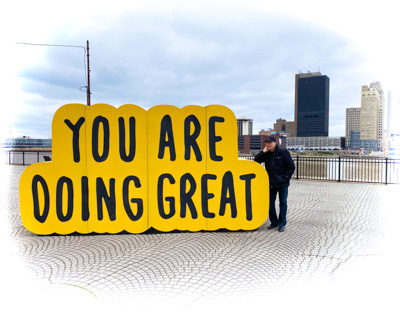
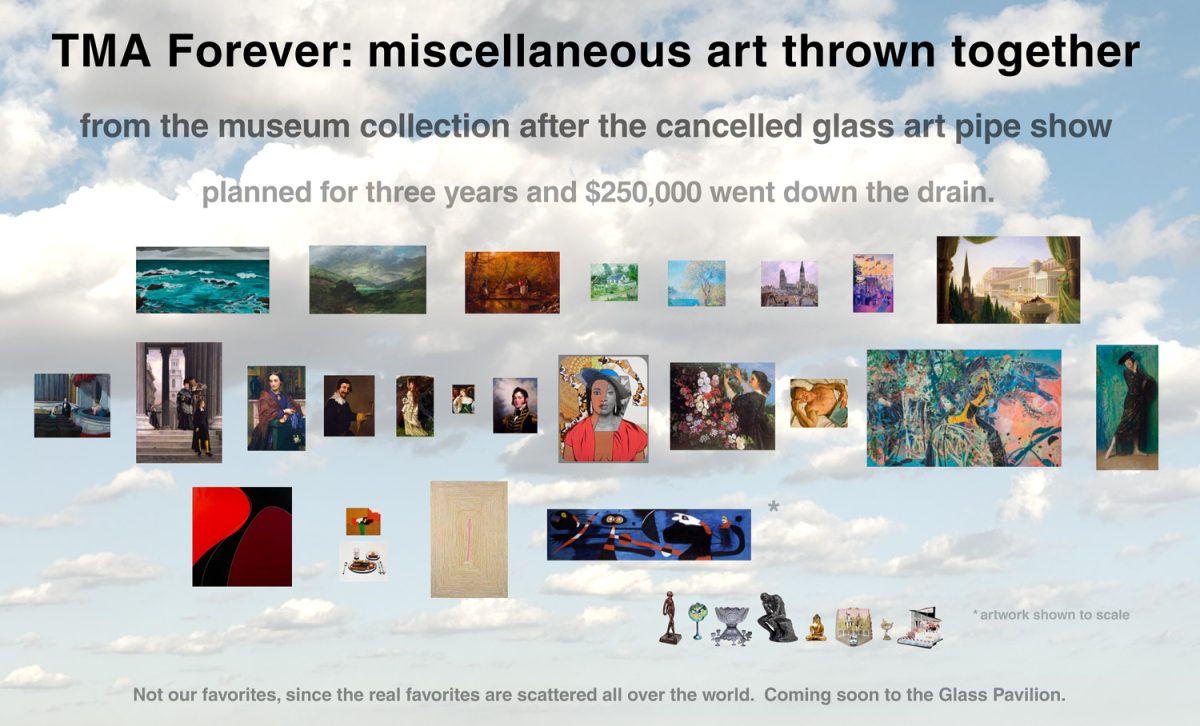
While most of the museum is closed for renovation and reinstallation, a new show has been announced: TMA Forever. Did they just think of hanging some art in Toledo? Could it be in reaction to the Petition to Enforce Libbey’s Will?
It will be at the recently repurposed Glass Pavilion, in the old Glass Study Room. The Glass Pavilion was built for the glass collection, but they have changed it from its singular purpose. Now they can do whatever they want with it, such as using it for sound shows, jewelry and cursed art exhibits, the local artist Community Gallery, and for hanging some paintings from the collection, calling it “TMA Forever,” to help us understand identity politics art. A warm-up for the dreaded transformation of our museum that we loved just the way it was.
 Cleaning out the old building
Claiming to have to do it for the HVAC system, they closed the historic white marble columned museum building and emptied it out. While they are transforming the Toledo Museum of Art into a world art history museum, they are ironically deleting the history of the museum and many of the artists it has held in its collection. They are on a special DEI mission to be the great influencer for American museums that must be changed. (“TMA’s strategy calls for us to become the model art museum in the United States for our commitment to quality and our culture of belonging.”) Not that the Toledo Museum of Art itself had ever been guilty of racism – far from it – but it doesn’t mind sacrificing itself for the cause.
Everyone is thinking of re-installations and reinterpreting collection today especially as a field and as institutions we’re coming to terms with the colonial and racist histories and legacies of our own institutions and their continued impact on what we do and how we do it today. – Diane Wright TMA Curator of Glass, TMA Symposium, Expanding Horizons, July 20, 2023
They bought 1,300 new pieces for the museum, including these two:

The Kiddush cup continues something of a busy spree at the Toledo Museum of Art, Levine said, citing the roughly 1,300 acquisitions it had made through gift and purchase over the past five years. ARTnews, November 6, 2025
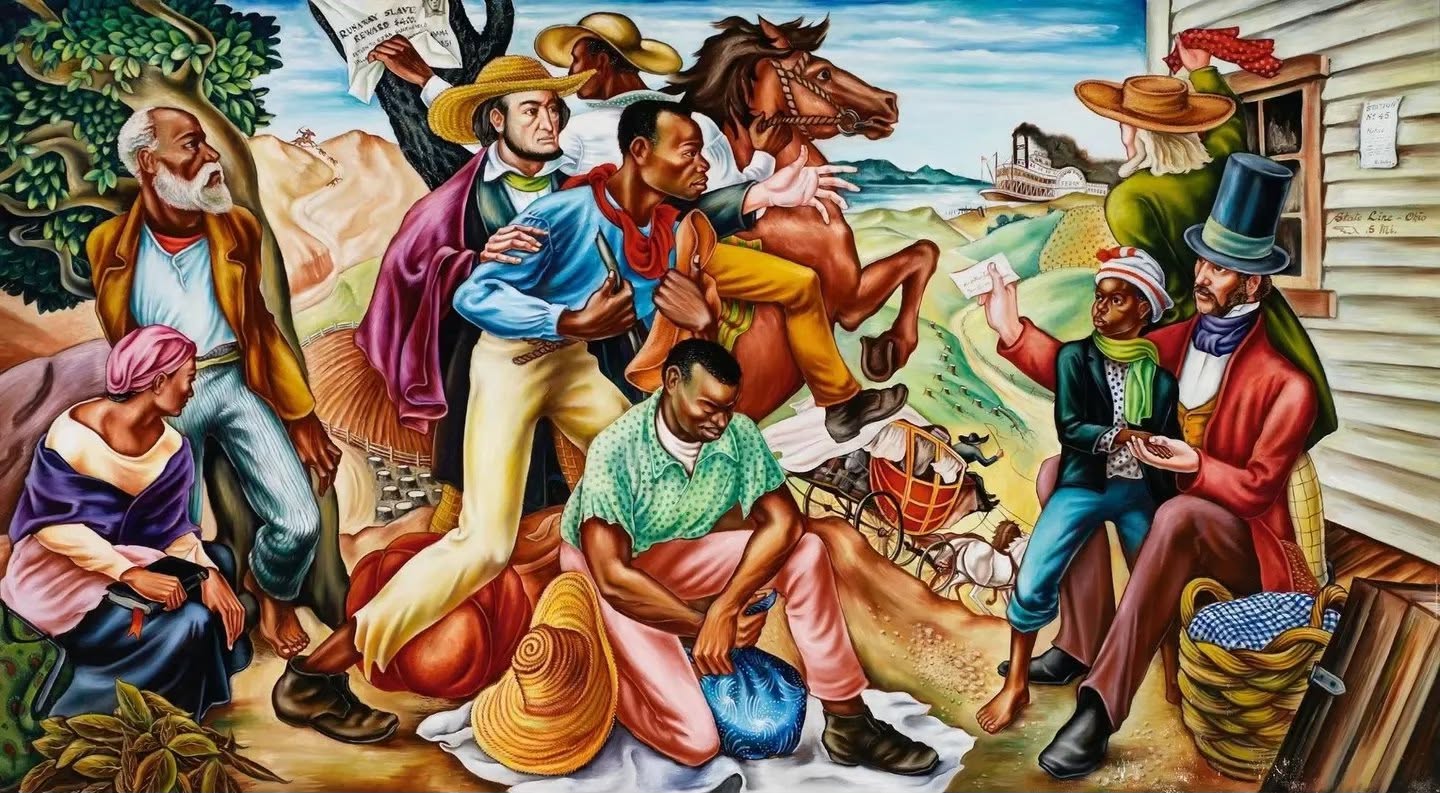
“My objective and the objective of the Toledo Museum of Art is to support Talladega College.” Adam Levine, New York Times, “To Avert Crisis, Talladega College Sells Its Art Treasures” October 29, 2025
“Much of the African American population of Toledo traces its genealogy to individuals who fled on the Underground Railroad, so this will be deeply meaningful for our audience.” Adam Levine, Forbes, “Art Imitates Life: Hale Woodruff’s ‘The Underground Railroad’ Headed North To Ohio” November 1, 2025
They claim that whatever they put up will be fine –
“The superpower that an art museum has is when something goes up on the wall, it’s considered good. We set the canon.” Adam Levine, Forbes, Feb. 28, 2022
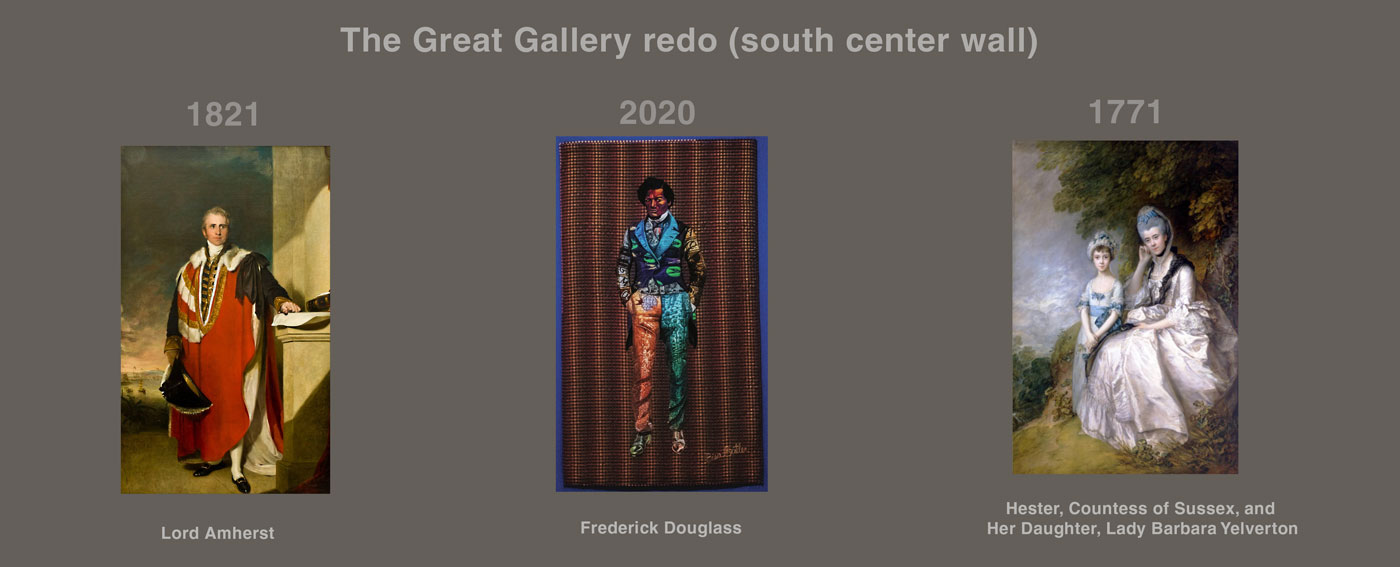
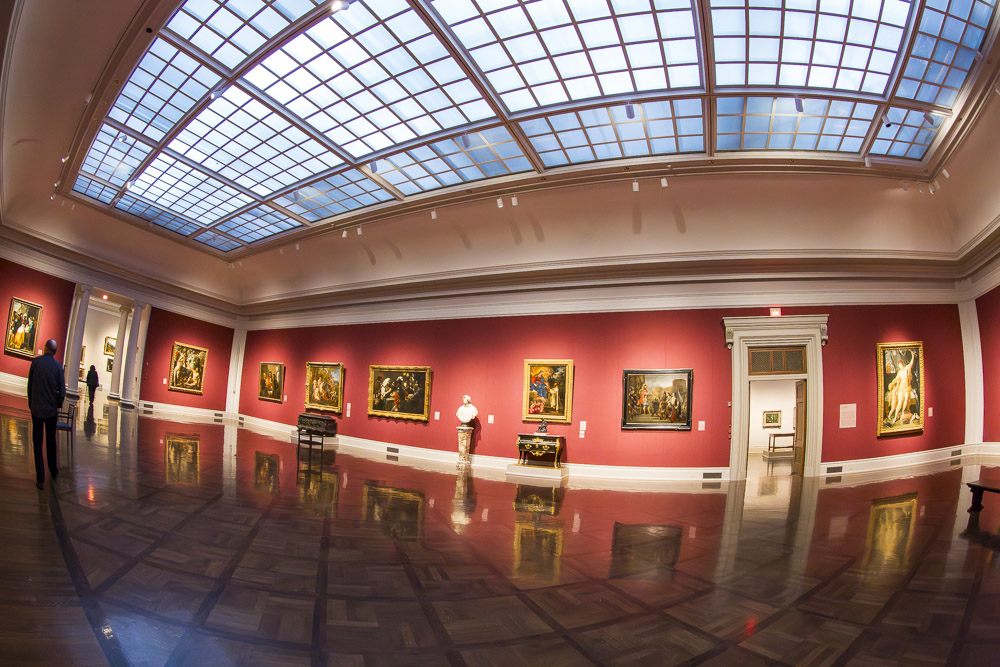
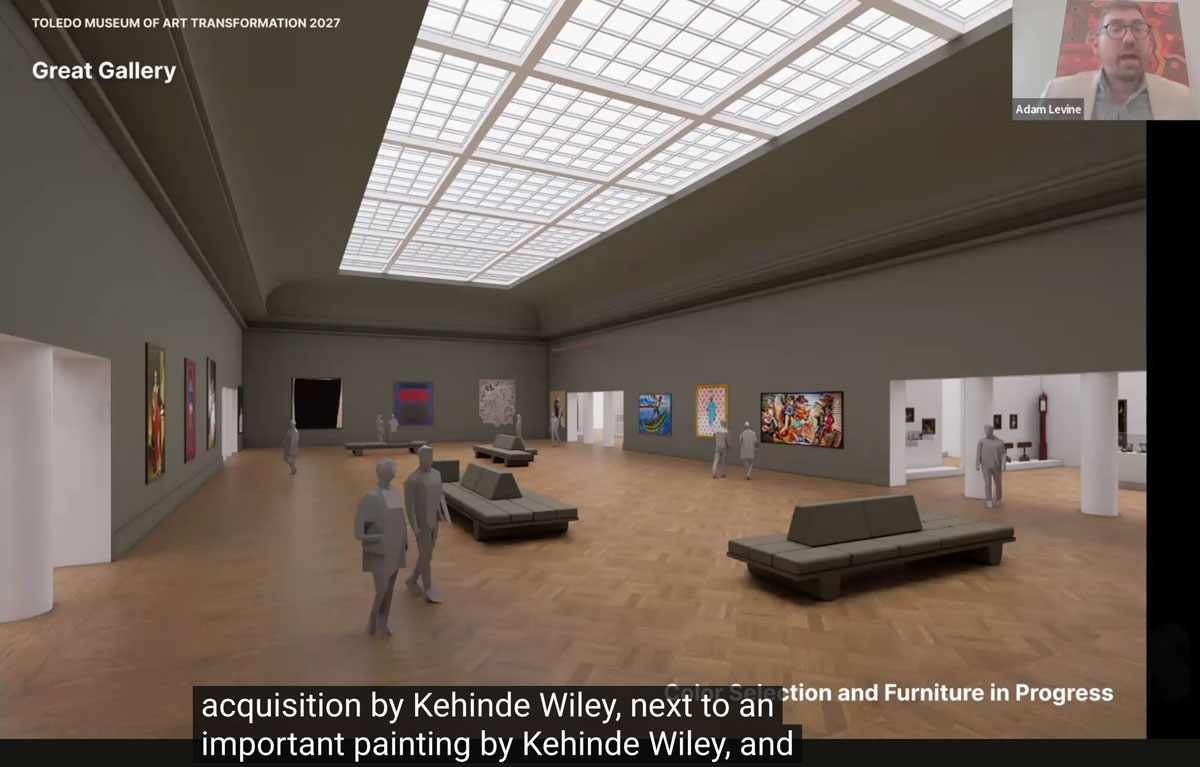
They are replacing the 17th and 18th century Italian Baroque paintings in the Great Gallery with this: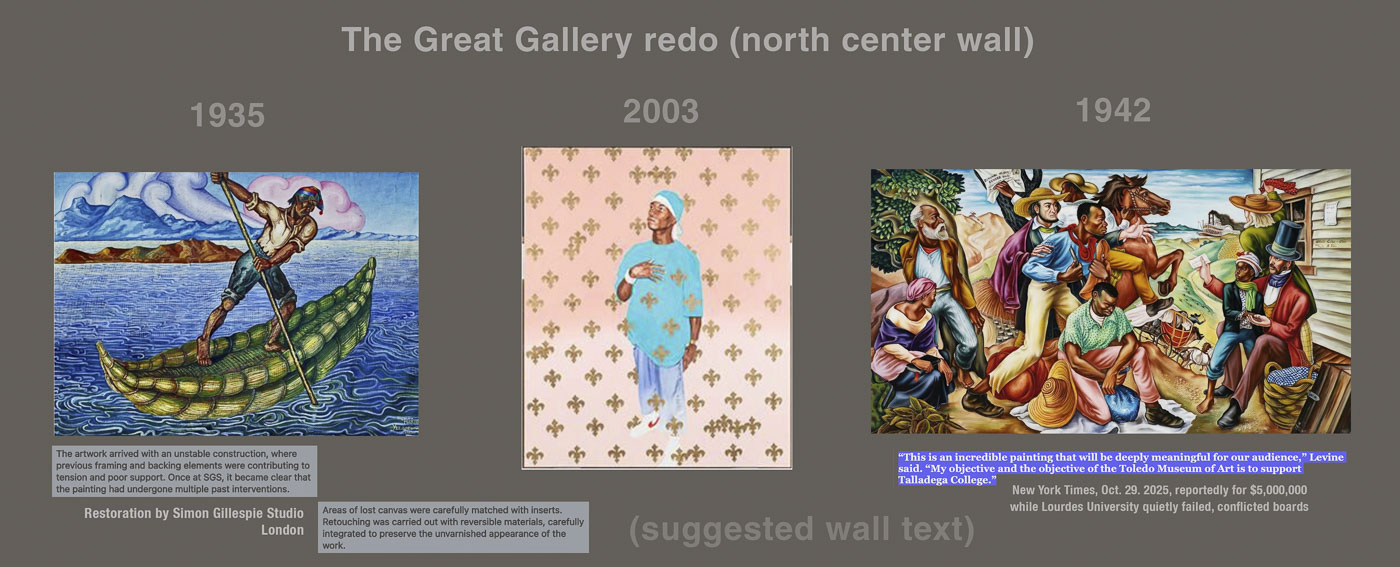 They moved the historic glass installed at the Glass Pavilion for reinstallation in the renovated museum building:
“It would be senseless not to have glass showcase alongside these other media, and to divorce glass history from overall art history,” Levine said. The Blade, August 2025
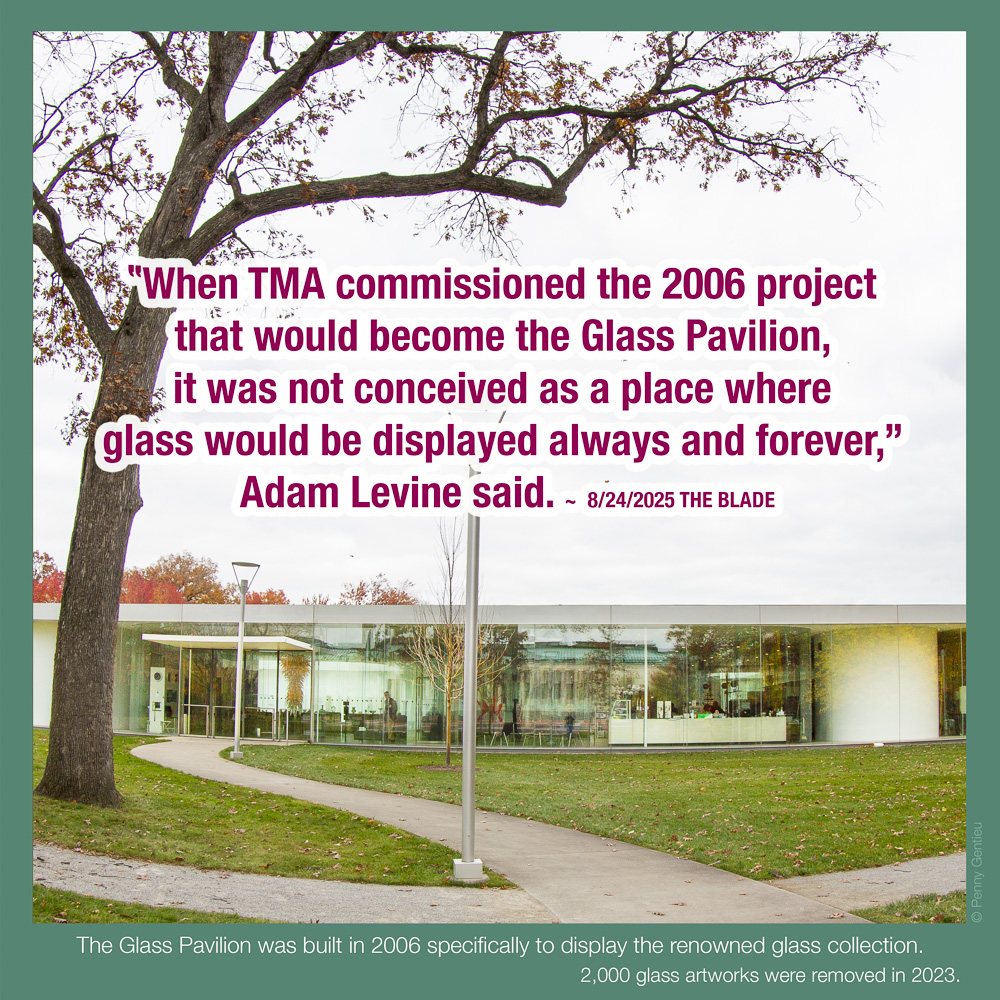 Conceived as a building of glass to display one of the world’s greatest art collections, where glass would be made, glass would be taught, and the history of glass would be studied, in a city known as the glass capital of the world, that gave birth to the studio glass movement in 1962, in a museum founded by a ground-breaking glass industrialist, it was in beautiful working order, as designed by master architects, to work together like a Swiss watch. Why did it stop?
Meanwhile…
The museum has set out to increase their international footprint and relevance. In the past, the museum had plenty of international relevance right here at home. The museum was visited by luminaries from around the world, such as the King and Queen of Greece. In any given year, the museum had been regularly visited by people from every state of the nation and over 50 countries around the world.
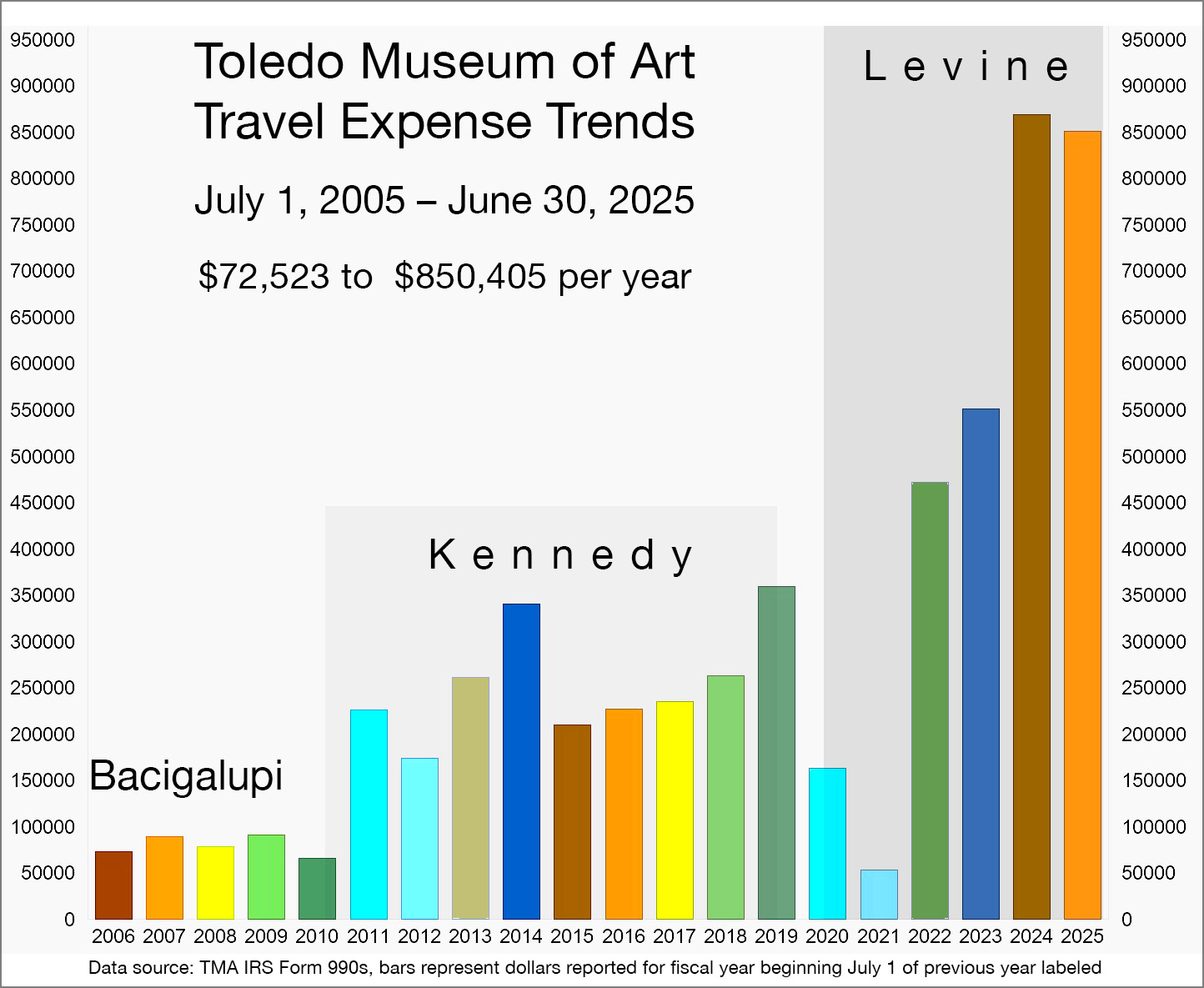
But now, instead of bringing people to Toledo to see the fine collection, the collection has been sent on tour, along with museum staff including curators and the art restorer. Many of the best paintings are either on loan or are being rented internationally. The art is put to work to fulfill their “transformative” mission, and the travel budget is going through the roof.
These paintings have been prepared for extensive wear and tear by reframing them with glass. You can imagine the many years it took to prepare so many paintings for such stress. For example, the two-year loan of four paintings to the Hudson River Museum that commenced in June 2025 and will end in June 2027 was arranged in 2023, as indicated on the adjacent plaques.
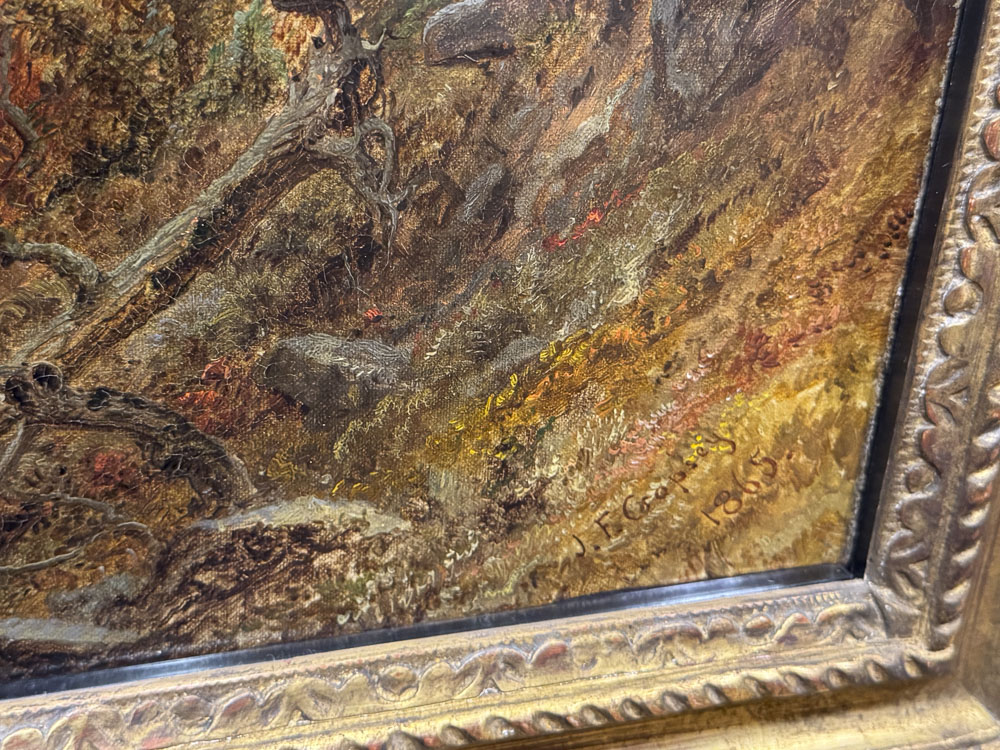
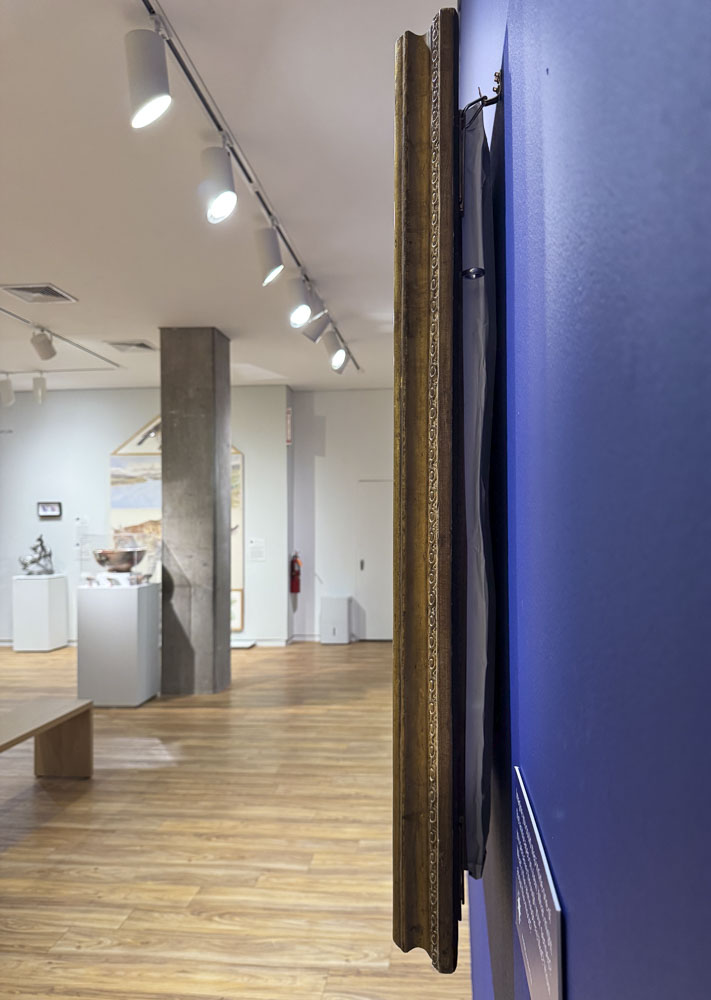
Rarely seen, except on the Mona Lisa, glass is used on canvas to protect it from damage. To glaze a painting, the art restorer has to crack open the frame, remove the artwork, and add glass to the frame. Then, the installation of spacers along the inside of the frame to keep the glass from touching the surface of the painting. As some depth of the frame has been taken up by the glass and the spacers, the canvas spills out of the back. A retro-fitted frame job is not the ideal framing for the valuable artwork. The paintings, like this one, have to be hung from hinges at the sides of the frames instead of from the back. I went to see some, in Yonkers, New York.
Here’s what Toledo’s art restorers did to the paintings to add glass — to upwards of 150 of paintings —
No wonder museum attendance has been pathetically low, considering that the curators’ attention has been focused on making shows for the rest of the world, instead of putting on good shows at the actual Toledo Museum of Art.
Edward Drummond Libbey Will
…all paintings, pictures and other works of art by it or them acquired by expenditures from said income, shall at all times be properly and appropriately housed in one or more rooms of The Toledo Museum of Art in said City of Toledo, each of which rooms shall at all times be designated and plainly marked “The Edward Drummond Libbey Gallery”; each and every of said painting, other pictures and works of art shall at all times be plainly marked “Gift of Edward Drummond Libbey”, and shall be kept adequately insured against loss from fire, theft and other causes…
Florence Scott Libbey Will
…in the purchase of paintings, statuary, furniture and other works of art, each of which, when so acquired, shall have designated thereon, or near thereto, the following words: “Florence Scott Libby Bequest in Memory of her Father, Maurice A. Scott”, and shall be permanently installed in one or more rooms of the building or buildings of said Museum of Art, each of which shall be designated and known as the “Maurice A. Scott Memorial Gallery”…
What don’t they understand about Libbey’s intentions for the art to be for the people of Toledo? Instead, the curators — all new to the museum — are using the great art belonging to the people of Toledo, risking and renting it all over the world. The Toledo elites are all in. So is The Blade, which supports the museum whole-heartedly, and the museum advertises in The Blade. (Update, September 8: The Blade announced that it is closing down if it is not sold by the end of the year, and the managing editor Mike Brice has a new job now promoting commercial concerns in Ohio. The Blade is in free-fall, so is it any wonder why they no longer publish fair journalism; see post dated September 6 right before it was announced, What The Blade Didn’t Publish About the Glass Pavilion)
Living far above it all, none of the movers and shakers understand the importance of the museum to the community. They don’t understand that you can’t take that away for all these years without changing the character of Toledo forever.
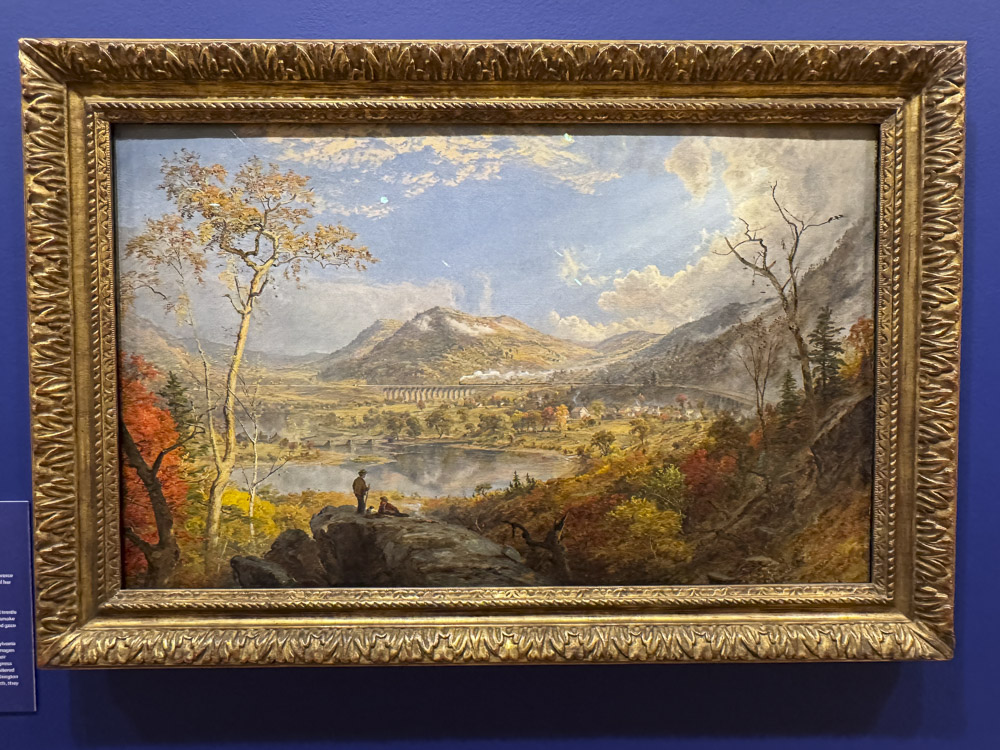
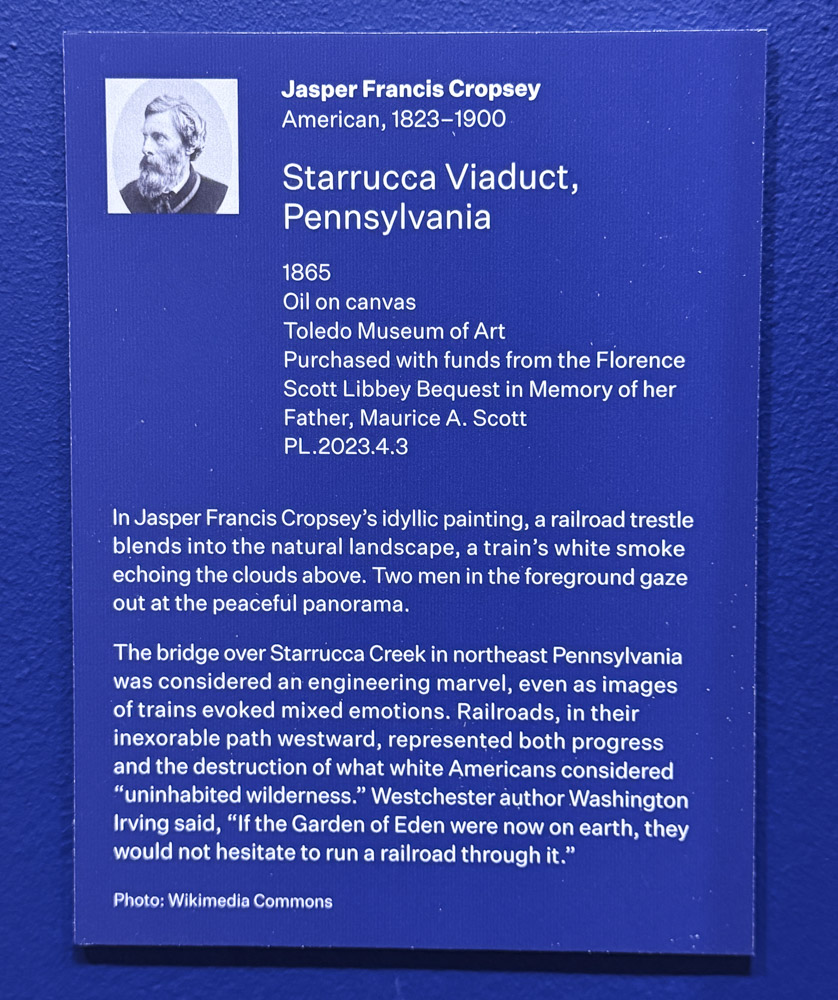
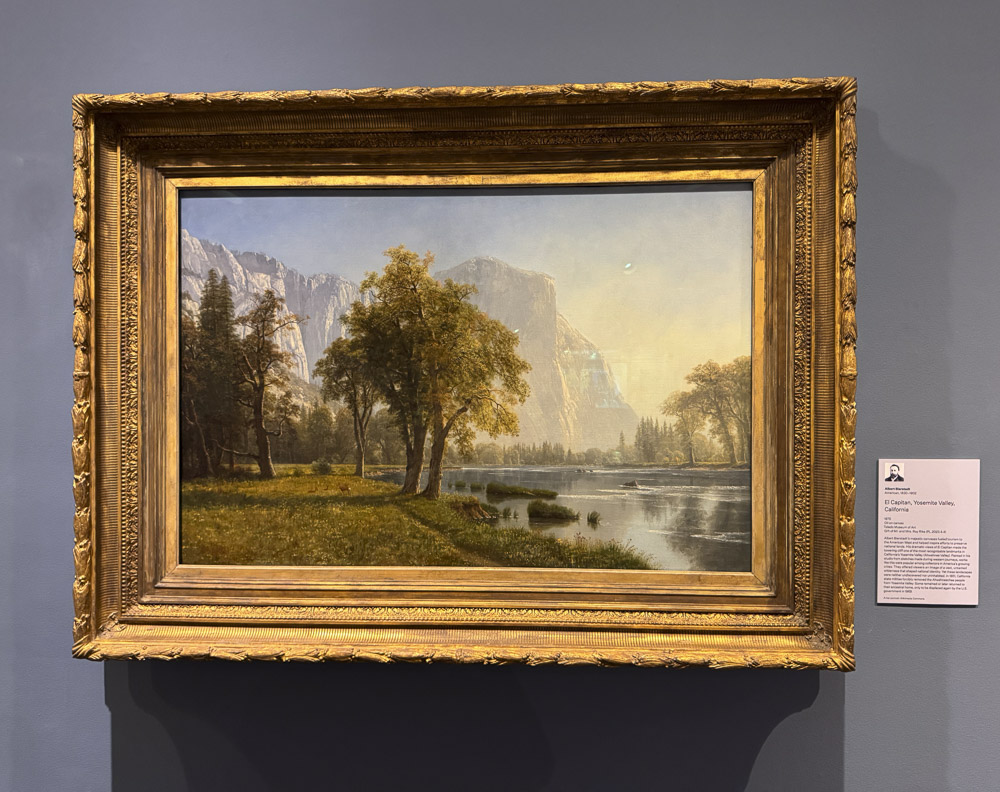
Telling a story in the “Everything Has a Story” Exhibition at the Hudson River Museum, Yonkers, New York
Four American paintings were lent to the Hudson River Museum and are the only paintings in the museum with glass on them. They look bad and Toledo looks bad. The wall text was written at the height of Toledo’s post-pandemic anti-colonialist revisionism panic, and it was unlike any of the other wall text on the rest of the art. For example:
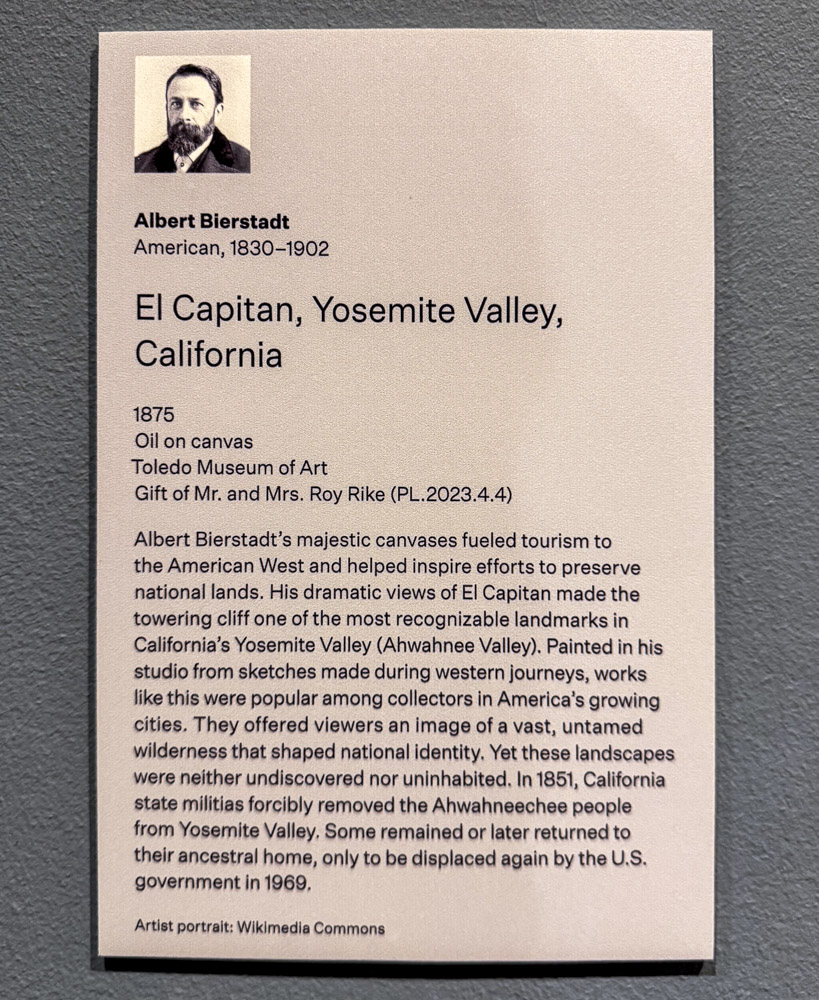
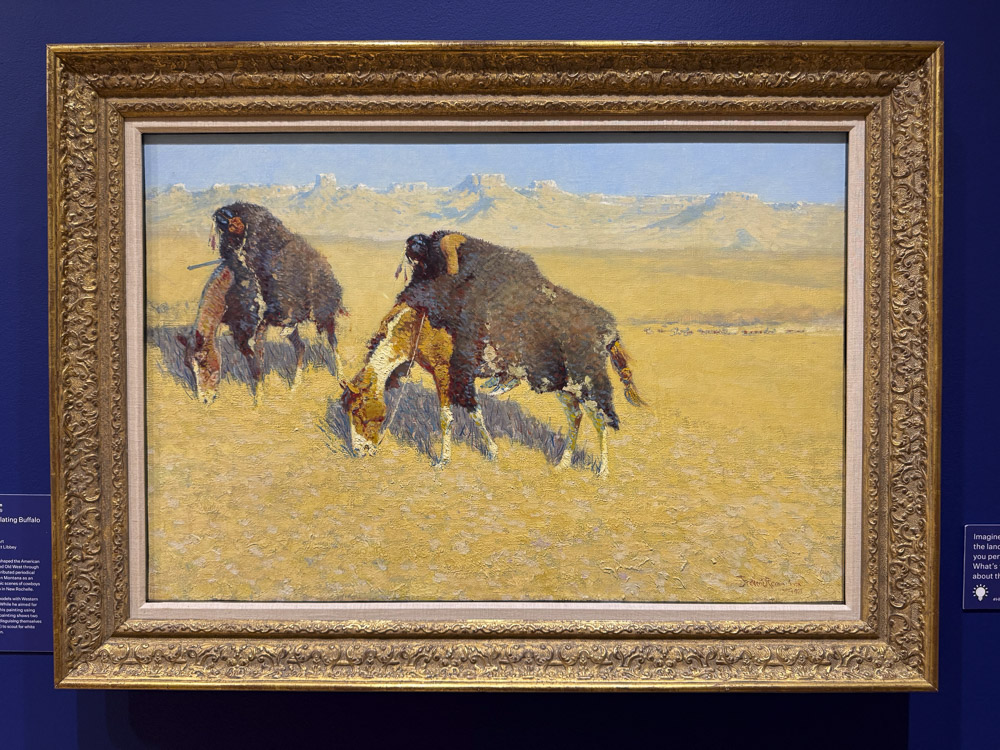
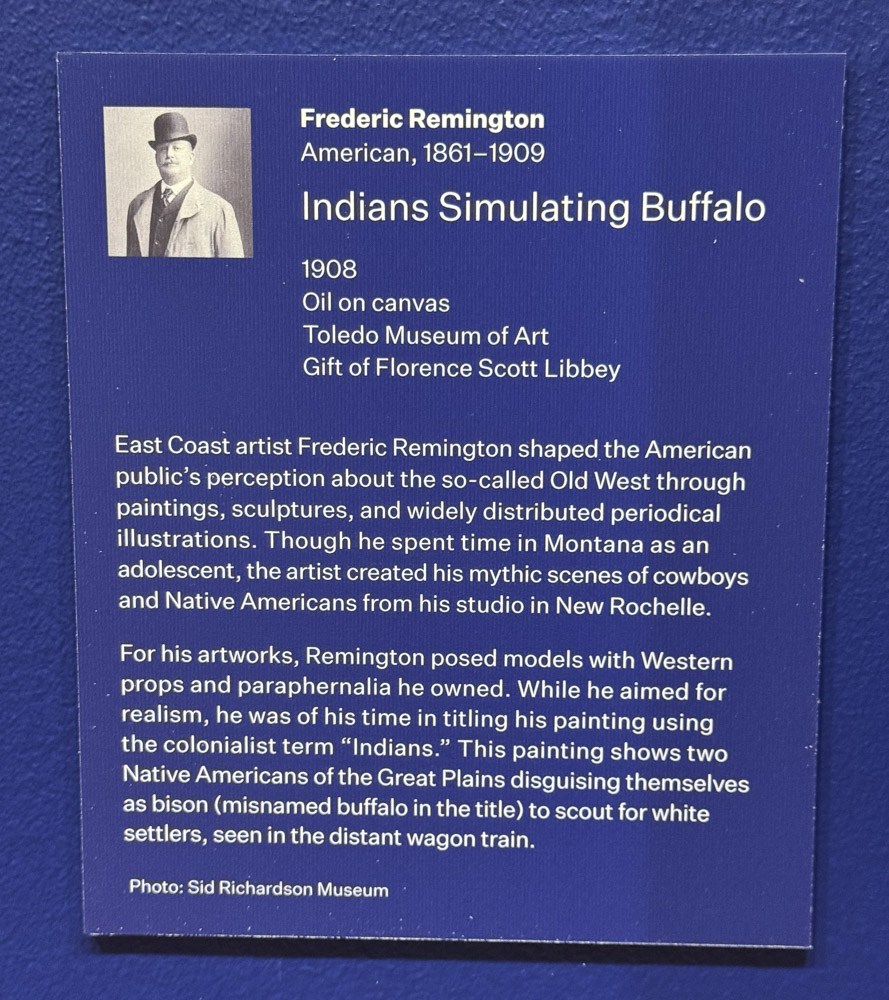
Toledo Forever
The Toledo Museum of Art explains to the foreign press that the reason the museum can “loan” so many masterworks at one time is because back home they are doing a massive renovation. But in fact, that excuse is only to make the museum look good to the foreigners. At home, the museum is closed for an unnecessary renovation along with an unwanted reinstallation. It is taking years and the museum will have not have any additional gallery space. In fact current gallery space will be reduced for the addition of new bathrooms and a lounge. Storage space will be not be added, even though in the past five years they have acquired 1,300 new art objects for the dreaded reinstallation.
As far as the rest of the world is concerned, the museum’s Wikipedia page claims that the museum is in the midst of a massive “campus expansion.” That’s great for international PR, for the people who will never set foot in Toledo but will pay admission fees overseas to view our art.
As for the “campus expansion,” the museum actually sold an important campus building – the art deco Professional Building, that housed the Symphony and Toledo Arts Commission, to the American Numismatic Society for $2 million one year ago. That is hardly “campus expansion.”
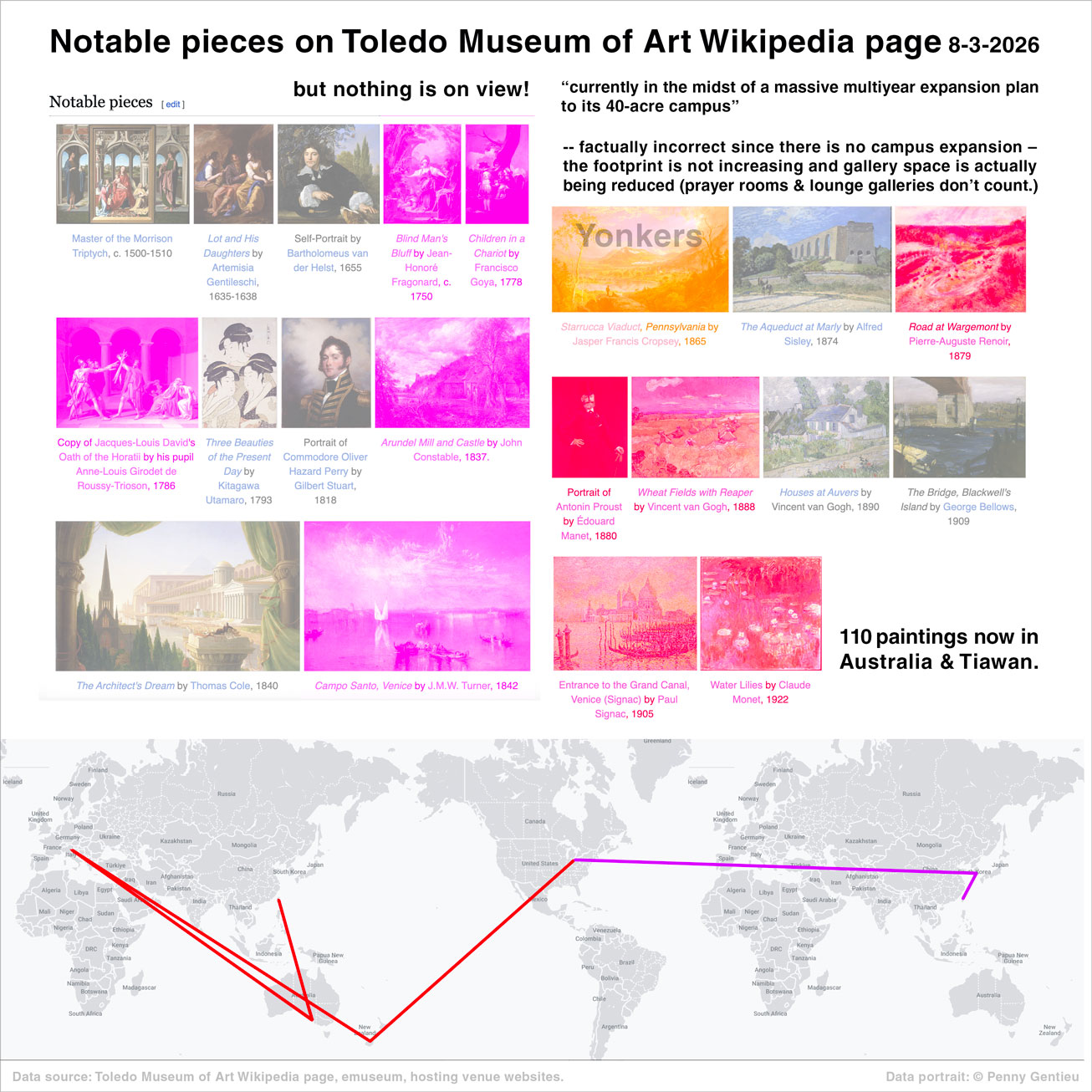
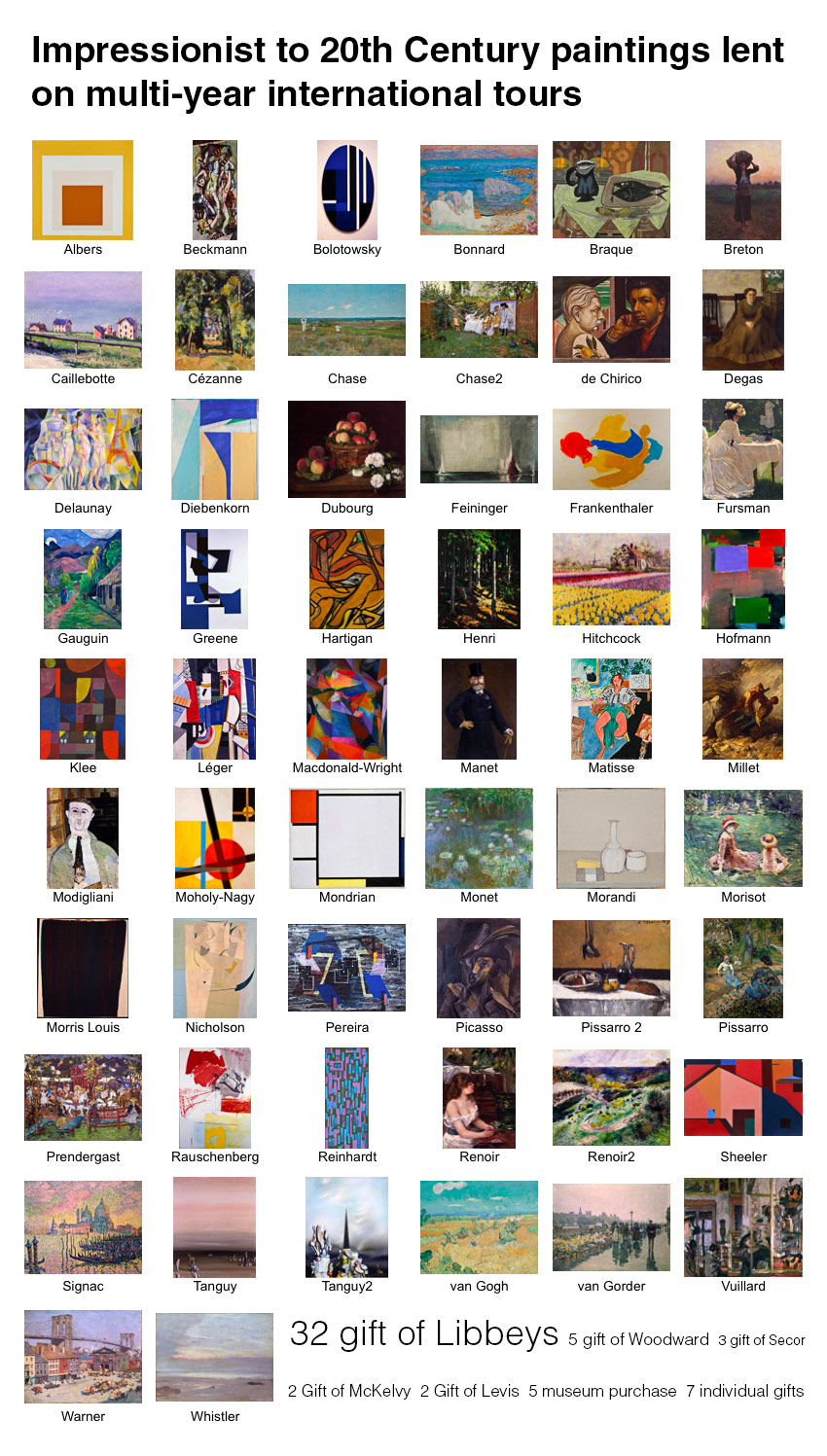
56 of 60 Impressionist thru Modern paintings on multi-year world tours, mangled with glass on them:
53 Old Master paintings on multi-year world tours, mangled with glass on them:
What we are losing:
For this:
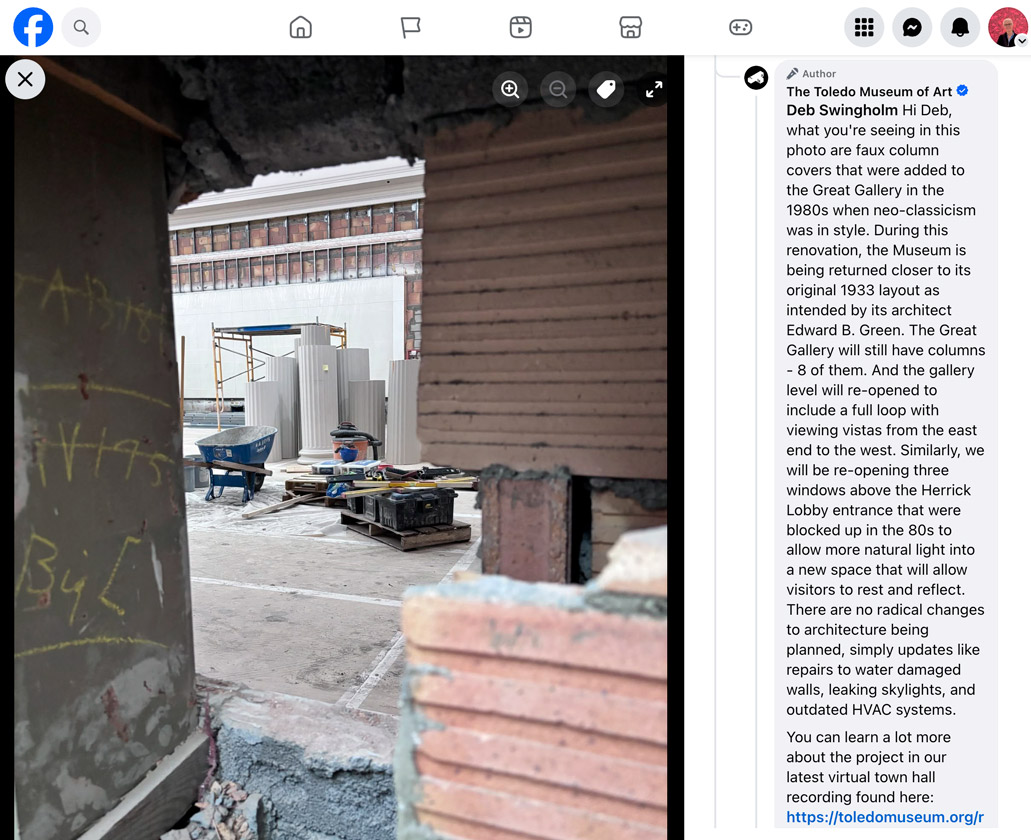
“The Great Gallery will still have columns – 8 of them.” TMA FB May 18, 2026
Instead of presenting the great art that has been painstakingly collected for over a century, the new crew at the museum is using the art to illustrate a presentation of a narrow view of politics.
The membership has dropped significantly, as has attendance, which never recovered after the pandemic. Who is paying for this transformation of the people’s museum? What strings are attached?
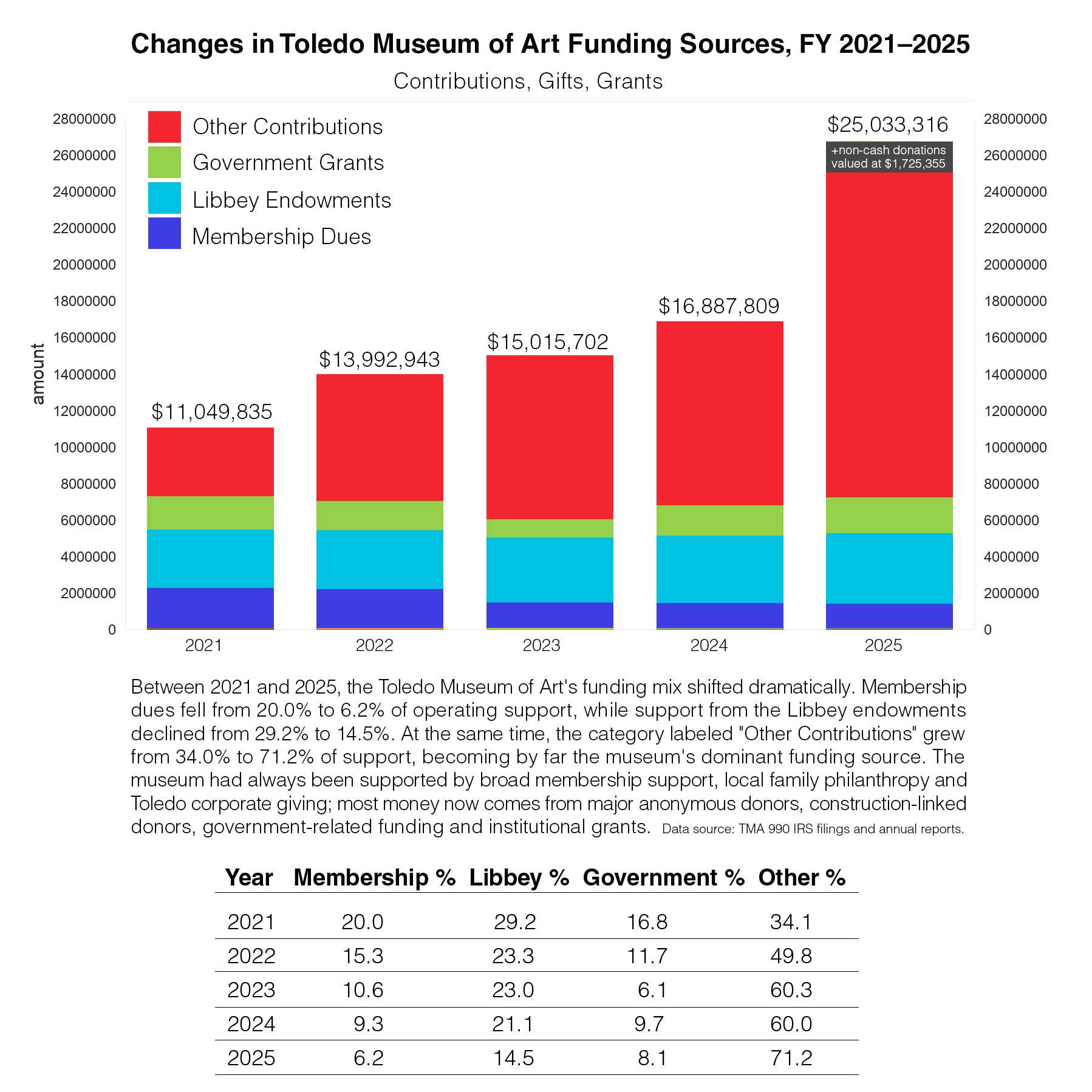
See more charts, graphs and data portraits analyzing the museum’s statistics on this page: