“Reframing History”– What Toledo Museum of Art Visitors Are Saying
Comments on the museum’s October 14, 2026 Facebook post reveal a deeper unease about the future of a Toledo institution.
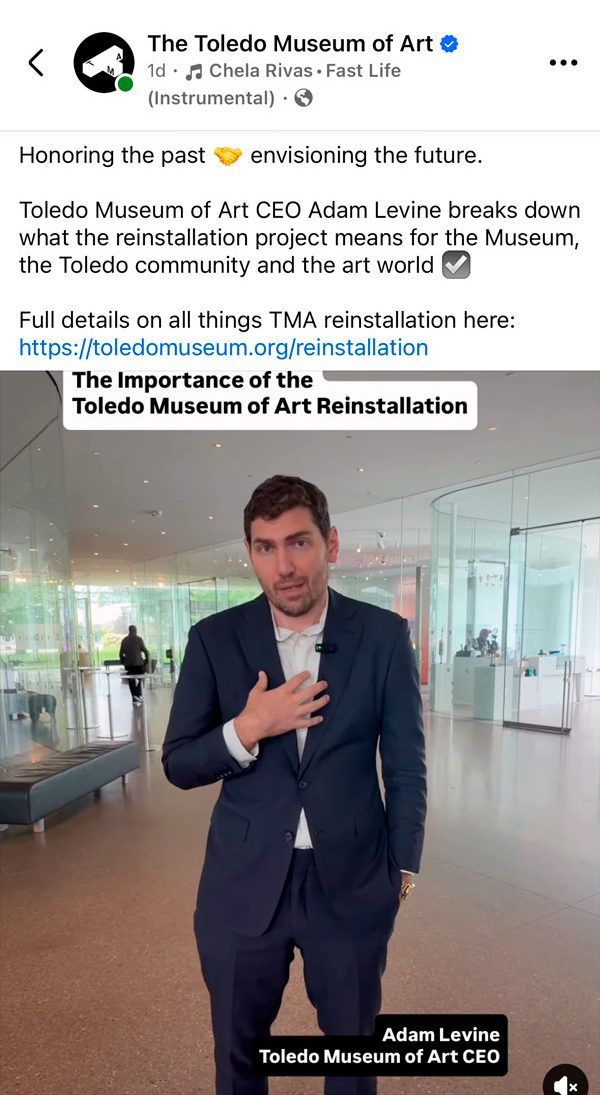
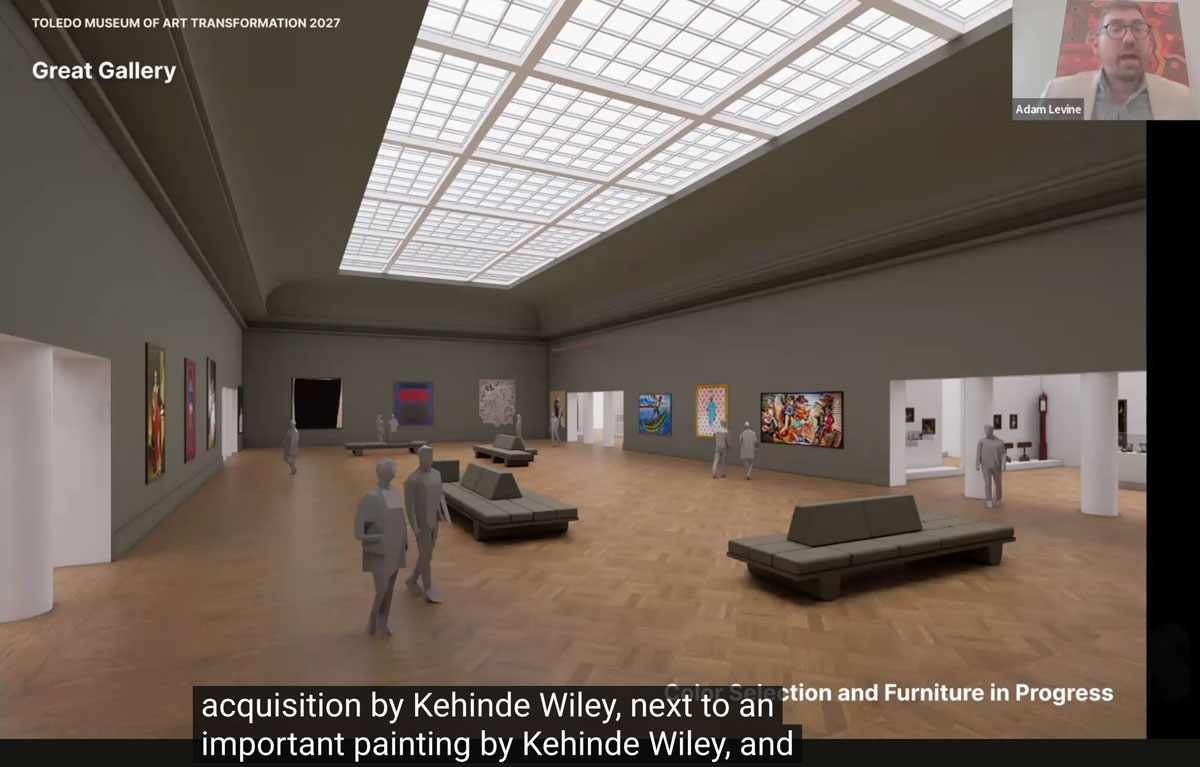
On October 14, the Toledo Museum of Art published a Facebook post featuring CEO Adam Levine under the heading “Honoring the past, envisioning the future.” The post invited viewers to hear what the museum’s reinstallation project means for the museum, the Toledo community, and the art world.
But the comments raised a question that the museum’s promotional language does not appear to answer: Why did a world-class museum with an established identity, important collections, and generations of community support need to be fundamentally reimagined?
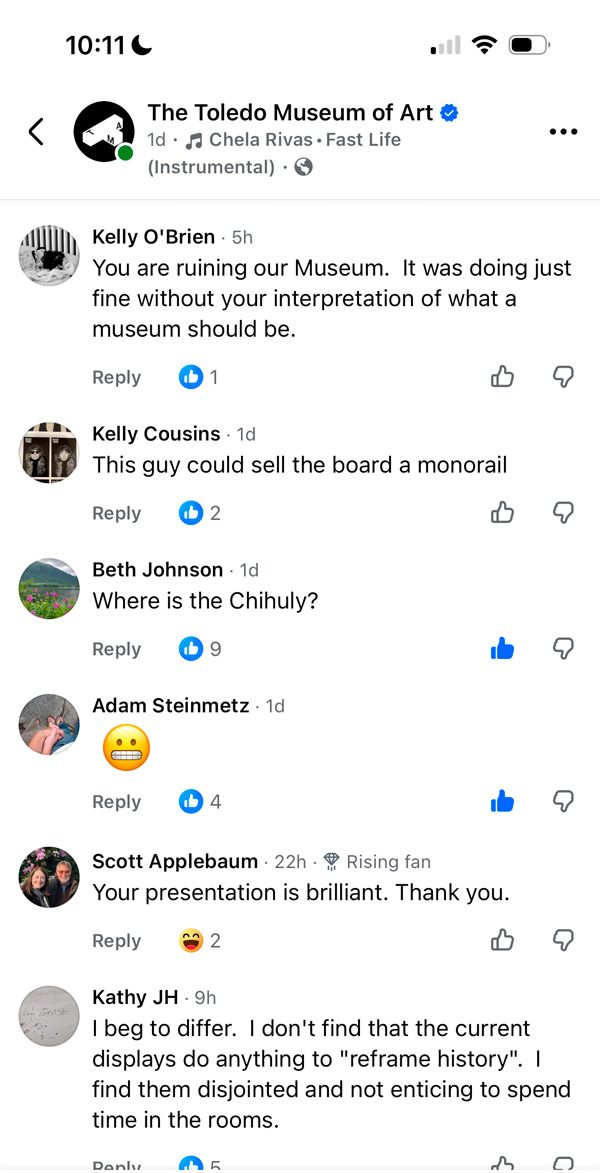
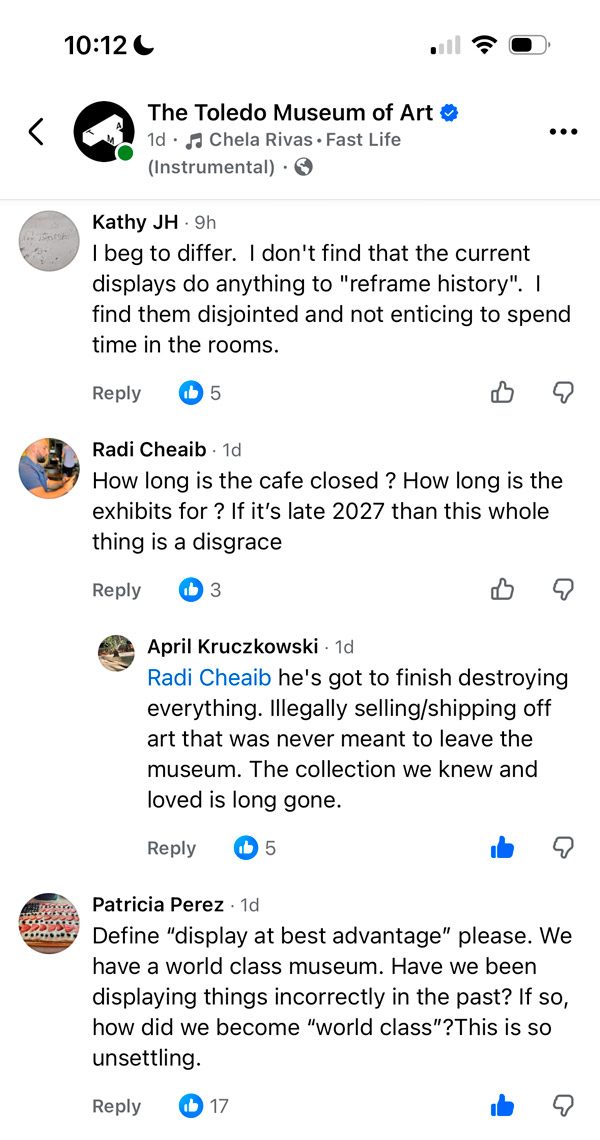
I captured the comments displayed beneath the post. Although on October 16 Facebook reported 39 comments, only 27 were visible in the comment views I checked. The responses included hardly any support for the project, but many expressed disappointment, confusion, and concern about the direction of the museum.
What does it mean to “reframe history”?
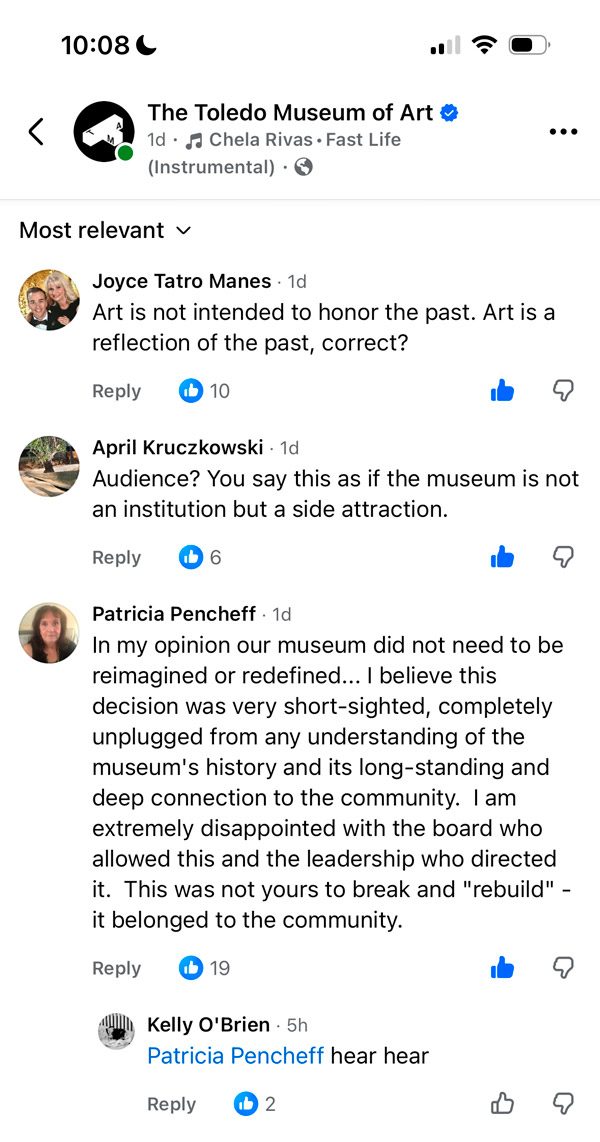
Again and again, commenters asked what the museum meant by “reframe history,” “reframe the art,” and “display at best advantage.”
Patricia Perez questioned whether the museum had been displaying its art incorrectly in the past. If the museum had already achieved a world-class reputation, she asked, why was this fundamental reinterpretation necessary?
Joyce Tatro Manes compared the idea to saying that the Louvre needed to be reframed. Other commenters dismissed the language as buzzwords that did not explain what visitors would actually gain.
These questions deserve serious answers. What specific shortcomings in the former displays justified the scale of the changes? What evidence supports the claim that the new approach will improve the visitor experience? And how will the museum measure whether it succeeds?
“The warmth and connection is gone”
For some commenters, the changes are not an abstract debate about museum philosophy. They describe a personal sense of loss.
Lisa Marie wrote that the museum had been perfect the way it was and that its warmth and connection were gone. She said her favorite works had been put on tour or taken down and asked, “What’s the vision?”
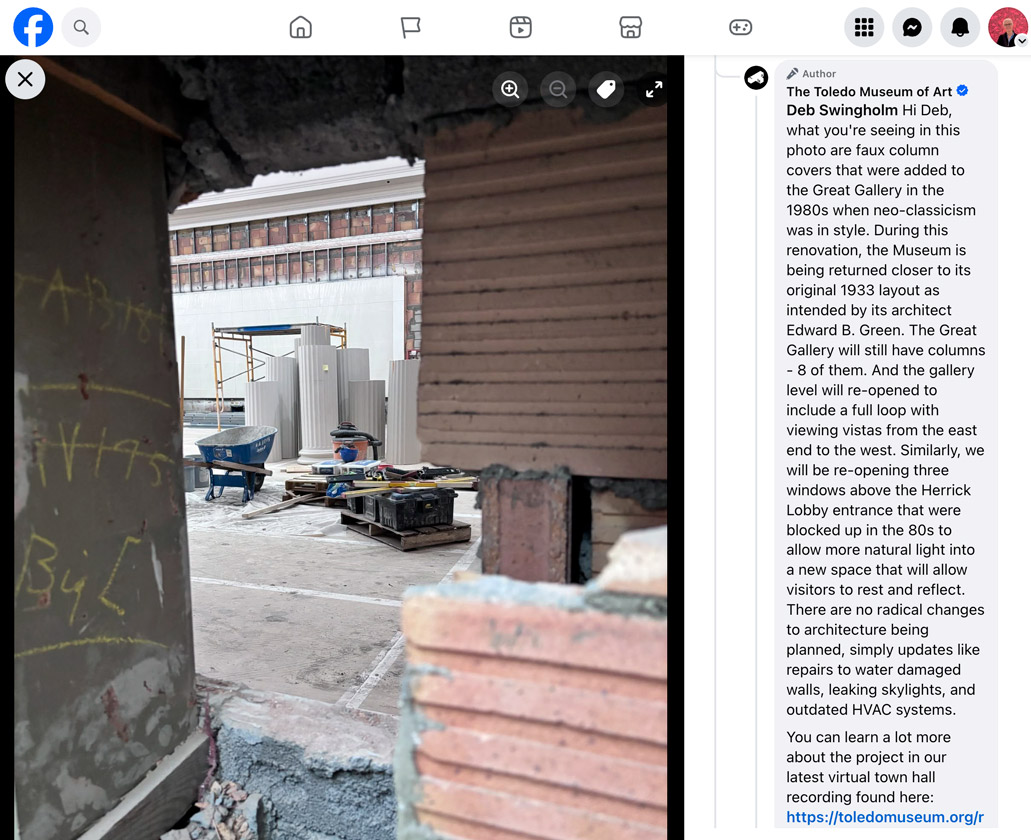
Deb Swingholm said that each recent visit seemed to leave the museum “less vibrant and less beautiful.” Kathy JH found the current displays disjointed and not enticing places to spend time. Beth Thomsen Madden called the museum a treasure that did not need redesigning.
These comments describe a gap between the museum’s promise of renewal and some visitors’ actual experience of the galleries.
Where is the art?
Perhaps the most consequential concerns were about the collection itself.
Deborah Torres wrote that the museum’s longstanding identity had grown out of the importance of its collections. She did not want to see them “reduced, sold, in storage, continually on loan, replaced etc.” She added, “I’m hoping I’m wrong.”
Visitors also asked where particular works had gone, including the Chihuly. Their questions reflect a larger concern: if familiar works disappear from the galleries, what remains of the museum that people have supported and come to know?
The museum needs to communicate clearly about which works are on view, which are in storage, which are on loan, and which have been sold. These are different circumstances, and the public should not have to guess about them.
Who owns the museum’s future?
Patricia Pencheff offered one of the clearest statements of the community’s stake in the decision:
“This was not yours to break and ‘rebuild’ — it belonged to the community.”
Her criticism was directed at both the leadership that initiated the changes and the board that approved them. April Kruczkowski similarly questioned the way the presentation characterized the museum’s audience.
These comments raise an important issue of stewardship:
The museum director and board have responsibilities to lead an institution, but leadership does not make the institution theirs. Its collections, reputation, and relationship with the public have been built over generations. Leadership’s fiduciary duty is spelled out in the Libbey will.
How are the changes are justified?
How do they serve the public?
Who asked for them?
A debate about history—and what museums should preserve
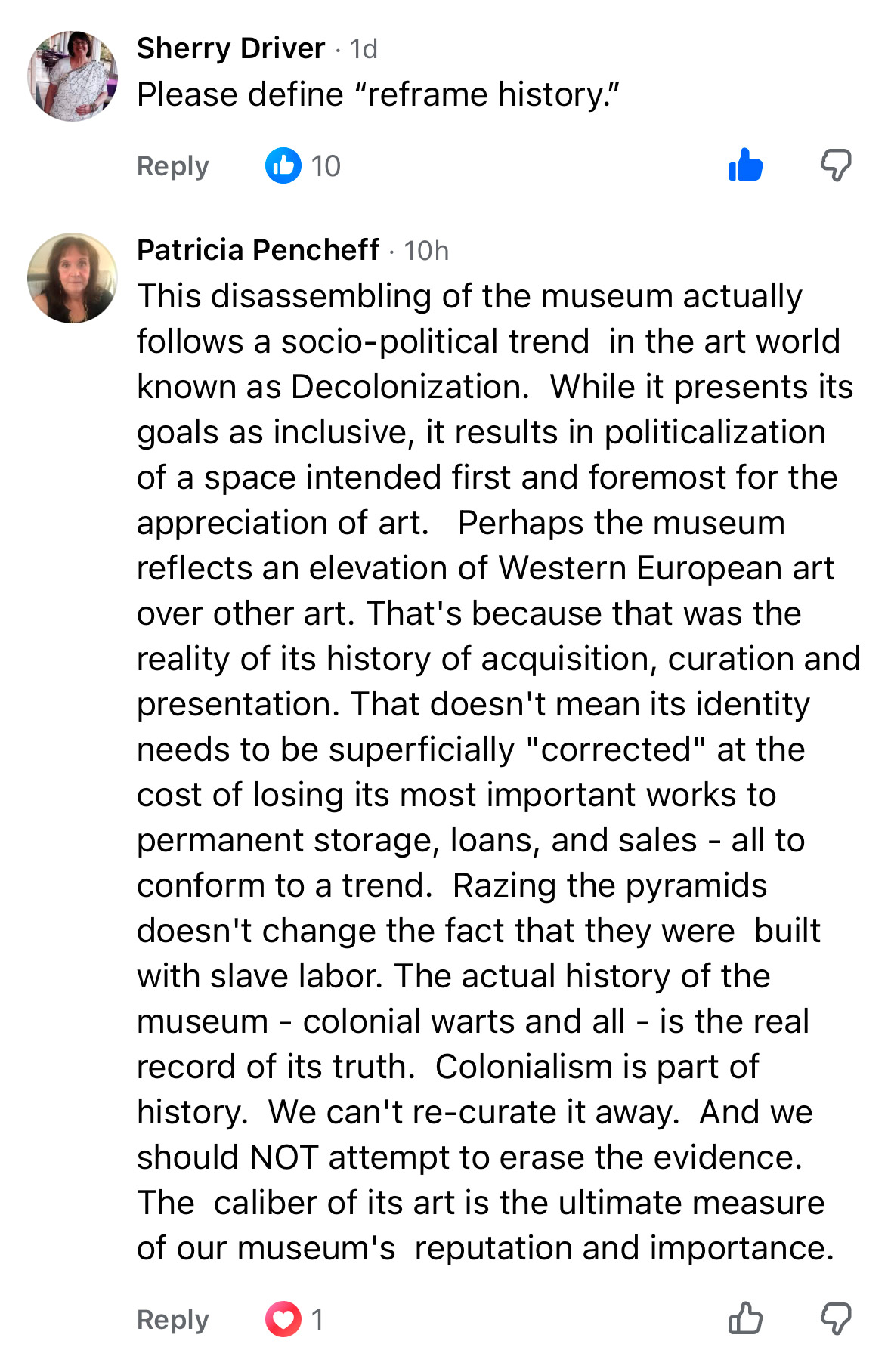
Patricia Pencheff also argued that the changes reflect a broader trend toward decolonization in the art world. She questioned whether changing the interpretation of a collection could come at the expense of preserving its most important works.
Her argument was that the history of a collection—including the uncomfortable parts—should be documented rather than obscured. Reinterpreting history does not change the historical record.
Visitors can reasonably disagree about the best way to display art, address colonial history, or introduce new perspectives. But those debates should not obscure a fundamental responsibility: to preserve the collection and make it accessible to the public.
A presentation is not the same as public confidence
Not everyone responding to the post was critical. Scott Applebaum praised Levine’s presentation, and Deborah Torres expressed confidence in architect Michael Maltzan’s involvement in the project.
But a polished presentation and an impressive architectural résumé do not, by themselves, resolve the concerns other visitors are raising.
The comments were not simply about wall colors or interior design. They concerned the museum’s identity, the accessibility of its collections, the experience of visiting, the length and consequences of the disruption, and the board’s judgment.
The museum’s post promised to honor the past while envisioning the future. Its critics are asking whether the past is actually being honored—and whether the future being envisioned is one that the people of Toledo recognize as their own.
A public museum should be able to explain why it is changing, what those changes accomplish, be accountable to the community it serves, be transparent about how much money it’s costing and how it is being funded. The people raising these questions deserve more than slogans. They deserve substantive answers.
Toledo bought “The Cup of Joy;” Toledo bought the story.
$4 million hammer price shattered auction records
Toledo Museum of Art bought it and immediately lent it to the Jewish Museum in New York for long term display in their just-renovated museum.
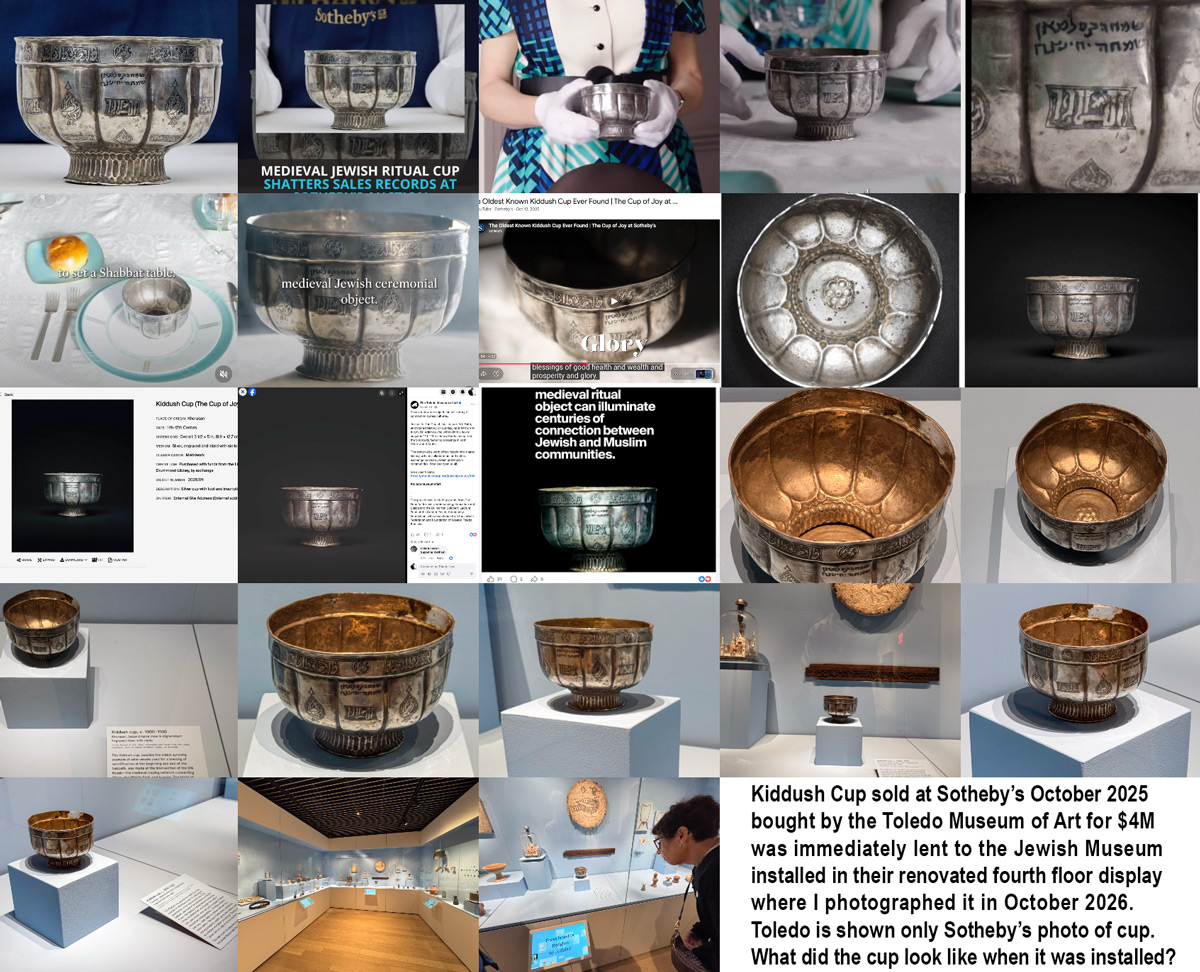
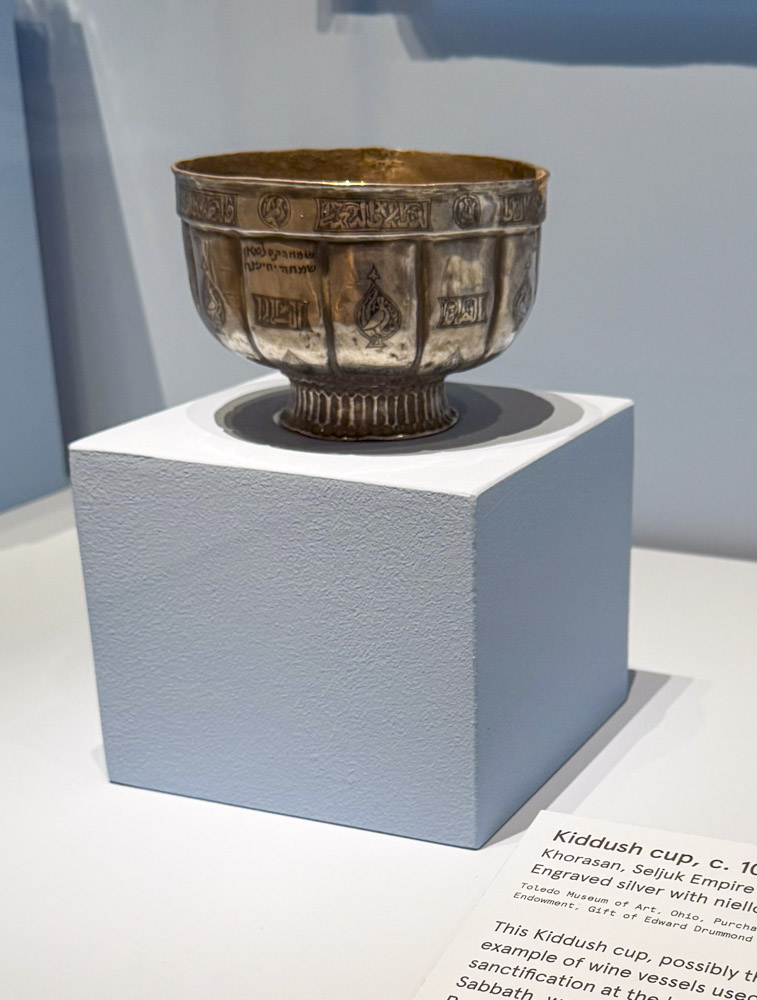
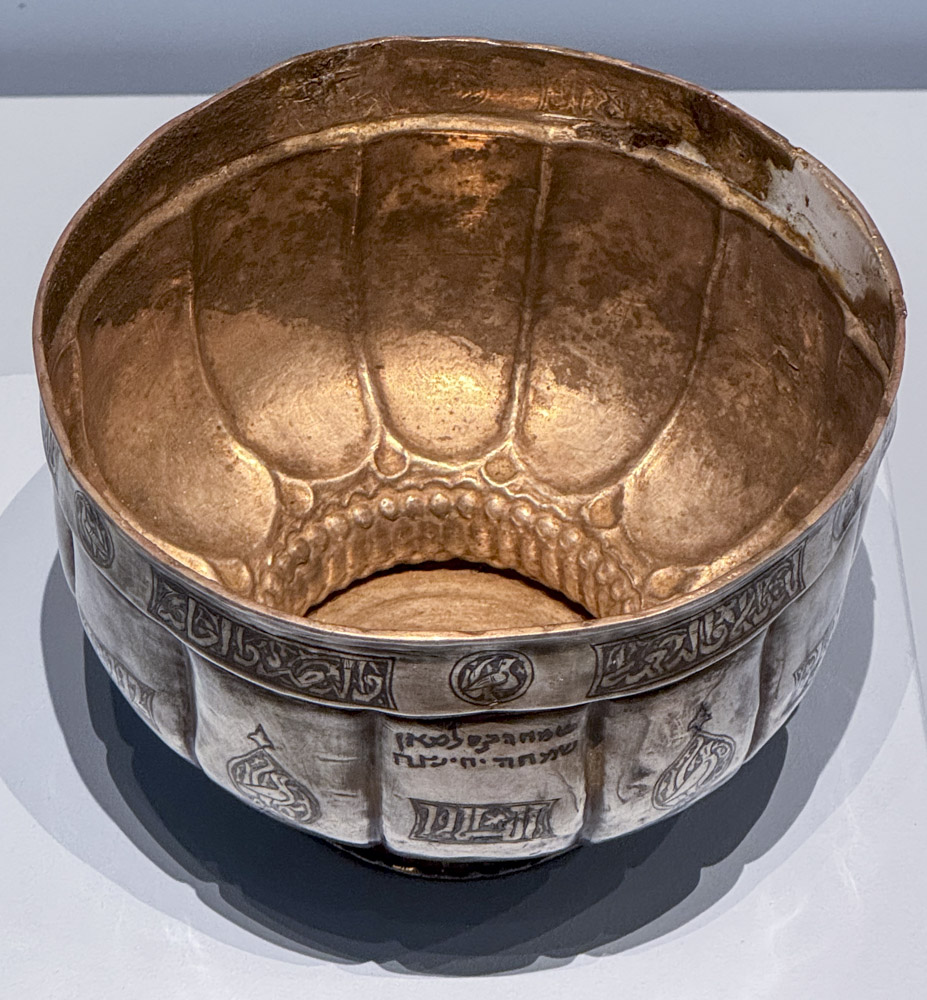
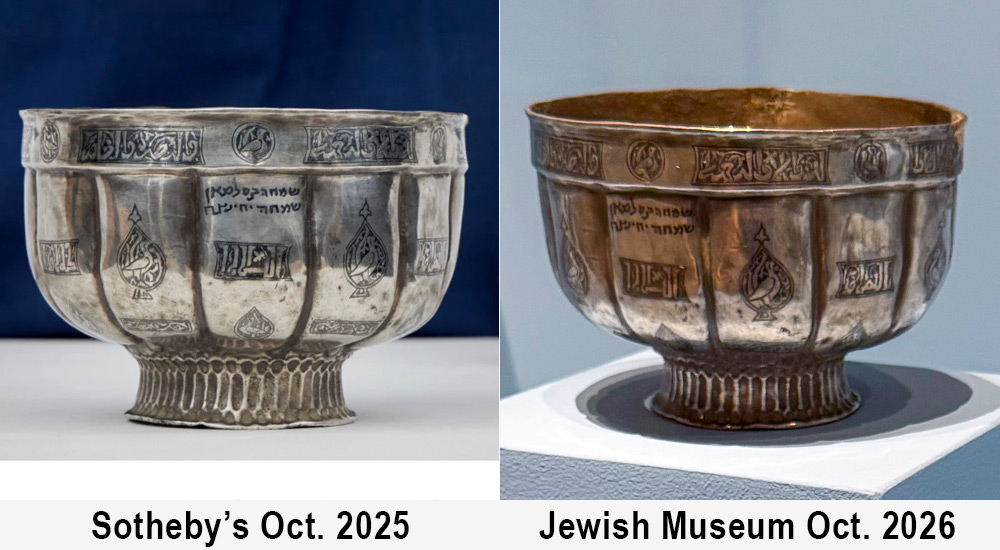
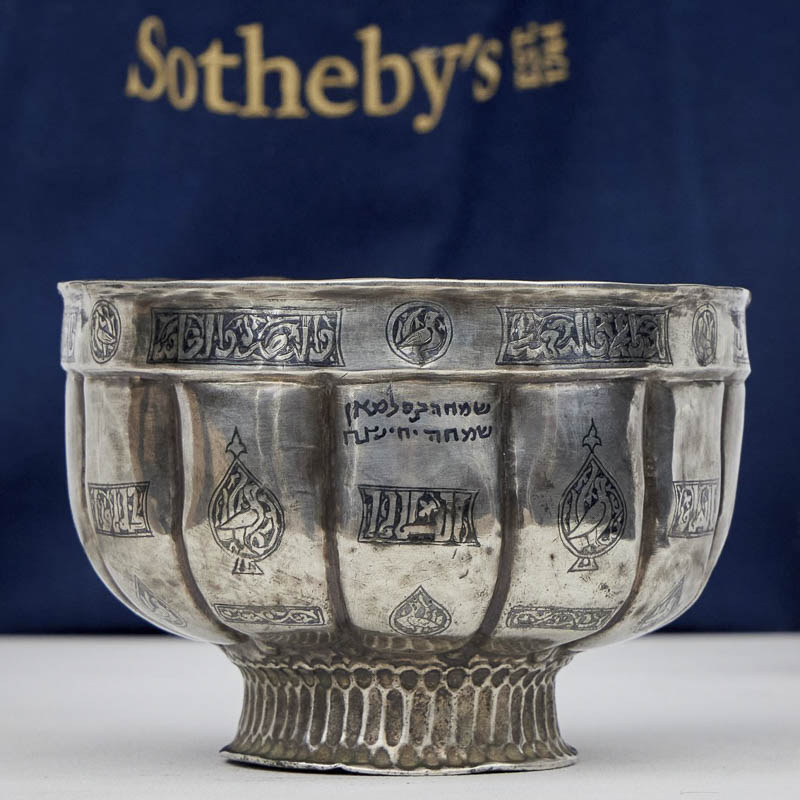
But what happened to the cup after it went on display to make it so yellow?
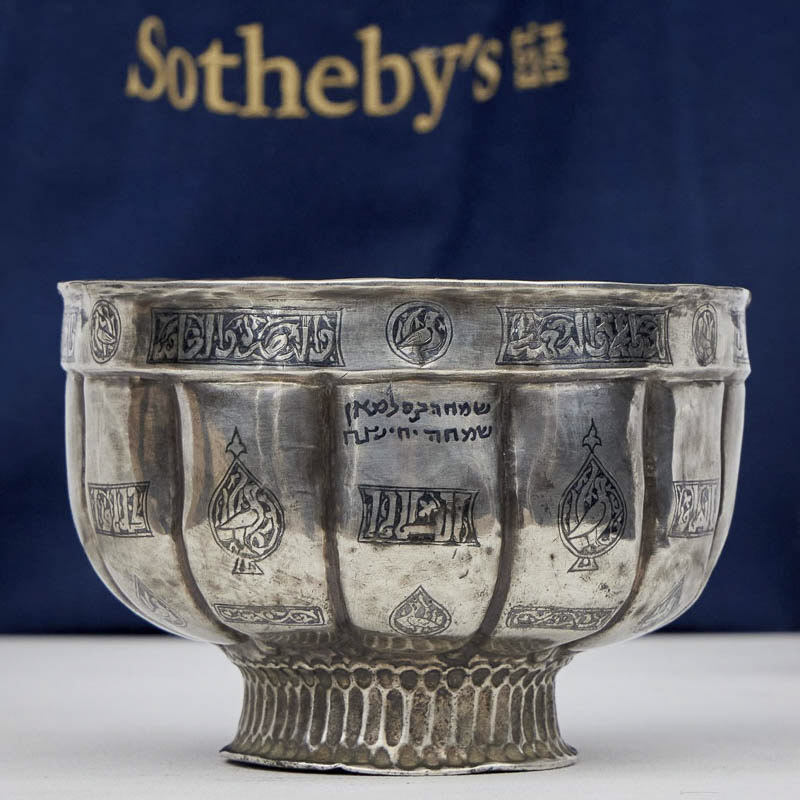
If it was a natural patina, it would have photographed that way in the marketing photos. Is it a thin tarnish layer, yet so evenly a brassy yellow-gold especially on the inside of the bowl? Is it the interaction of the silver with its environment, a brand new freshly painted display case in the newly renovated fourth floor of the museum? One thing is clear, it’s definitely not the lighting.
For four million dollars, the public has a right to know.
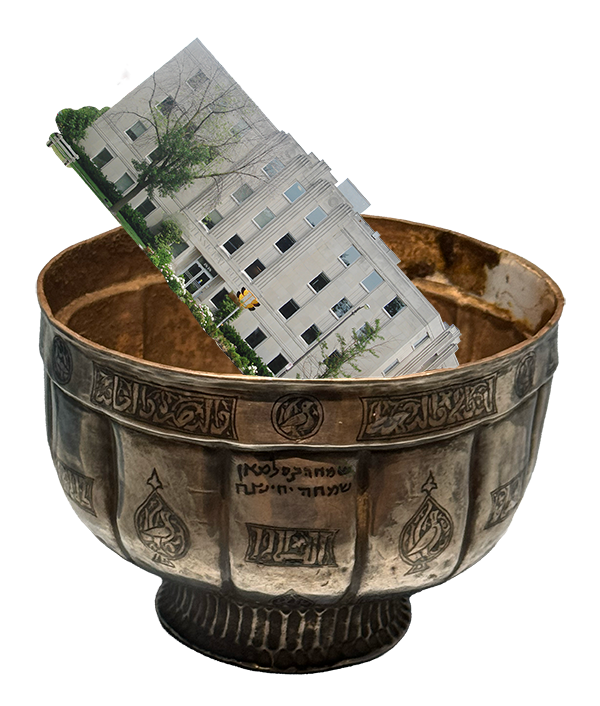
One lump, or two? the price of the kiddush cup is actually worth two of the Professional Building, apparently.
Now in the collection of the Toledo Museum of Art, Toledo is shown only one photo of the ancient kiddush cup — the Sotheby’s photo, misrepresenting the condition it is in today, one year after the purchase. For an ancient, fragile little cup having such a big price tag – $4M – more than the museum’s usual entire annual art budget – and two times as much as what it got for the Professional Building, why isn’t it on display for Toledoans in the Glass Pavilion? It doesn’t take up much room, after all, and it’s considered such a prized possession.
Adam Levine bought the story and took it on the road.
He got plenty of national press for the $4M hammer price. That helps him – but does it help the people of Toledo, for whom Edward Drummond Libbey, whose funds were used for the cup, funded this art, and intended the art to be on display in the Toledo Museum of Art?
The first paragraph of his March 26, 2023 editorial, an insight into the mindset of Adam Levine?
Who needs the cup when $4 million gets you the story?
On April 19, Adam Levine didn’t show the actual cup when telling the story of the cup to Toledoans.
On October 27, one week before a contentious senatorial election, he will be telling the story of the cup at a university north of Detroit. Is he using Toledo’s new acquisition to influence an election?
On December 7, Adam Levine will be giving a talk at the Jewish Museum with the director, James S. Snyder, tickets are $24.“Since assuming directorship in 2020, Dr. Levine has led the museum through a period of significant growth…” Oh really, when the attendance never recovered after the pandemic and now the entire main building of the museum is pretty much closed, for years, to fix the HVAC and reinstall the art? Great art has been sold, and the renovated museum will have less gallery space, with no additional storage, on a smaller campus, since the Professional Building was sold last year for $2 million.
Financial growth decoupled from public engagement and exhibition output – a disconnect between visitors and revenue — and Levine is lauded by that being called significant growth! The museum campus is made smaller, art is loaned and sent on world tours for years, and meanwhile an entire generation in Toledo is growing up without the benefit of the only art museum within 50 miles.
Compared to the Jewish Museum, the Toledo Museum is about the same size, same budget, same number of objects, but the similarities stop there. One difference is that the Jewish Museum managed to completely renovate and reinstall two floors while still remaining open to the public on the other two floors, and they did it for $15 million — they are transparent about it – unlike Toledo. Closing the museum in spite of the public trust, and Adam Levine refuses to answer the question that the public has a right to know: How much is the renovation costing?
Who benefits from the way this charitable asset is being used, and where is the Toledo public’s benefit in the arrangement?
To recap:
TMA spends $4 million acquiring a major object.
The object is not exhibited in Toledo; it is loaned to a prominent New York museum. The TMA director is invited to New York to speak about it. The program’s description prominently markets his credentials and his tenure at TMA, but not how great the museum itself is. The object becomes a vehicle for discussing Adam Levine’s leadership and his transformation of our beloved museum.
What public benefit does TMA receive from this particular disposition of a $4 million acquisition, and what was the basis for deciding that the object should be loaned immediately to an institution outside Toledo rather than first being exhibited to the Toledo community?
Levine is scheduled to discuss the “Cup of Joy” in Michigan immediately before the November 3, 2026 U.S. Senate election, in a state where the election has received national attention because Democratic nominee Abdul El-Sayed could become the first Muslim U.S. senator.
It makes you wonder whether this new acquisition advances the Museum’s public and institutional purposes, or does it primarily provide substantial professional and reputational benefit to its director? The circumstances warrant examination because the $4 million acquisition was not initially made available to the Toledo public, was instead placed on loan outside Toledo, and now is serving as the subject of a high-profile program in which the Museum’s director is the featured speaker and his personal leadership biography is prominently presented.
Is TMA is operating its charitable assets primarily in accordance with its public obligations, or according to the interests and ambitions of Adam Levine?
And what’s up with the color?
They spent $4 million of Edward Drummond Libbey’s money to acquire this object that has an actual appearance quite different than the image used to represent it to the public. That, and the museum has not put the cup on view in Toledo. Does the museum know why the silver surface looks the way it does?
What is the relationship between the acquisition, the immediate loan to the Jewish Museum, and the promotional/public relations use of the object?
The museum is promoting an image of the acquisition that does not correspond to the object as it is actually experienced by visitors. There is no apparent public explanation of this discrepancy.
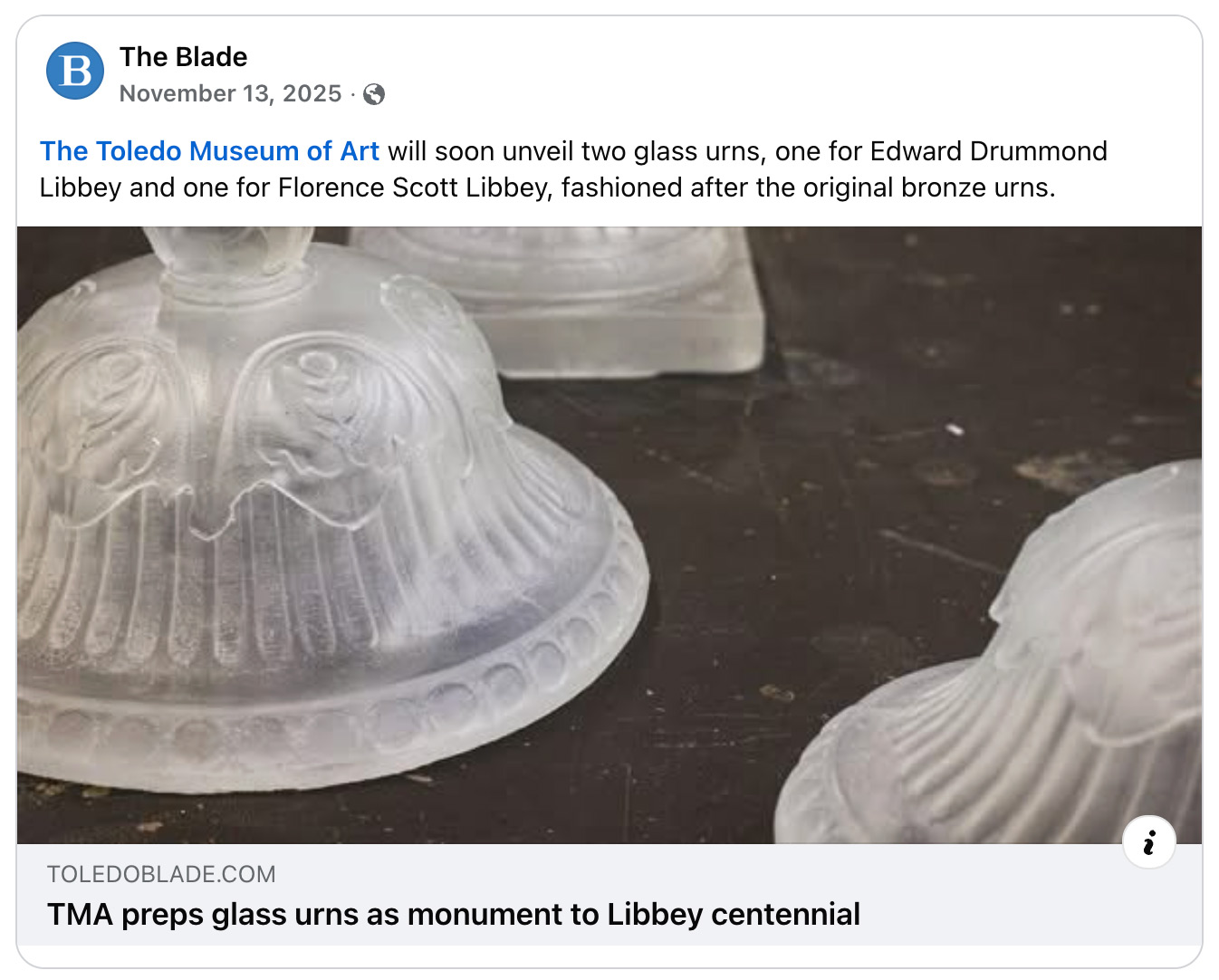
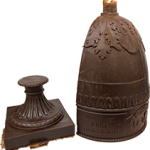
Hanging in the air are the uncompleted glass urns for the Libbey monument at Woodlawn.
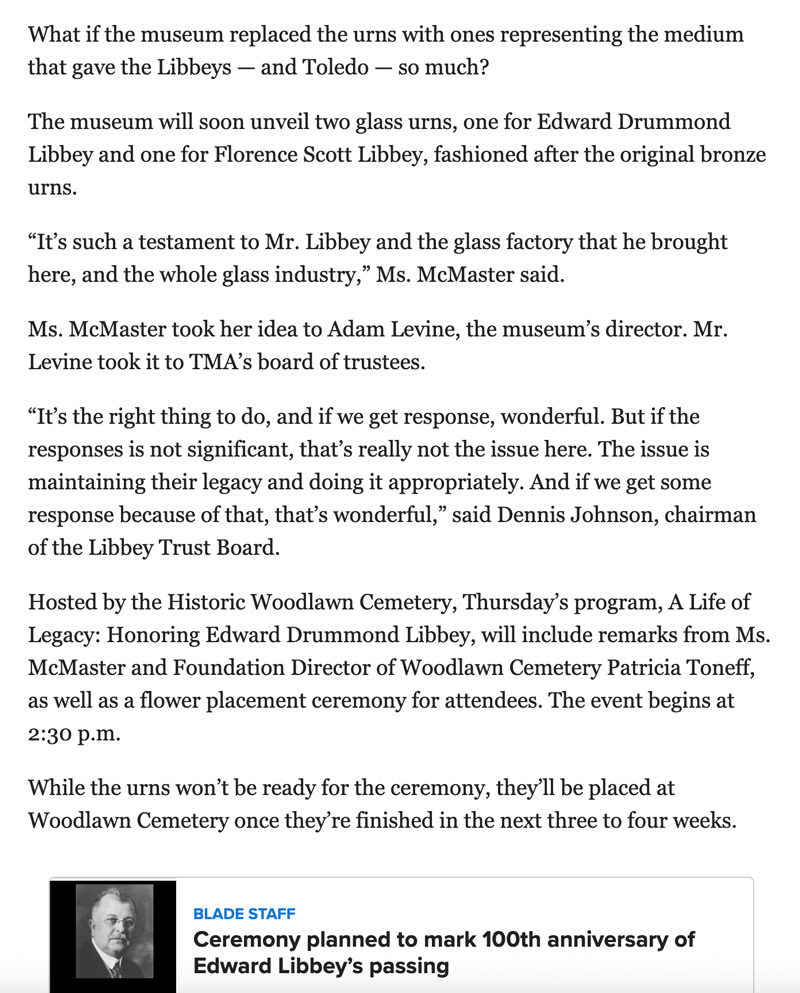
Because of labor trouble, the museum couldn’t get the honorary glass urns finished by November 13, 2025 for the centennial ceremony of Edward Drummond Libbey’s passing.
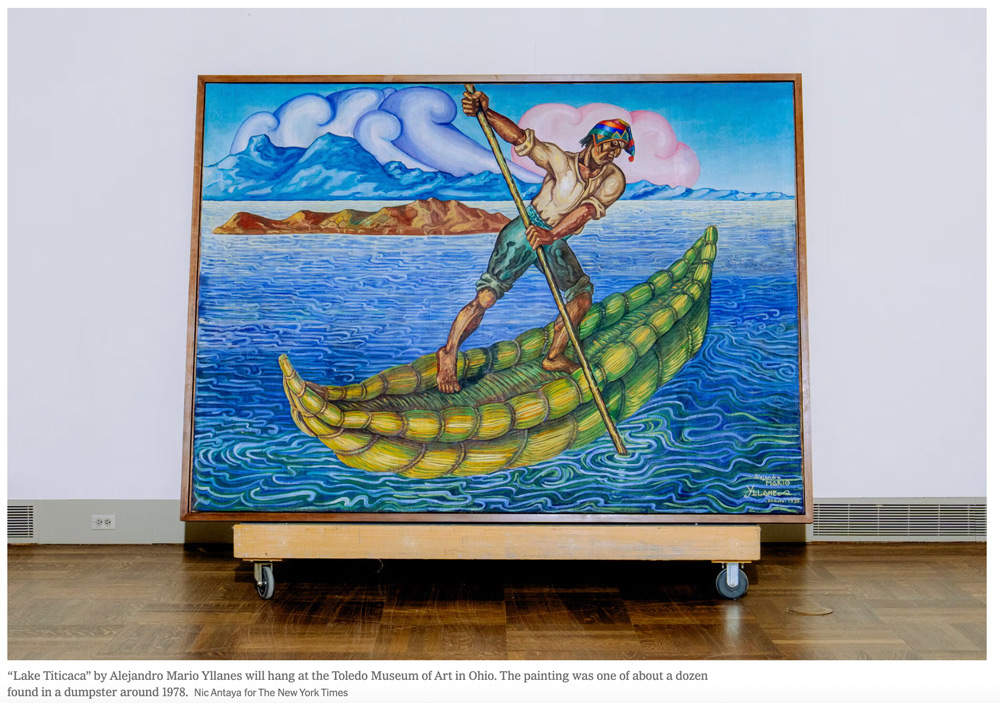
but they purchase a painting in terrible condition, because the subject is a Bolivian workers rights artist – the irony. The hypocrisy!
The irony and hypocrisy, when the museum treats their employees so badly after they joined the union. And the guards, when they tried to form a union, were fired, just to be offered the same job through a third party agency, without benefits.
“Yllanes’s works often exposed the harsh mistreatment to which Bolivia’s Indigenous communities were regularly subjected.” The Enigmatic Bolivian Artist Who Centered Indigenous Workers’ Rights, Hyperallergic, February 6, 2024
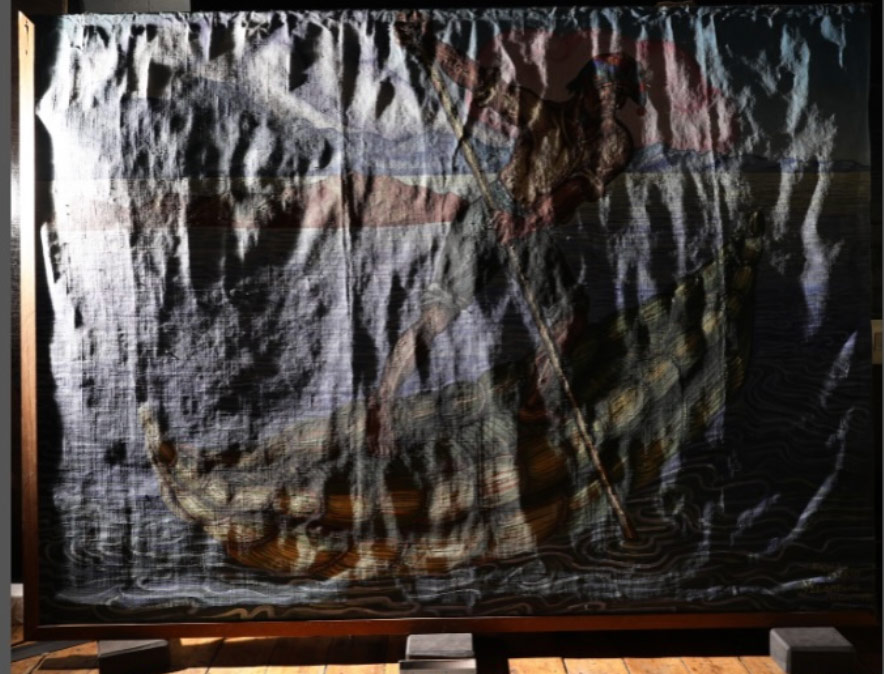
Photographed at the Toledo Museum of Art for the New York Times September 22, 2026 news story, This Forgotten Artist’s ‘Extraordinary’ Work Was Saved From a Dumpster, even though the museum closed because the HVAC system had to be replaced and walls were being taken down to the studs and all the paintings had to be sent away to be put in storage or loaned internationally or nationally.
The painting the museum bought, Lake Titicaca, is reminiscent of the powerful strength of a glass blower with a long blowpipe who just gathered a glowing, molten glob of glass from a furnace, but instead of following through with the making of a creation, the hot glass was dropped into the cold water of the lake.
Which is symbolically what happened at the Glass Pavilion with the glass urns for the honoring of the 100th anniversary of the passing of the founder of the museum, Edward Drummond Libbey for the ceremony at the Libbey monument at Woodlawn Cemetery on November 13, 2025. It fell short, because of the despicable labor relations at the museum.
The Blade, as usual, covered for the museum
instead of reporting on the urns
That was on November 13, 2025. The Blade’s story reported that the urns would not be ready for the ceremony because of the annealing process, but would be ready before Christmas. It is now ten months later, and the urns have still not been installed at the gravesite monument.
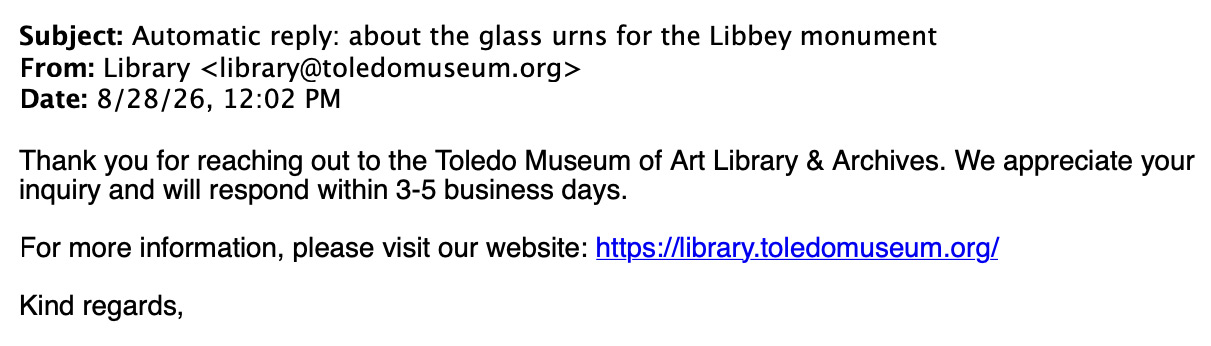
I wrote to the museum twice in the past month for some clarity, but they did not reply, sending automated responses that they would get back to me within three business days.
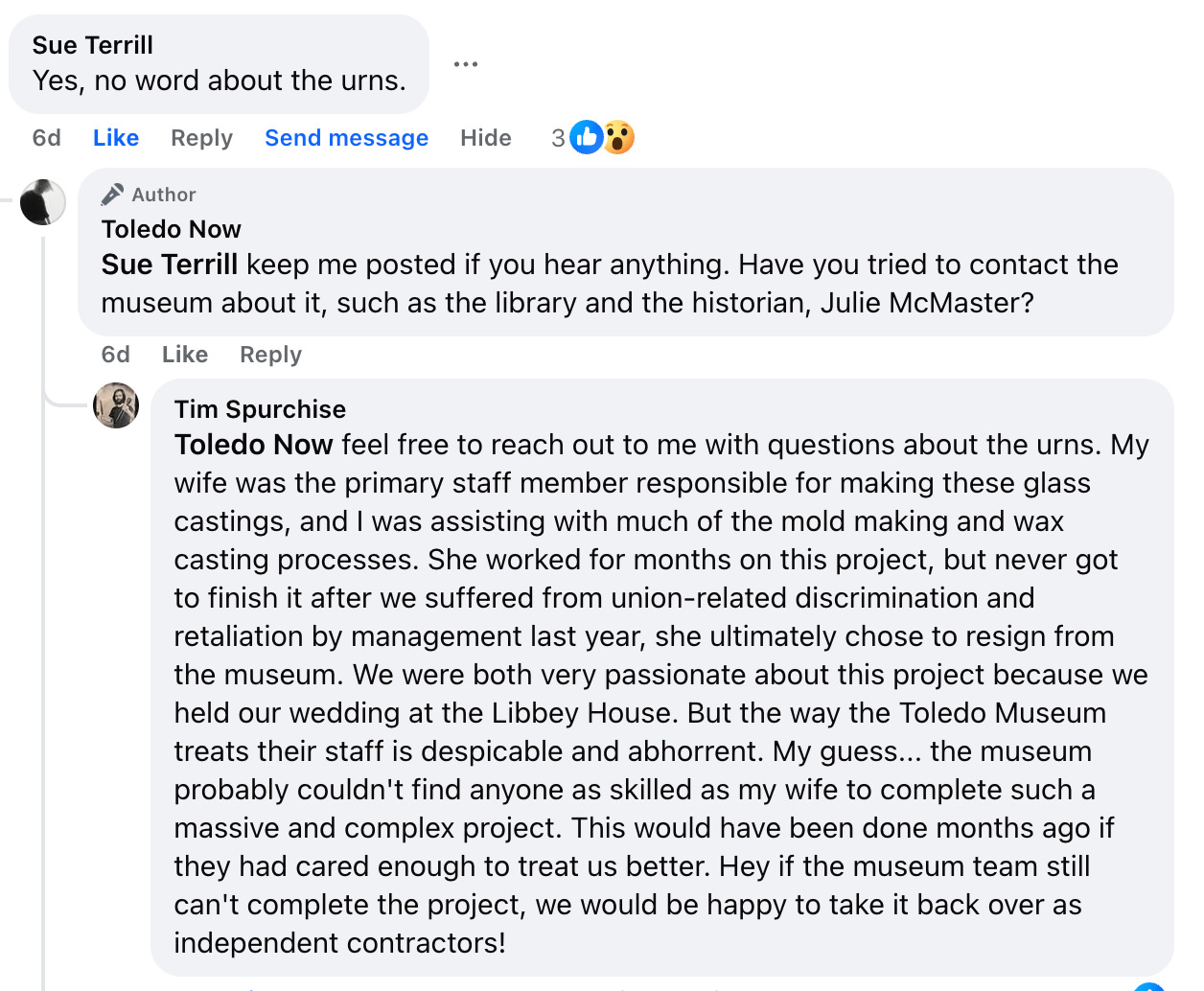
Then, last week on a Toledo Now Facebook post, a comment was made by the glass artist working on the project:
I did reach out to Tim Spurchise, and here is his story, in his own words:
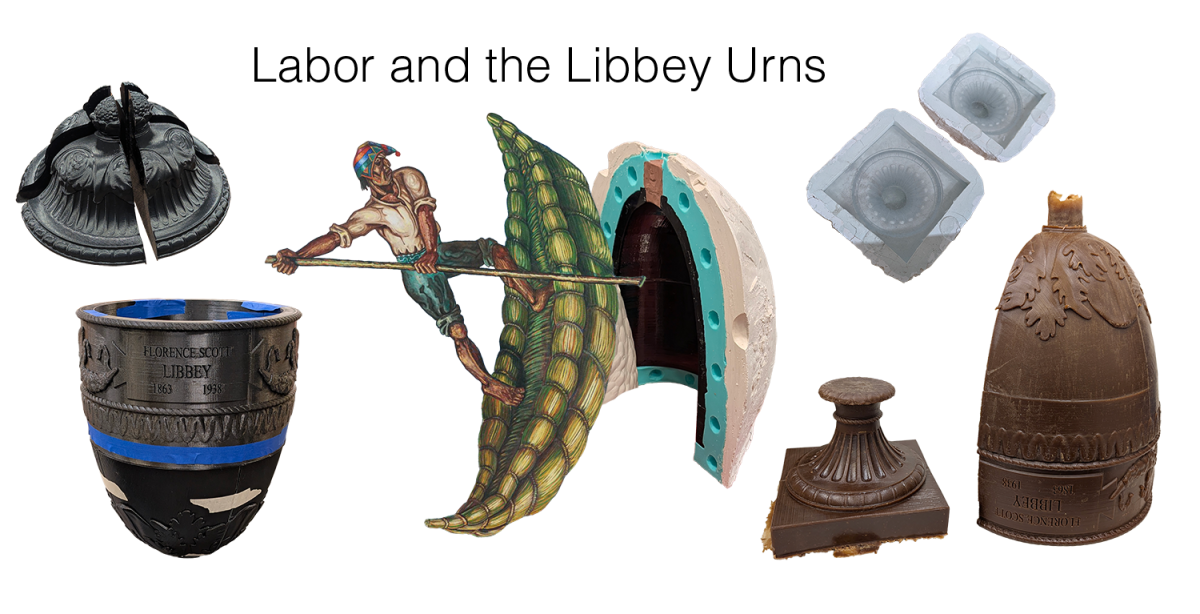
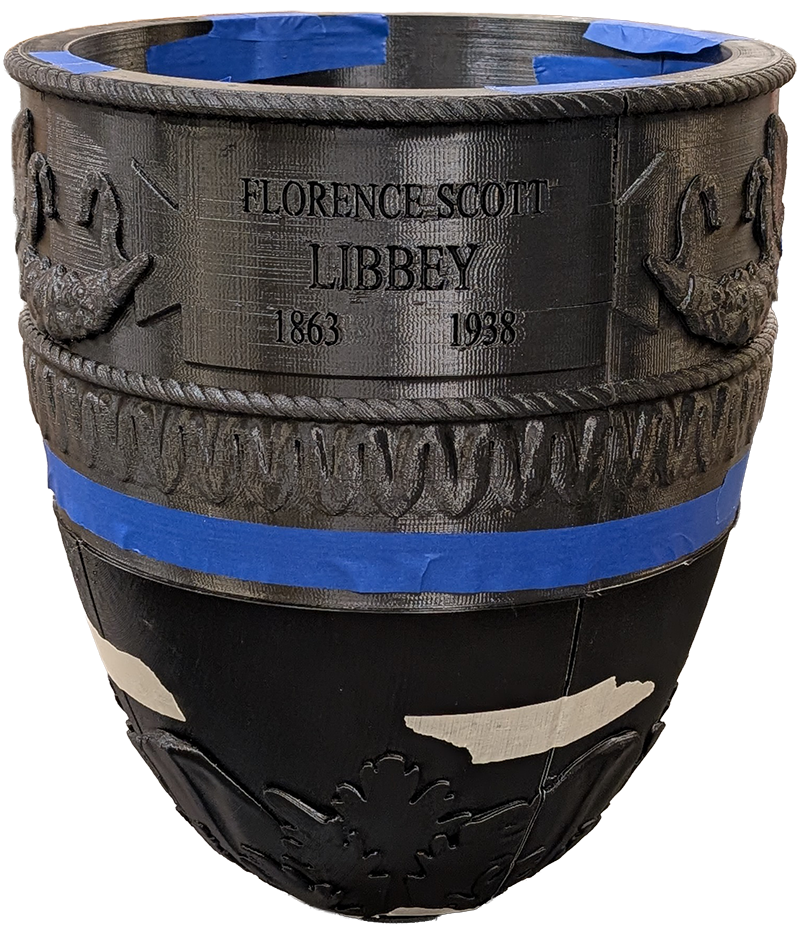
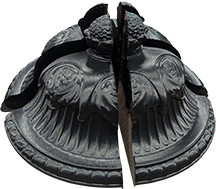
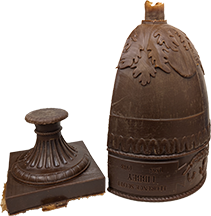
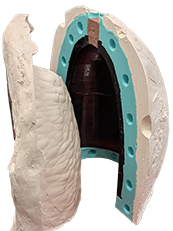
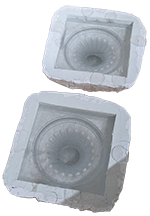
The glass pavilion team at the museum received information about the desire to cast replica Libbey urns out of glass around the beginning of 2025. My wife, Chuchen, had been the lead glass casting artist at the museum for a few years because she has highly specialized skills when it comes to mold making and glass casting, which is a very different process than glassblowing. Anytime we had a GAPP Resident Artist who was interested in kiln work or glass casting, Chuchen was always the lead on those projects. So when the Urn project came through, Alan asked her to put together a budget of materials and labor with a rough timeframe of project completion. The museum outsourced the 3D scanning and the 3D printing for the urns (I don’t know the company they used, but it wasn’t done in house). The glass studio got back the final 3D prints around the end of March 2025. Chuchen was immediately able to get to work and she made all of the plaster and rubber molds, cast all the wax, and began the kiln castings of them.
For the next few months, Chuchen spent most of her time working on the Urn project, and anytime she needed assistance, I was the one scheduled to help because I have helped her with mold making in the past. Misha and the rest of the team were focusing on other projects during this timeframe, and Misha was not involved until after Chuchen left the museum.
So Chuchen had to clean the 3D prints, adhere them together, seal them, then make rubber molds around the prints, then make a rigid plaster mold around the rubber, and then cast wax into the rubber molds. Once the waxes cooled, we would clean and detail the waxes, then make a more complicated plaster/silica mold around the wax. The wax then gets steamed out of the mold, the mold is dried and then glass is measured and cleaned to be added into the mold inside the kiln. The kiln gets slowly sent up to melting temperature, and then slowly cooled to prevent cracking.
Depending on the thickness and complexity of the final mold, this kiln process could take 1 to 4 weeks. Once the kiln is back to room temperature, the molds are taken out and the plaster/silica is broken away from the glass, and then the glass gets cleaned and cold worked (this is the image of Misha).
After the staff unionized in April of 2025, my wife and I received immediate and harsh retaliation from management (Alan Iwamura and Deb Ball). This included unjust write ups, false accusations, unequal treatment, etc. This happened to all staff (such as my wife and I) who were vocal about their union support.
Shortly after the unionization, my wife and I were notified that our schedules would be changing (and only ours). We would have opposite schedules, giving us less time to work on the Libbey Urns together, which we felt was continued retaliation and an attempt to slow us down on the progress we were making, trying to set us up to fail. This also meant we would not longer have any overlapping days off together at home. While obviously problematic, we had no choice but to accept the decision.
Unrelated to the unionizing, my wife and I had received horrific workplace harassment over about two years of being there. While we reported it numerous times to management and HR, nothing was done to help us. We received no support from the people we needed it from the most. Prior to the unionizing timeframe at the museum, we were finally relieved that the individuals who caused us so much pain had finally left the museum. We thought we would finally get some relief, and after having no support from management, we felt very strongly in favor of supporting the unionizing.
Throughout this timeframe, we had also reported to others in the field about the harassment we received at the museum. Well, after the union passed, Deb spent as much effort as she could in targeting anyone who was vocal about their union support.
In June of 2025, Chuchen and I were called into meetings with Deb and Alan, where we were told we shouldn’t have reported on the harassment we received because it looked bad on the museum. Deb’s exact words were that it put the museum at “reputational risk.” How ironic. With my union representative present, I said to Deb Ball how can you not only violate my first amendment rights, but also stand by the harassment we received in an attempt to cover up your retaliation against the union. Her response was “I don’t need to hear any more from you, my decision is made.” To which I replied “Well, I need to hear more from you because this doesn’t make any sense to me.” And I was met with nothing but silence. That same day I was terminated and my wife was disciplined (probably not terminated because they knew they needed her for the urn project). Well she immediately took protected Family and Medical Leave of Absence, and then resigned from the museum afterwards.
By this time, we had completed the castings for some of the lids and bases, and began making the final molds for the rest of them. We had also mostly finished detailing the main waxes for the urn bodies and we had everything prepared to move forward with the next mold-making process. It was devastating and heartbreaking for us not to be able to finish such an amazing work of art, but the museum’s management shot themselves in the foot when they chose to target us because they’re too childish to learn how to work with a union instead of against them. So to my knowledge, the only finished portions of the urn project are the lids and bases that we cast before leaving the museum (this would be what Misha would have been photographed cold working).
As far as we know, the project has basically been at a standstill since then. We heard that Alan tried to contract another artist to come in and make a mold, but it sounds like it was possibly an unsuccessful casting, and not enough got made within the timeframe anyway.
We love the Libbey Foundation and we were honored to have our wedding at the Libbey House. I don’t know who funded this Urn project, if it was the museum directly or the Libbey Foundation. But if the Libbey Foundation wants this project completed, we welcome the opportunity to work directly with them. We would be happy to be contracted as independent artists to finish this project properly and the way it was intended.
Photos by Tim Spurchise:
the process:
clean the 3D prints,
adhere them together,
seal them,
then make rubber molds around the prints,
then make a rigid plaster mold around the rubber,
and then cast wax into the rubber molds.
Once the waxes cooled, we would clean and detail the waxes,
then make a more complicated plaster/silica mold around the wax.
The wax then gets steamed out of the mold,
the mold is dried and then glass is measured and cleaned to be added into the mold inside the kiln.
The kiln gets slowly sent up to melting temperature, and then slowly cooled to prevent cracking.
Depending on the thickness and complexity of the final mold, this kiln process could take 1 to 4 weeks.
Once the kiln is back to room temperature, the molds are taken out and the plaster/silica is broken away from the glass,
then the glass gets cleaned and cold worked (this is the image of Misha).
Thank you, Tim, for providing some clarity on the new unfinished urns that the museum’s historian, Julie McMaster, with all of her best intentions, tried to have made for the Libbey ceremony, and for giving us a window into the hypocritical labor relations of the museum.
As a native Toledoan I am ashamed of my city and of my museum and I am especially sorry for the pain you and Chuchen, talented artists choosing to come to our glass city, Toledo, a union town, to practice and teach your craft at our supposedly esteemed and progressive museum, have had to endure navigating the dysfunctional mismanagement and toxic environment that never should have been.
You came to make art, to lay down roots and start your life together here – you held your wedding at the Libbey House and you worked on the Libbey Urns – what a profound and beautiful connection, and how heartbreaking for it to be cut short. Your relocation here as skilled and talented glass artists was a gift to Toledo, and for Toledo to lose you is tragic. Toledo disrespected your contributions and your rights, victimizing you for having the courage to unionize, while telling the world that they are all for workers rights.
The Libbeys did not intend to support a future like this. The museum is for, first and foremost, the people who live in Toledo.
The museum had five full months after repelling this talented young couple in June 2025, in order to complete the project in time for the Libbey Centennial ceremony on November 13, 2025, but they failed to do so.
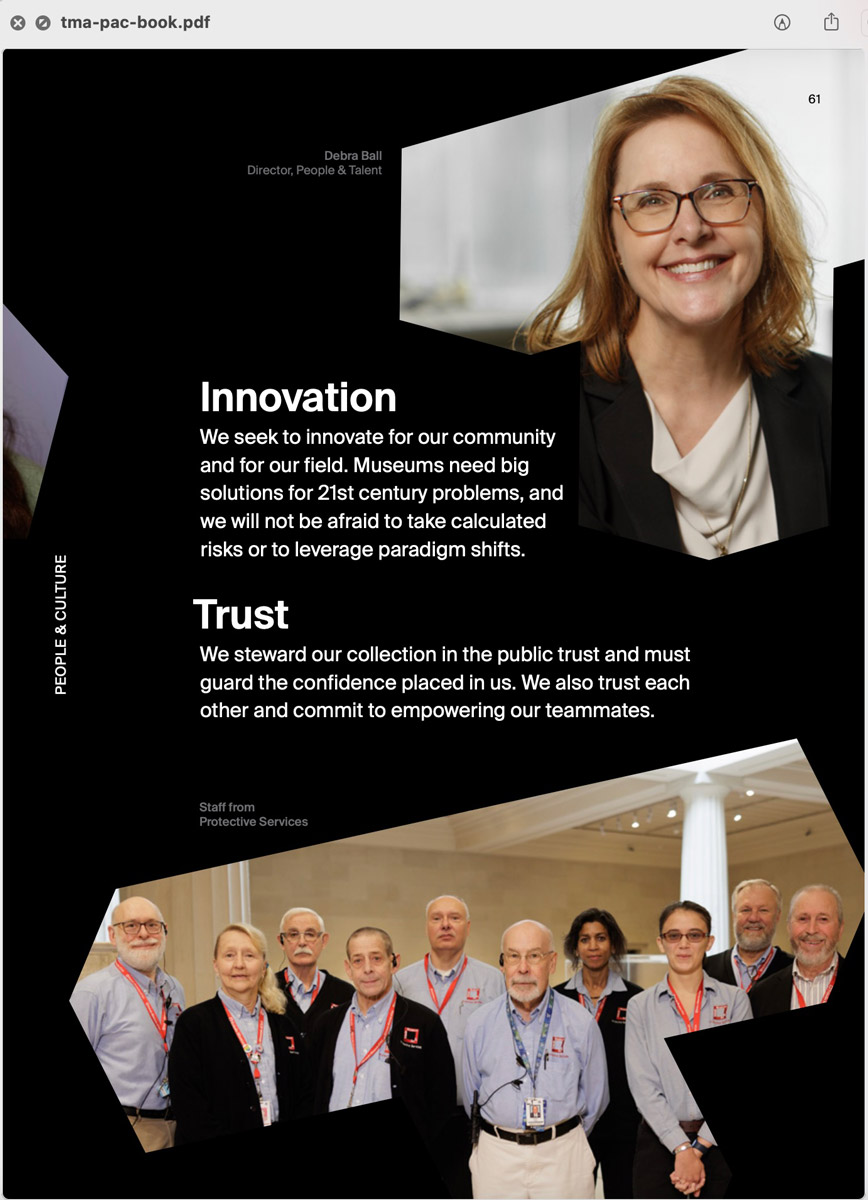
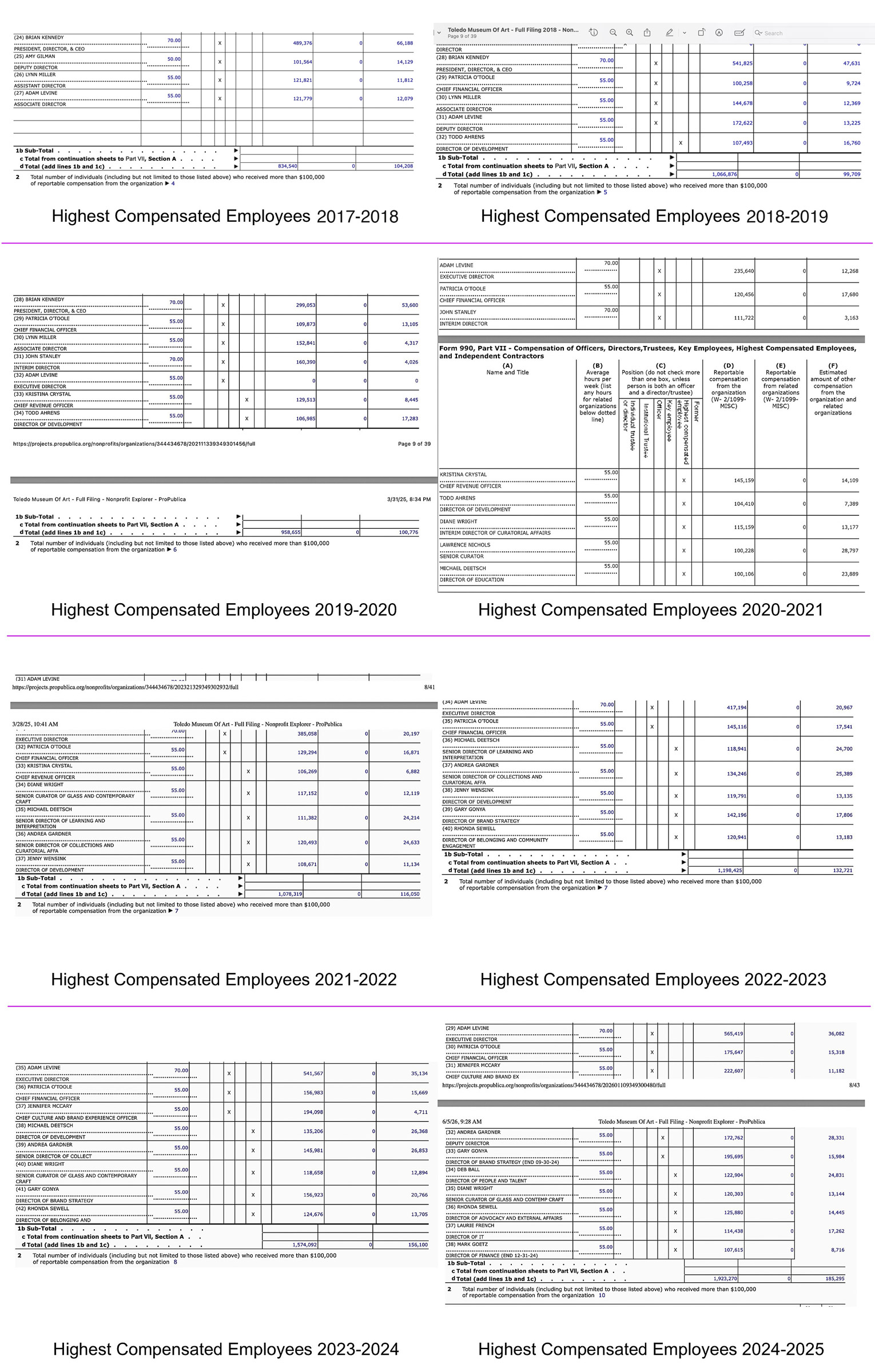
The museum disrespected their own skilled workers and mismanaged employees, ironically after hiring two new managers for two new oversight departments — Jennifer McCary, Chief People, Culture and Brand Experience Officer, and Debra Ball, Director of People and Talent, to oversee these matters. The museum had recently doubled its administration, but to what end?
The consequence of poor management and the toxic environment in this instance was the failure to be able to produce (on time or at all) the very important and symbolic Libbey Urns in honor of the museum’s founder and the father of Toledo’s glass industry. That is but one example of what Toledo has lost due to what they are doing to the museum.
The bloated new management allowed skill and talent to slip through their fingers in their attempts to bust the union instead of trying to work with it. Then, by purchasing a sub-par painting mainly for the workers rights story, they mock their own employees’ efforts to form a union.
“Yllanes’s career was repeatedly disrupted by political exile due to the radical nature of his work in its critique of Indigenous labor conditions.” Toledo Museum of Art press release September 25, 2026
The Toledo Museum of Art has degenerated from being a free, creative, educational space that fostered the birth of the 1962 Studio Glass Movement to being a repressive and hypocritical institution where, in 2025, not even the special Libbey Urns could be completed in the Glass Pavilion that grew out of Toledo’s great glass legacy.
TOLEDO IS A UNION TOWN
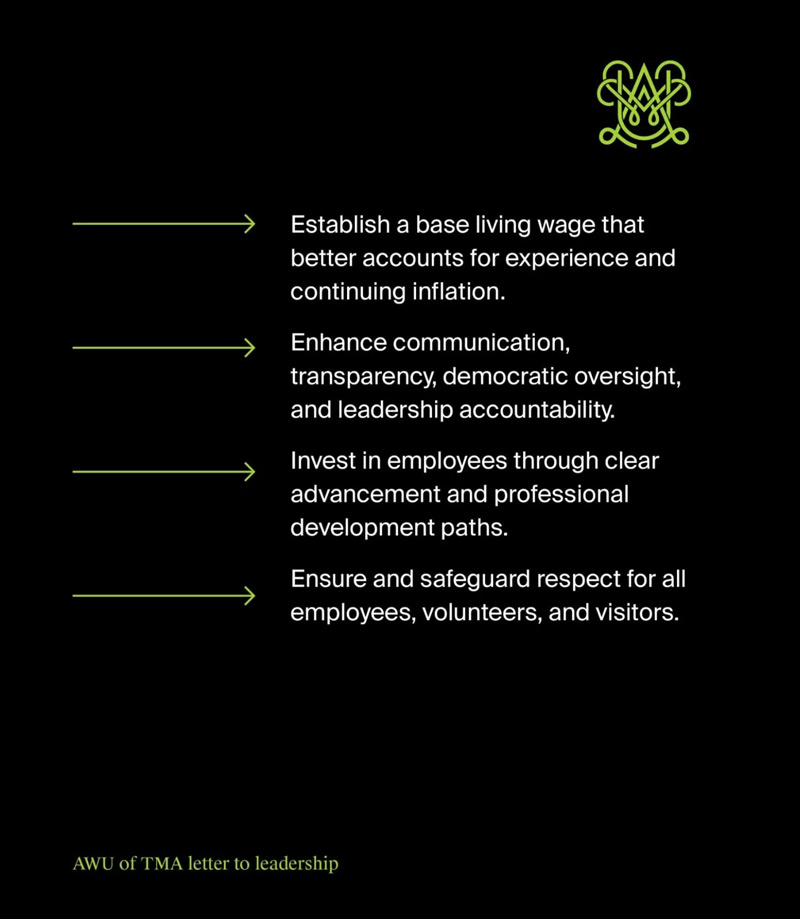
AWU of TMA letter to leadershipA question for the museum: why are several of these workers voting yes for the union no longer employed at the museum?
In 2024, while the management was doubling in size and planning massive changes to the museum, the employees started talking about forming a union.
A union of about 100 workers in visitor services, glass studio, research, education, family center, outreach, curators, librarians and more was formed under the American Federation of State, County and Municipal Employees (AFSCME), and was officially recognized in the spring of 2025.
For Chuchen Song, a glass studio specialist, the union is also about strengthening connections and building solidarity among museum staff.
“TMA talks about how the administration can be more supportive to employees and community,” said Song. “As an employee, l believe our union not only provides protection but also brings a positive impact to our community because workers always look out for each other.” – Art Workers United – TMA Win Their Union Election
“The time to raise our voices is now,” said Skye Sloane, a Visitor Services Team Lead, “The Toledo Museum of Art is building and remodeling key sections of the Museum in a multimillion-dollar capital project. As employees, we want to make sure there is transparency and an opportunity for employees to have a formal way to make their voices heard. As dedicated cultural workers, we have invested in the Museum’s success and want equal footing.” Art Workers United – TMA Win Their Union Election
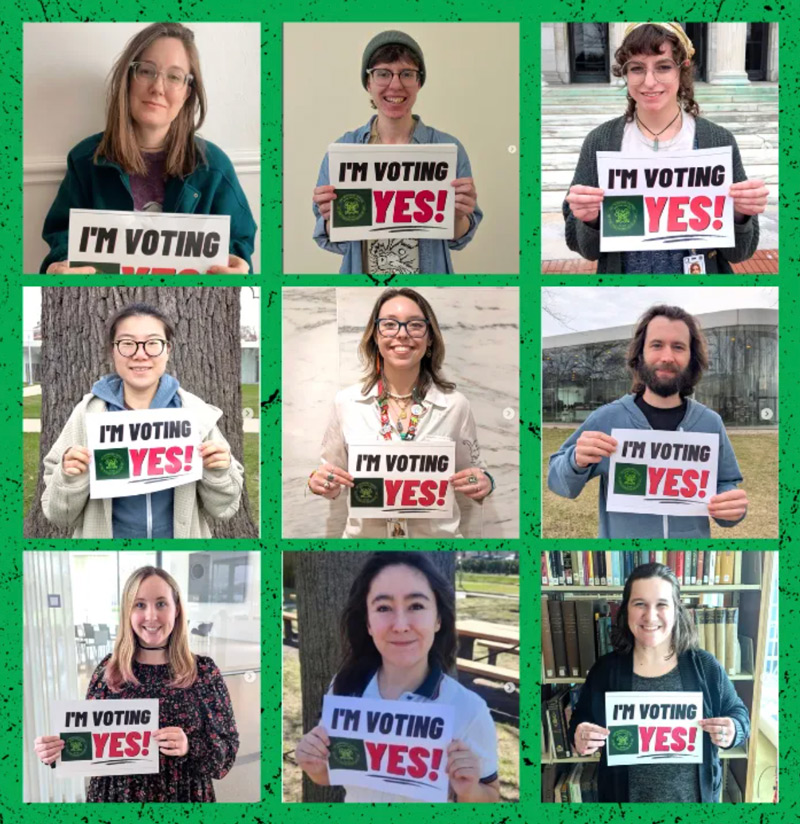
photo of employees that appeared in the Hyperallergic article
The reinstallation project is “a significant change to the institution that we all love, and we wanted to band together and feel sure and secure in our new jobs, benefits, and wages, before the project is completed.” Skye Sloane, a team leader for visitor services, told Hyperallergic.
Jennifer McCary, the museum’s Chief People Officer, told Hyperallergic that the Museum “respects the democratic process and remains committed to fostering a supportive and collaborative work environment for all employees.”
For a museum that says it wants to be an employer of choice, the management has really shown its true colors.
Of the six employees who were interviewed or were photographed for the Hyperallergic article, including Chuchen Song, who was interviewed but not photographed, only half remained employed at the museum one year later, after the formation of the union. These employees were proud of forming the new union, and hopeful for their solidarity at the Toledo Museum of Art, but they were hassled so much by management that they either left on their own or were terminated, according to inside reports.
“It seems the museum is more willing to punish & dispose of loyal staff than address deep-rooted issues in organizational culture & toxic individuals in leadership positions.”Toledo Free Press facebook post, August 18, 2026, with several comments by former museum employees and a glass pavilion student who was mistreated, discussing the toxic environment and mismanagement of the employees.
On May 6, a complaint was filed with the (National Labor Relations Board (NLRB) on behalf of all guards, claiming retaliation and unlawful interference. The filings allege that the museum interrogated security staff about their collective bargaining interests and discriminated against workers who “joined or supported a labor organization”. Furthermore, guards were allegedly terminated for engaging in legally protected activities, which included protesting working conditions and openly discussing wages.
The friction escalated after the museum announced plans to outsource most of the Protective Services department—the largest wing of its workforce with over 60 employees—to a third-party contractor, Safeguard Security Services. This operational shift effectively forced the original museum guards to reapply for their own positions. Legal counsel has filed formal notices on behalf of the museum, and the NLRB case remains an active investigation.
Allegations:
8(a)(3) Discharge (Including Layoff and Refusal to Hire (not salting))
It’s a frightening time for those who love the Toledo Museum of Art, whether they be employees, ex-employees, or the public at large, to see the museum imploding like this – not only the physical closure of the galleries but the utter dysfunction of leadership and staff.
The galleries are closed. The art has been sent away. Hanging precariously out on a limb is Toledo’s glass legacy and about 20 billion dollars worth of public art. The museum belongs to the people of Toledo. Do people understand that? Why are they letting this happen?
Toledo – reclaim your legacy.If you would like to sign the petition, sign here.
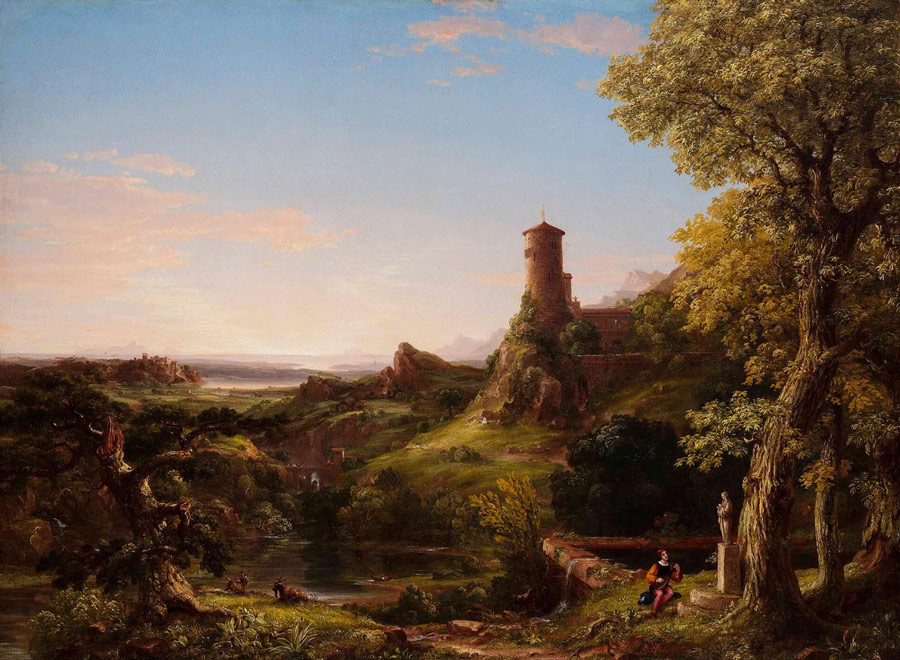
Thomas Cole, "Landscape, The Vesper Hymn: An Italian Twilight." Thomas Cole, hailed as one of America's first noteworthy landscape painters. Culled from the museum's collection sometime after April 2025.
Stewardship is the promise that what one generation builds, the next will care for and carry forward.
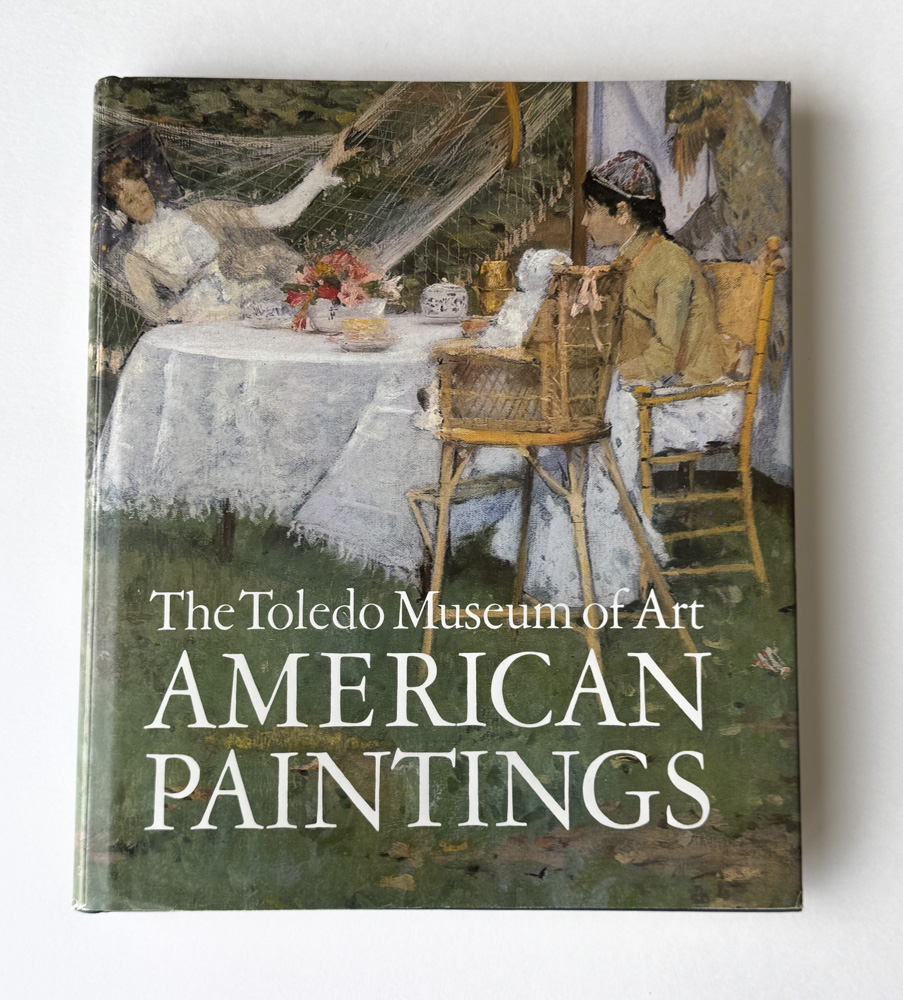
Should the Museum be getting rid of classic American paintings from their historic collection of American art? Does the new director have to get rid of the Museum’s collection of American paintings, so well-curated and scholarly researched that a major book was published in 1979 serving as its catalog of 277 paintings? Is the shrinking of the collection really necessary to make way for “global endeavors” (whatever that is supposed to be)?
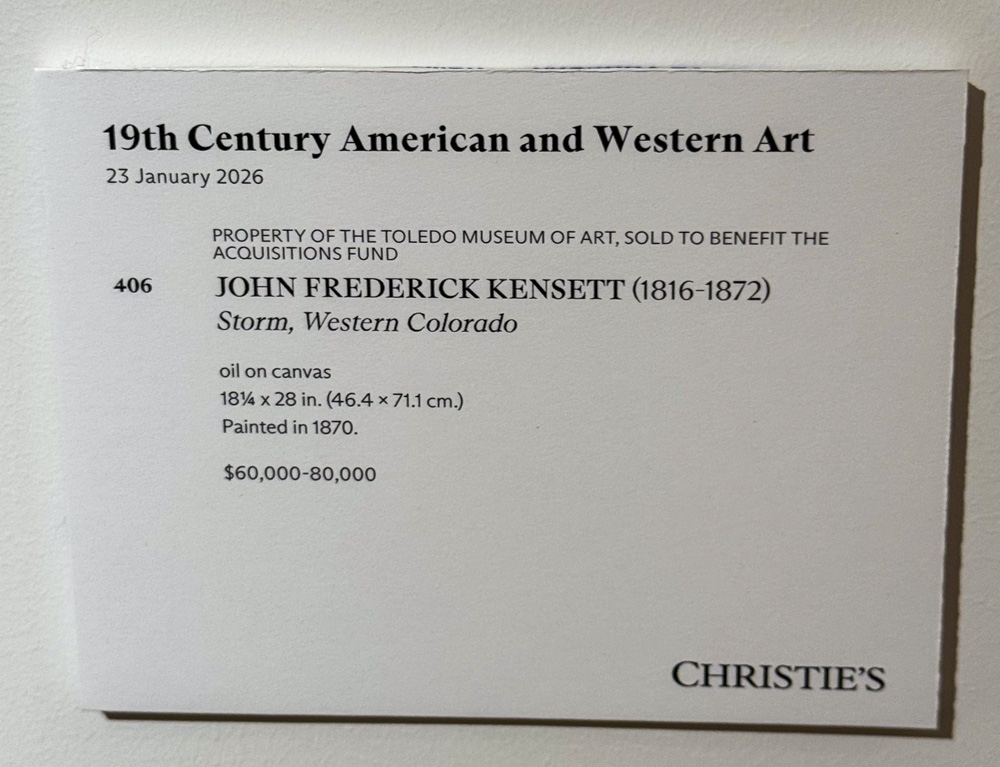
John Frederick Kensett’s Storm, Western Colorado displayed for the 19th Century American and Western Art auction at Christie’s, Rockefeller Center, New York City, January 19, 2026. Photo by Penny Gentieu
What a fine howdy-do to mark the nation’s 250th anniversary celebration – a massive sale of 18 paintings in an auction titled 19th Century American and Western Art on January 23, 2026 at Christie’s. It was quite opportunistic for the Museum to sell, rather than show, American paintings, and right in sync with the auctioneer’s schedule, who also happens to be a major Museum donor — (an auction house! And so is Sotheby’s, a major Museum donor! Is this ethical?…)
The Museum could have put up an American painting exhibition for show, not for sale, but they chose to put 18 paintings up for sale at Christie’s 19th Century American and Western Art auction instead.
They could have had a show to celebrate the 250th anniversary of America. But instead they sold 19 American paintings.
The Museum closed, and the repair of the HVAC system was the excuse. Along with it, a renovation and reinstallation of the art in chronological order. The project disrupted years of access to art that is held in trust for the community and the educational opportunities that the Museum used to offer the community.
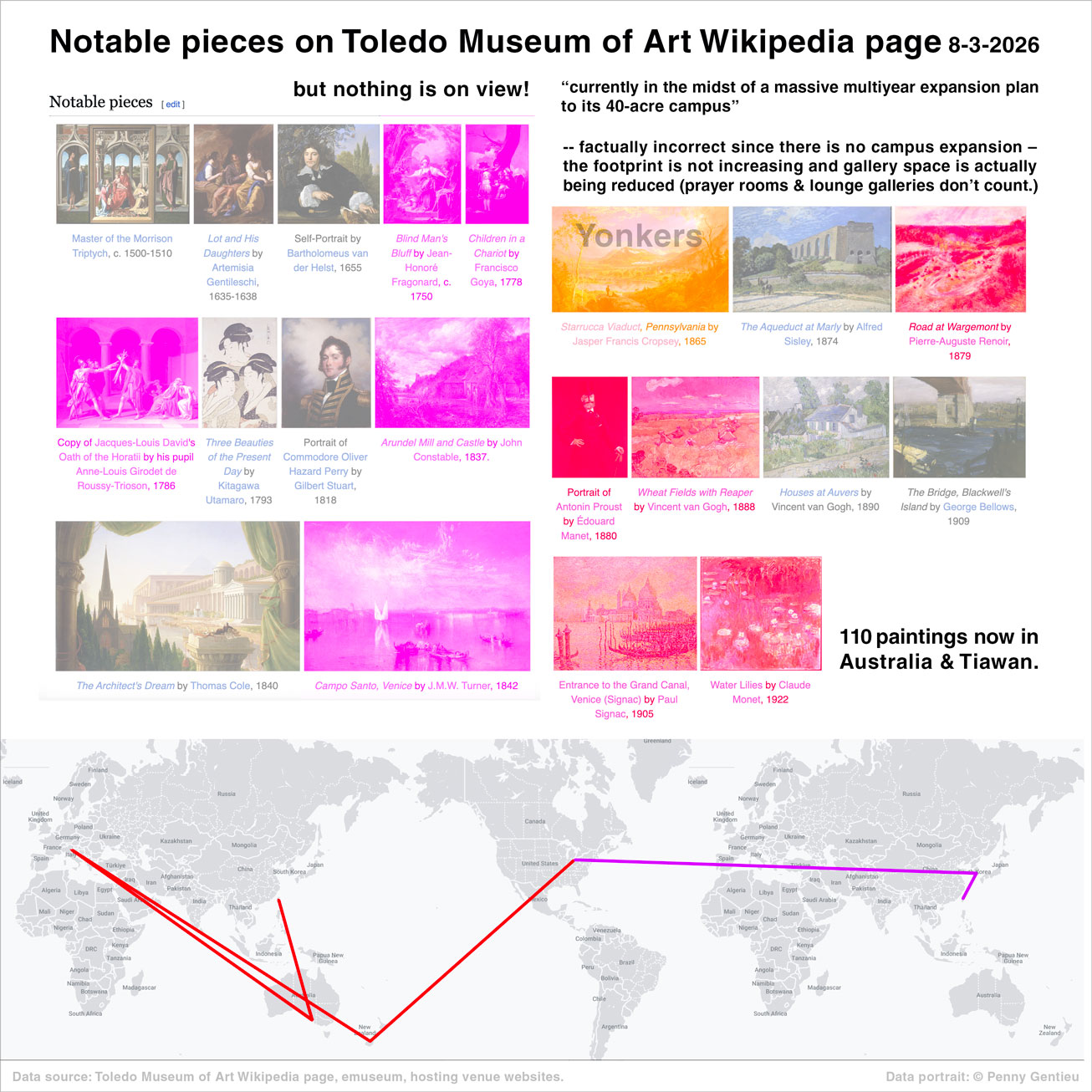
Wikipedia describes what is going on as a “massive multi-year expansion plan to its 40-acre campus,” but in actuality, there will be no increased gallery space or additions. In fact, gallery space will be reduced to make lounges and bathrooms. Not even storage space will be added. But 1,300 new artworks have been added to the Museum’s collection during the past few years. They are spending many millions on the renovation and the new acquisitions, but will have no space to store additional art, so do they sell off everything they don’t happen to like?
Should haters be selling Toledo’s precious collections?
The public perception is that the new director and curators don’t care about the paintings or the fiduciary duty that comes along with being temporary stewards of the art in the public’s trust, or the Libbeys’ Trust and gift of the art museum being for the people of Toledo.
Toledo Museum of Art American Paintings, the book
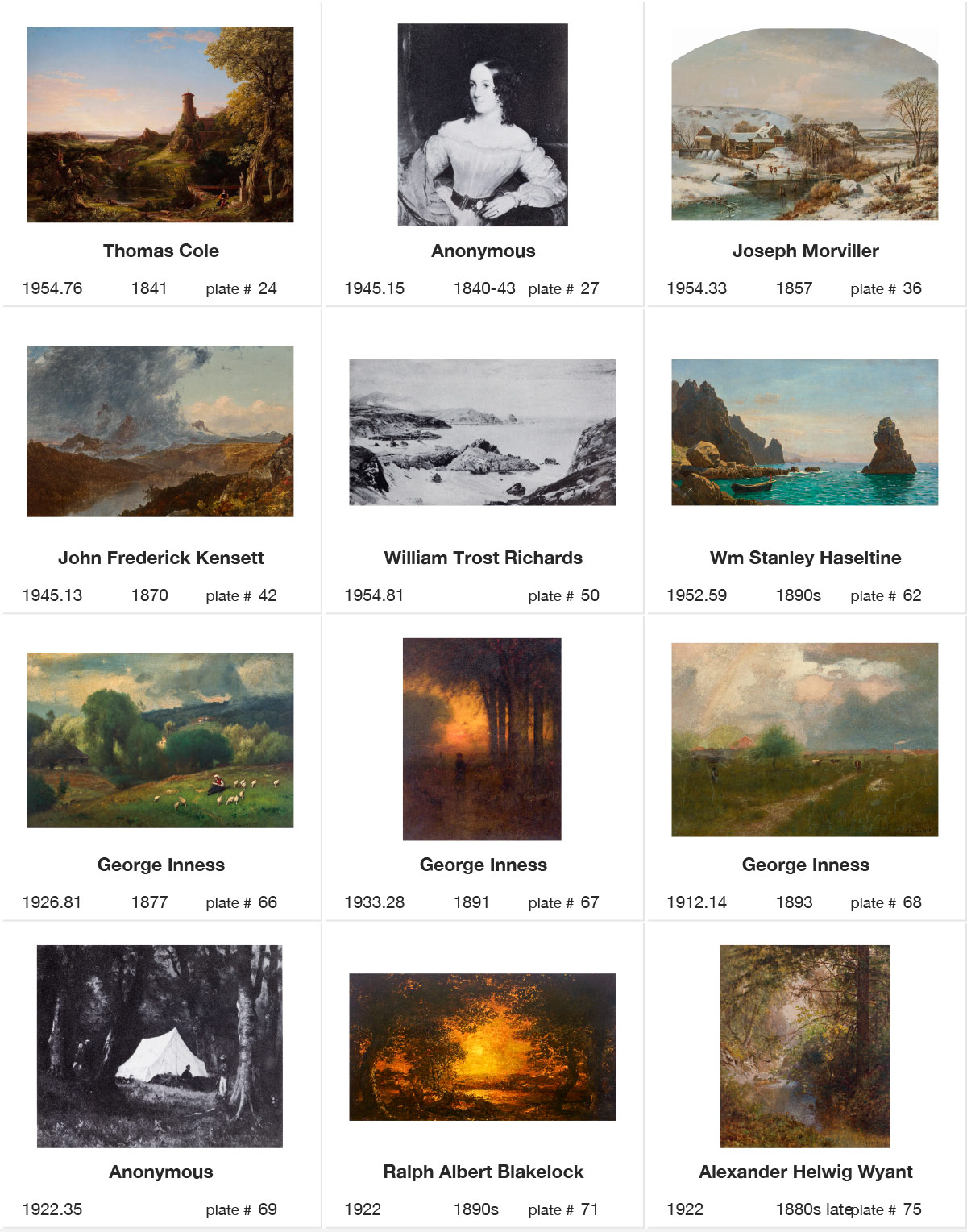
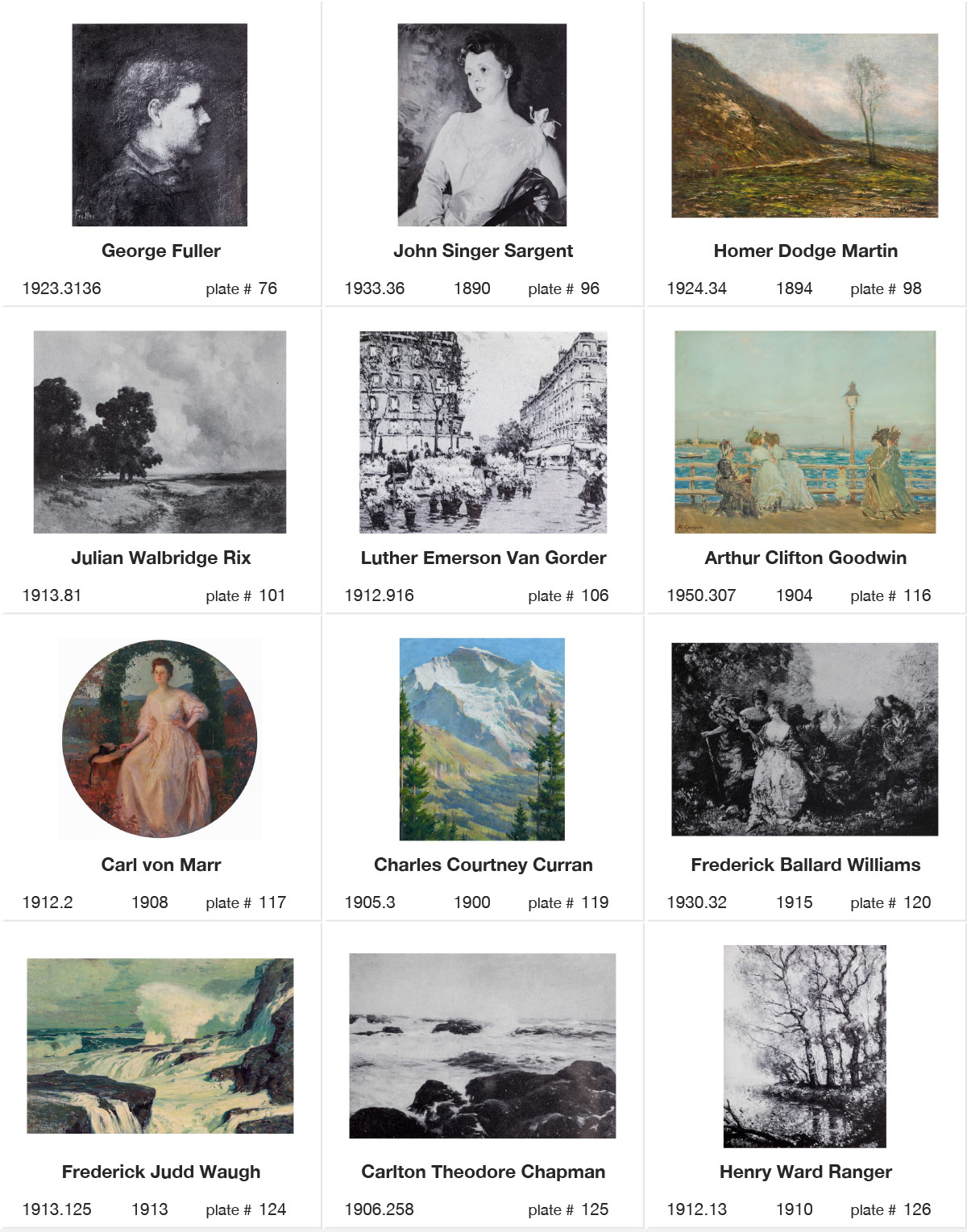
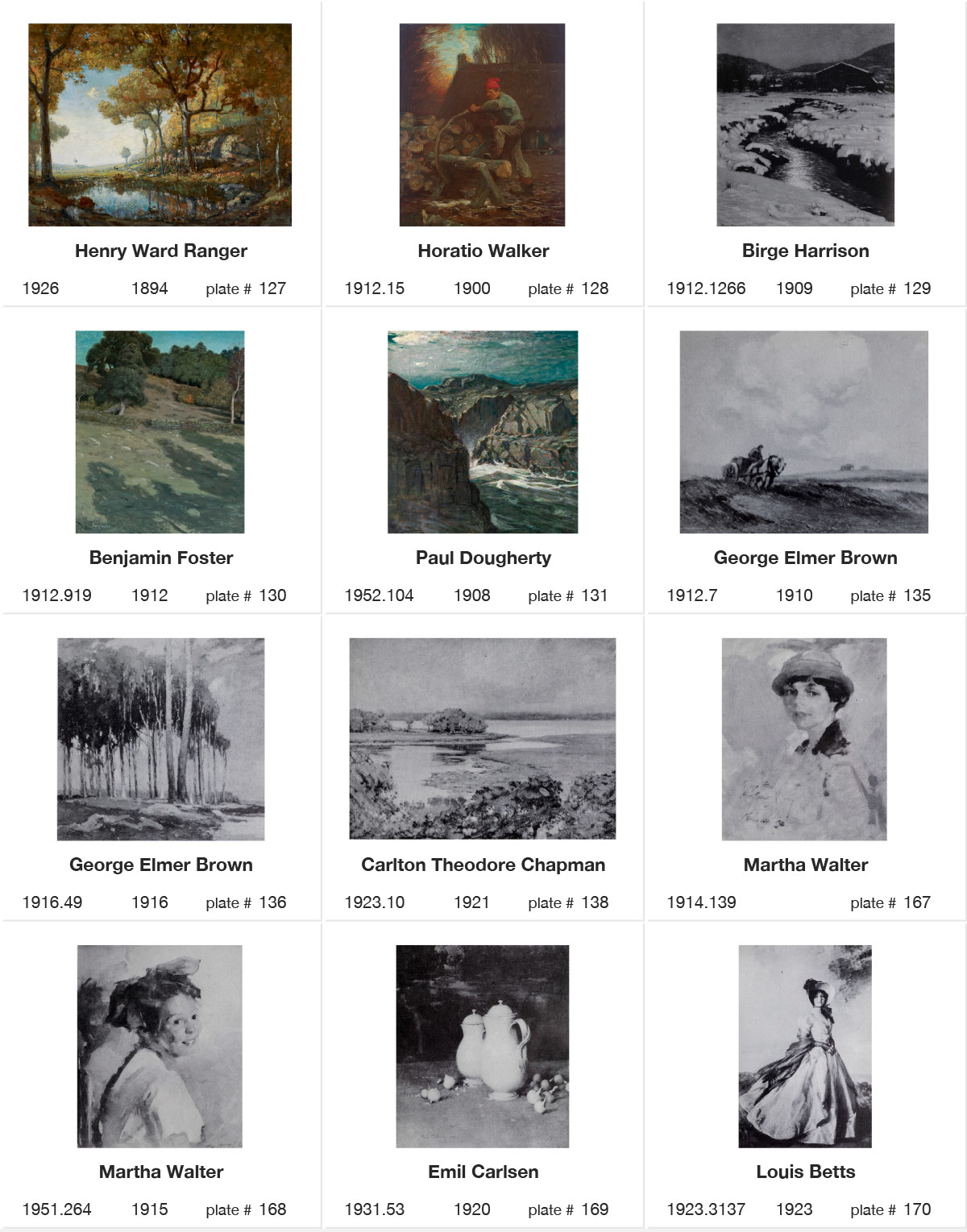
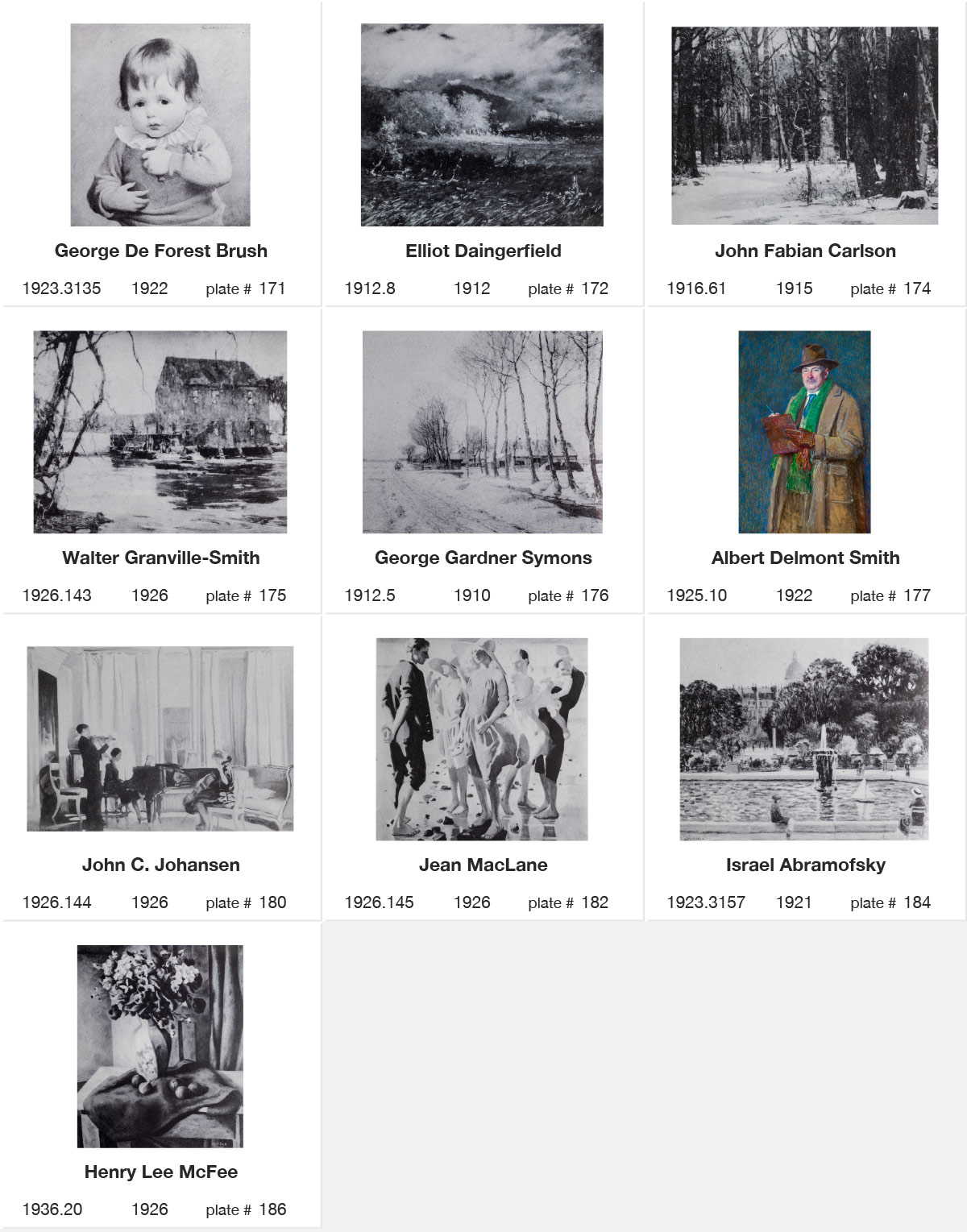
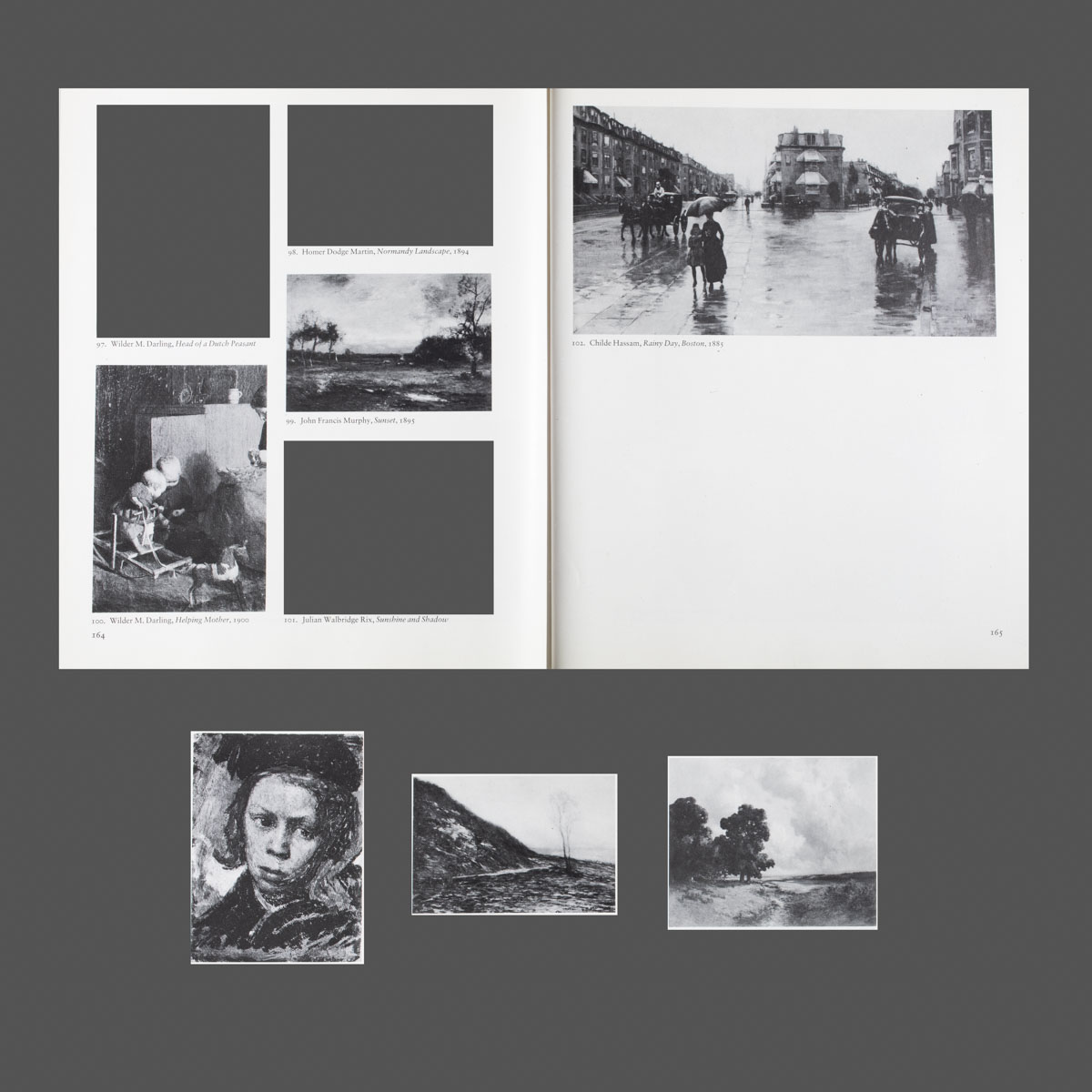
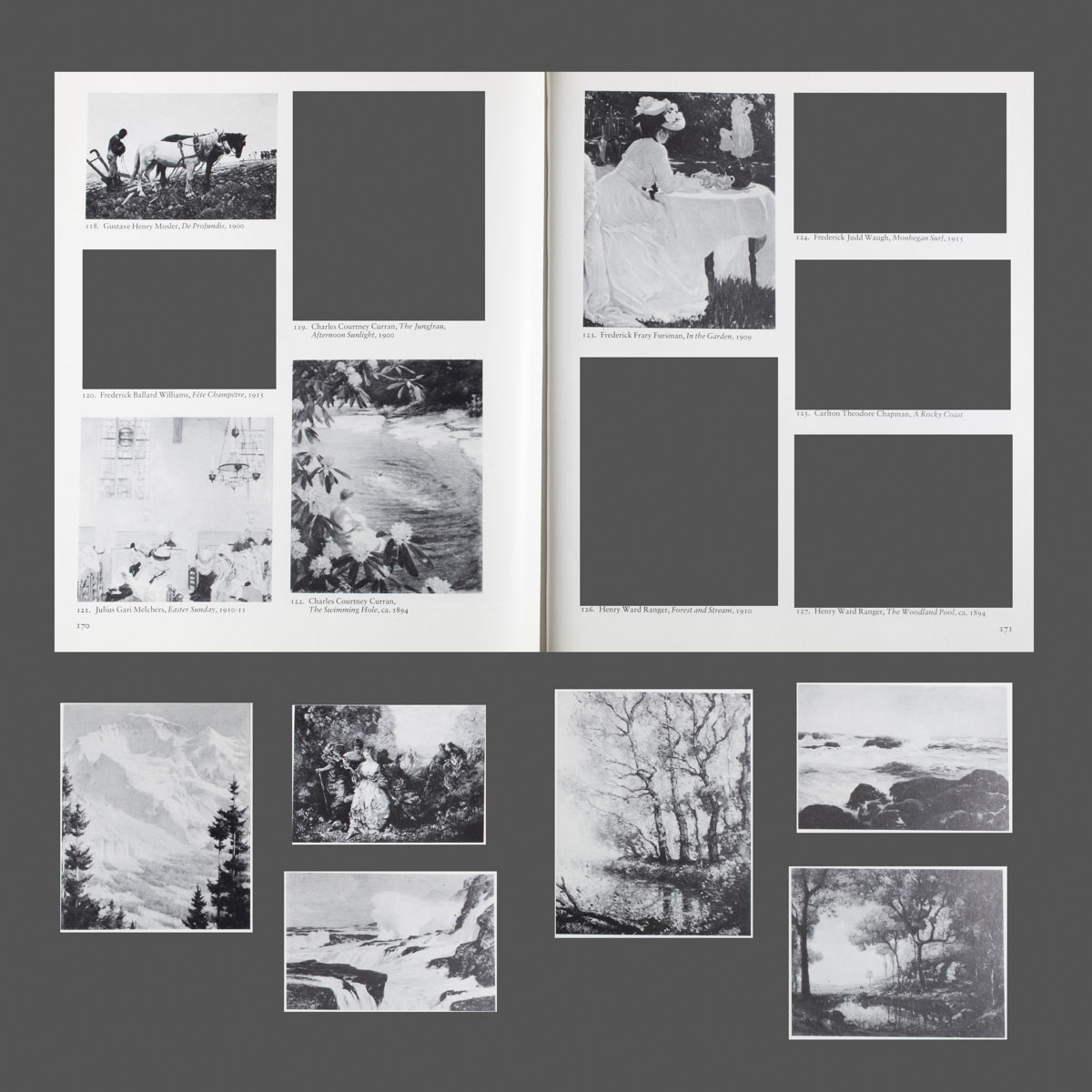
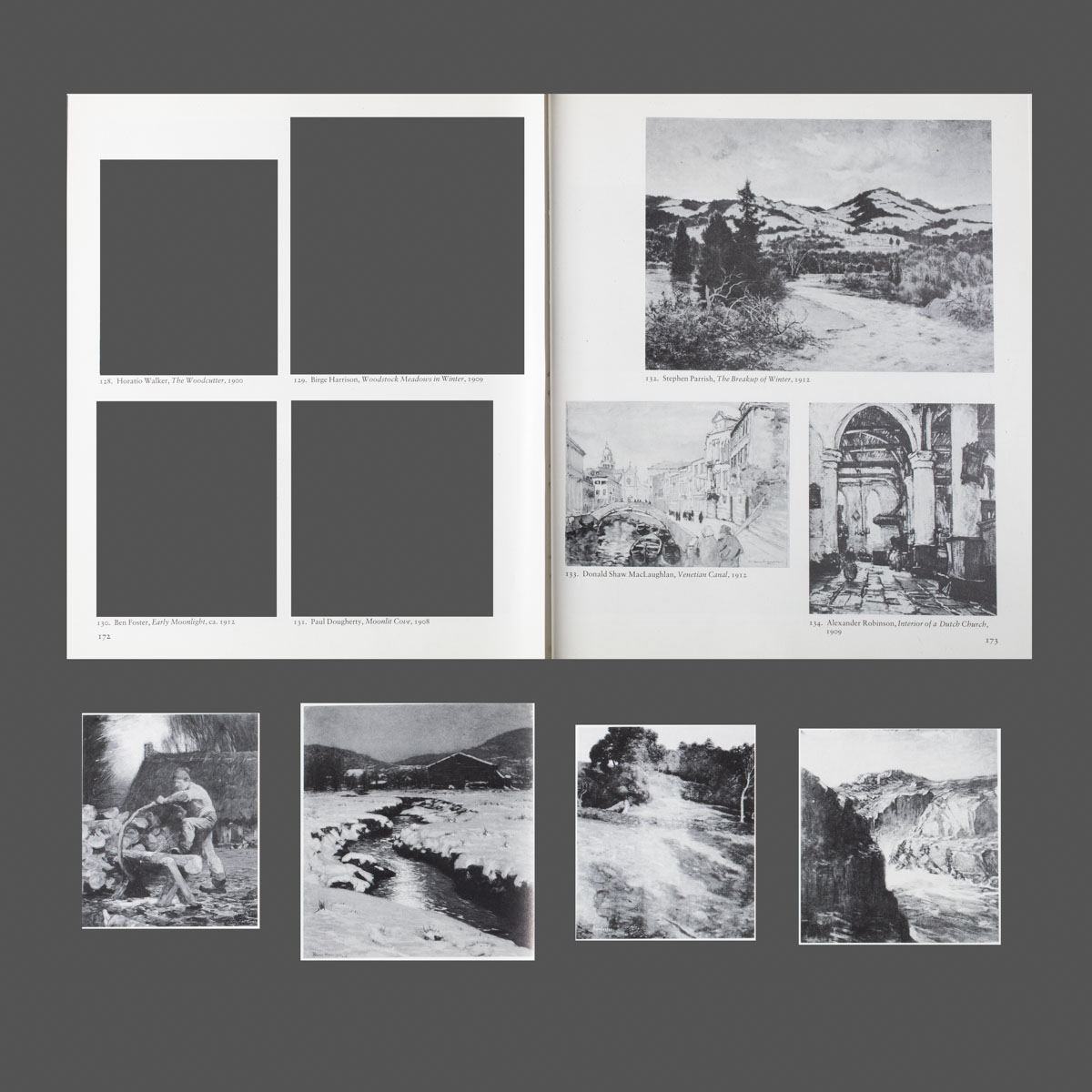
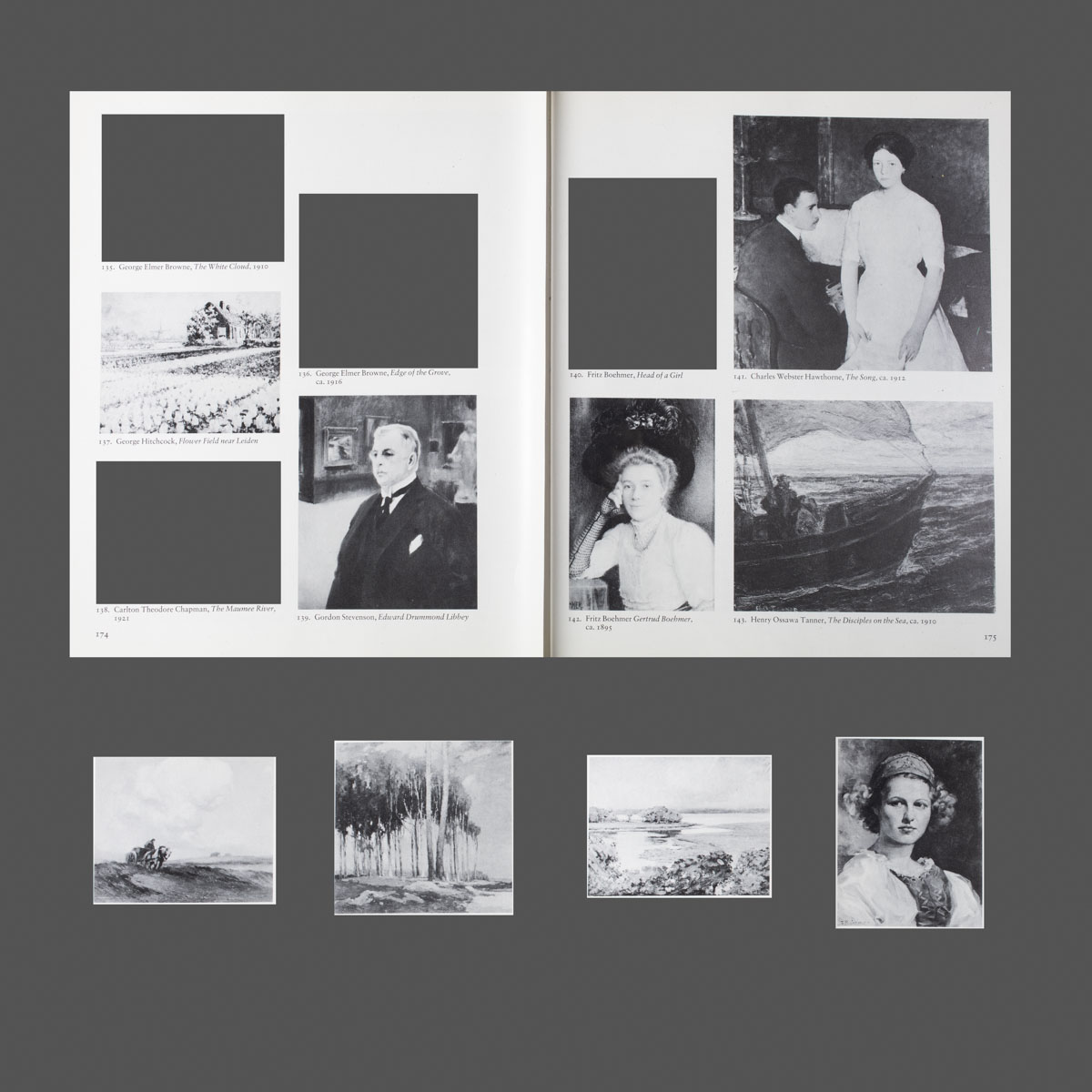
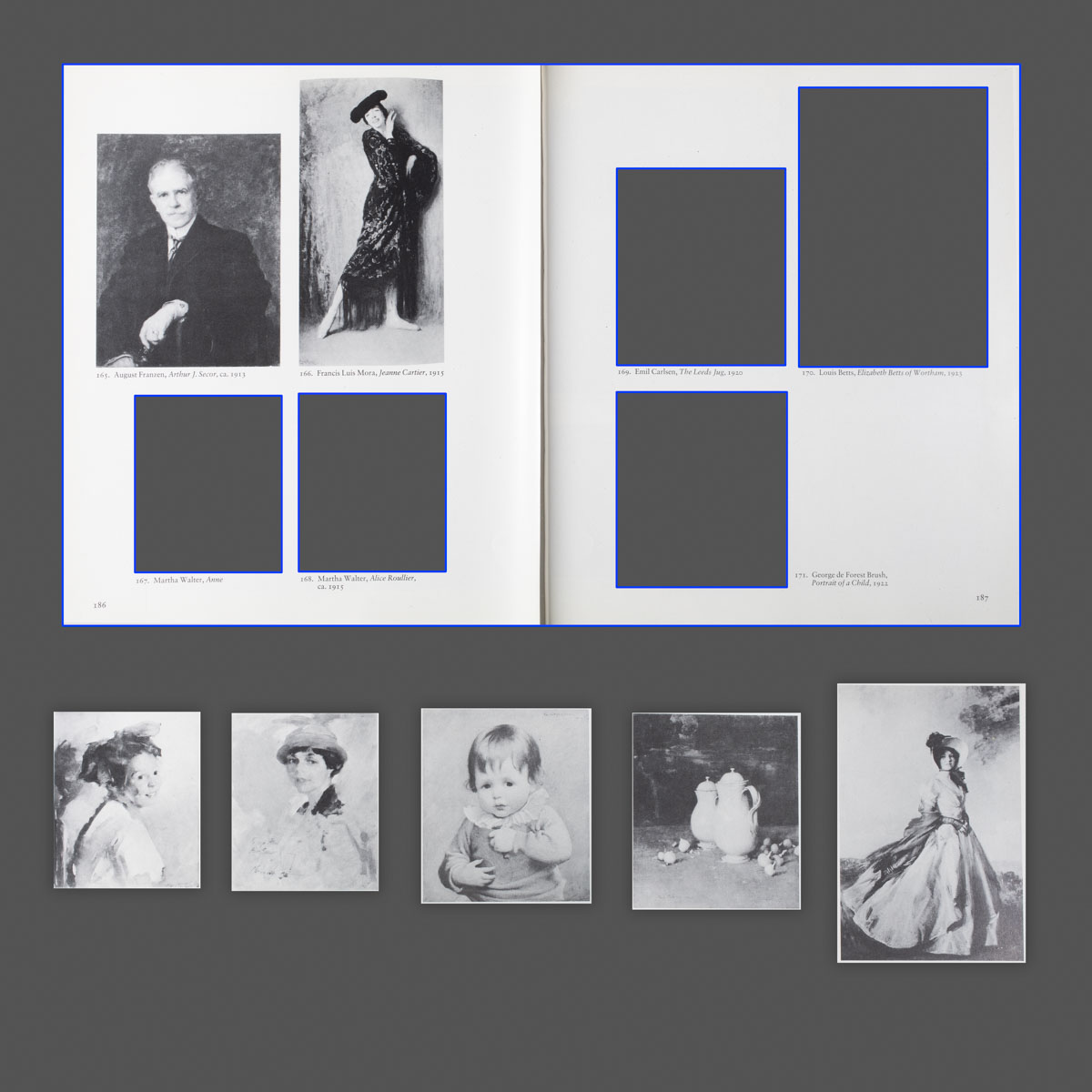
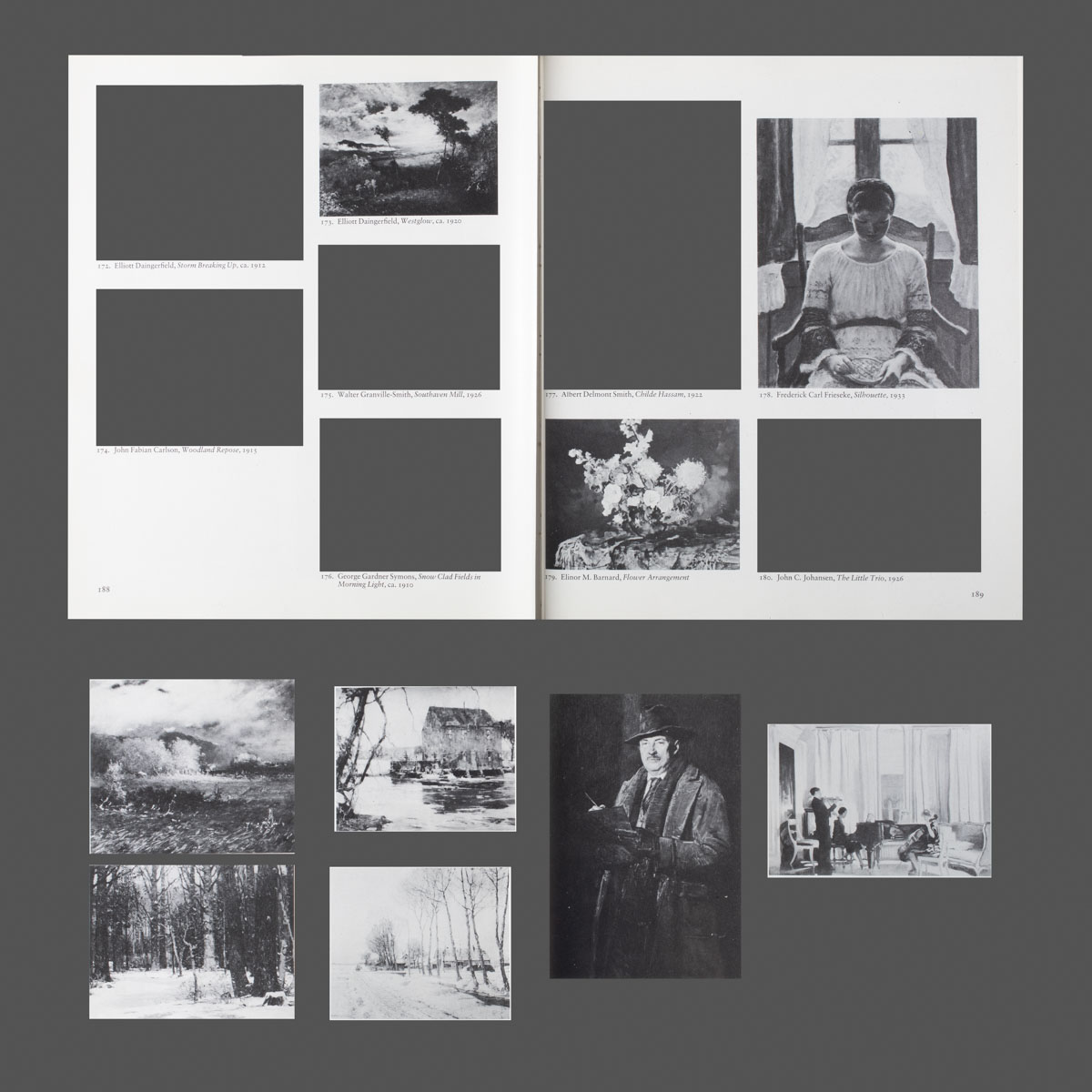
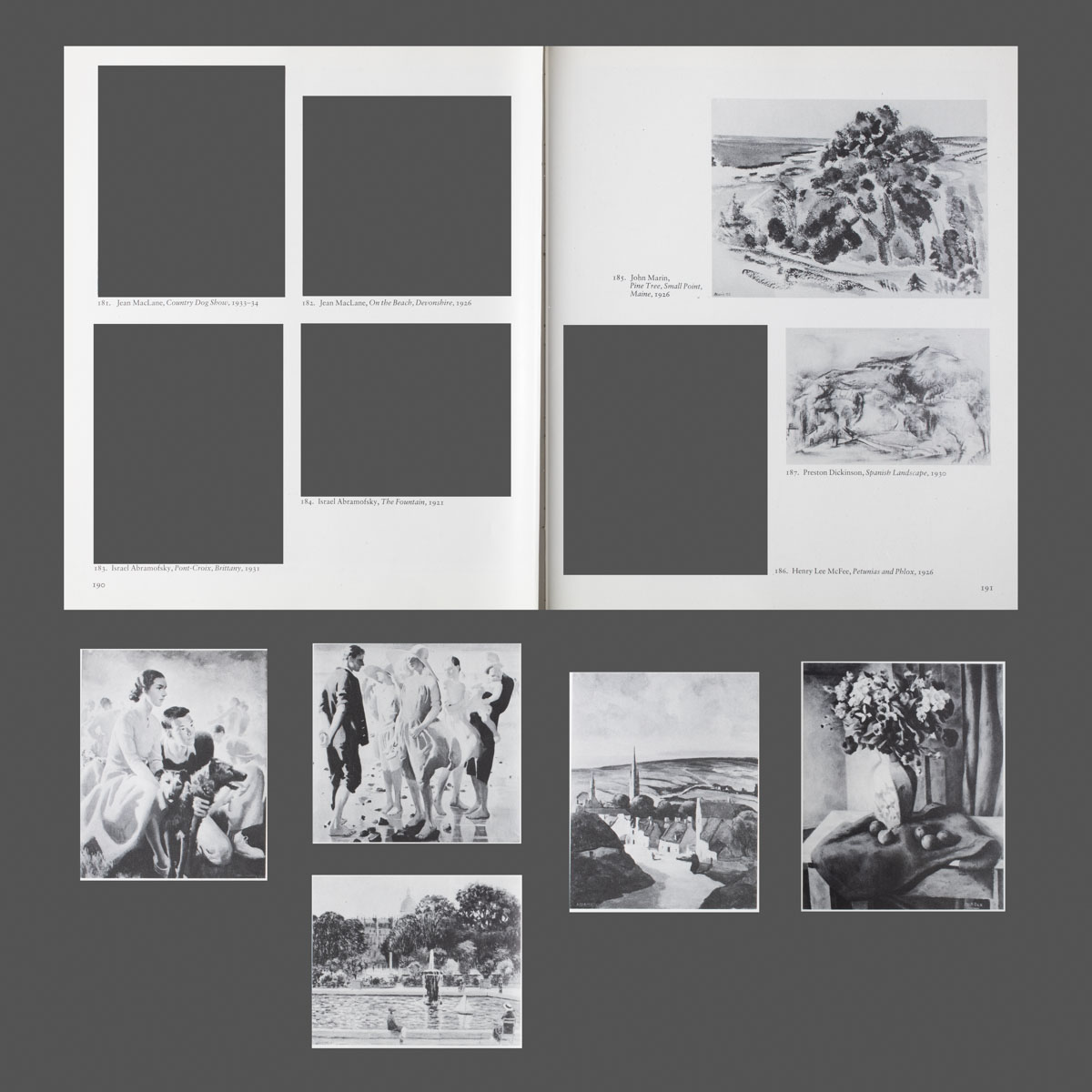
Documenting the painting, its accession number, the year it was painted, and the plate number in the catalog, I compiled a list of 46 deaccessioned American paintings, spanning from 1840 to 1926 (which were the years encompassing the recently sold paintings). These paintings were documented in the complete catalog of the Toledo Museum of Art American Paintings, published in 1979. Remarkably, over one-third of the oil paintings in this category of the collection have been deaccessioned.
The 18 oil paintings, shown above in color and sold in January at Christie’s brought a measly $289,179. Why sell such a strong early collection? Collecting is about collecting.
46 out of 133 oil paintings dated 1840 to 1926 from the American Painting collection, documented in the 1979 book, Toledo Museum of Art American Paintings, have been deaccessioned.
That’s 46 paintings sold to the 87 that remain.
30 American artists culled from history. 77 remain.
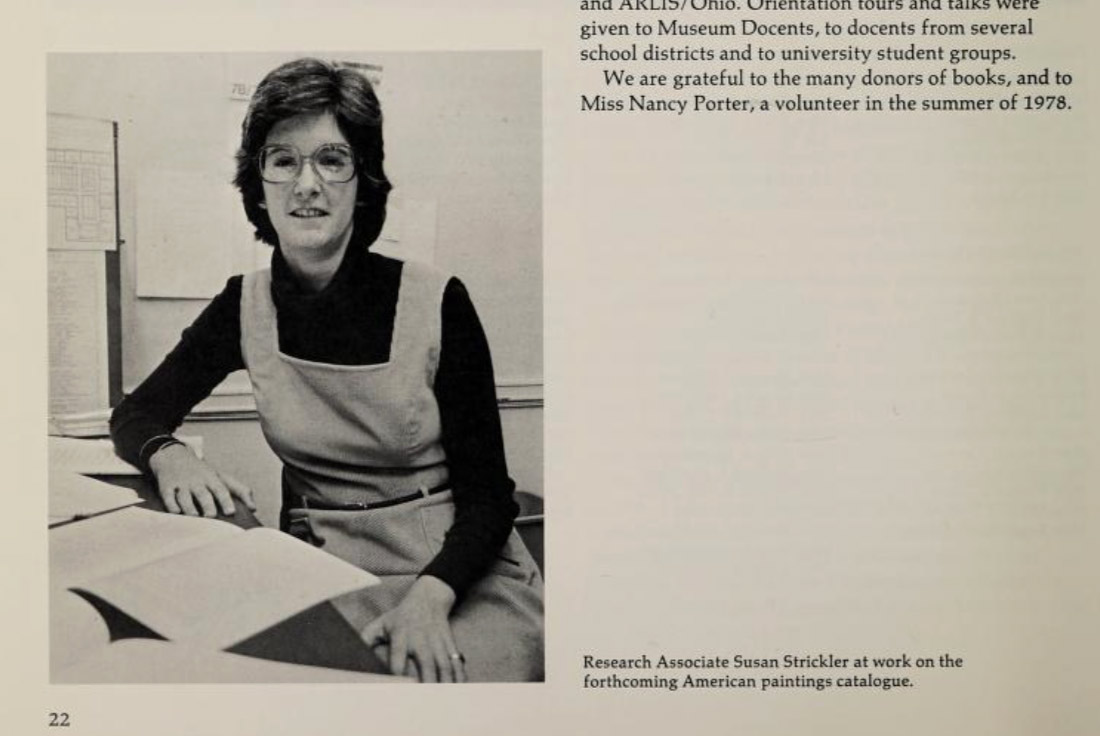
Susan Strickler, Research Associate working on the American Paintings catalogue in 1978. Ms. Strickler went on to be a distinguished museum professional and director of the Currier Museum of Art, now retired.
Curating a collection is about caring for the art. Museums usually increase the number of artworks in their collection over time, but TMA has reduced the size of collections. WHY?
They certainly have large endowments from which to draw funds for new acquisitions, so much more than most museums that it makes the other museums envious. They have over $5,000,000 a year from these funds. What is the point of weakening a collection to increase this amount by 5 percent?
But when the Museum buys a painting for $5,000,000 to support a failing Southern college, and they buy an early Kiddush cup for a record-setting $4,000,000 at Sotheby’s the same year, they are not honoring the way the Museum has successfully built its collection for over a century. The formula was to hunt for periods, styles, and geographical movements that were temporarily neglected by the mainstream art world, and not to buy art at the height of the market, which they have done in both of these examples.
Here’s what the former director, Don Bacigalupi said in 2010 about the Museum’s collections policy:
Because the TMA collection is encyclopedic in nature, spanning cultures from ancient to modern times in a vast range of media, the institution can avoid overheated sectors of the art market and focus instead on spectacular treasures that are receiving less attention. – Don Bacigalupi on the Vibrant Collections Legacy, Annual report 2010.
1,300 new acquisitions but no additional storage?
Why isn’t increased storage a part of the big renovation taking place that’s closing almost all museum galleries not just for months, but for years?
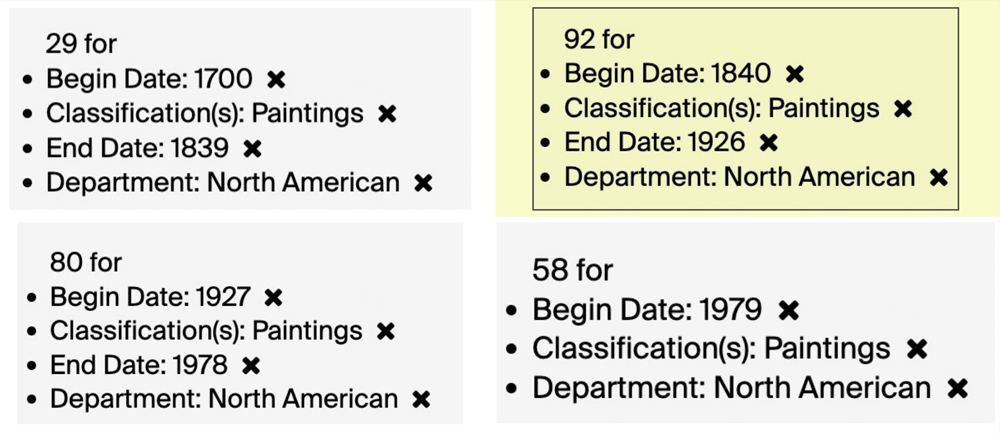
TMA emuseum stats on North American paintings retrieved August 2026:
Search results for North American Paintings in the TMA emuseum database, showing 92 for paintings dated 1840 – 1926. Five are works on paper, so that leaves 87.
Thomas Cole’s painting was deaccessioned since last appearing on TMA’s emuseum in April 2025. Perhaps it was sold privately?
several pages of the book, Toledo Museum of Art American Paintings, with sold paintings cut out:
It’s our American legacy, our history, how our great great+ grandparents saw the world, authentically given to us by the founders of our museum, and several of the artists were local.
Ironically, with the new vision of the museum identifying strongly with telling a historical story, our local history has been erased. Our cultural tradition of the Toledo Area Artists Exhibition, which was almost 100 years old, and brought together the Toledo area art community every year with a competitive, high-quality juried show, was stopped in 2014. That marked the beginning of the ending of the once flourishing community centered museum.
An entire collection of distinguished local art, dated from 1948 to 2013, comprised of the purchase awards of the Toledo Area Artists Exhibition annual shows, was removed from storage at the Museum about 18 years ago, and relegated to the care of the Toledo School for the Arts. At the high school, the collection was stored in a utility closet until 2024, when the Toledo Federation of Art Societies, the historic group formed to put on the annual juried exhibition, disbanded. They gave it to the Schedel Arboretum & Gardens in Elmore, Ohio. The historic and distinguished collection of the TFAS Purchase Awards is not even in Toledo anymore.
it’s anti-local and unamerican
The museum’s so-called “stewards” took our traditions away, they took our education away, they took our art away, and they took our history away!
As for the Glass Pavilion, built to house Toledo’s glass collection and encompass Toledo’s unique glass history; this richly dedicated, all-glass building conceptually designed by the famed Japanese architects, SANAA with this in mind, is being dishonored. I wrote about it here, along with the problem that Toledoans are not getting the news –
The Toledo Museum of Art belongs to the people of Toledo. It is a gift from the Libbeys, but it’s getting broken, torn, separated, divvied out, exploited, used, leveraged and sold out. Voices speaking up are muted and ignored.
Transformation 2027???
Transformation 2027: it’s a cover story for the shell games of the new Toledo Museum of Art, keeping you busy looking in one direction while they are busy doing very questionable things undercover.
We should be proud of our heritage. Hold on to it, don’t let it go.
Crusader Icon, Purchased with funds from the Libbey Endowment, Gift of Edward Drummond Libbey, by exchange (for example, instead of the Cezanne)
Object number 2025.132
What gap is Adam Levine filling with the over-priced, over-restored “Crusader Icon,” traded for a valuable Impressionist painting, when Edward Drummond Libbey gave us a dozen similar icons in 1912?
How does TMA decide what artwork to put on view in the reinstalled galleries?
TMA’s primary goal is to have the highest quality collection that demonstrates our commitment to broadening the narrative of art history. The Museum’s collection has been acquired over the last 125 years and over that time priorities and patterns of collecting have evolved.
As we prepare to install a comprehensive display of art that showcases six centuries of human creativity across six continents, we are prioritizing new acquisitions that fill a variety of gaps in our collection.
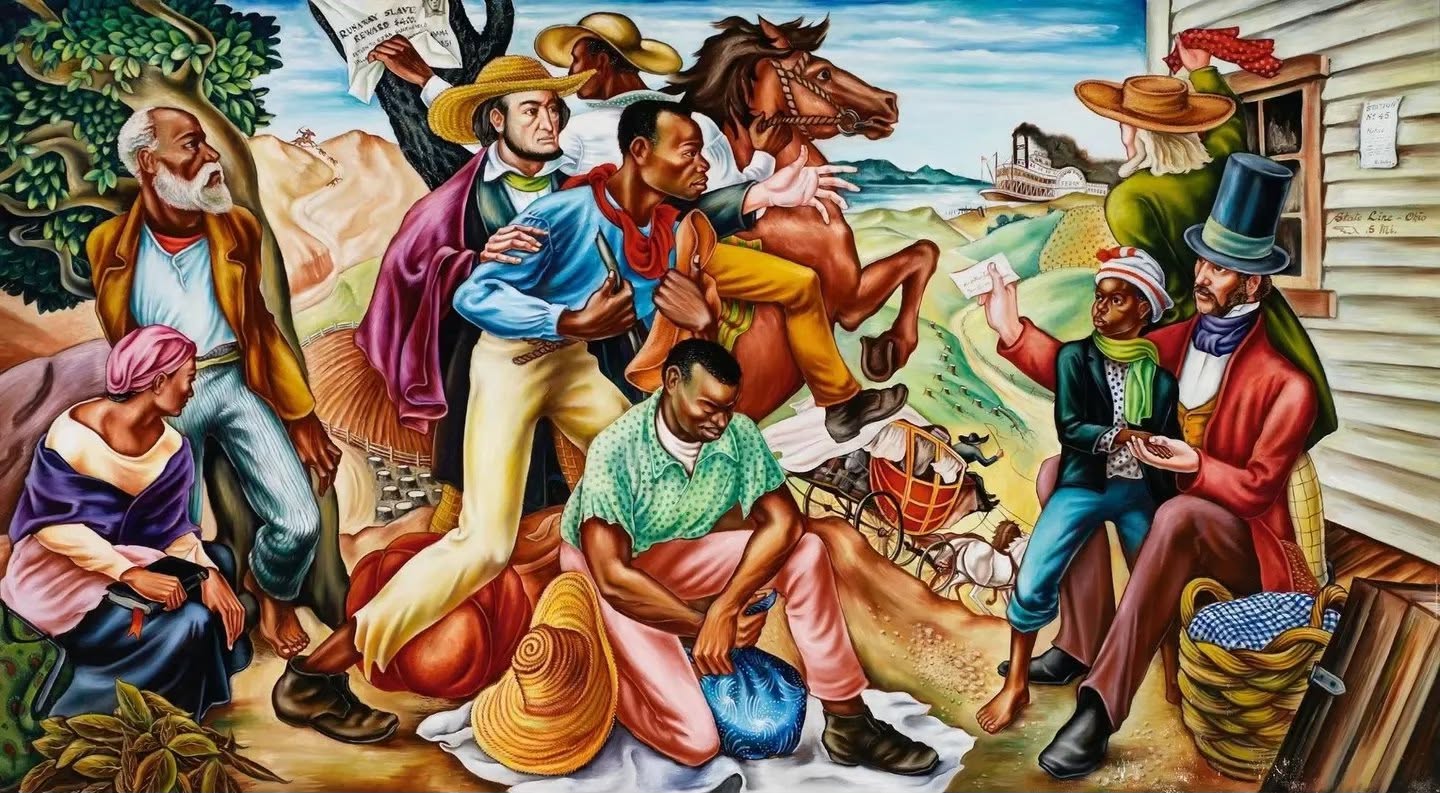
These gaps include geographic areas, time periods, under-represented artists, and mediums. To date, these acquisitions have included objects like the Cup of Joy, the Crusader Icon, Hale Woodruff’sThe Underground Railroad, and colorful contemporary Hawaiian quilts just to name a few.
Madonna of Moscow, Gift of Edward Drummond Libbey, 1912.521Madonna and Child, Gift of Edward Drummond Libbey, 1912.524Alexis Metropolitan, Gift of Edward Drummond Libbey, 1912.514St. John; Head of Christ, Gift of Edward Drummond Libbey, 1912.523The Archangel Appearing to Saint John, Gift of Edward Drummond Libbey, 1912.522Christ with Archangel Michael and Gabriel, Gift of Edward Drummond Libbey, 1912.515Head of Christ, Gift of Edward Drummond Libbey, 1912.513Madonna and Child, with two Saints, Gift of Edward Drummond Libbey, 1912.512
A 20th-anniversary celebration was an opportunity to ask what happens next. Instead, an important public conversation went missing.
On August 16, The Blade published an article, written by the journalism intern, Chantal Eulenstein, marking the 20th anniversary of the Toledo Museum of Art’s Glass Pavilion.
A museum anniversary is an opportunity to look backward—but also forward. What did this building mean to Toledo? Why was it created? What has happened during its first twenty years? And, most importantly, what does its next twenty years look like?
There is quite a story to tell about that last question.
The Toledo Museum of Art is now fundamentally changing the relationship between the Glass Pavilion and the collection it was specifically created to house. That change has generated serious concern among people who believe the Pavilion’s architecture, its glass collection, Toledo’s industrial history, and the history of the Studio Glass Movement form an extraordinary and irreplaceable whole.
But people don’t know what’s going on with the changes at the Glass Pavilion, and this article did not say anything about it.
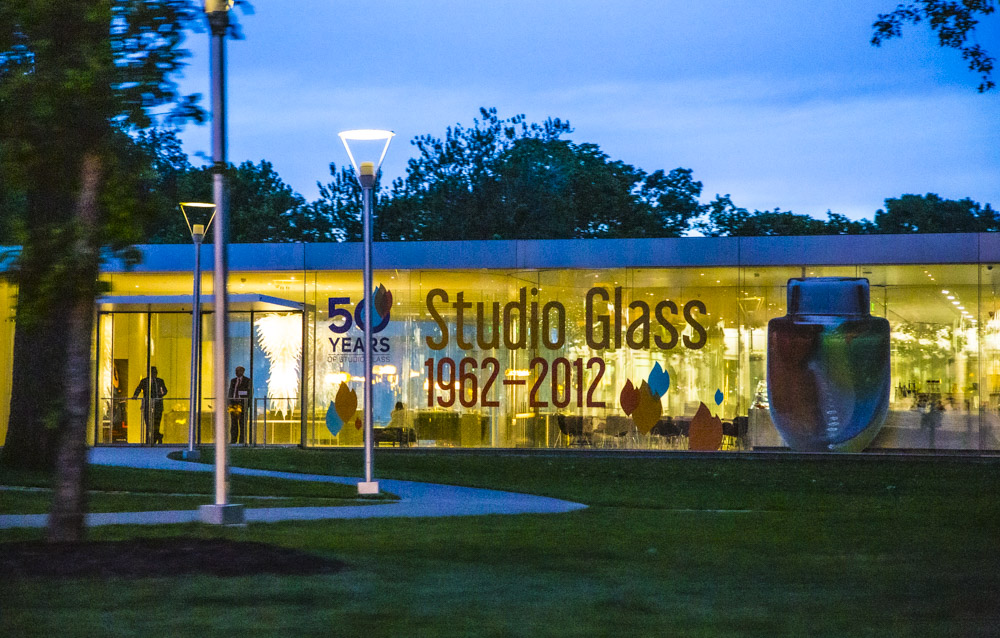
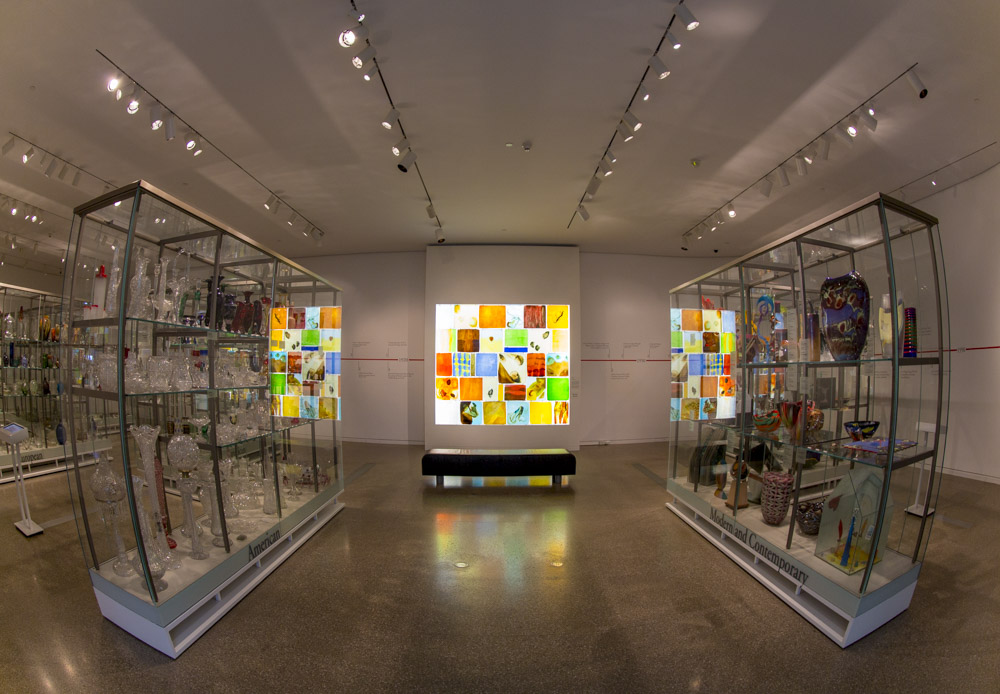
Studio Glass 50-year Anniversary, 2012. Photo by Penny GentieuGlass Study Room, photo by Penny Gentieu 2014
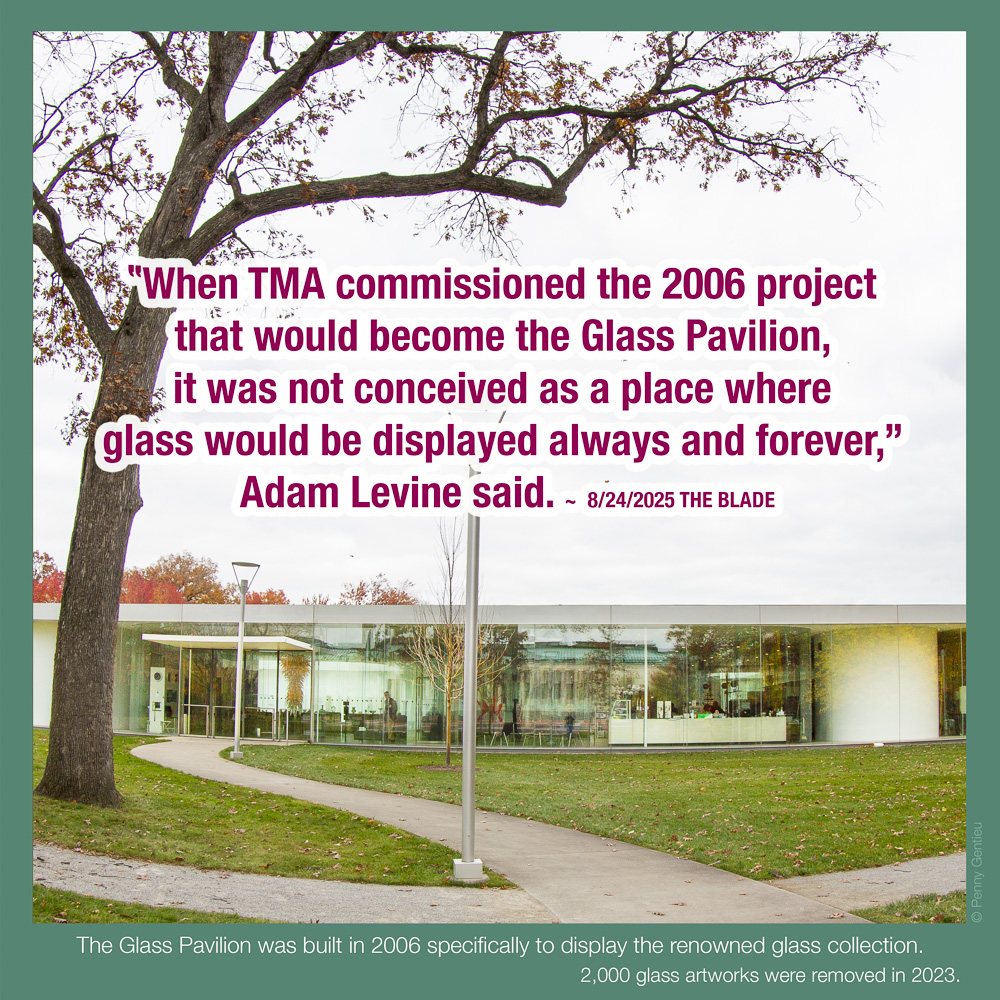
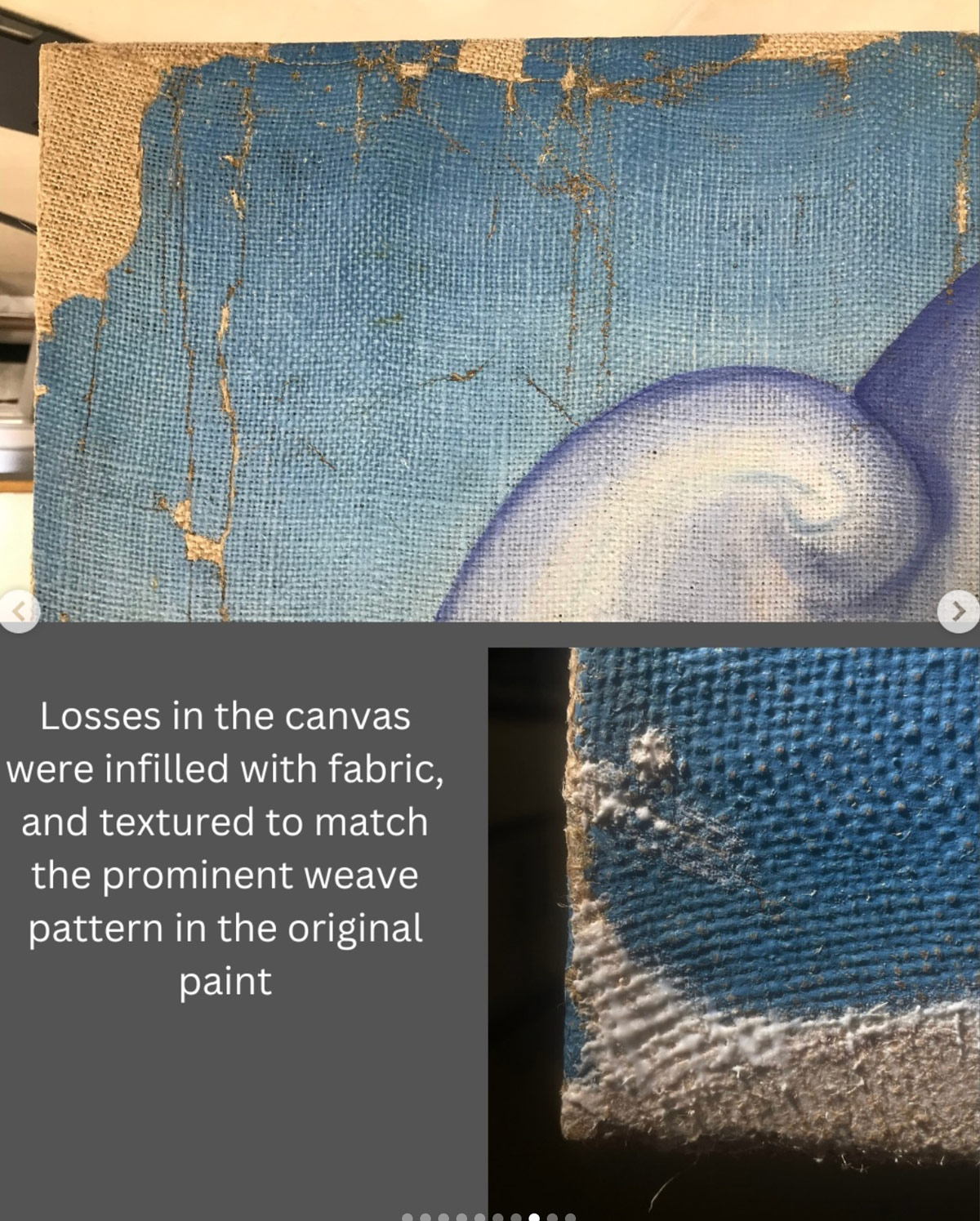
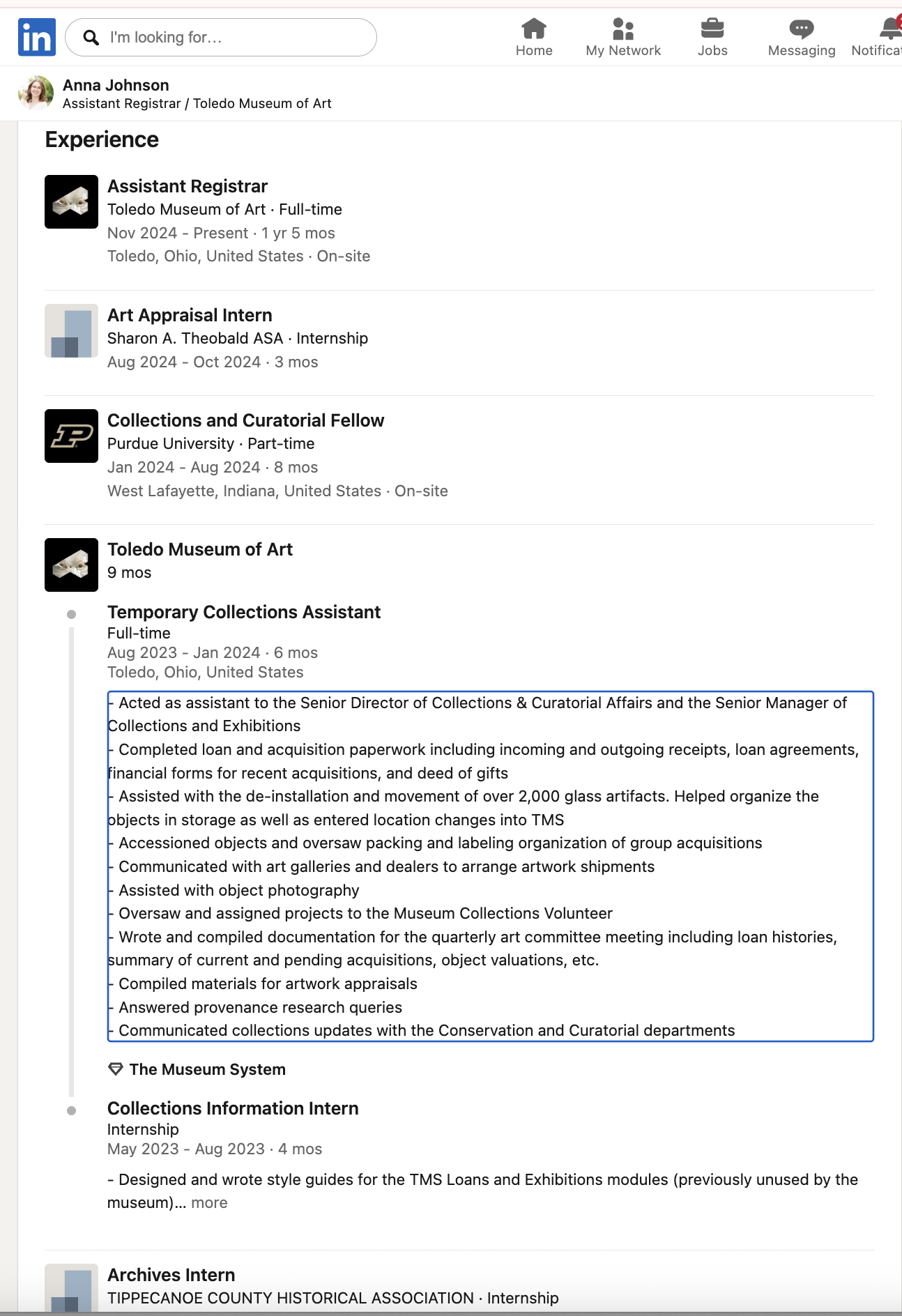
It was misleading and inaccurate to report that “It also houses the first of the glass collections purchased by glass industrialist Edward Drummond Libbey in 1913.” These works were removed from the Pavilion in 2023 when the “Glass Study Room” was repurposed and cleared out. Unreported anywhere, but discovered on an employee’s Linkedin page, over 2,000 glass artifacts were removed in 2023 and put in storage. One can easily see on the TMA emuseum website that these works, that were added to the collection in 1913, the gift of Edward Drummond Libbey, are no longer on display.
They now have a “TMA Forever Exhibit” in that gallery, how ironic. (here is a link to my recent blog post about it:)
The Blade’s anniversary article did not explore any of these issues, but it could have.
In fact, a thoroughly researched guest editorial (shared with me) was submitted to The Blade specifically in response to the anniversary coverage. It examined the history of the Glass Pavilion, the relationship between the building and the collection, and the unique role Toledo played in the development of Studio Glass.
It asked this:
Why weaken something that Toledo has that no other city can reproduce?
The editorial pointed out that SANAA did not design an interchangeable exhibition hall that happened to contain glass. The building itself is part of the experience of the collection. It connected architecture, glass, transparency, reflection, sight lines, working furnaces, and Toledo’s history as the Glass City.
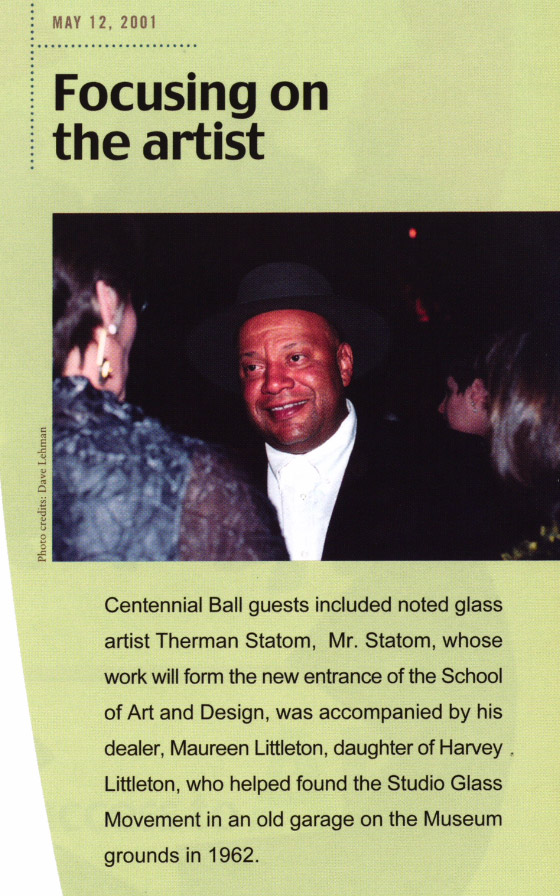
It also brought together a history that is rarely told as a whole: Harvey Littleton and Dominick Labino’s 1962 Studio Glass workshops on the Museum grounds; the subsequent development of the Studio Glass Movement; artists such as Dale Chihuly and Therman Statom; Toledo’s industrial history; and the collectors, donors and artists who helped make the Museum’s glass collection what it is today.
Toledo Museum of Art Annual Report 2001
In the 2001 Toledo Museum of Art Annual Report, the Museum itself described Therman Statom’s presence at its Centennial Ball and identified his dealer, Maureen Littleton, as the daughter of Harvey Littleton, whom the Museum described as having helped found the Studio Glass Movement in an old garage on the Museum grounds in 1962.
That is precisely the kind of history that could have made the Glass Pavilion anniversary story meaningful.
Instead, readers were given very little opportunity to consider what will be lost when the relationship between the building and its collection is fundamentally altered.
Meanwhile, The Blade Has Published Another puff piece
On September 3, The Blade published a letter praising its August 20 coverage of the finally disclosed traveling exhibitions and the Museum’s current direction.
The writer, John Fedderke praised the “complexity and global significance” of the project, the “professionalism, care, and thought” of Museum staff, and the decision to send major works from the collection around the world.
The letter repeated some of the Museum’s own framing of the project, describing the traveling paintings as “ambassadors for Toledo” and praising the Museum for “reimagining” itself.
It concluded by thanking Museum staff for their work and calling the project a “once in a lifetime” undertaking.
There is nothing wrong with a reader expressing enthusiastic support for the Toledo Museum of Art. One might question it though when that writer is an advertising professional, in fact John Fedderke used to be the Marketing Director at The Blade. But putting that little fact aside, there is a larger question here:
Where is the equally visible opportunity for readers to hear the substantive case against what is being changed?
This Is Not About Whether Someone Likes the Museum
The problem is that the public is being asked to understand a major transformation of one of Toledo’s most important cultural institutions without being given the full debate surrounding it.
The Glass Pavilion is not simply a building that can be repurposed whenever the Museum changes directors. Its architecture, collection, furnaces, history and Toledo’s identity as the Glass City are deeply intertwined.
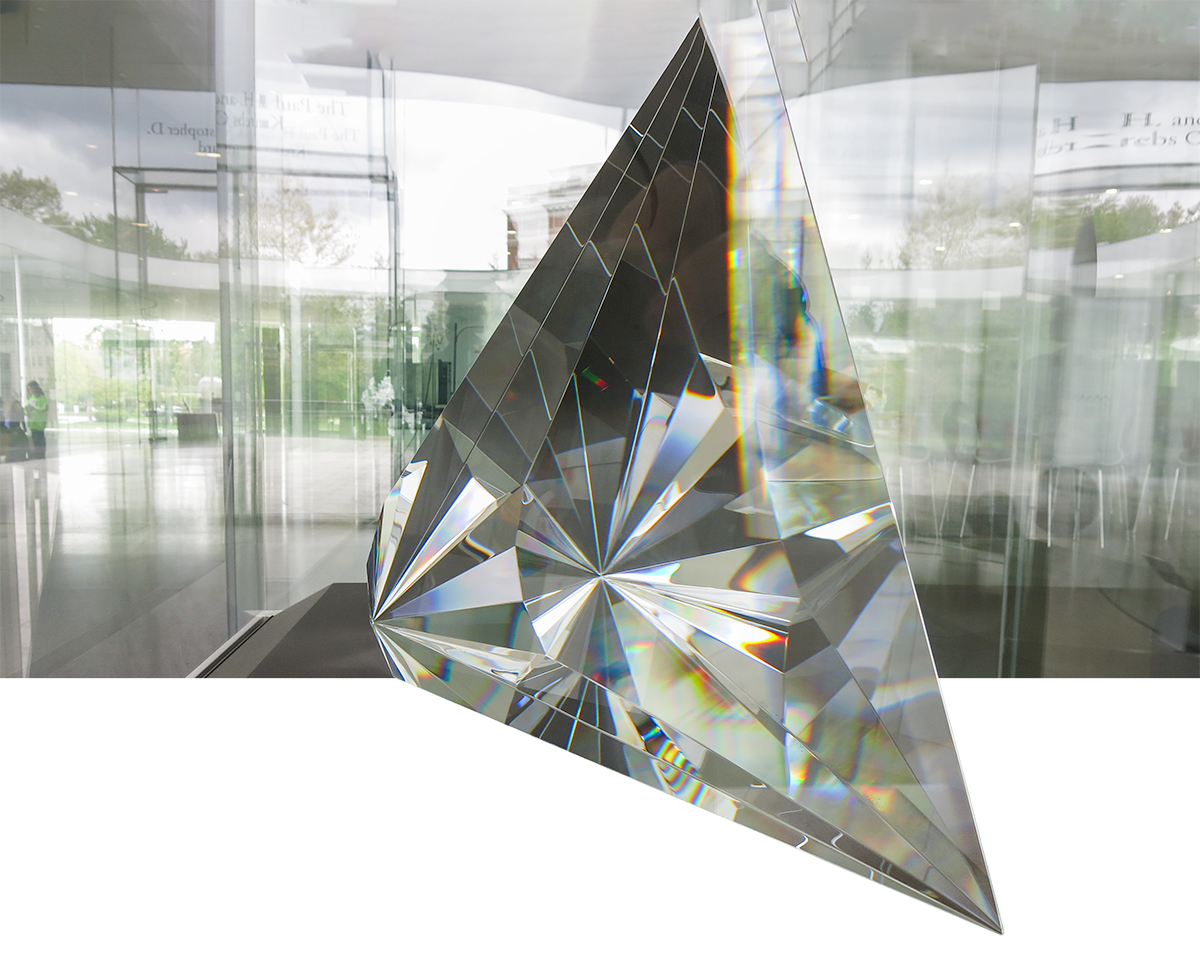
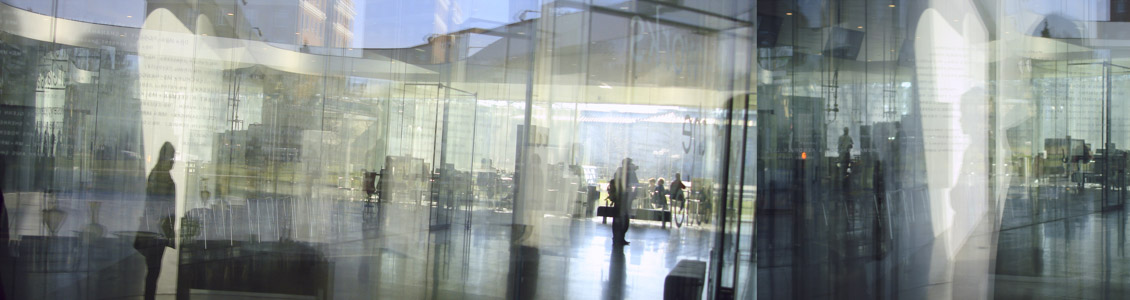
Interior of the Glass Pavilion, with donors’ names etched on the glass walls. Photo by Penny Gentieu
Those relationships deserve examination before they are dismantled—not after.
The Glass Pavilion is only one part of a much larger transformation now taking place at TMA. Major galleries are being dismantled or redesigned. The Museum’s collection is being reorganized. Major works have been sent on extended international tours. And Toledo residents have raised serious concerns about what these changes mean for their Museum.
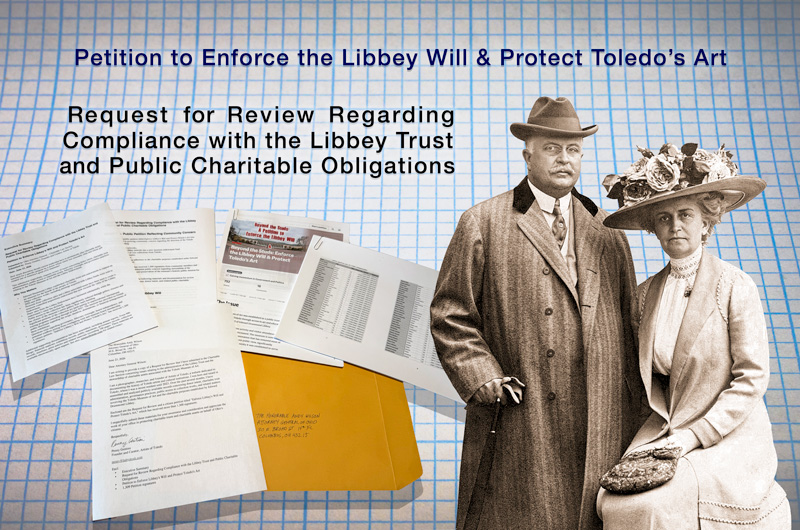
More than 1,700 people have signed the petition “Enforce Libbey’s Will and Protect Toledo’s Art.” A formal request for review has also been submitted to the Ohio Attorney General’s Charitable Law Section.
Whatever one’s position on those questions, it is difficult to characterize them as nonexistent.
The Toledo Museum of Art is undertaking one of the most consequential transformations in its history.
That deserves more than celebration.
It deserves scrutiny.
It deserves competing viewpoints.
And it deserves a newspaper willing to ask difficult questions before the changes become irreversible.
The Glass Pavilion’s first twenty years are worth celebrating.
Its next twenty years are worth fighting for.
Update: September 8: The Blade, founded in 1835, has announced that it will be closing down if it does not find a buyer by the end of the year.
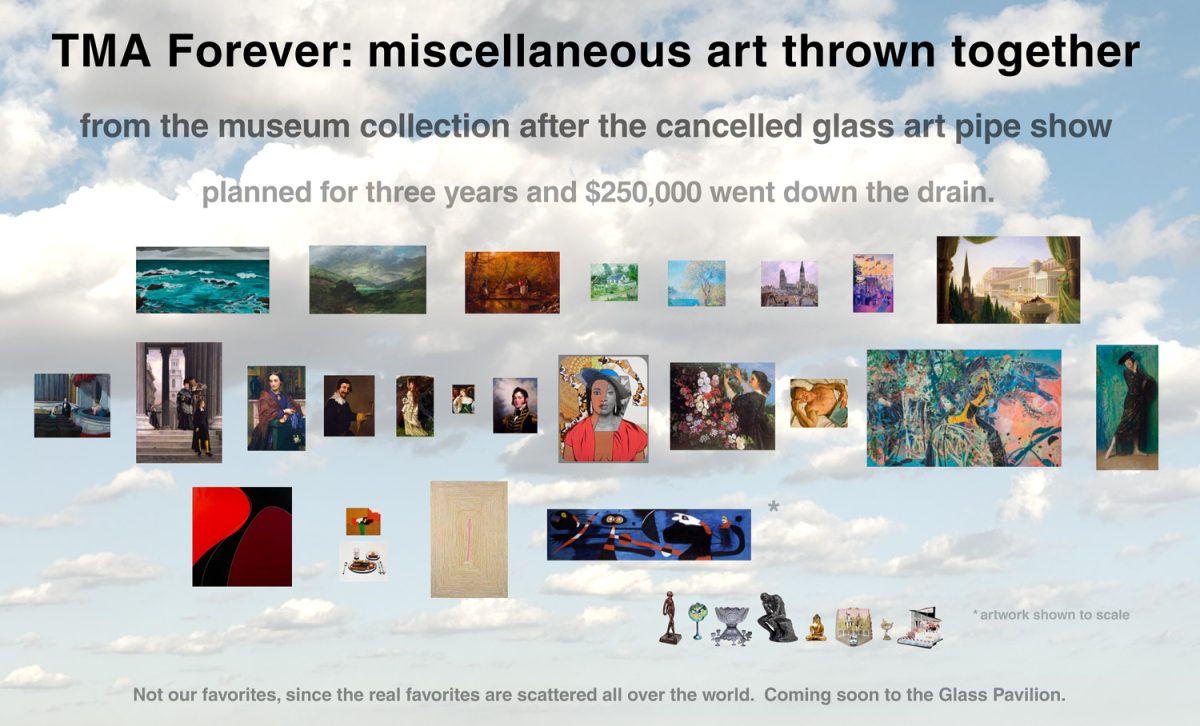
While most of the museum is closed for renovation and reinstallation, a new show has been announced: TMA Forever. Did they just think of hanging some art in Toledo? Could it be in reaction to the Petition to Enforce Libbey’s Will?
It will be at the recently repurposed Glass Pavilion, in the old Glass Study Room. The Glass Pavilion was built for the glass collection, but they have changed it from its singular purpose. Now they can do whatever they want with it, such as using it for sound shows, jewelry and cursed art exhibits, the local artist Community Gallery, and for hanging some paintings from the collection, calling it “TMA Forever,” to help us understand identity politics art. A warm-up for the dreaded transformation of our museum that we loved just the way it was.
Cleaning out the old building
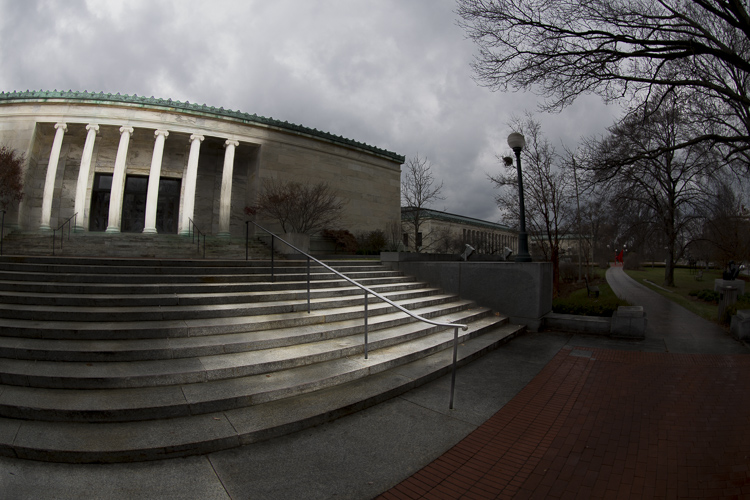
Claiming to have to do it for the HVAC system, they closed the historic white marble columned museum building and emptied it out. While they are transforming the Toledo Museum of Art into a world art history museum, they are ironically deleting the history of the museum and many of the artists it has held in its collection. They are on a special DEI mission to be the great influencer for American museums that must be changed. (“TMA’s strategy calls for us to become the model art museum in the United States for our commitment to quality and our culture of belonging.”) Not that the Toledo Museum of Art itself had ever been guilty of racism – far from it – but it doesn’t mind sacrificing itself for the cause.
Everyone is thinking of re-installations and reinterpreting collection today especially as a field and as institutions we’re coming to terms with the colonial and racist histories and legacies of our own institutions and their continued impact on what we do and how we do it today. – Diane Wright TMA Curator of Glass, TMA Symposium, Expanding Horizons, July 20, 2023
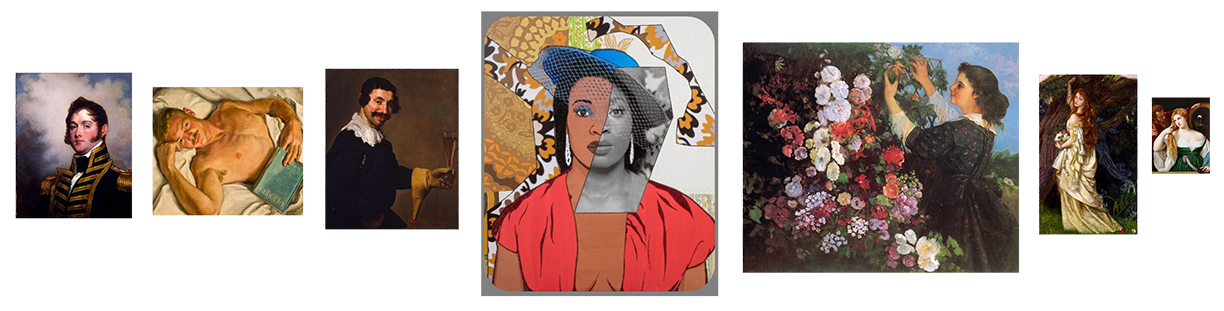
They bought 1,300 new pieces for the museum, including these two:
Early Kiddush Cup, cost $4,000,000, which is about three times the annual draw of the Edward Drummond Libbey Endowment for the purchase of art.
The Kiddush cup continues something of a busy spree at the Toledo Museum of Art, Levine said, citing the roughly 1,300 acquisitions it had made through gift and purchase over the past five years. ARTnews, November 6, 2025
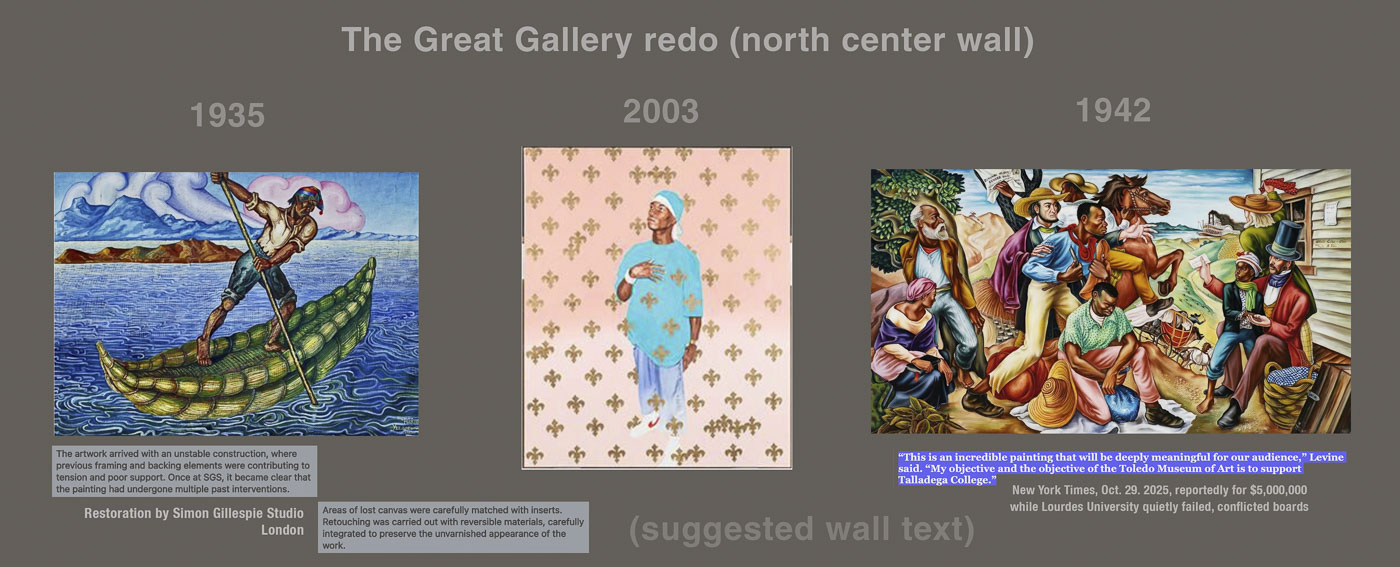
The same year they bought the cup, in 2025, they bought this painting by a relatively unknown painter for another estimated $5,000,000, as a part of a bailout of a small college in Alabama.
“My objective and the objective of the Toledo Museum of Art is to support Talladega College.” Adam Levine, New York Times, “To Avert Crisis, Talladega College Sells Its Art Treasures” October 29, 2025
“Much of the African American population of Toledo traces its genealogy to individuals who fled on the Underground Railroad, so this will be deeply meaningful for our audience.” Adam Levine, Forbes, “Art Imitates Life: Hale Woodruff’s ‘The Underground Railroad’ Headed North To Ohio” November 1, 2025
They claim that whatever they put up will be fine –
“The superpower that an art museum has is when something goes up on the wall, it’s considered good. We set the canon.” Adam Levine, Forbes, Feb. 28, 2022
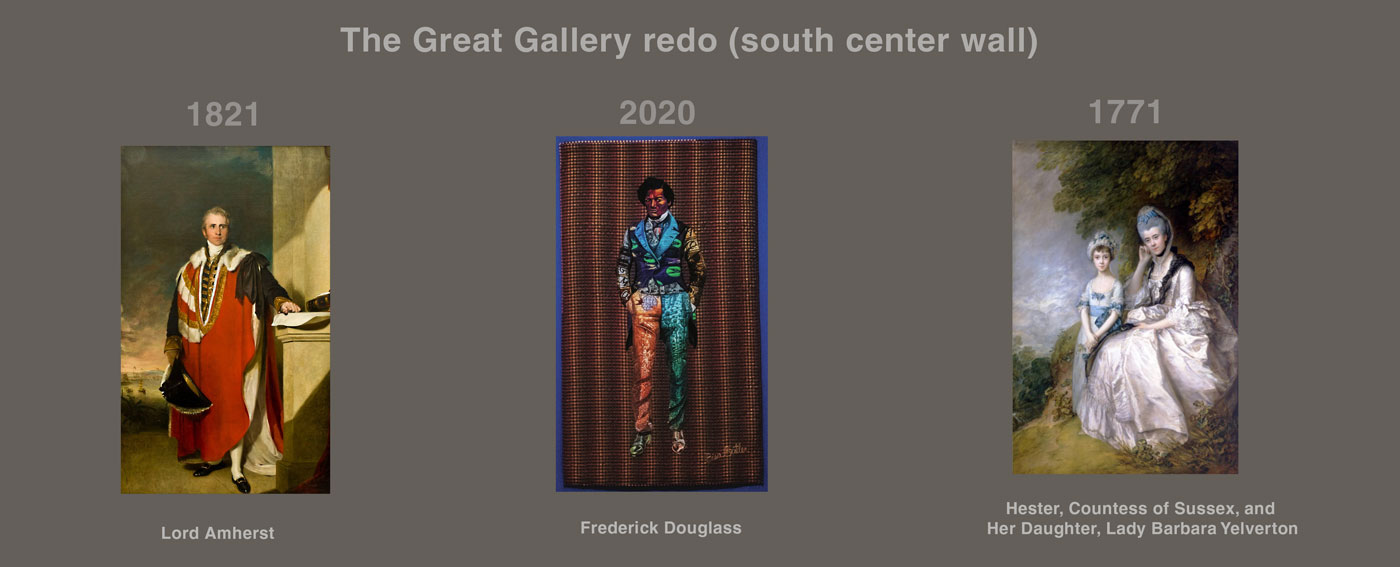
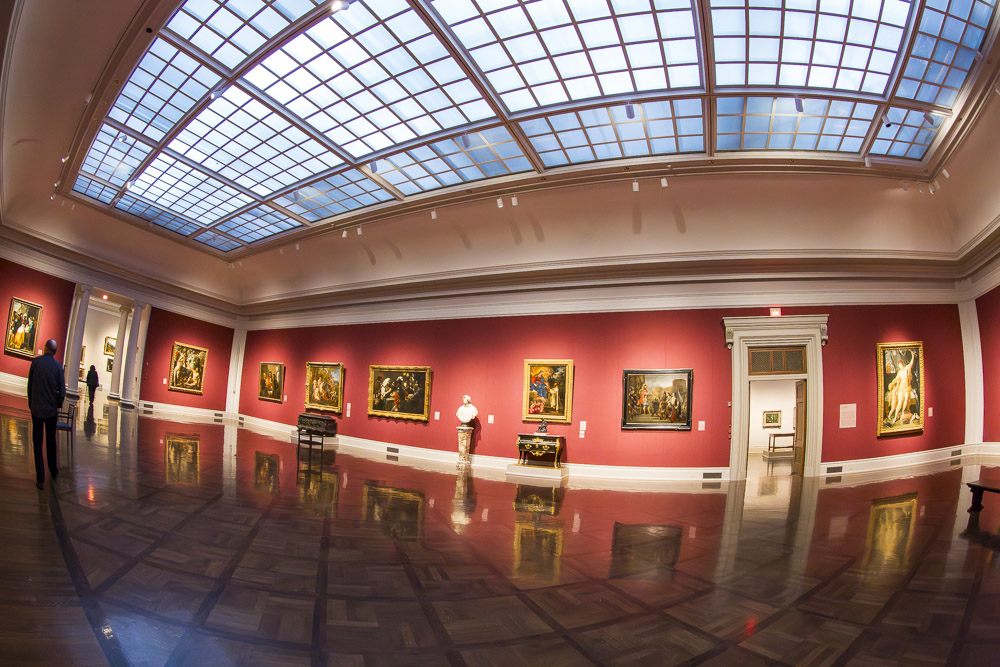
They are replacing the 17th and 18th century Italian Baroque paintings in the Great Gallery with this:They moved the historic glass installed at the Glass Pavilion for reinstallation in the renovated museum building:
“It would be senseless not to have glass showcase alongside these other media, and to divorce glass history from overall art history,” Levine said. The Blade, August 2025
Conceived as a building of glass to display one of the world’s greatest art collections, where glass would be made, glass would be taught, and the history of glass would be studied, in a city known as the glass capital of the world, that gave birth to the studio glass movement in 1962, in a museum founded by a ground-breaking glass industrialist, it was in beautiful working order, as designed by master architects, to work together like a Swiss watch. Why did it stop?
Meanwhile…
The museum has set out to increase their international footprint and relevance. In the past, the museum had plenty of international relevance right here at home. The museum was visited by luminaries from around the world, such as the King and Queen of Greece. In any given year, the museum had been regularly visited by people from every state of the nation and over 50 countries around the world.
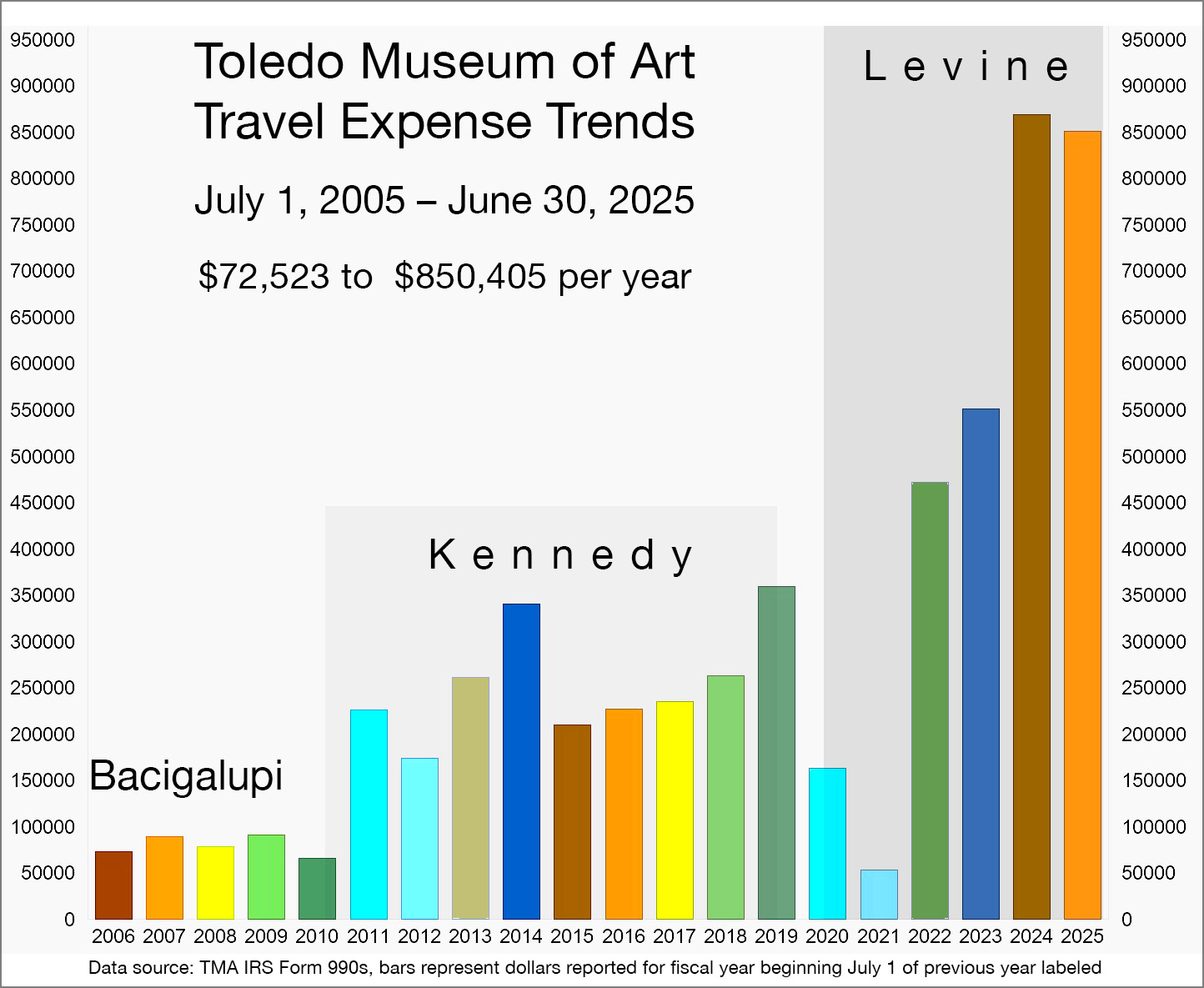
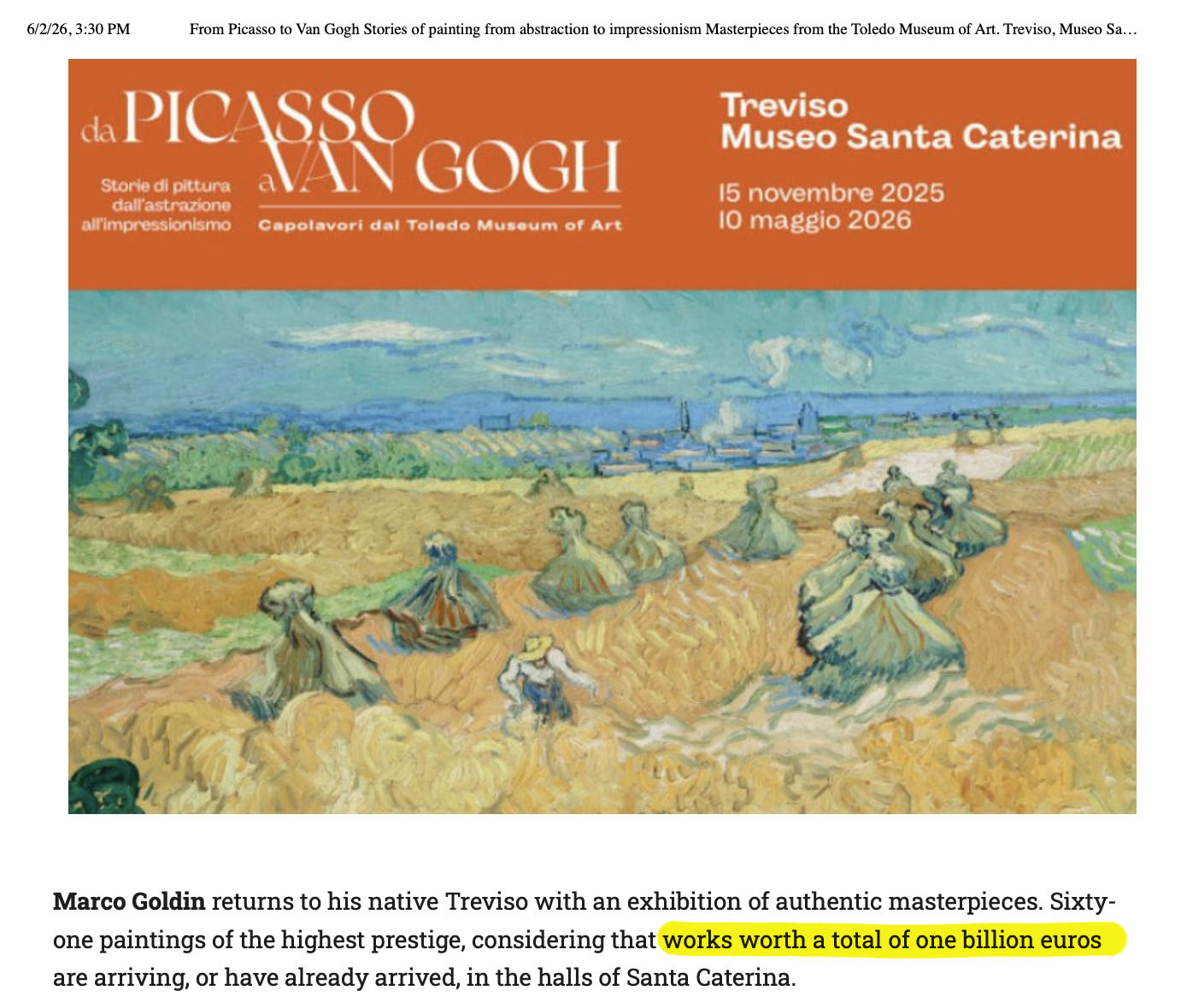
But now, instead of bringing people to Toledo to see the fine collection, the collection has been sent on tour, along with museum staff including curators and the art restorer. Many of the best paintings are either on loan or are being rented internationally. The art is put to work to fulfill their “transformative” mission, and the travel budget is going through the roof.
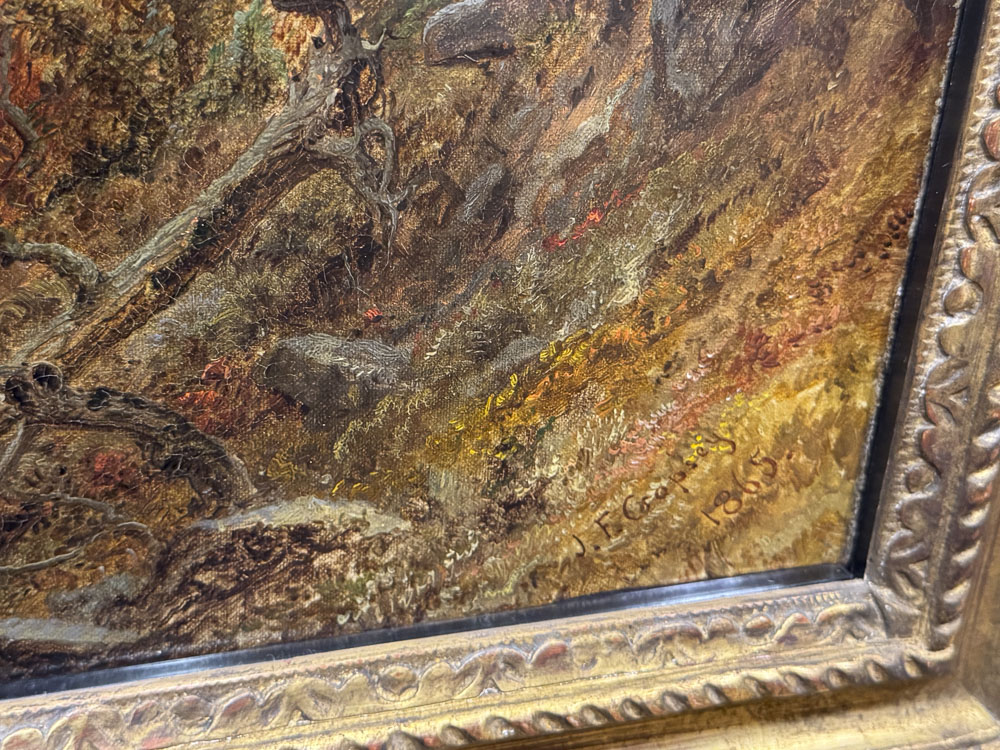
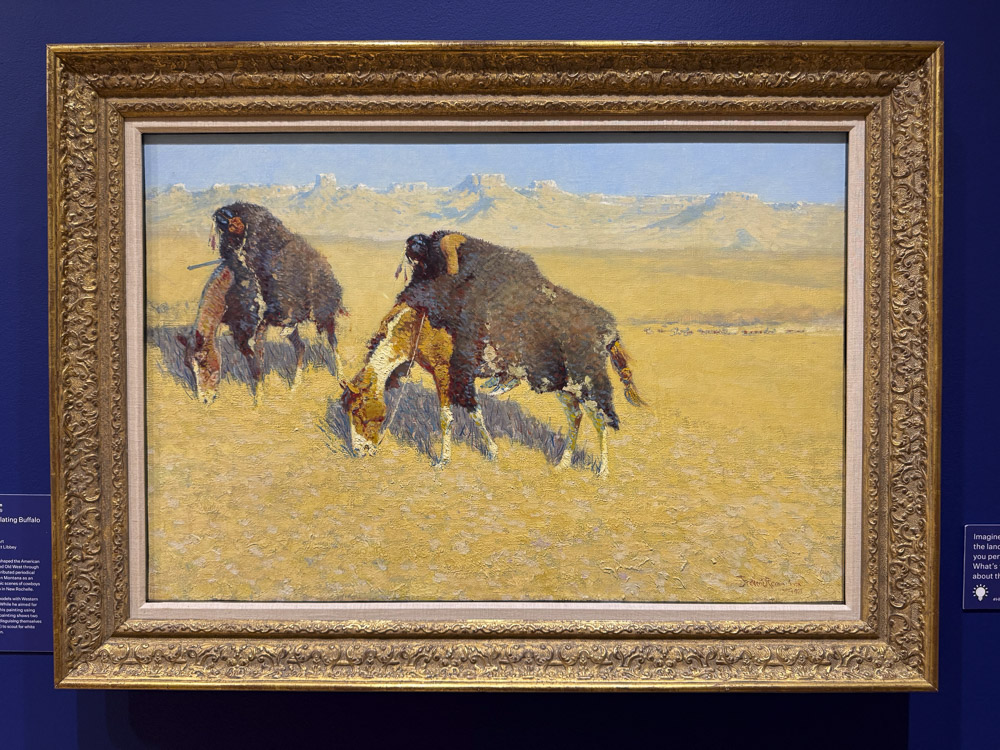
These paintings have been prepared for extensive wear and tear by reframing them with glass. You can imagine the many years it took to prepare so many paintings for such stress. For example, the two-year loan of four paintings to the Hudson River Museum that commenced in June 2025 and will end in June 2027 was arranged in 2023, as indicated on the adjacent plaques.
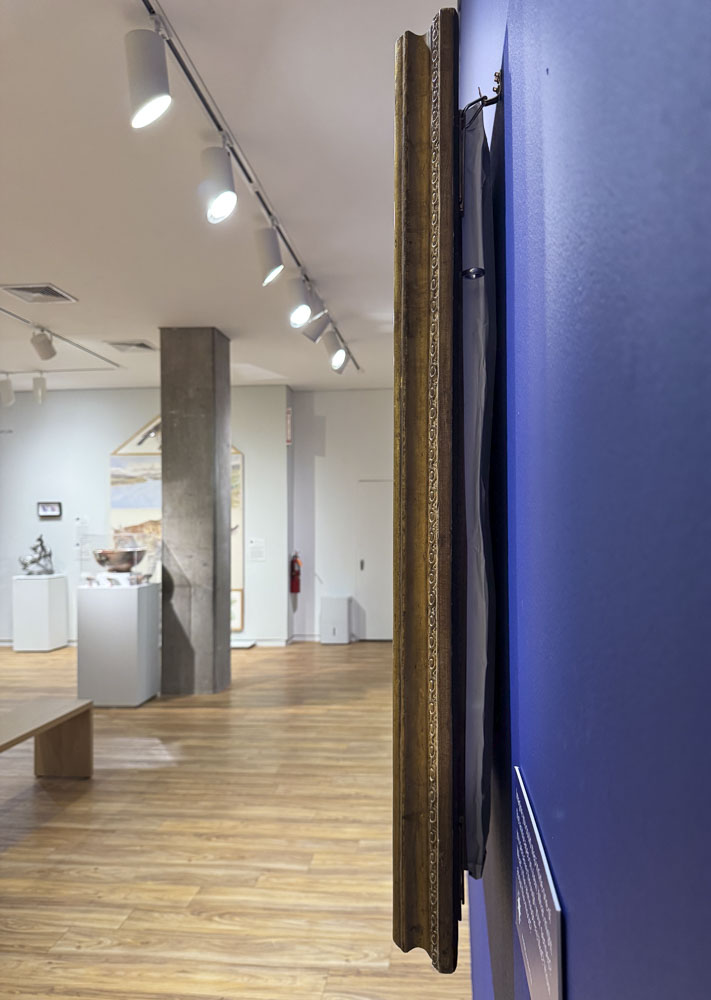
Rarely seen, except on the Mona Lisa, glass is used on canvas to protect it from damage. To glaze a painting, the art restorer has to crack open the frame, remove the artwork, and add glass to the frame. Then, the installation of spacers along the inside of the frame to keep the glass from touching the surface of the painting. As some depth of the frame has been taken up by the glass and the spacers, the canvas spills out of the back. A retro-fitted frame job is not the ideal framing for the valuable artwork. The paintings, like this one, have to be hung from hinges at the sides of the frames instead of from the back. I went to see some, in Yonkers, New York.
Here’s what Toledo’s art restorers did to the paintings to add glass — to upwards of 150 of paintings —
No wonder museum attendance has been pathetically low, considering that the curators’ attention has been focused on making shows for the rest of the world, instead of putting on good shows at the actual Toledo Museum of Art.
Edward Drummond Libbey Will
…all paintings, pictures and other works of art by it or them acquired by expenditures from said income, shall at all times be properly and appropriately housed in one or more rooms of The Toledo Museum of Art in said City of Toledo,each of which rooms shall at all times be designated and plainly marked “The Edward Drummond Libbey Gallery”; each and every of said painting, other pictures and works of art shall at all times be plainly marked “Gift of Edward Drummond Libbey”, and shall be kept adequately insured against loss from fire, theft and other causes…
Florence Scott Libbey Will
…in the purchase of paintings, statuary, furniture and other works of art, each of which, when so acquired, shall have designated thereon, or near thereto, the following words: “Florence Scott Libby Bequest in Memory of her Father, Maurice A. Scott”, and shall be permanently installed in one or more rooms of the building or buildings of said Museum of Art, each of which shall be designated and known as the “Maurice A. Scott Memorial Gallery”…
What don’t they understand about Libbey’s intentions for the art to be for the people of Toledo? Instead, the curators — all new to the museum — are using the great art belonging to the people of Toledo, risking and renting it all over the world. The Toledo elites are all in. So is The Blade, which supports the museum whole-heartedly, and the museum advertises in The Blade. (Update, September 8: The Blade announced that it is closing down if it is not sold by the end of the year, and the managing editor Mike Brice has a new job now promoting commercial concerns in Ohio. The Blade is in free-fall, so is it any wonder why they no longer publish fair journalism; see post dated September 6 right before it was announced, What The Blade Didn’t Publish About the Glass Pavilion)
Living far above it all, none of the movers and shakers understand the importance of the museum to the community. They don’t understand that you can’t take that away for all these years without changing the character of Toledo forever.
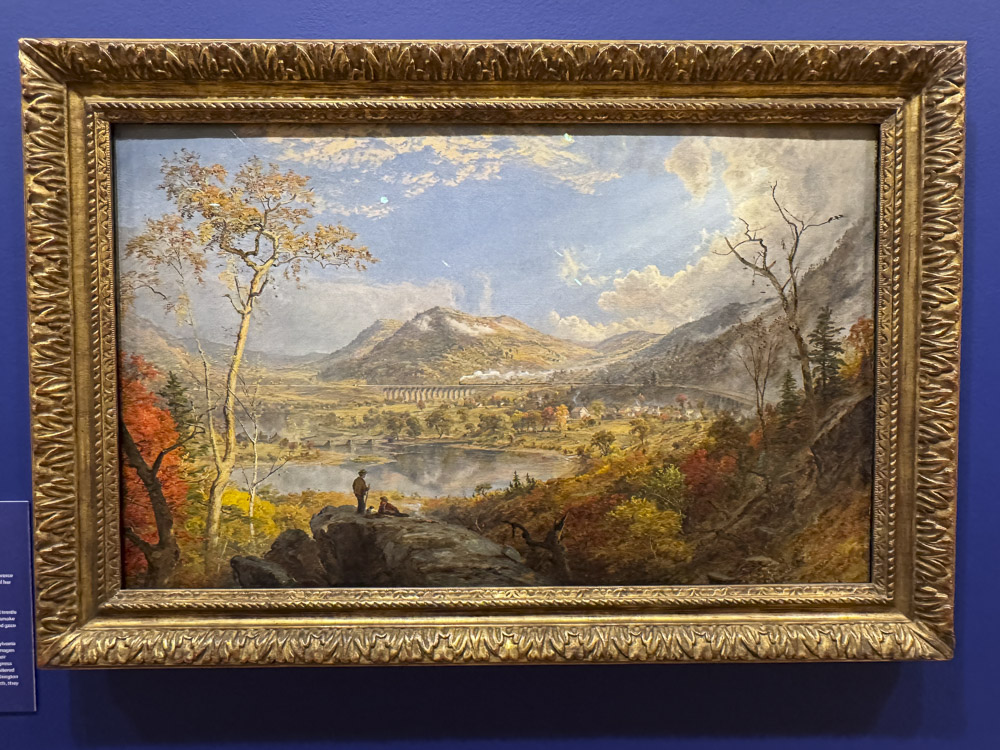
Telling a story in the “Everything Has a Story” Exhibition at the Hudson River Museum, Yonkers, New York
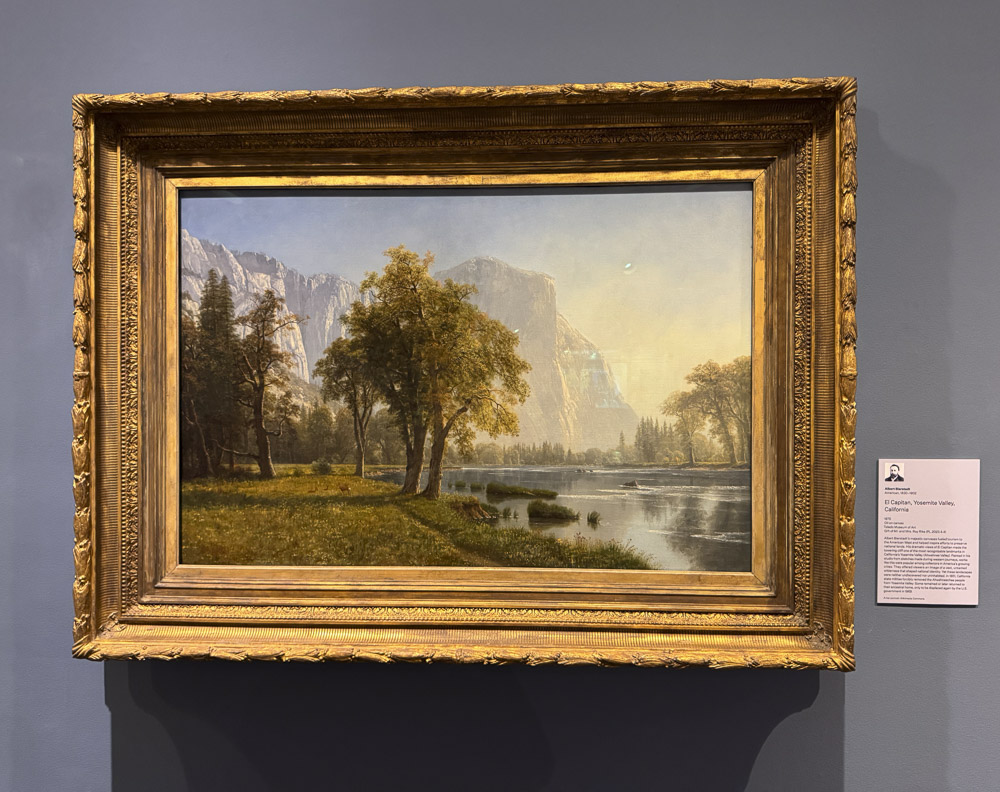
Four American paintings were lent to the Hudson River Museum and are the only paintings in the museum with glass on them. They look bad and Toledo looks bad. The wall text was written at the height of Toledo’s post-pandemic anti-colonialist revisionism panic, and it was unlike any of the other wall text on the rest of the art. For example:
The Toledo Museum of Art explains to the foreign press that the reason the museum can “loan” so many masterworks at one time is because back home they are doing a massive renovation. But in fact, that excuse is only to make the museum look good to the foreigners. At home, the museum is closed for an unnecessary renovation along with an unwanted reinstallation. It is taking years and the museum will have not have any additional gallery space. In fact current gallery space will be reduced for the addition of new bathrooms and a lounge. Storage space will be not be added, even though in the past five years they have acquired 1,300 new art objects for the dreaded reinstallation.
As far as the rest of the world is concerned, the museum’s Wikipedia page claims that the museum is in the midst of a massive “campus expansion.” That’s great for international PR, for the people who will never set foot in Toledo but will pay admission fees overseas to view our art.
As for the “campus expansion,” the museum actually sold an important campus building – the art deco Professional Building, that housed the Symphony and Toledo Arts Commission, to the American Numismatic Society for $2 million one year ago. That is hardly “campus expansion.”
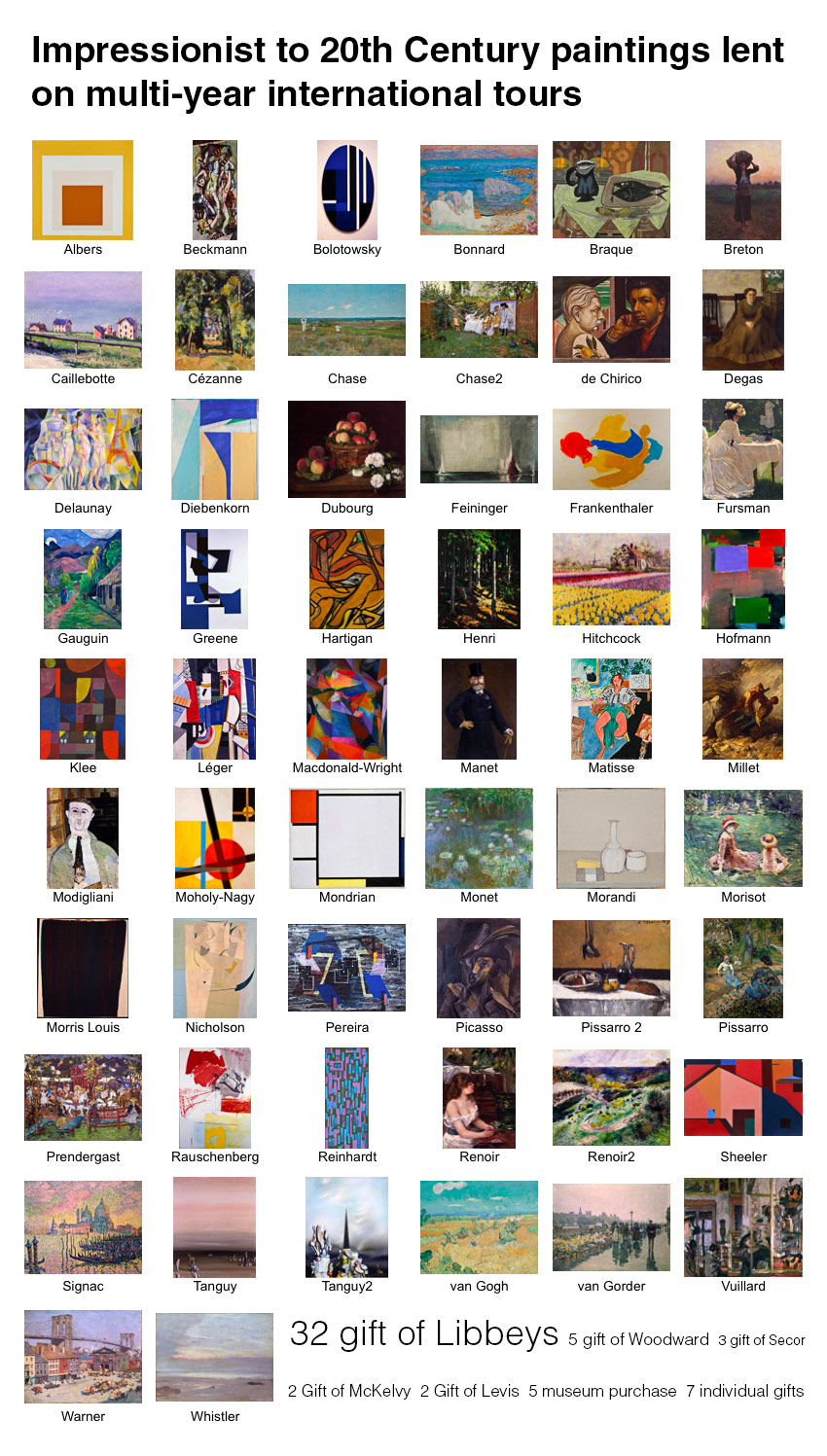
56 of 60 Impressionist thru Modern paintings on multi-year world tours, mangled with glass on them:
53 Old Master paintings on multi-year world tours, mangled with glass on them:
What we are losing:
Instead of presenting the great art that has been painstakingly collected for over a century, the new crew at the museum is using the art to illustrate a presentation of a narrow view of politics.
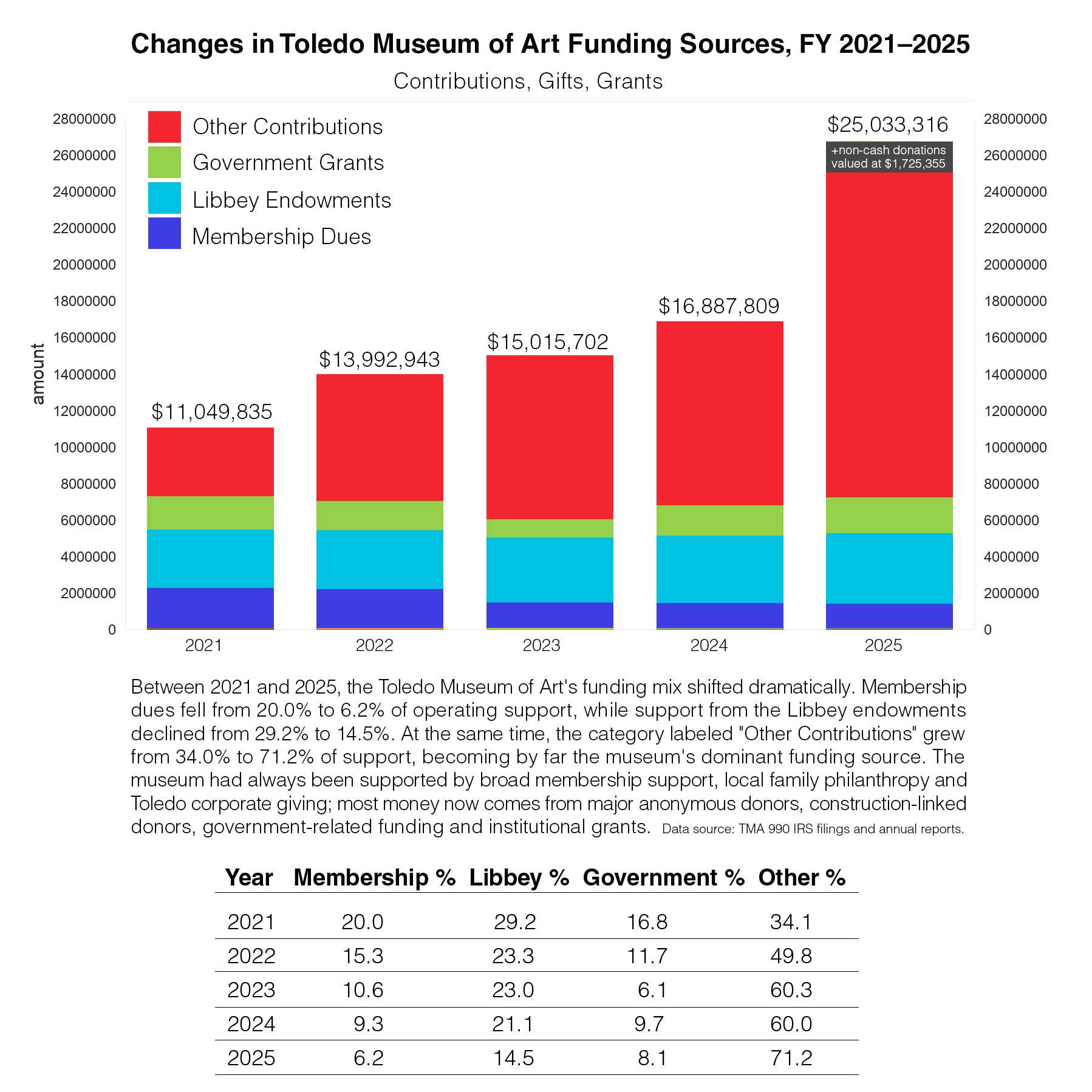
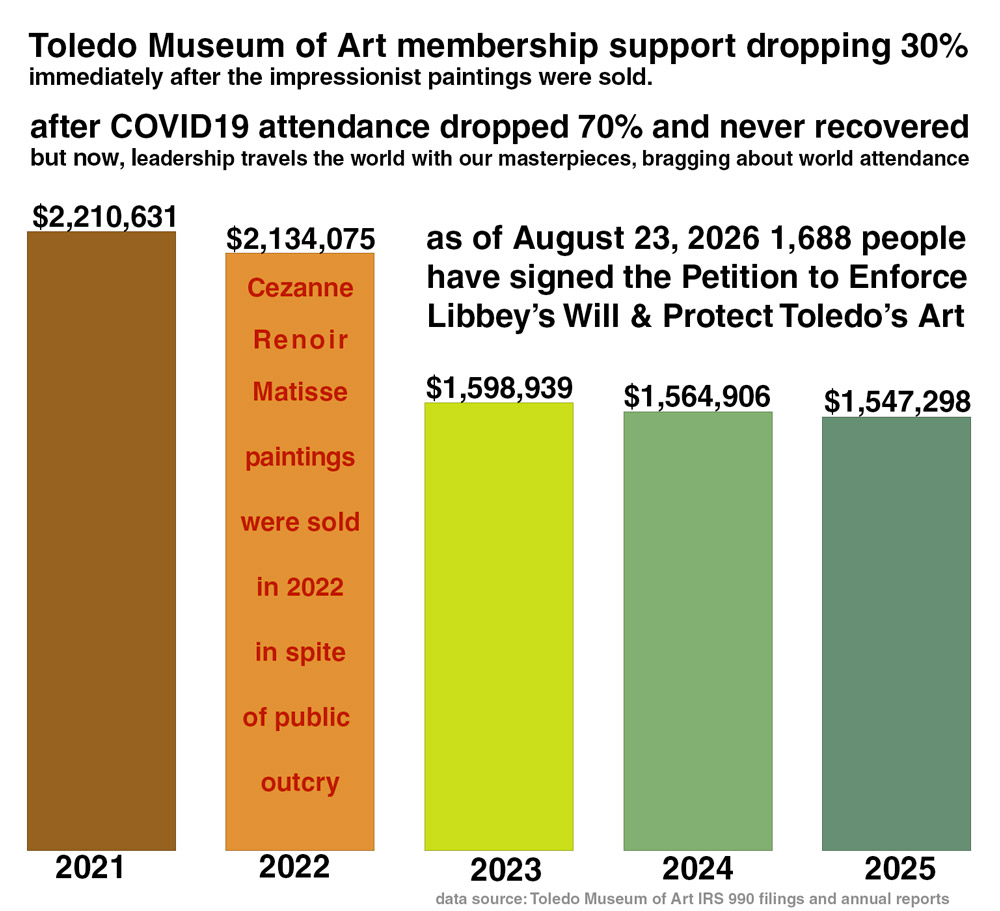
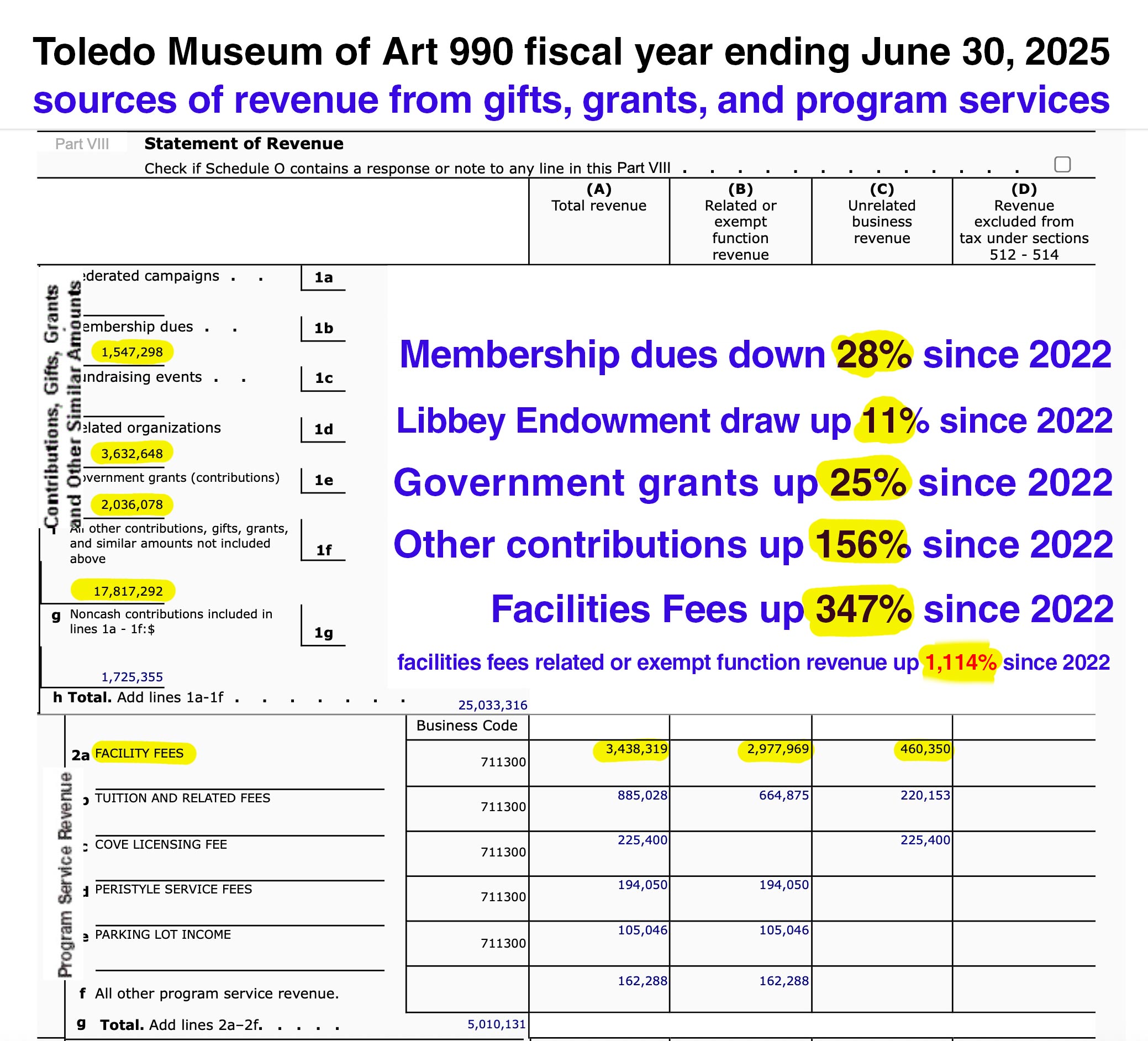
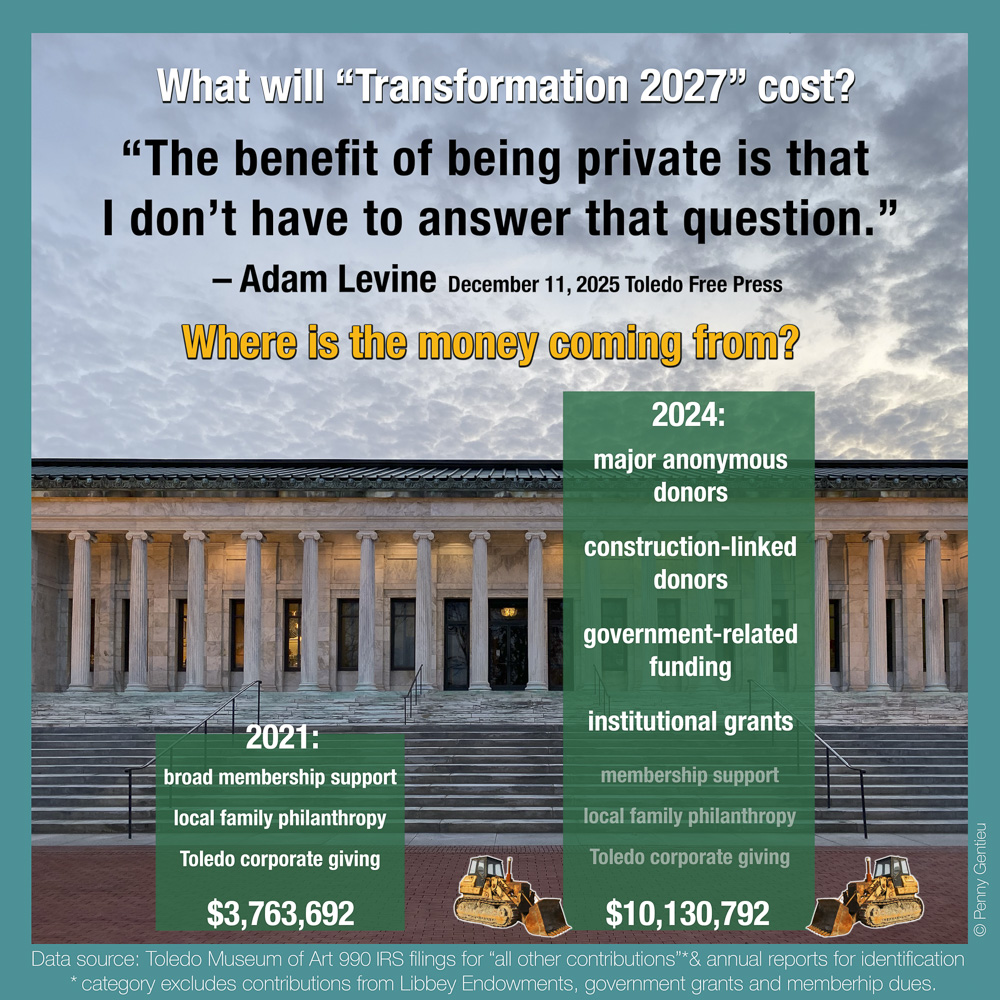
The membership has dropped significantly, as has attendance, which never recovered after the pandemic. Who is paying for this transformation of the people’s museum? What strings are attached?
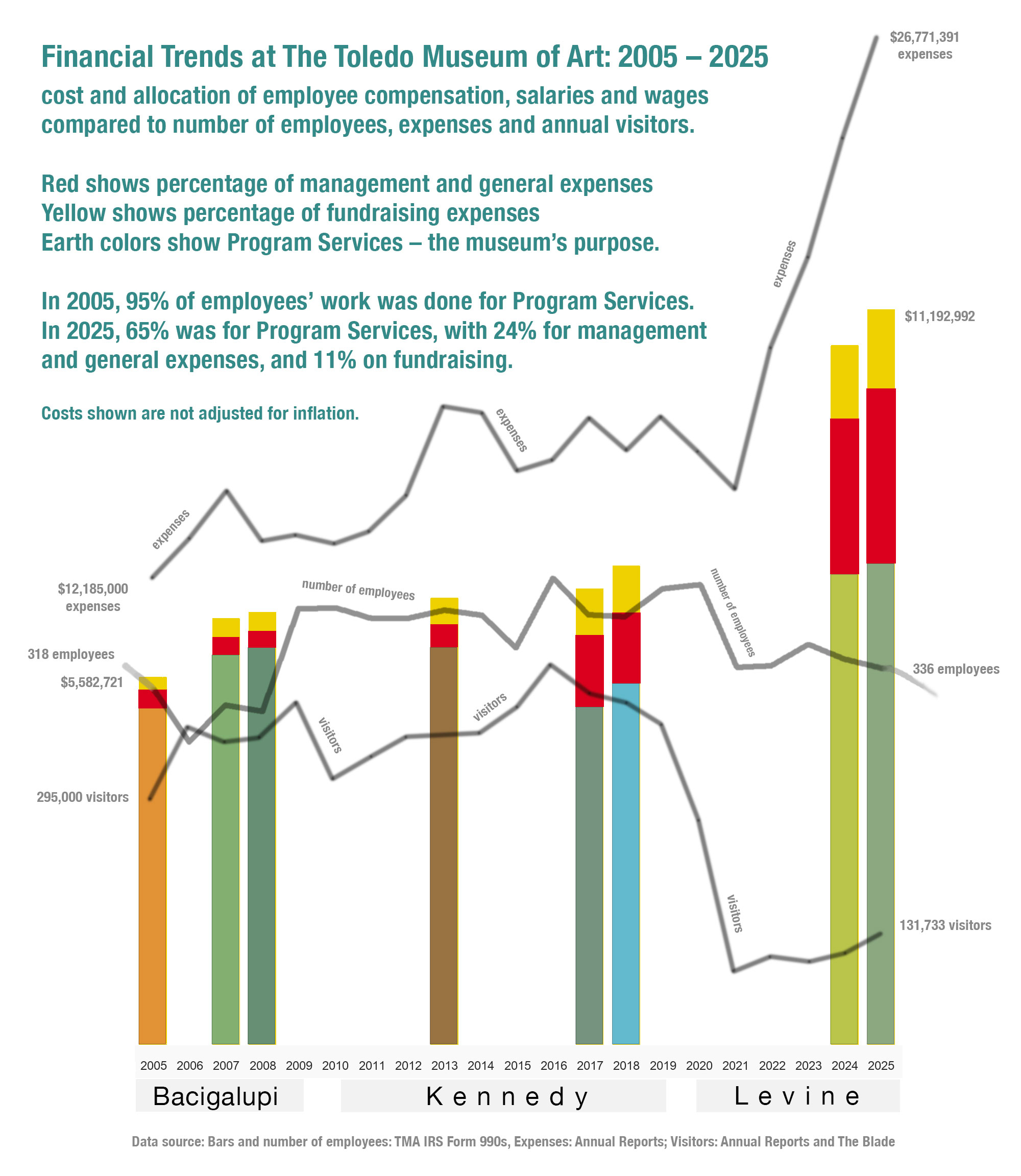
See more charts, graphs and data portraits analyzing the museum’s statistics on this page:
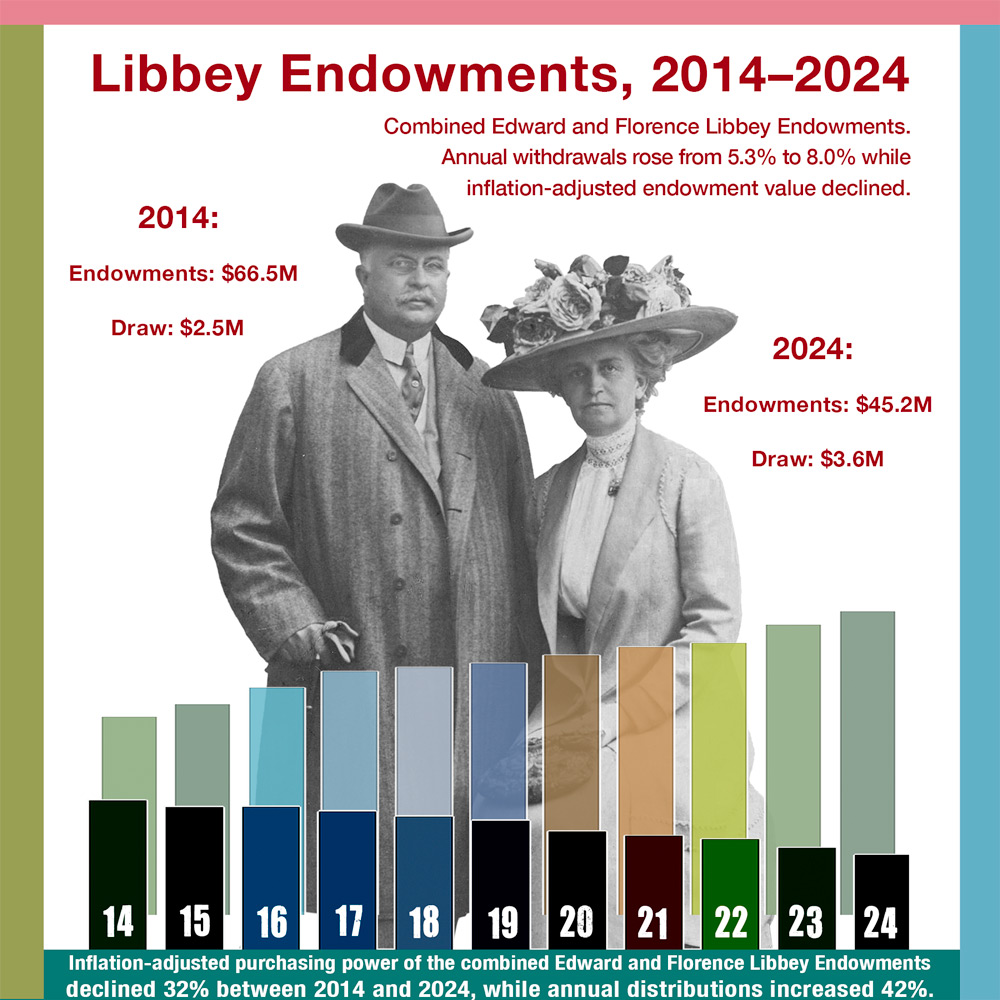
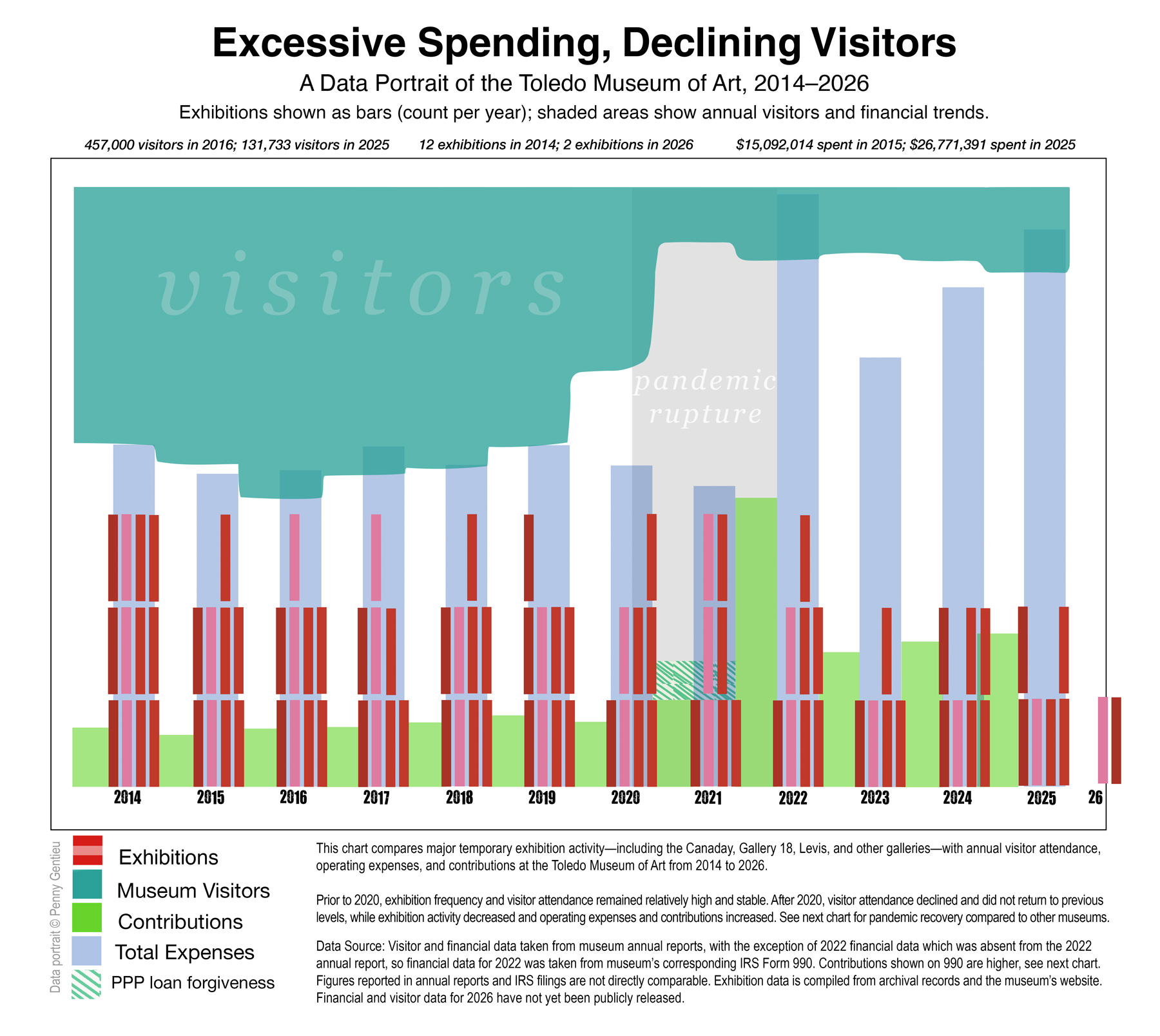
The tall bars show the increasing draws taken every year, the short bars show the reduction in the funds’ value adjusted for inflation, declining 32% between 2014 and 2024. Data source: 990 IRS filings, 2014-2025, of the individual Edward Drummond Libbey and Florence Scott Libbey Endowments.Excessive Spending, Declining Visitors: Exhibition Activity, Attendance, and Financial Trends at the Toledo Museum of Art 2014–2026
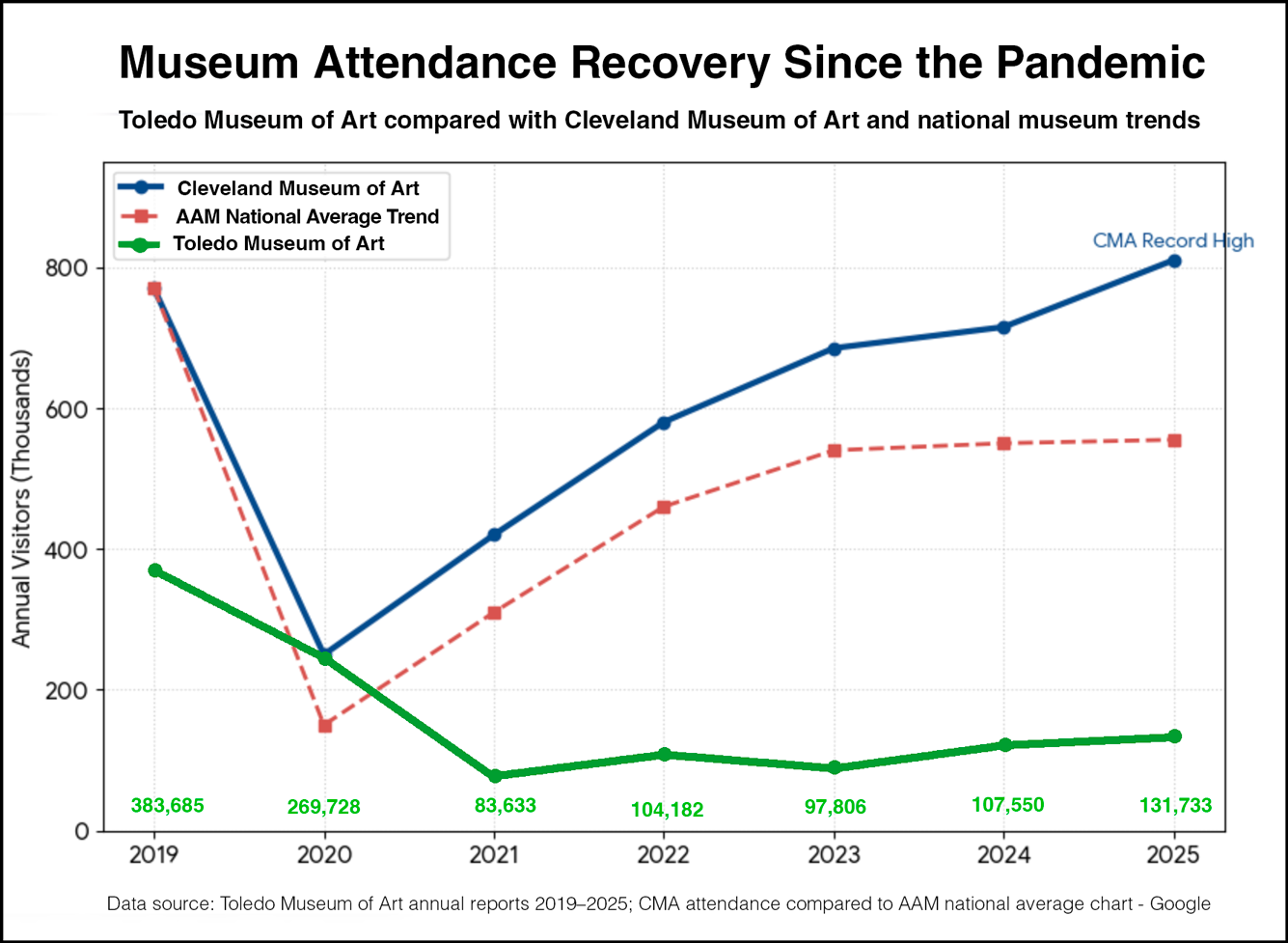
The success of a museum is measured by the attendance.
While the Toledo Museum of Art, as of June 2026, is closed for renovations, it is important to remember that it was entirely open for visitors through fiscal year 2024, which ended June 30, 2025, 13 months ago.
What’s up with the low attendance?
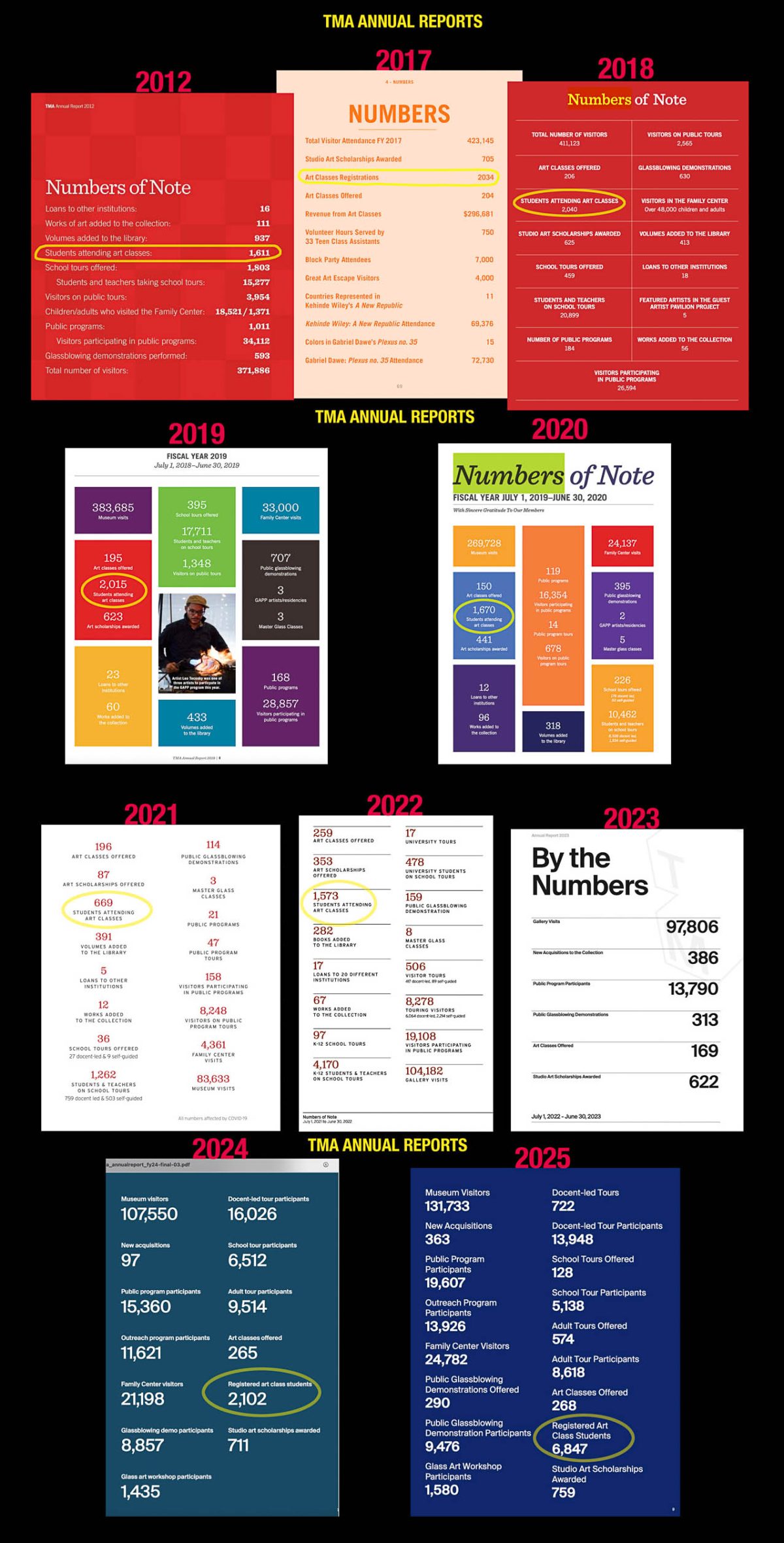
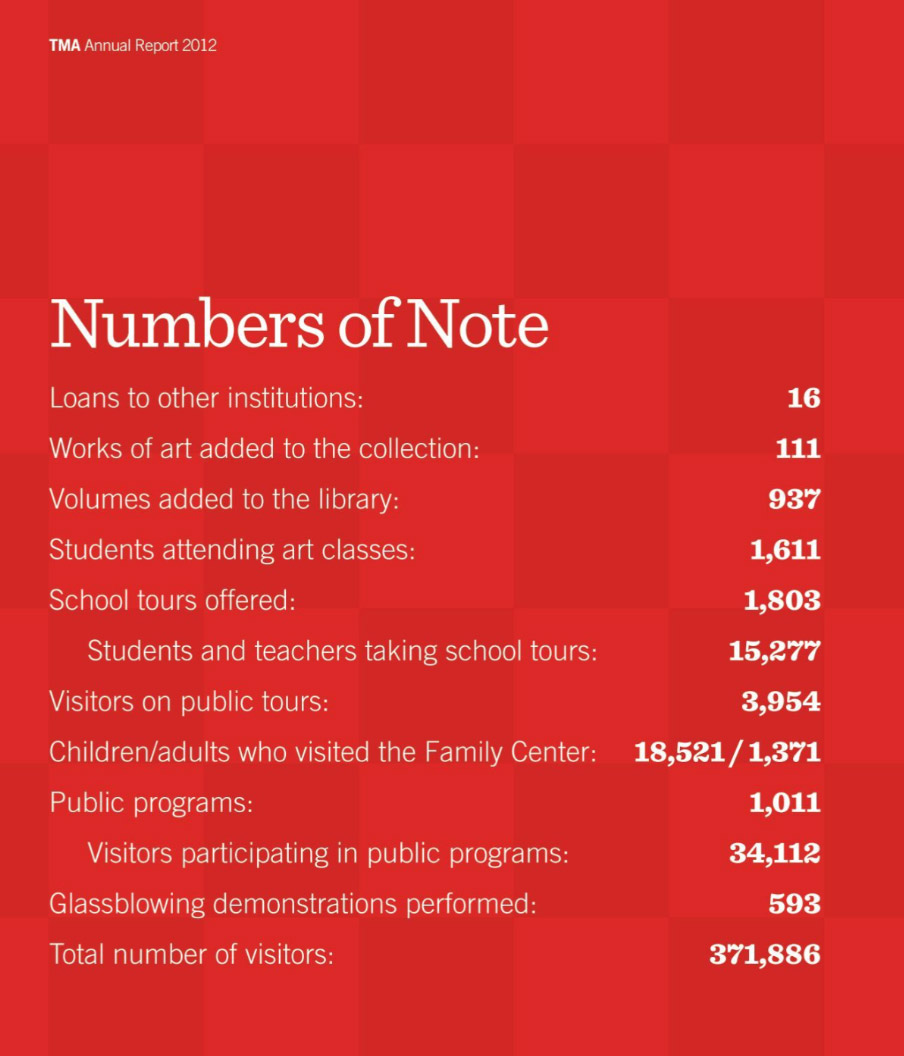
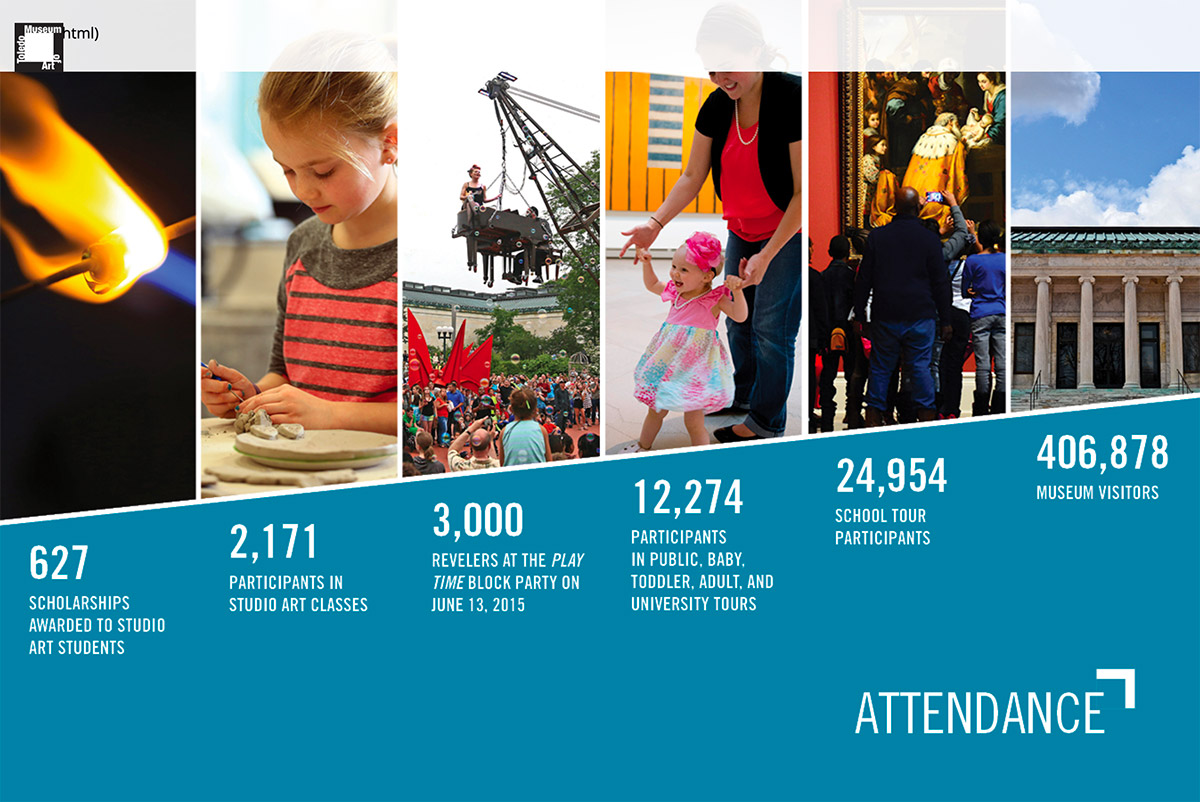
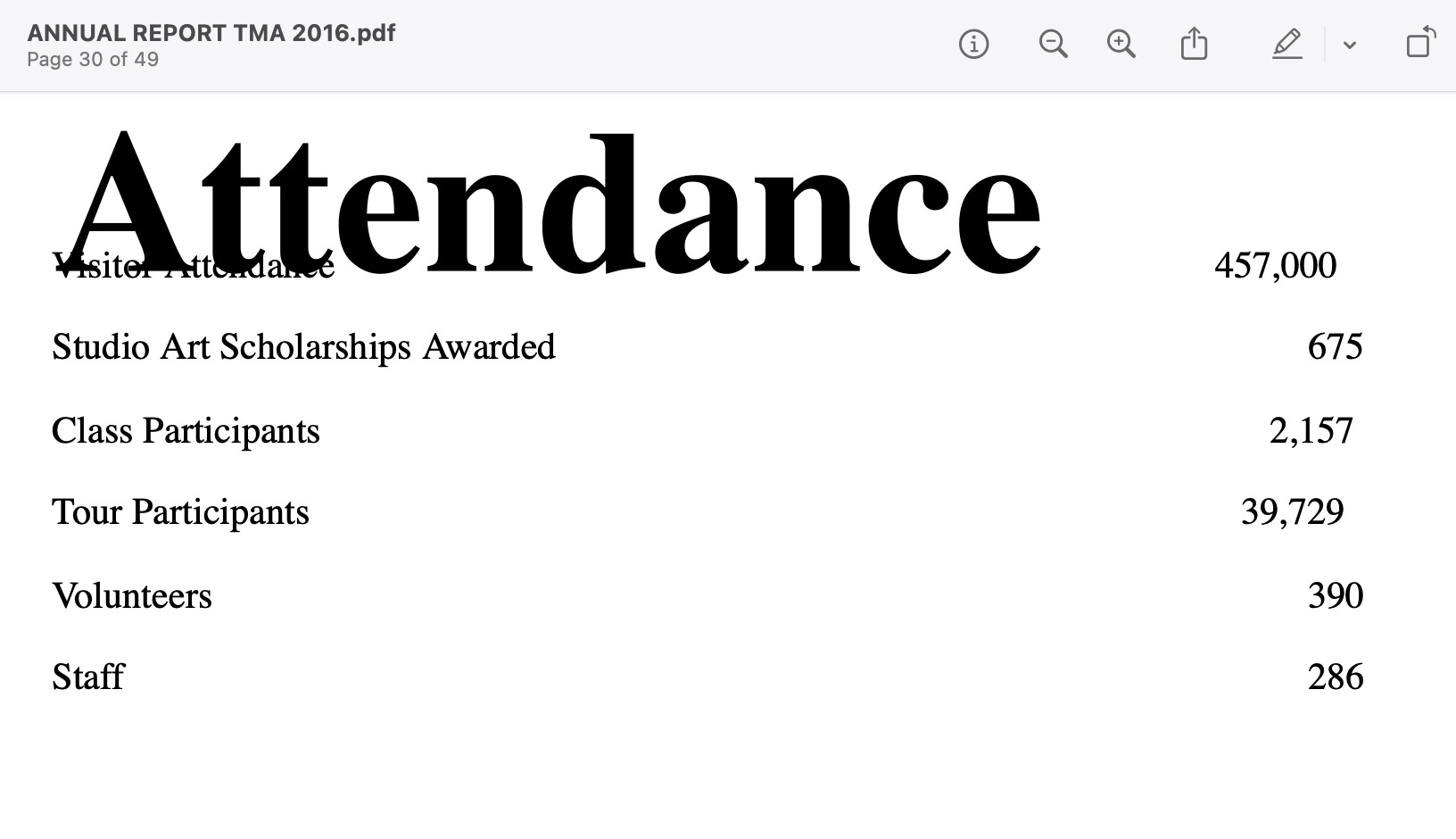
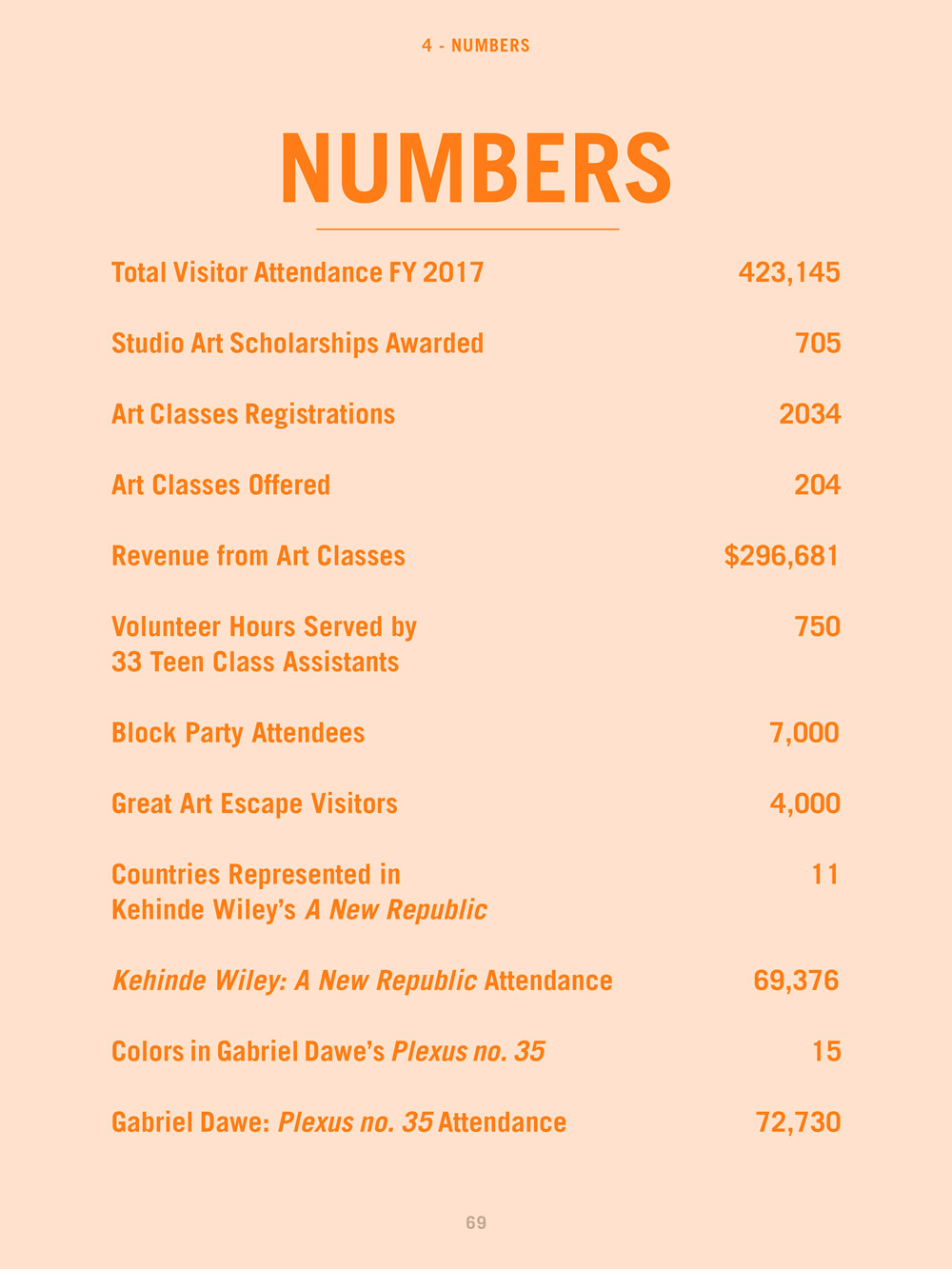
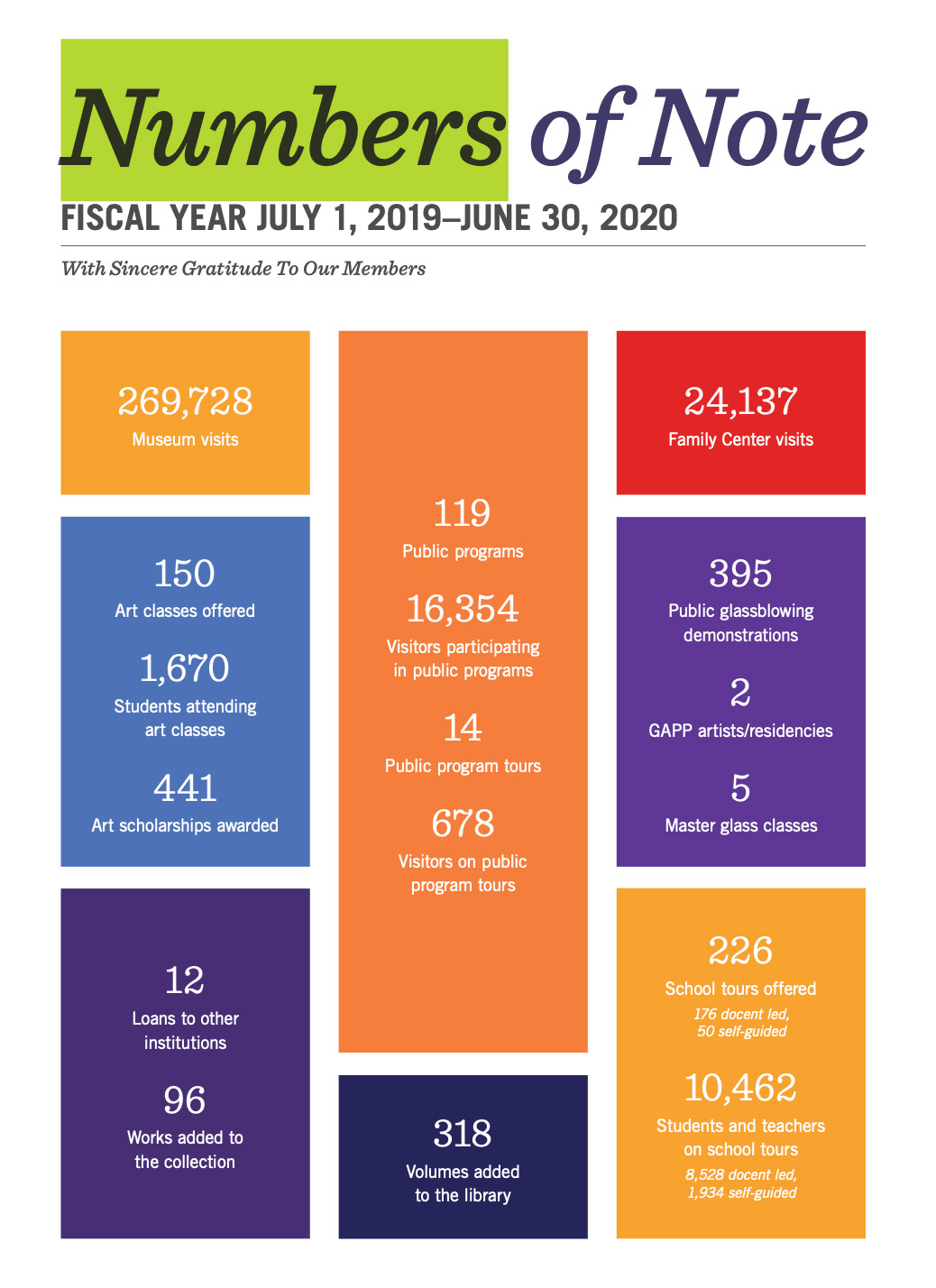
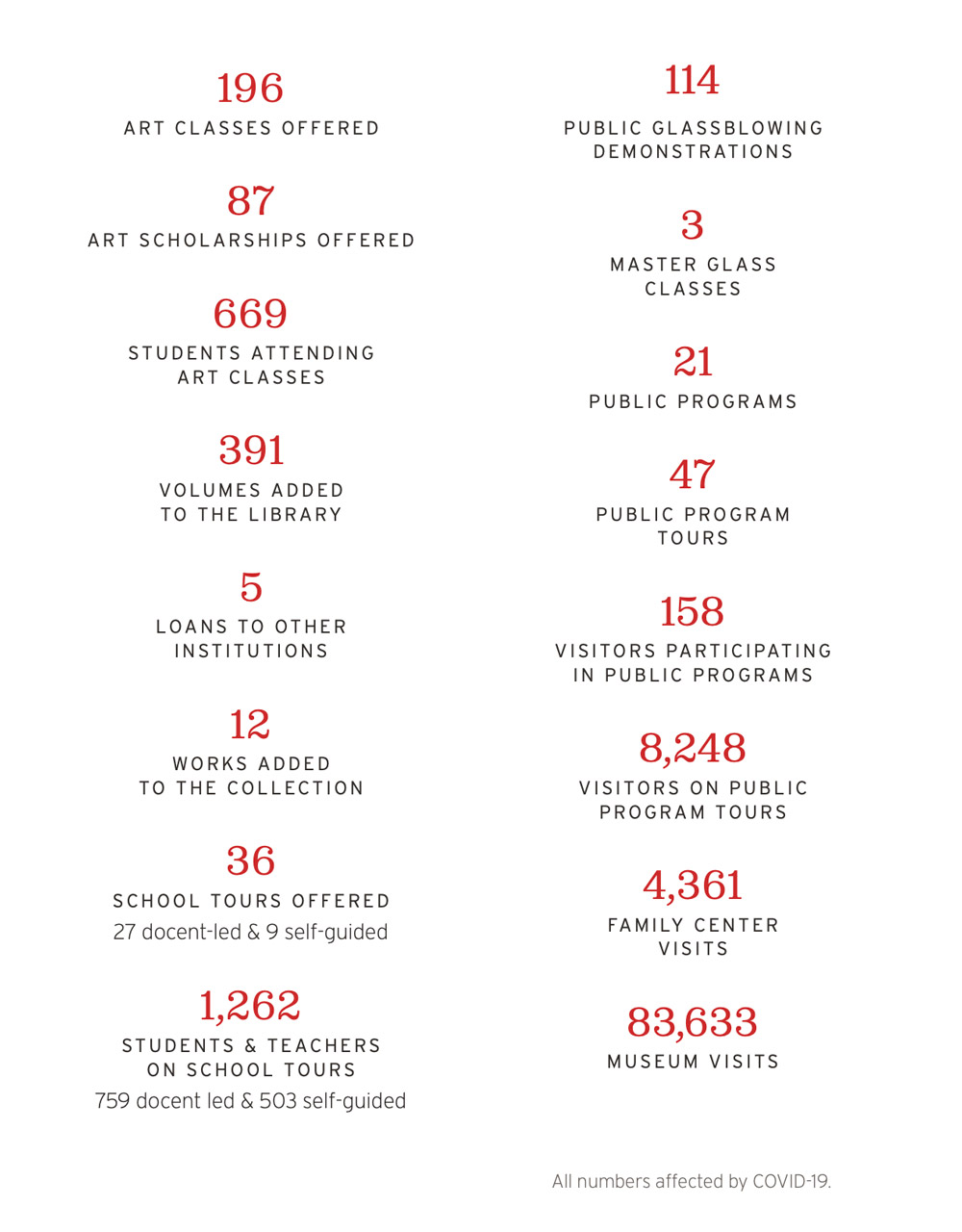
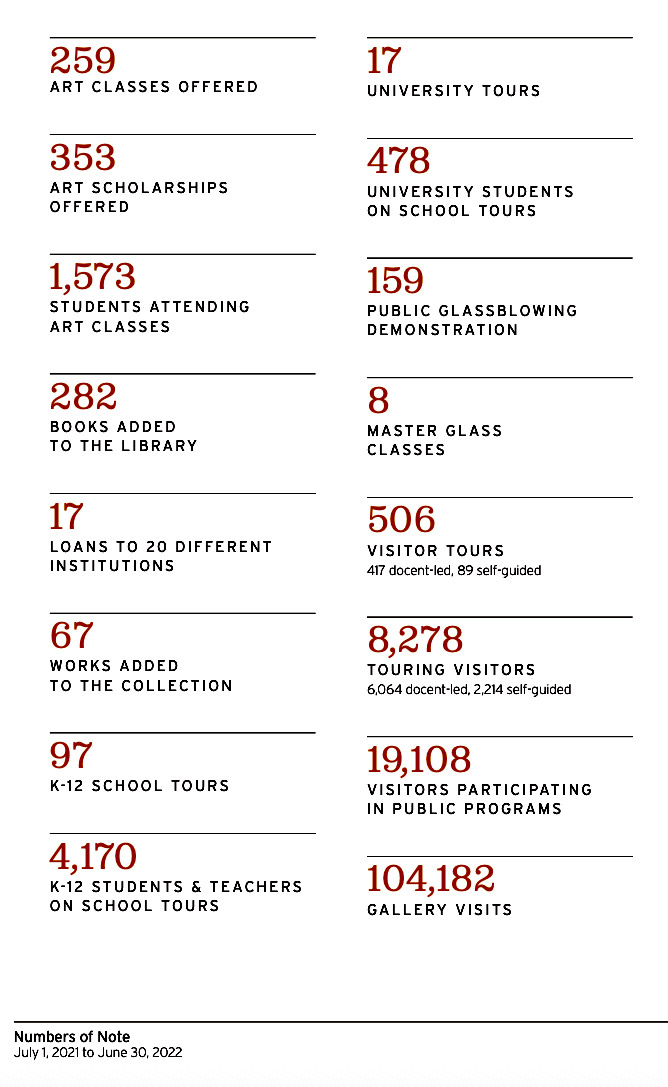
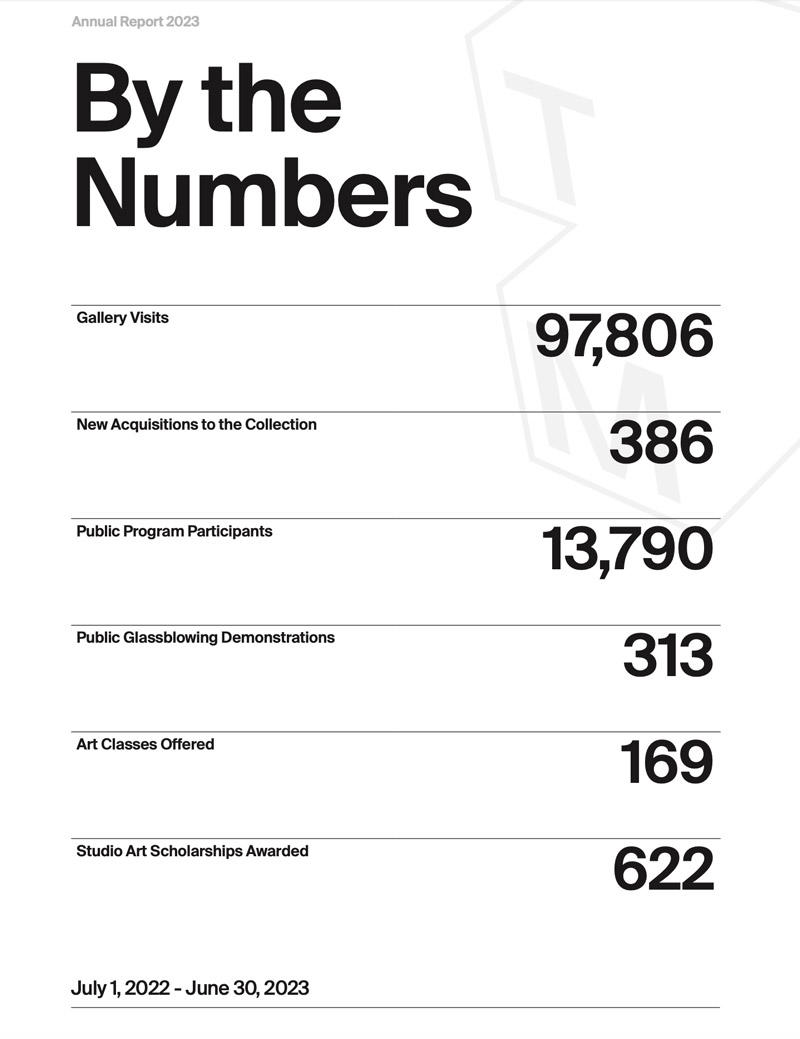
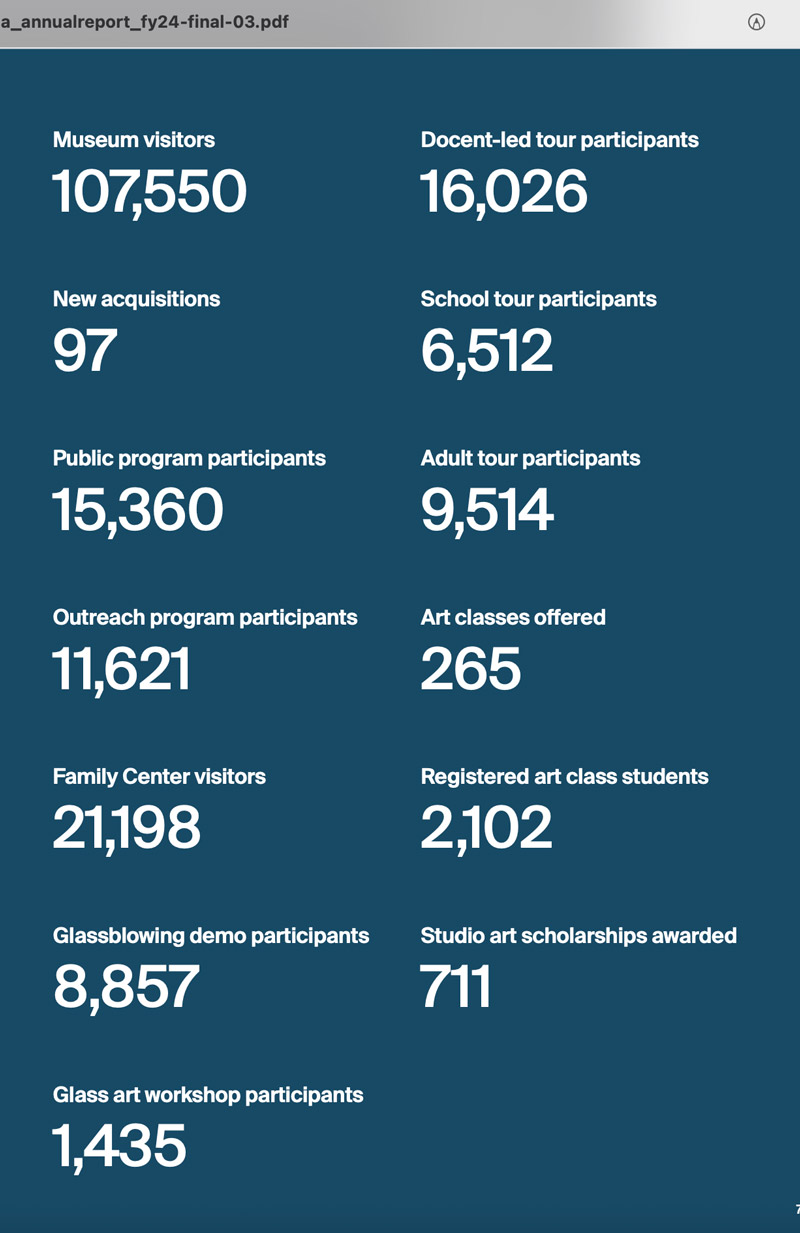
This chart reflects the annual visitors through June 30, 2025. The numbers are taken from the annual reports. See, here, for the actual pages of annual reports for your own comparison: 2012, 2013, 2014, 2015, 2016, 2017, 2018, 2019, 2020, 2021, 2022, 2023, 2024, 2025.
What does Adam Levine have to say about it?
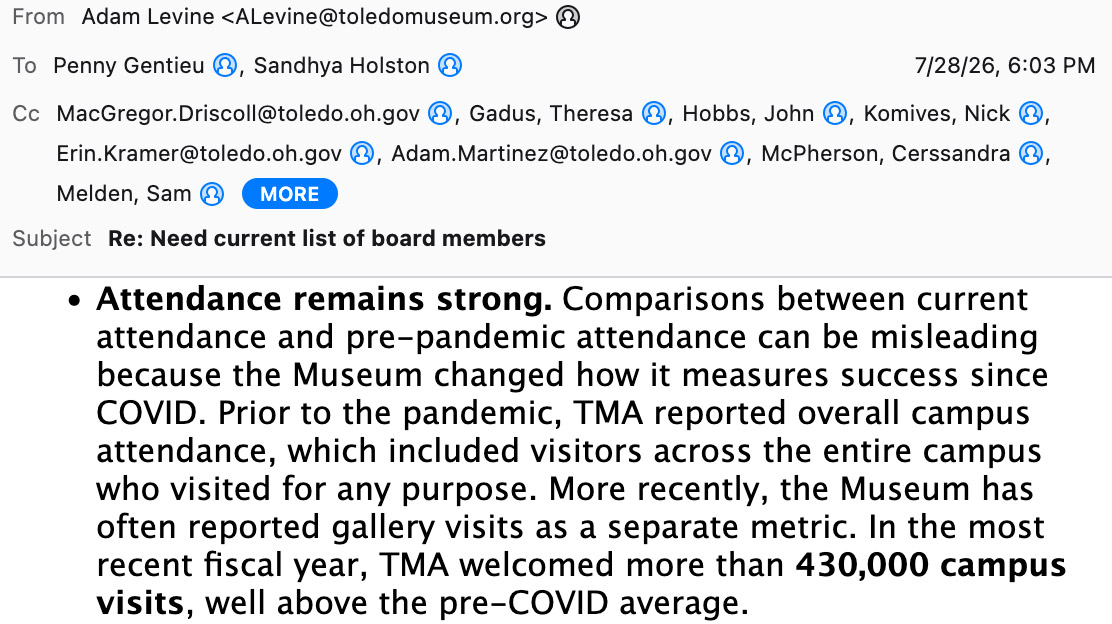
I didn’t ask, but he volunteered. Here is a bullet point in an email to me, cc’d to the Toledo City Council, Mayor, State Representatives, and The Blade, all of whom I had originally cc’d on my email to the board liaison, Sandhya Holston asking for a current list of board members (the second time I asked, and it was all I asked. This time my email was passed off to Adam Levine to respond, who still didn’t give me the list, but responded with bullet points) ––
Comparisons can be misleading between current attendance and pre-pandemic attendance.
“The Museum changed how it measures success since COVID.”
Because prior to the pandemic, according to Adam Levine, when reporting annual museum visitors in the annual reports and to the press, the previous directors reported anyone who came to the museum for any purpose. In other words, he’s saying that before COVID, the museum fudged the numbers by adding anyone who ever stepped foot into the museum buildings for any reason, including employees, university students in the Gehry building Center for the Visual Arts, wedding rental attendants, business event attendees, contractors, repairmen, construction workers, and not just people coming to see the art.
– Museum visitors (to see the art): 132,000
– Community classes & Family Center: 25,000
and to pad the numbers, we are to surmise that perhaps they added:
– Employees: 50,000
– Student and teacher attendance at CVA: 125,000
– Peristyle attendees: 40,000
– Users of the library: 5,000
– Private venue rental attendees and caterers: 20,000
– Contractors, construction workers & delivery workers: 15,000
– Dog walkers, strollers, joggers, block party attendees: 18,000
–– to comprise the 430,000 visitors.
Levine reports “welcoming” just as many campus visits as the previous directors would report museum visits (but were really campus visits, and now Levine is coming clean with that revelation.)
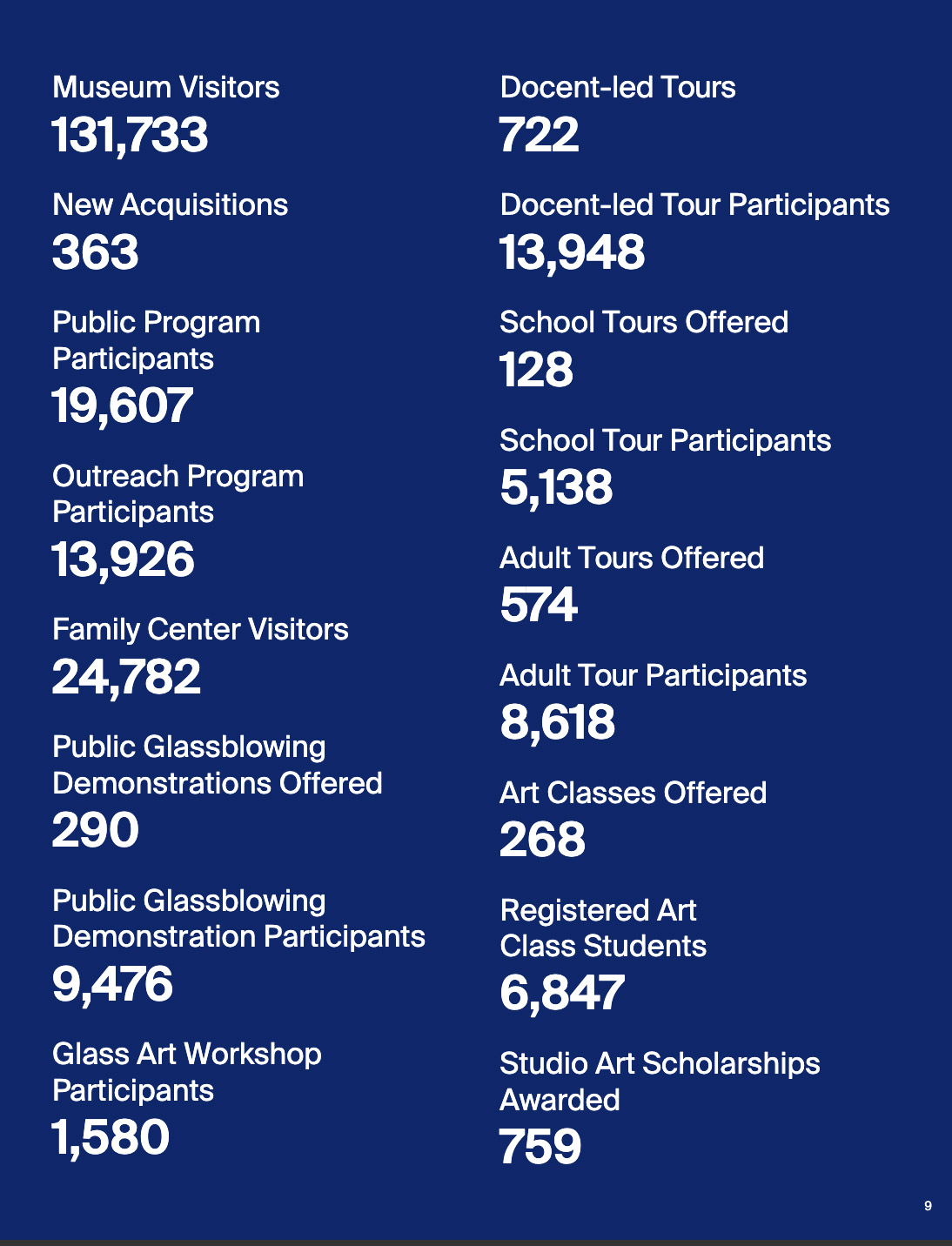
Adam Levine only counts visitors who come to see the art, unlike his predecessors. In 2025, museum visits totaled 131,733, one-third of what it was pre-pandemic, before he became director.
Wrangling, mangling and rewriting history
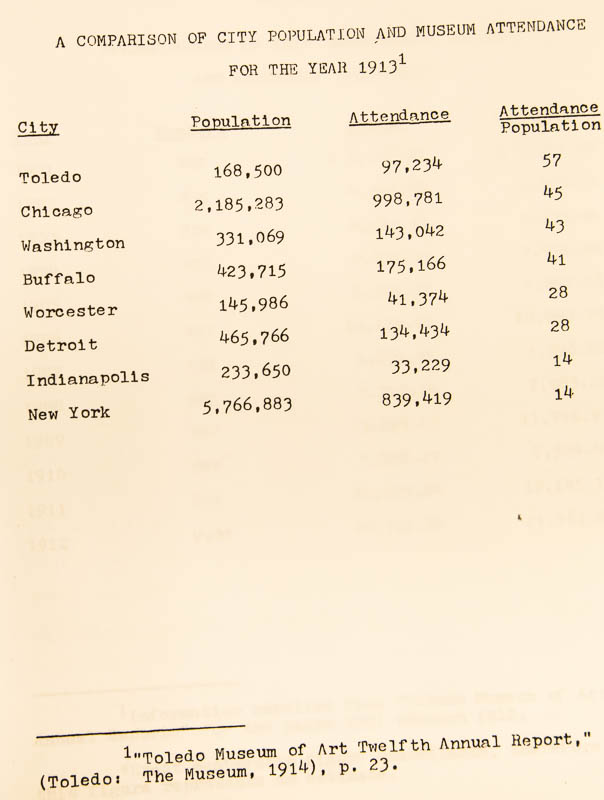
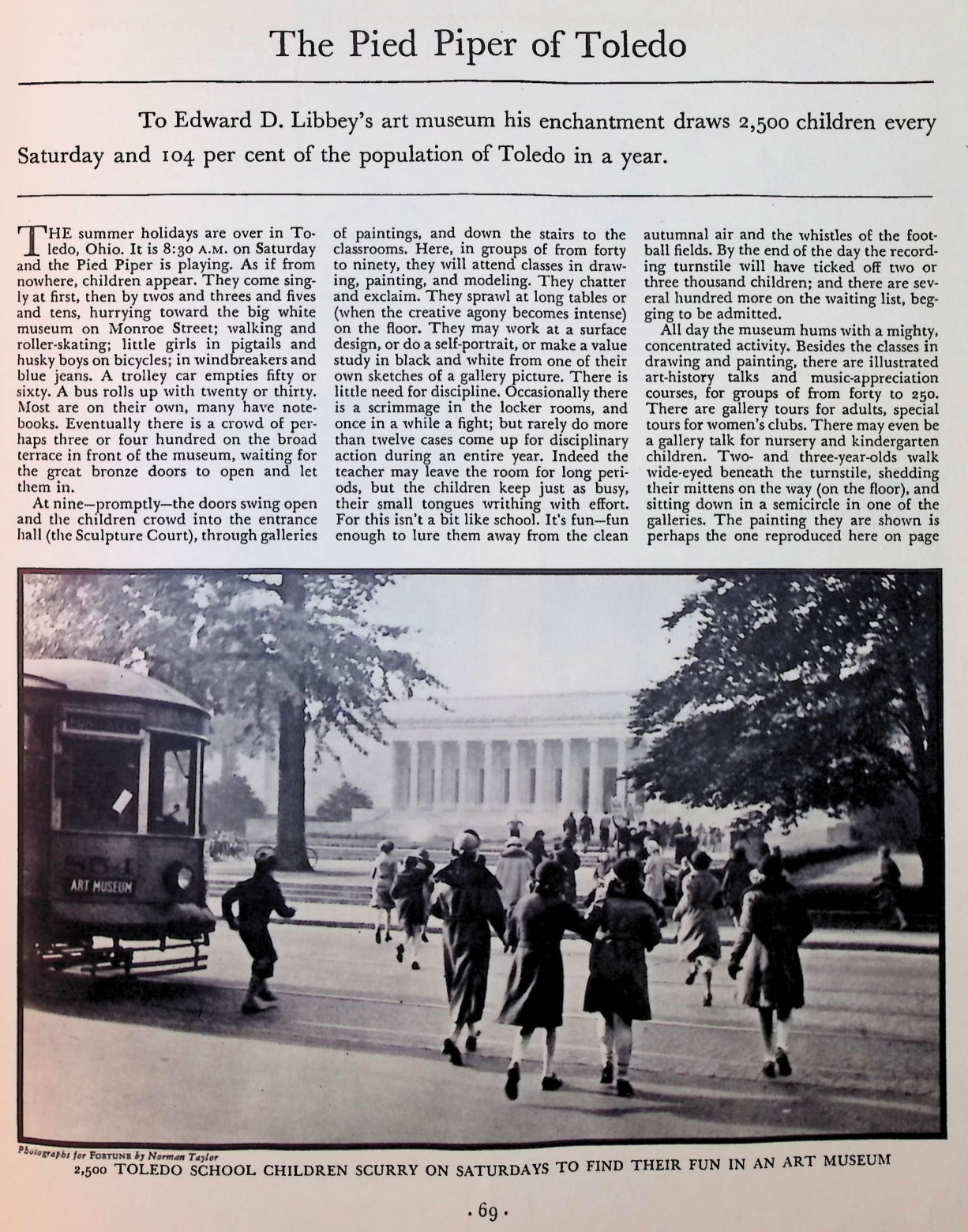
Throughout its history, the museum is famous for having the same or more visitors as the population of Toledo year after year. And now, the attendance has dropped to be one-third of what it had always been and the director is telling us that in the past, the previous directors lied to us. Who is doing the lying?
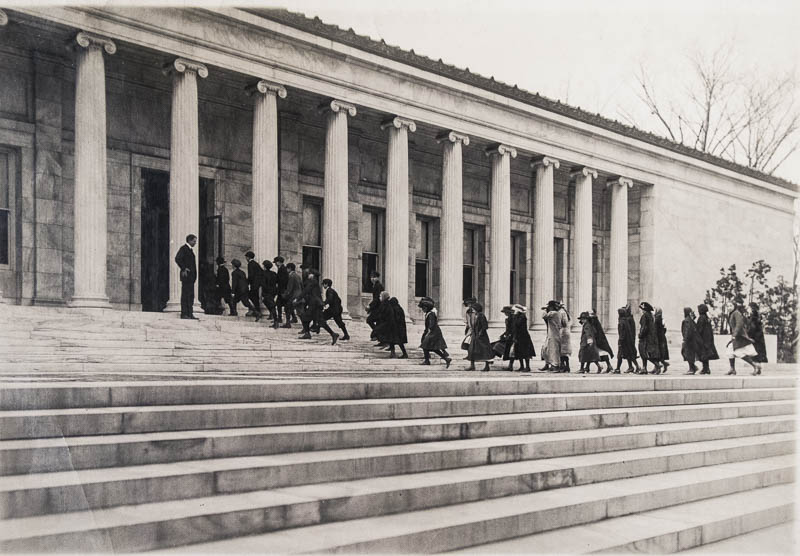
March 30, 1914. Toledo Museum of Art Archives
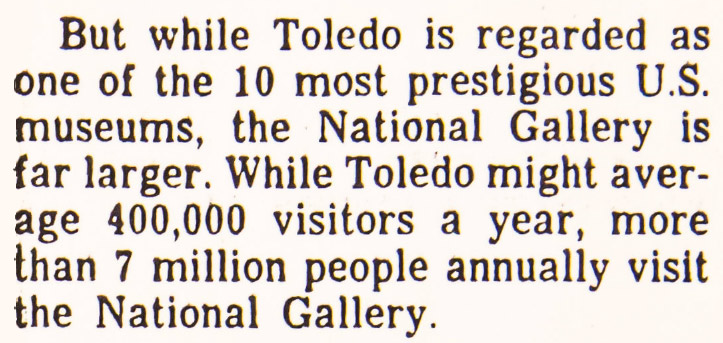
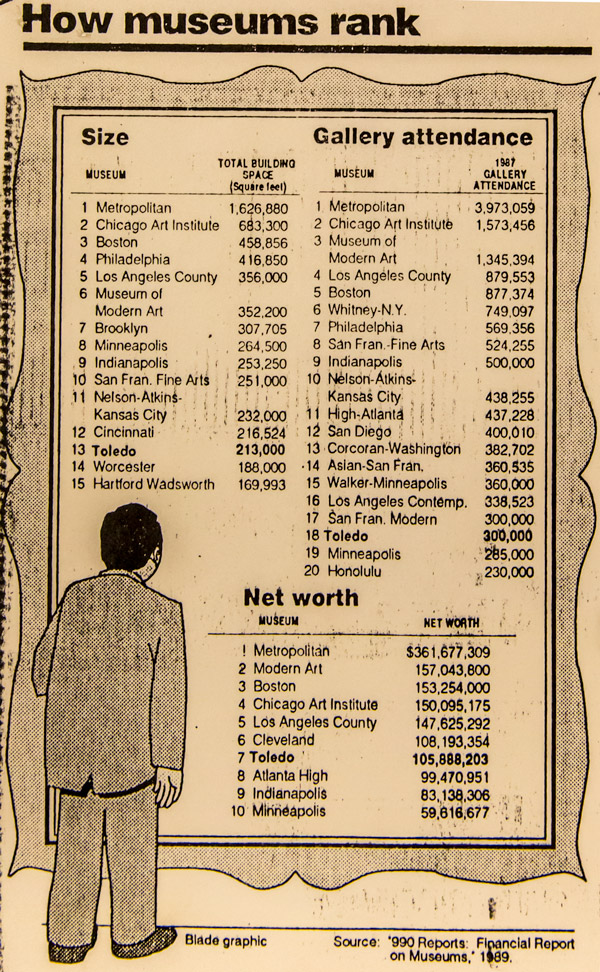
Fortune Magazine, January 1938: museum draws 104% of the population of Toledo in a year.How does Toledo Museum of Art stack up against nation’s best? The Blade, September 17, 1989The Blade, Sept 17, 1989 showing 1987 gallery attendance
How the museum brought them in
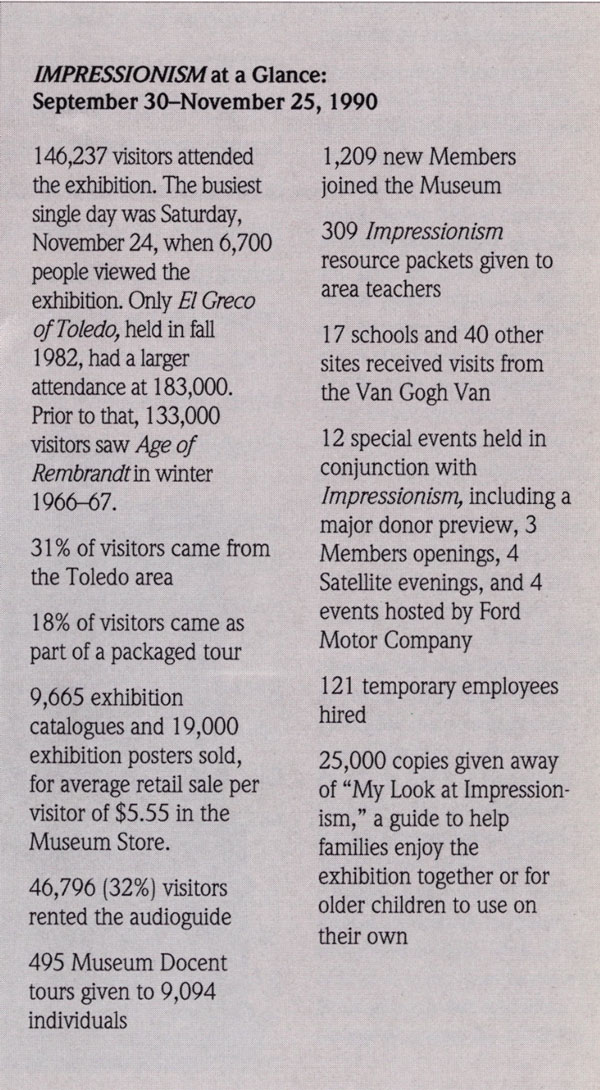
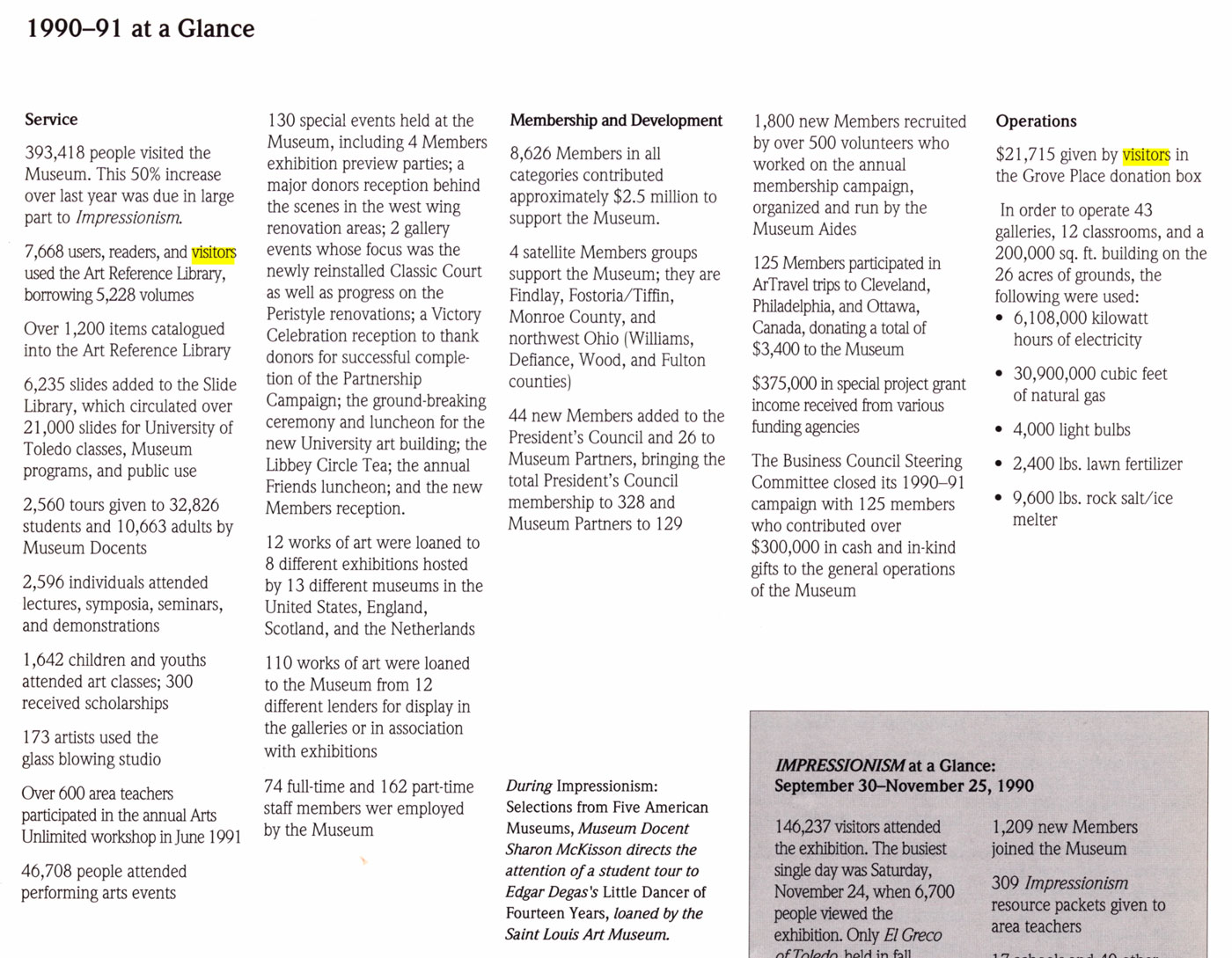
Impressionism, brought in 146,237 visitors alone, in only eight weeks. 393,418 people visited the museum that year, according to the 1991 annual report, an increase of about 98,000 from the previous year, due to the Impressionism show.
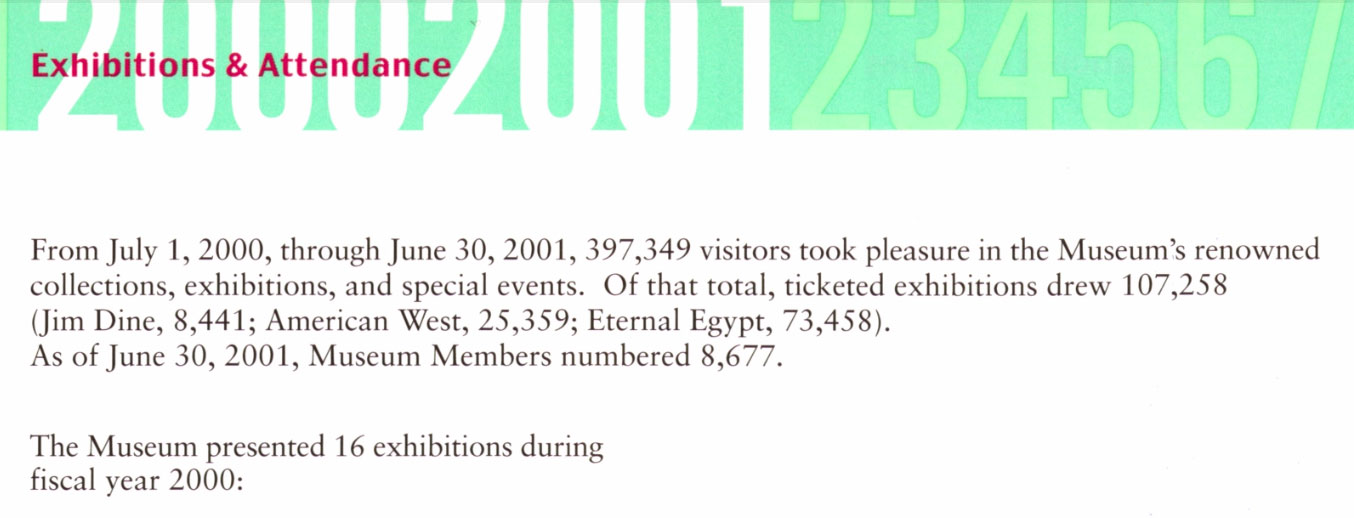
In fiscal year 2000, 397,349 visitors took pleasure in the Museum’s renowned collections, exhibitions, and special events.
In 2001, the museum reported that from July 1, 2000 through June 30, 2001, presenting 16 exhibitions that year, 397,349 visitors took pleasure in the Museum’s renowned collections, exhibitions, and special events.
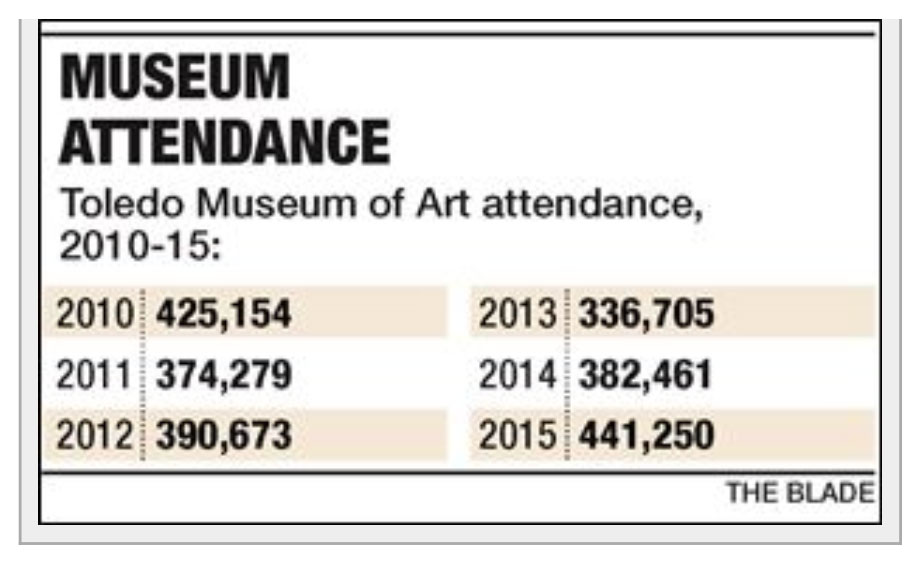
Looks like the public was still going to the museum in 2012.Chart published in The Blade January 17, 2016
2015: Toledo Museum of Art sets attendance mark
In 2015 the museum set an attendance record — over 440,000. Toledo Museum of Art sets attendance mark, The Blade January 17, 2016. Director Brian Kennedy said,
While the increased attendance numbers are “great,” they don’t necessarily measure the museum’s success, says TMA director Brian Kennedy. Rather, it’s the programming chosen and a measure of the relevancy of the museum itself that drives the institution.
“Attendance numbers are not the most important thing for us. The most important thing for us is visitor satisfaction,” Kennedy said. “We want to be the best in other people’s opinions.”
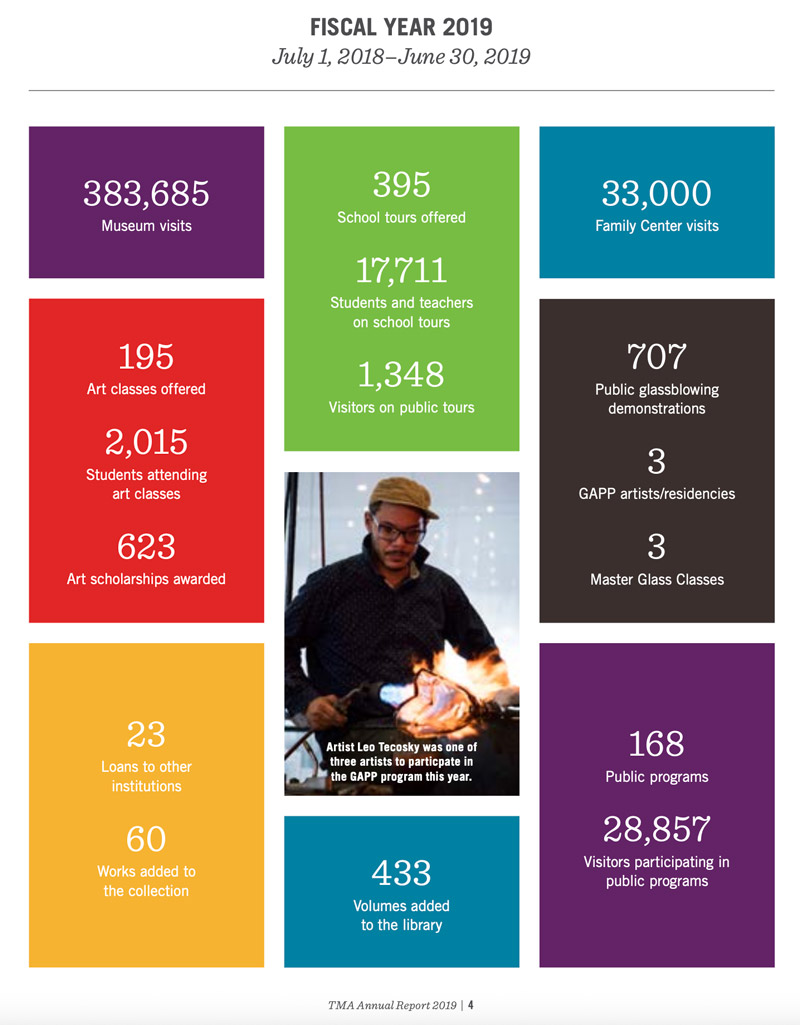
In 2019, The Blade reported a 3% attendance drop in the article, Attendance falls at Toledo Museum of Art, January 15, 2019.
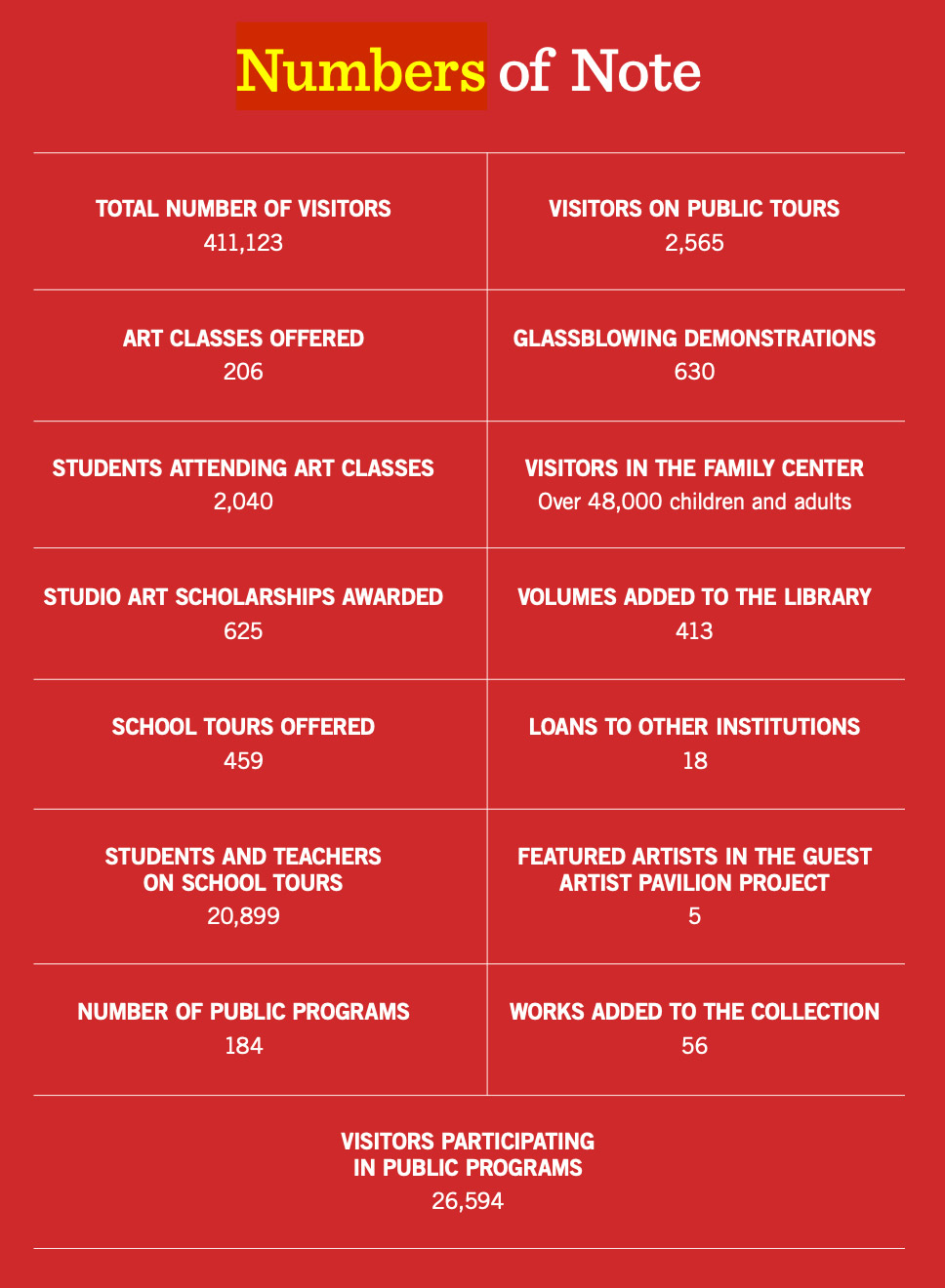
The numbers are in line with overall museum attendance, which dropped 2.8 percent from 423,145 people to 411,123, according to TMA’s recently released annual report. The 12,000- person decrease was less than in fiscal year 2017, when attendance dropped by almost 34,000 people.
Those numbers don’t alarm museum officials, who say the museum has consistently seen more than 400,000 visitors come through its doors annually in recent years.
“While attendance is something we do track and report on, how the museum really benchmarks its success is two-fold: the quality of what we offer the public and in return, what visitors say about the museum,” Ms. Elton said.
Attendance of special exhibitions is reported:
– The Mummies: From Egypt to Toledo, 2018: 33,228 – Fired Up: Contemporary Glass by Women Artists, 2018: 34,849 – Rebecca Louise Law: Community, 2018: 44,817
– Kehinde Wiley, 2017: 69,000 – Play Time including the Red Ball project, 2016: 135,000
Fast-forward to post-covid
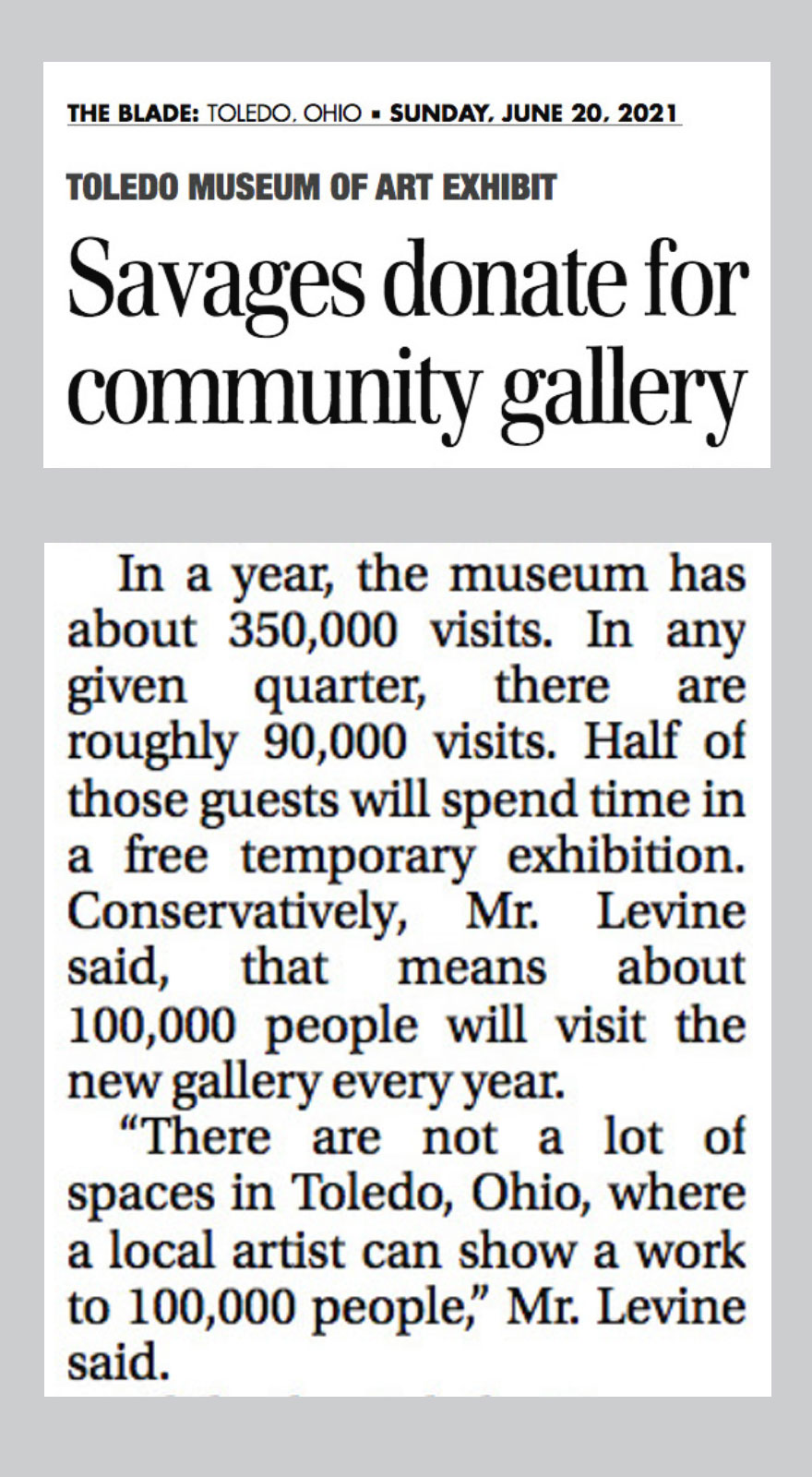
Adam Levine’s gallery visits estimate in 2021, that half of museum visitors will spend time in a free temporary exhibition, which might be 100,000 to 175,000 people in a year. Seems to be talking about visitors coming to see the art.
It takes a real effort to bring the people in.
“Our curatorial team has tripled while our exhibitions budget has nearly doubled.” Adam Levine wrote in an email to TMA members in March 2023.
Whereas 16 shows annually had been the norm in the past, in 2025, the museum had only five exhibitions, with only two shows in the major temporary exhibition spaces:
– Rachel Ruysch: Nature into Art (Levis Galleries)
– Infinite Images: The Art of Algorithms (Canaday Gallery)
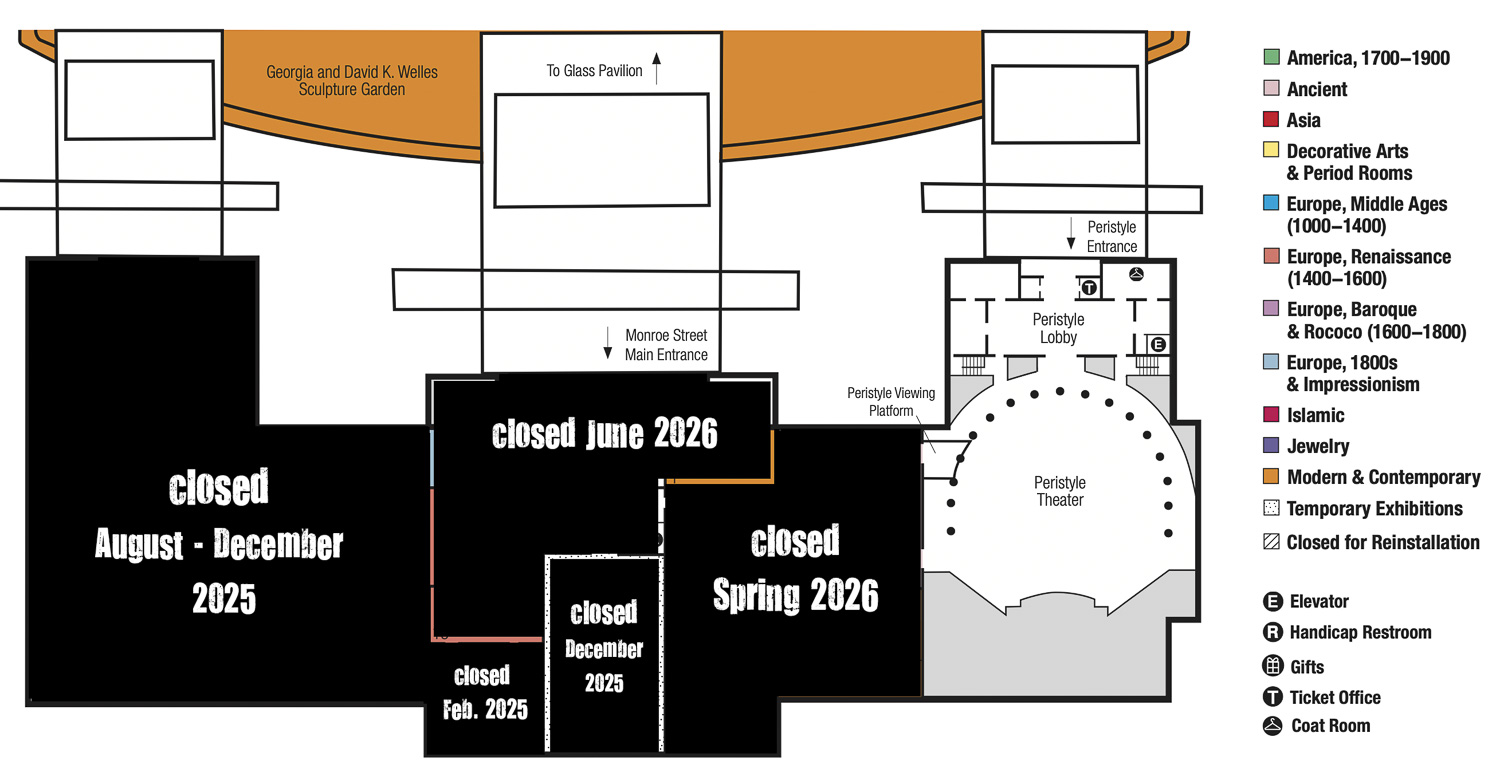
Now, in 2026, all of the sprawling galleries of the white-pillared museum building are closed and the art has been removed – it has been rented overseas, loaned throughout the U.S., and stored off-site, out of town while they “renovate.”
What was Director Adam Levine doing all these years with a tripled curatorial staff and a doubled exhibition budget? We know now, as they were shutting down the museum, that they were actually really busy working on secret international blockbuster exhibitions with the masterworks. Secret, because no announcements were made to the Toledo public, who had to find out through foreign news stories that most of their best masterworks were overseas in unprecedented institutional “loans.”
Faced with having to report pathetic post-COVID museum attendance statistics, which really look bad compared to other museums, Adam Levine informs us that the past has been a fraud – the museum was dishonest with the public, implying that all the reporters at The Blade writing about museum attendance throughout the years had to have been dumb and gullible, as were all of the museum stakeholders, all those many years.
What a deceit.
The founders of the museum intended for the museum to be maintained in Toledo and for the art to be displayed in Toledo. The Libbey will is clear: the museum is for Toledo.
But Adam Levine had a different idea: change the measurement of success by leveraging our art and betraying our legacy.
I was merely asking for a current list of board members. It seemed outrageous to me that they didn’t simply send it to me the first time I asked, so when I had to ask a second time, I cc’d the city council, state representatives and the press. I expected the reply to be straight-forward: a list of current board members.
I wanted a list of current board members, since the list was not current on the TMA website, and I wanted to see who the three newly announced board members were replacing.
Can you believe the audacity of Adam Levine to use my email to broadcast to city council, state representatives and the press that previous directors had falsely reported museum attendance, and that recent attendance is equal to what it had been when our museum used to be great?
This goes way beyond gaslighting. It’s difficult to grasp how our museum is being used and abused, torn apart and lied about, all in plain sight.
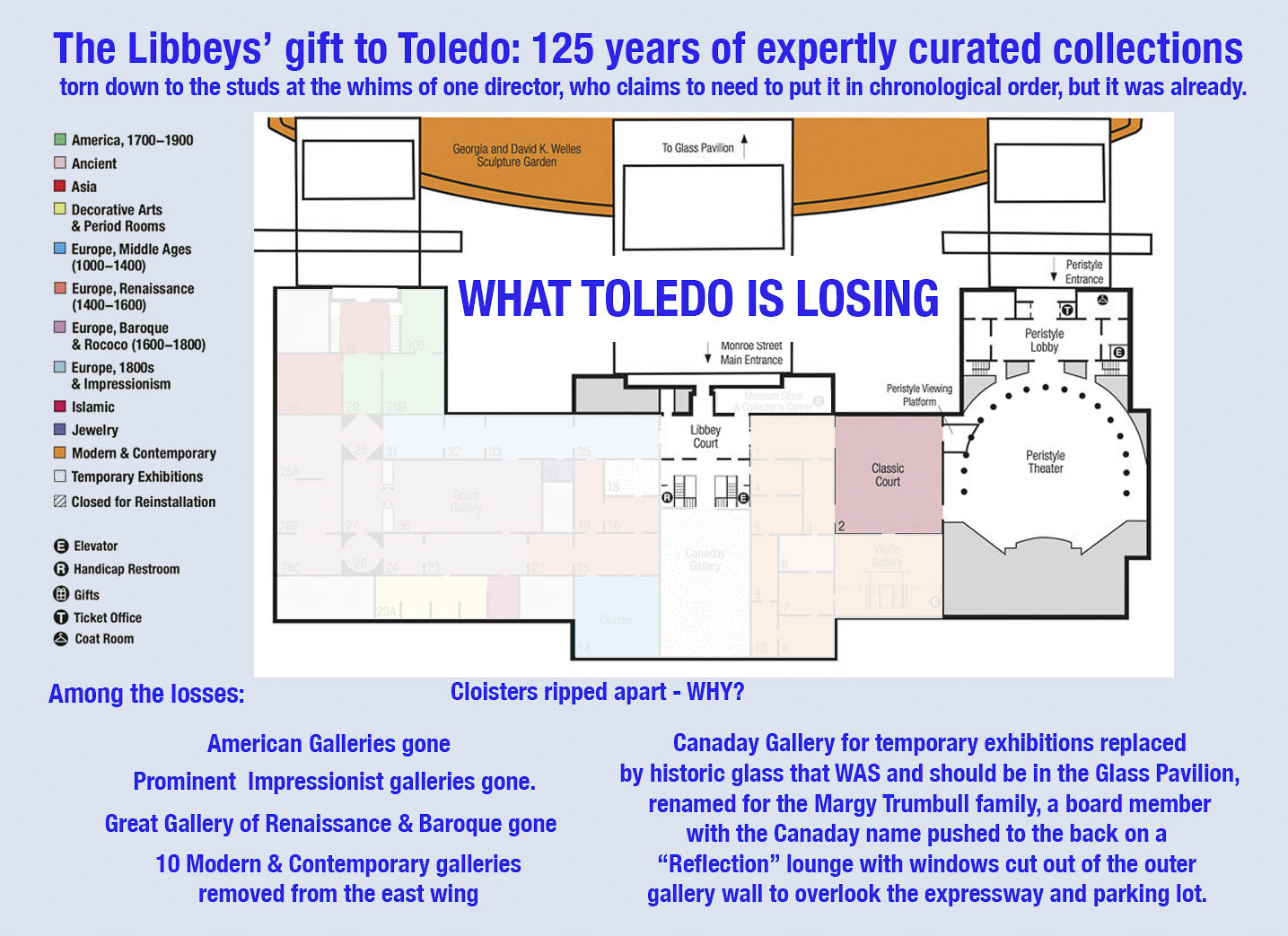
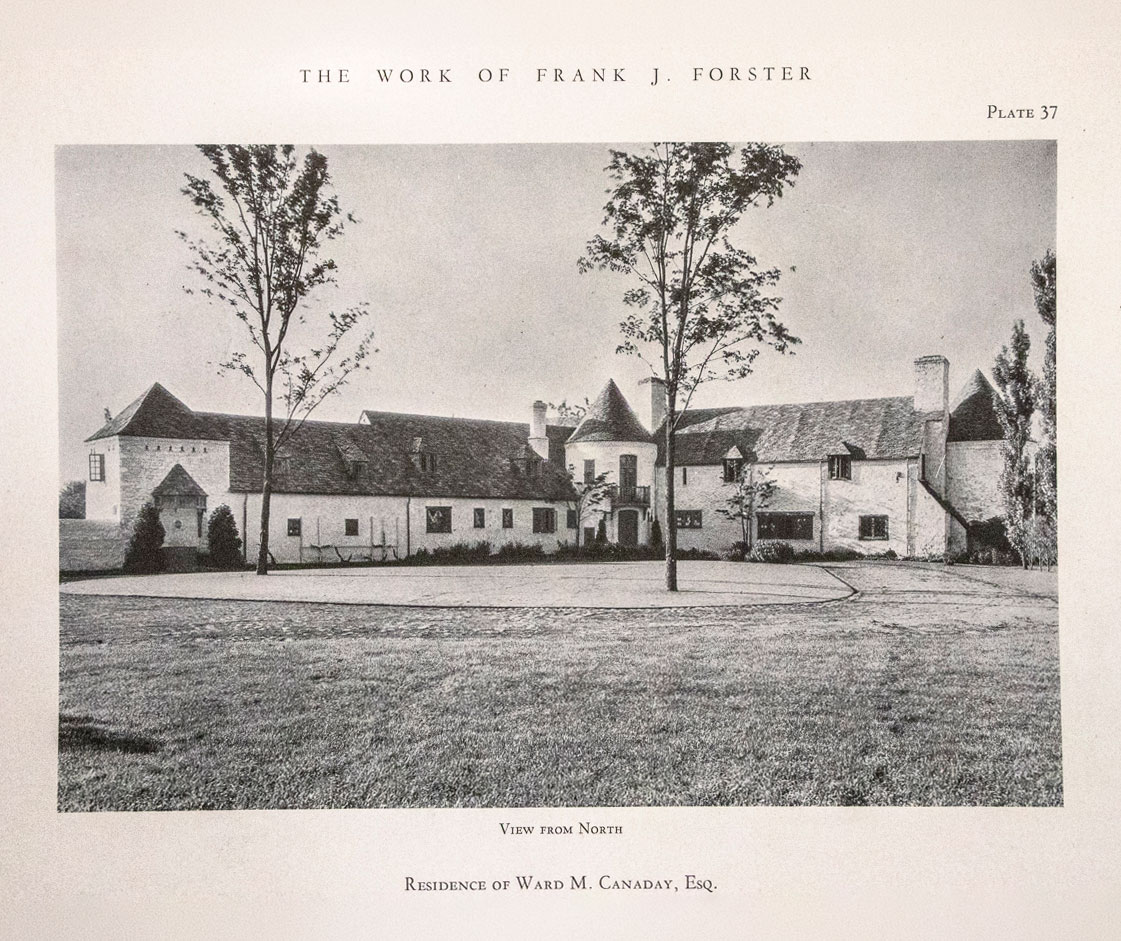
I wonder what Ward Canaday, “Father of the Jeep,” would think, knowing the gallery that he endowed and was built in 1982 for blockbuster exhibitions, the Ward M. Canaday Gallery, is getting repurposed for a history of glass gallery (never mind that the Glass Pavilion was built in 2006 to house the glass collection, but that’s getting repurposed, too.)
The Ward M. Canaday Gallery is being re-christened “The Trumbull Family Gallery.”
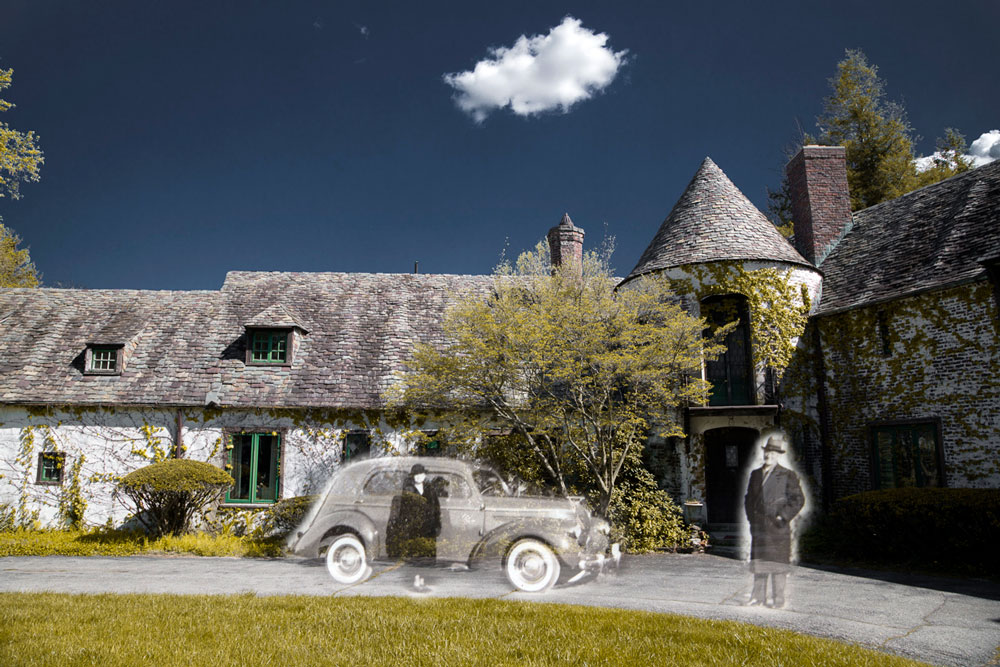
Inlands, Home of the Canadays, 1926
Margy Trumbull, a board member, lives (or lived) in a house on property that had been part of the original Inlands estate in Ottawa Hills, the estate built by the Canadays in 1926. And now she has his gallery space in the art museum. The Inlands house and remaining property (which was subdivided after Canaday’s death) was donated to the museum in 2021 when the then-owner died — Charles Johnson, of Johnson furniture fame. But the museum refused it. The museum has instead an 1876 centennial side table to honor Charles Johnson.
Screenshot from online video, captured July 16, 2026
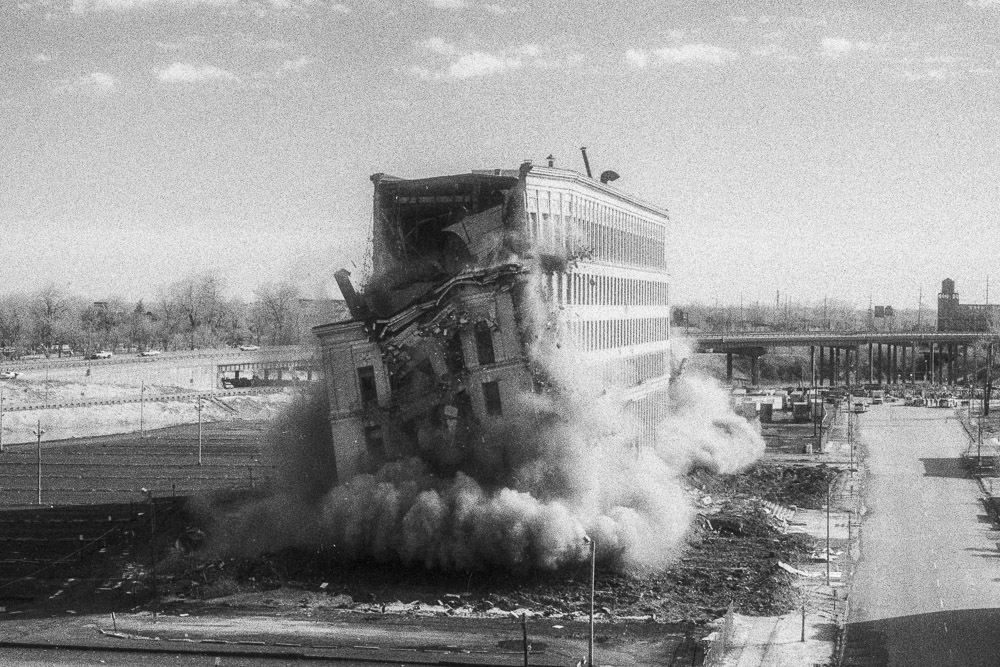
The Canaday name is moving to the back of the museum, to a former gallery space. This space will now be a lounge with a lot of “comfortable seating.” Windows are being cut into the wall revealing a view of the parking lot. Which is apropos, since three years after Ward Canaday died, in 1979, the Jeep Administration Building was imploded for a parking lot. Which turned out to be unnecessary, since the new Jeep factory was then relocated a few miles to the north.
Photo: Penny Gentieu
The Canaday Reflection Gallery will be a place to hang out and reflect on how you never know what you’ve got until it’s gone. Especially in Toledo.
The renovations reduce gallery space. Most museums, when they go to the trouble of renovating, add gallery space. But if you have other plans for the art — makes you wonder why then did the museum acquire 1,500 new artworks during the past few years?