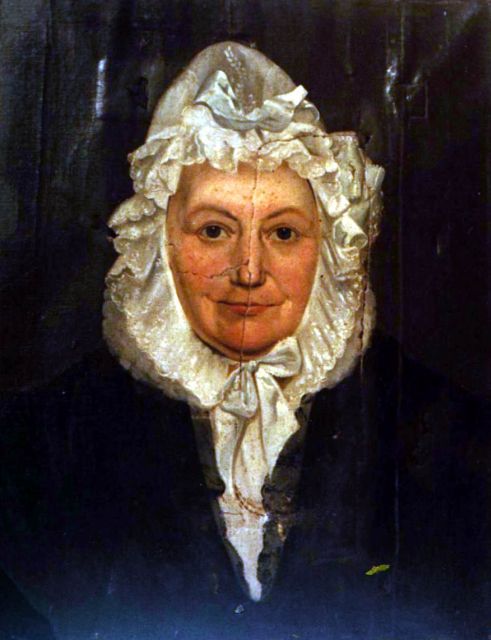
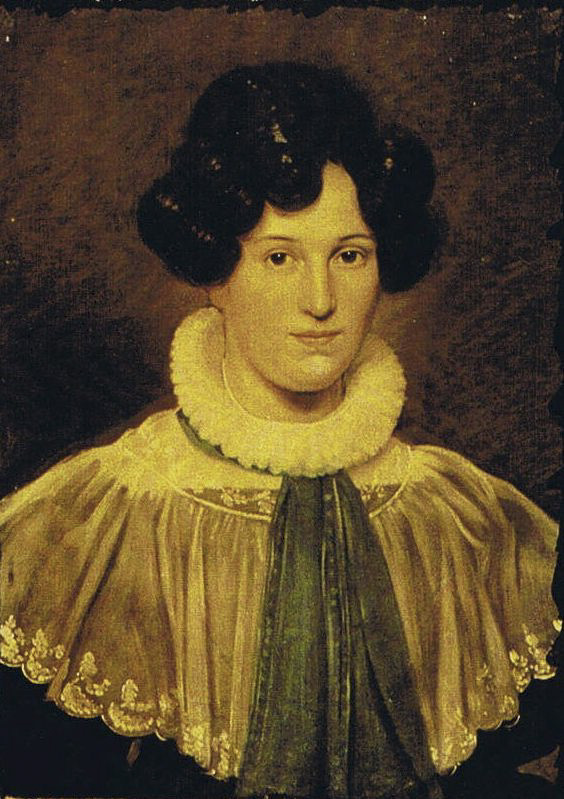
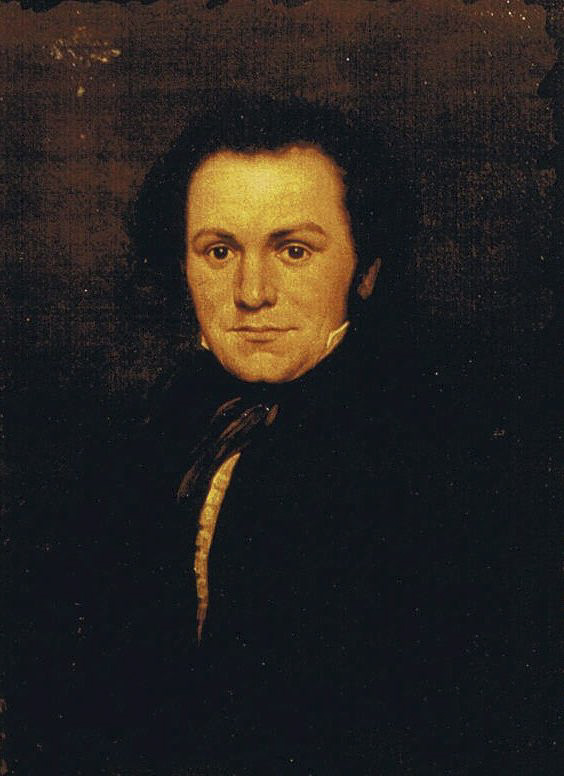
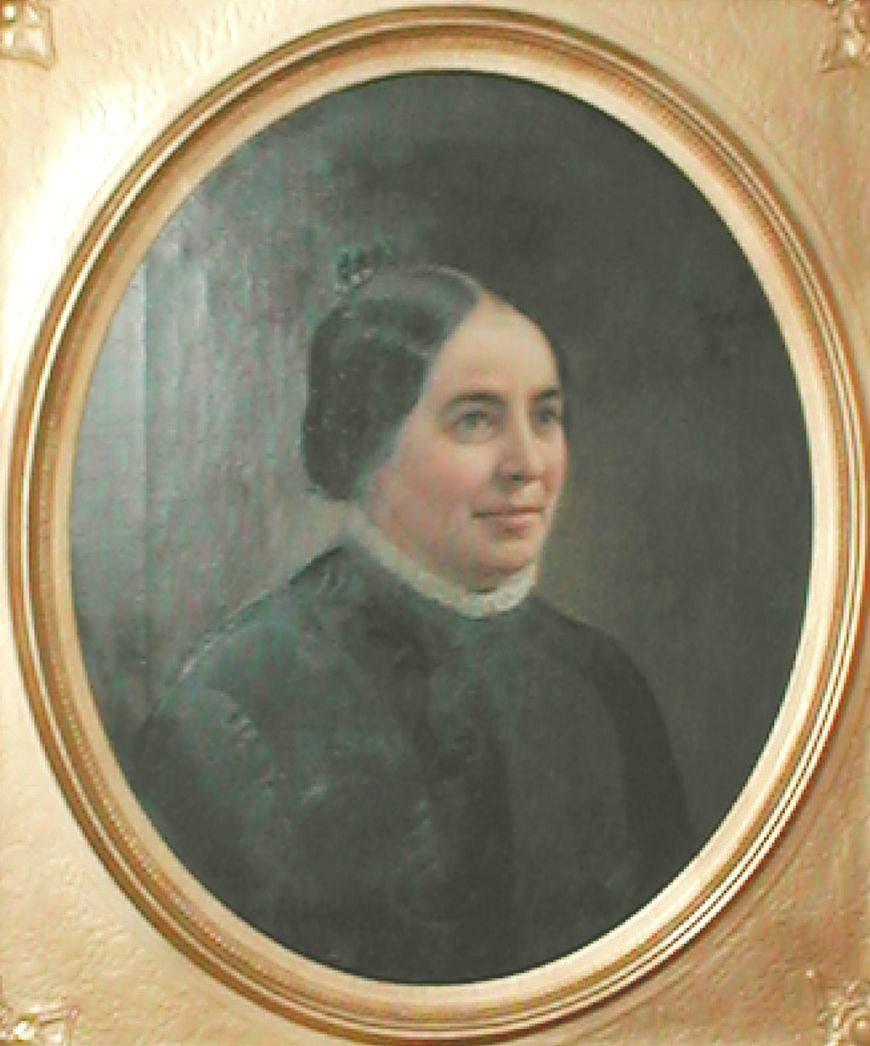
A painting now widely identified as William H. Machen’s mother is almost certainly not his mother. The identification does not hold up.
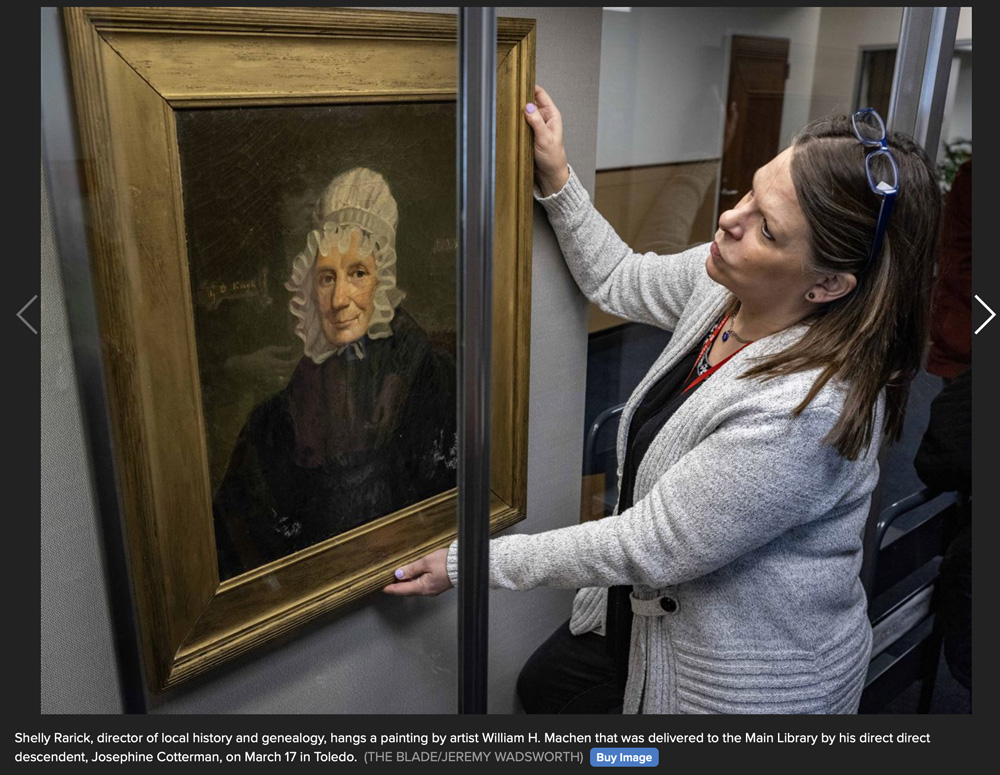
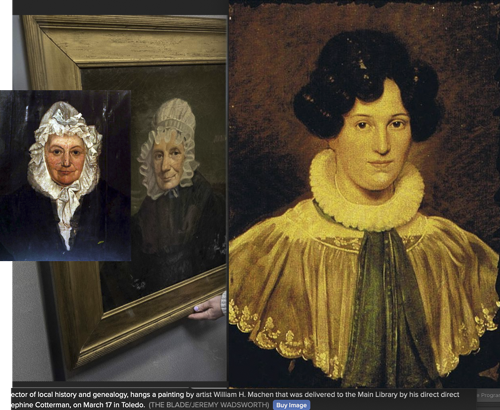
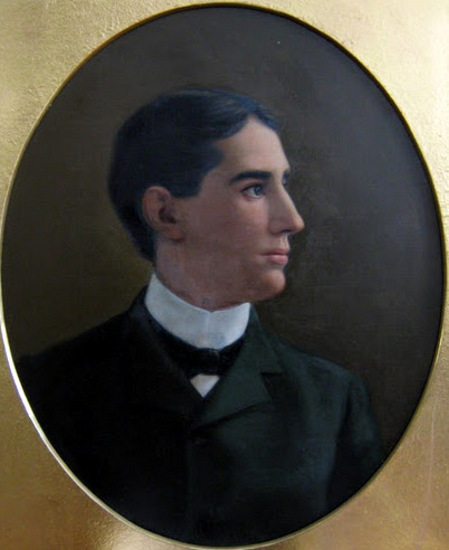
Photo from a story that appeared in The Blade on March 17, 2026, Library adds portrait painted by early Toledo artist. This painting remained in family possession for decades and was identified through oral tradition, illustrating how attributions can evolve over time.
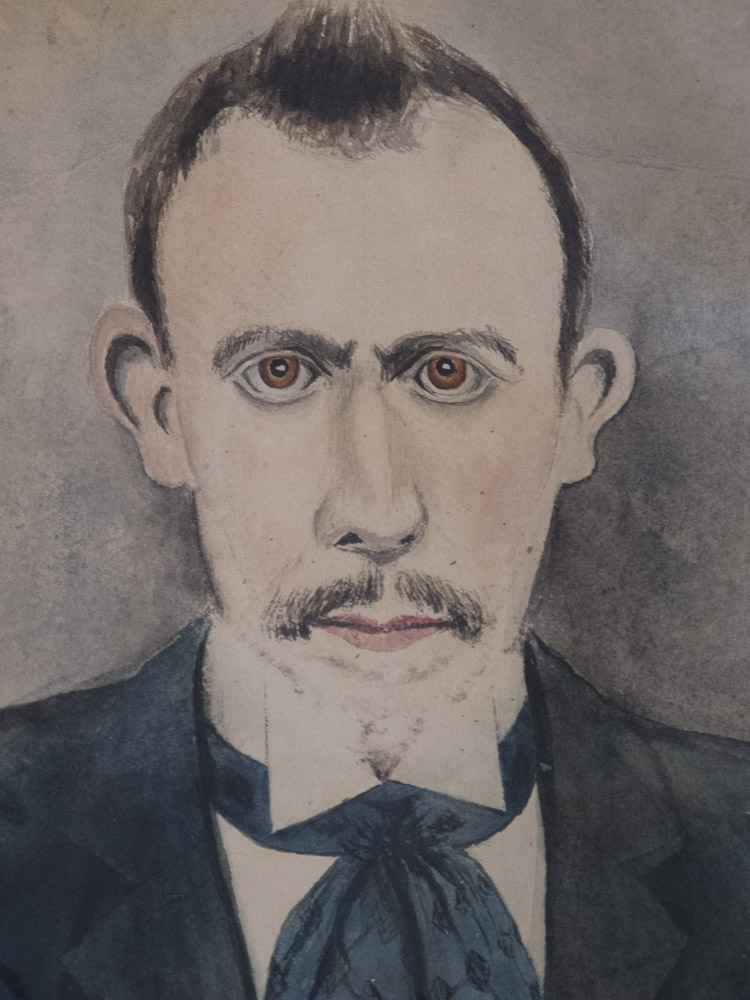
My research on Machen over the past 17 years, including work with his descendant, James Machen made me think that this painting could not possibly be Machen’s mother, since she died at the age of 48. If left unexamined, misattributions like this reshape the historical record–quietly but permanently.
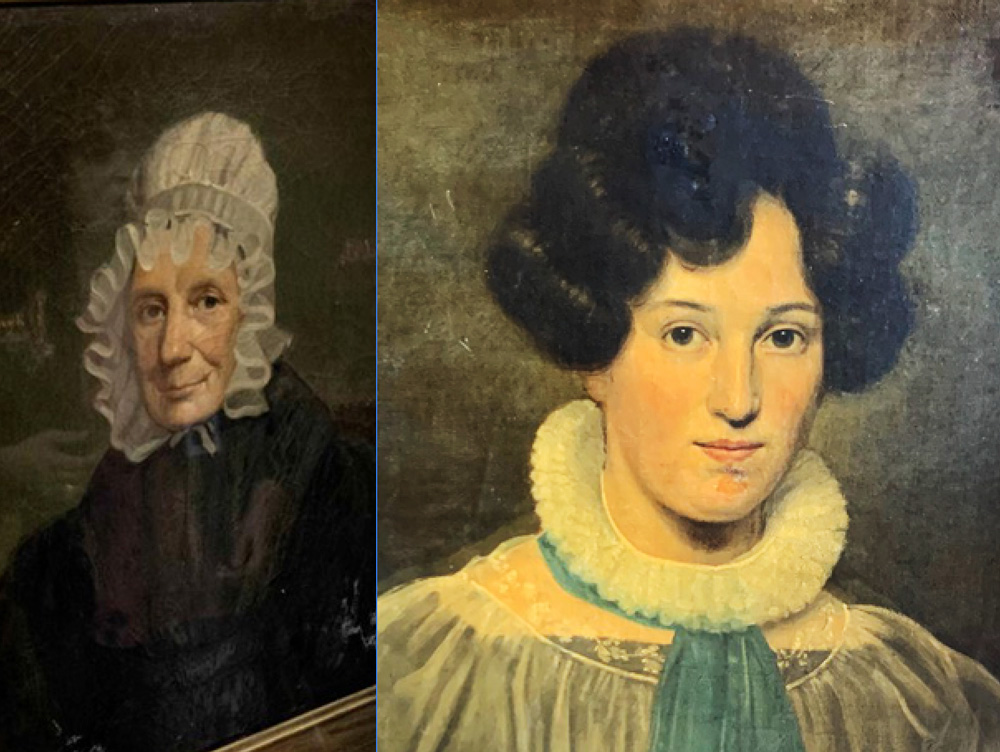
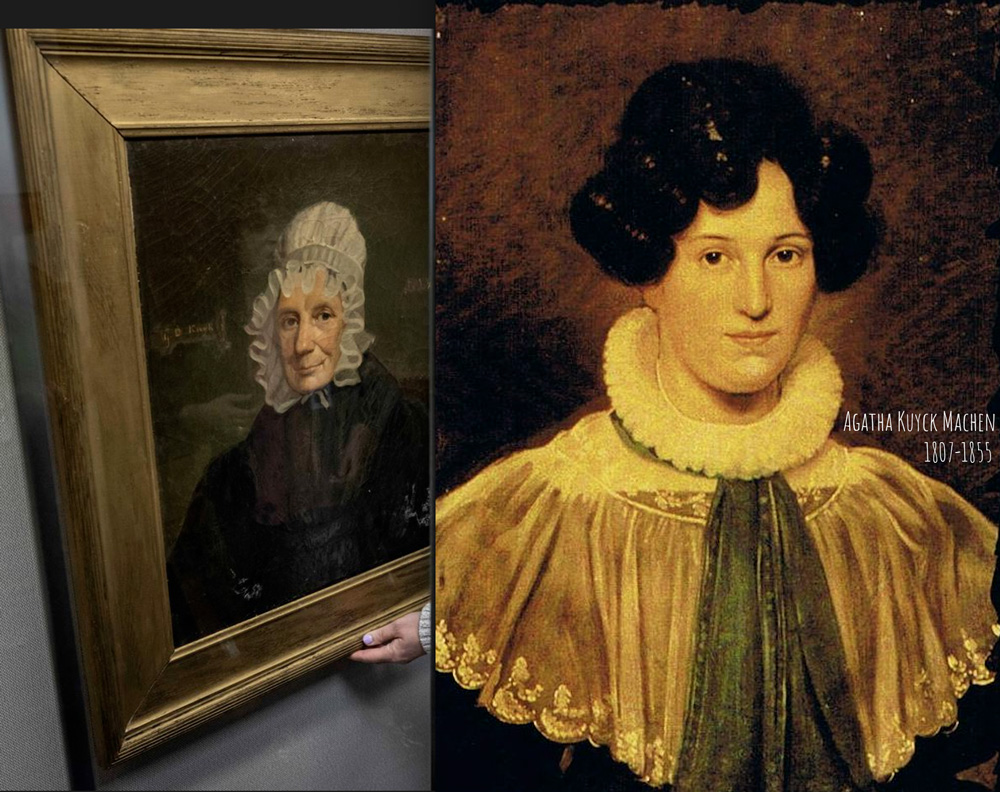
The painting shows an elderly woman: the lengthened upper lip, the deep folds around the mouth, the softened jawline. These are not the features of a woman in her forties. In a known portrait of Agatha Kuyk Machen, she appears to be in her prime.
Painting in question on the left compared to Agatha Kuyck Machen on the right, as represented in historical and genealogical archives.
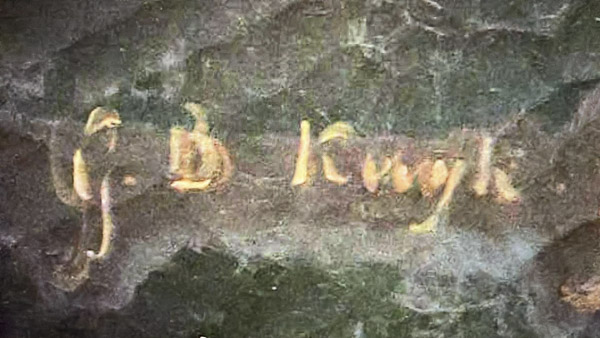
And then there is the matter of the inscription in the middle left of the painting. A high-resolution detail of the inscription appears to read “G.B. Kuyk,” suggesting that the painting may not be by Machen at all.
Detail of inscription, “G.B. Kuyk,” suggests a different artist and a connection to Machen’s early training in Holland. Photo: Jeremy Wadsworth, The Blade. (high-resolution detail of painting in above photo)
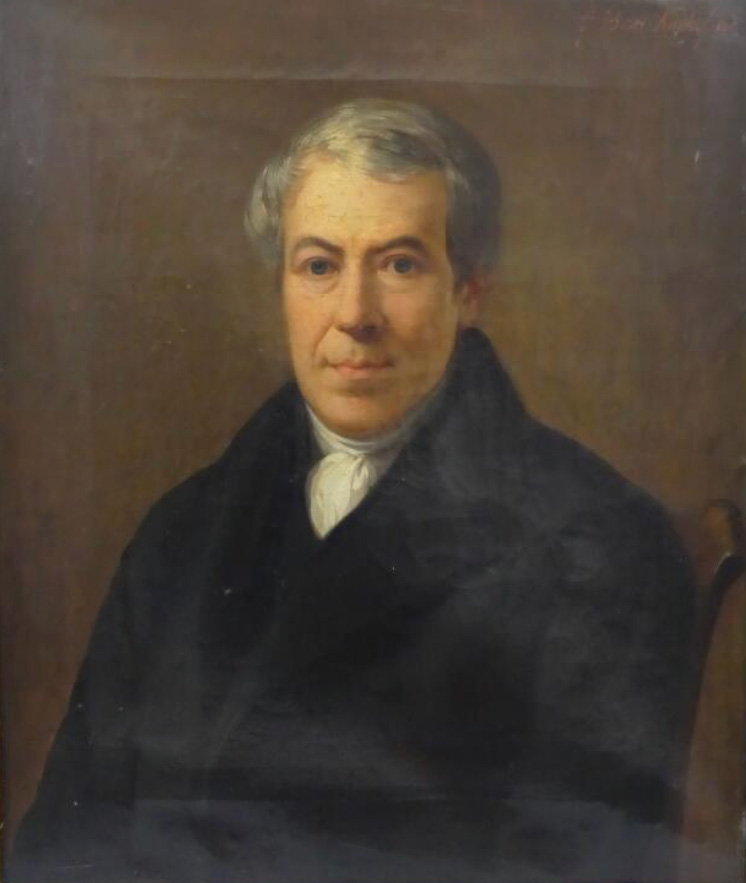
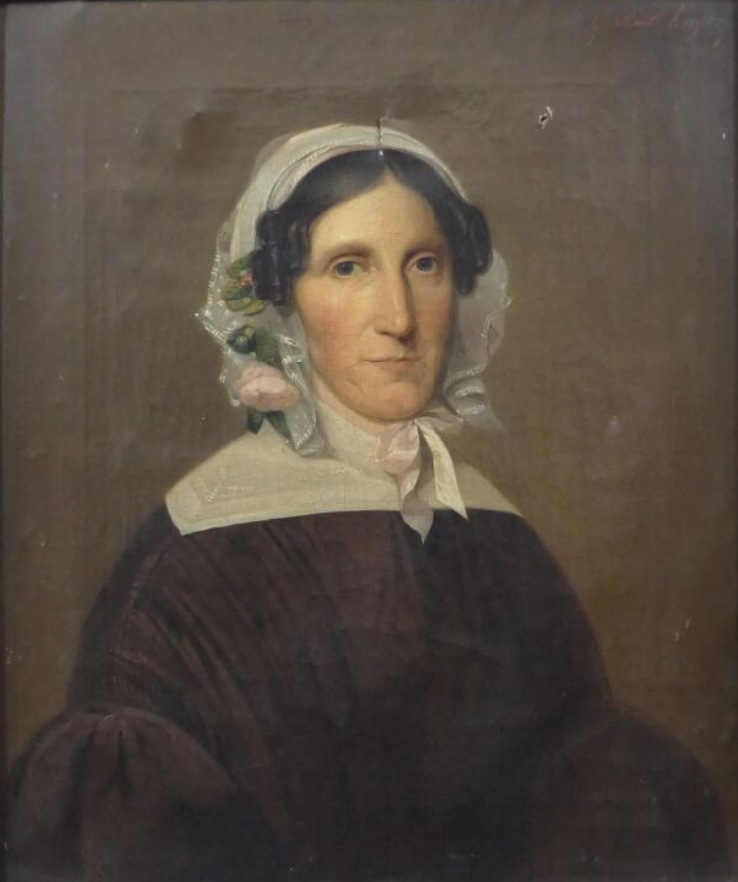
The name points back to Holland, and to Machen’s early artistic training with his uncle, a renowned painter, G. Buitendijk Kuijk. Perhaps it depicts his mother, who would also be Machen’s maternal grandmother.
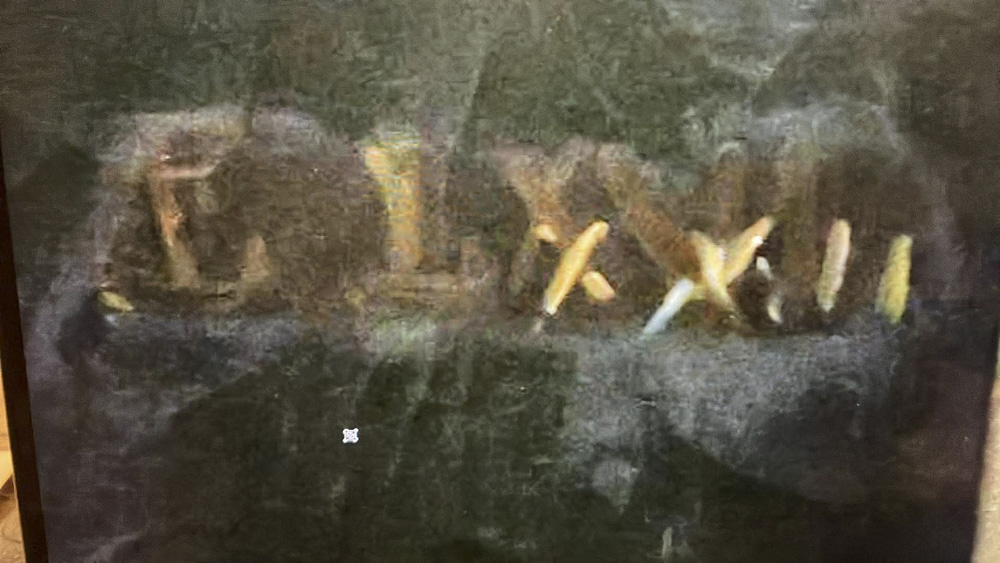
The reported date of “1872” appears to derive from a difficult-to-read inscription on the middle right of the painting. Rather than a clear, original marking, the area shows multiple layers of paint, with brighter strokes superimposed over darker forms. What has been read as “1872” may in fact be an interpretation of an obscured and possibly altered inscription, calling the reliability of the date into question.
Photo: Jeremy Wadsworth, The Blade. (high-resolution detail of painting in above photo)
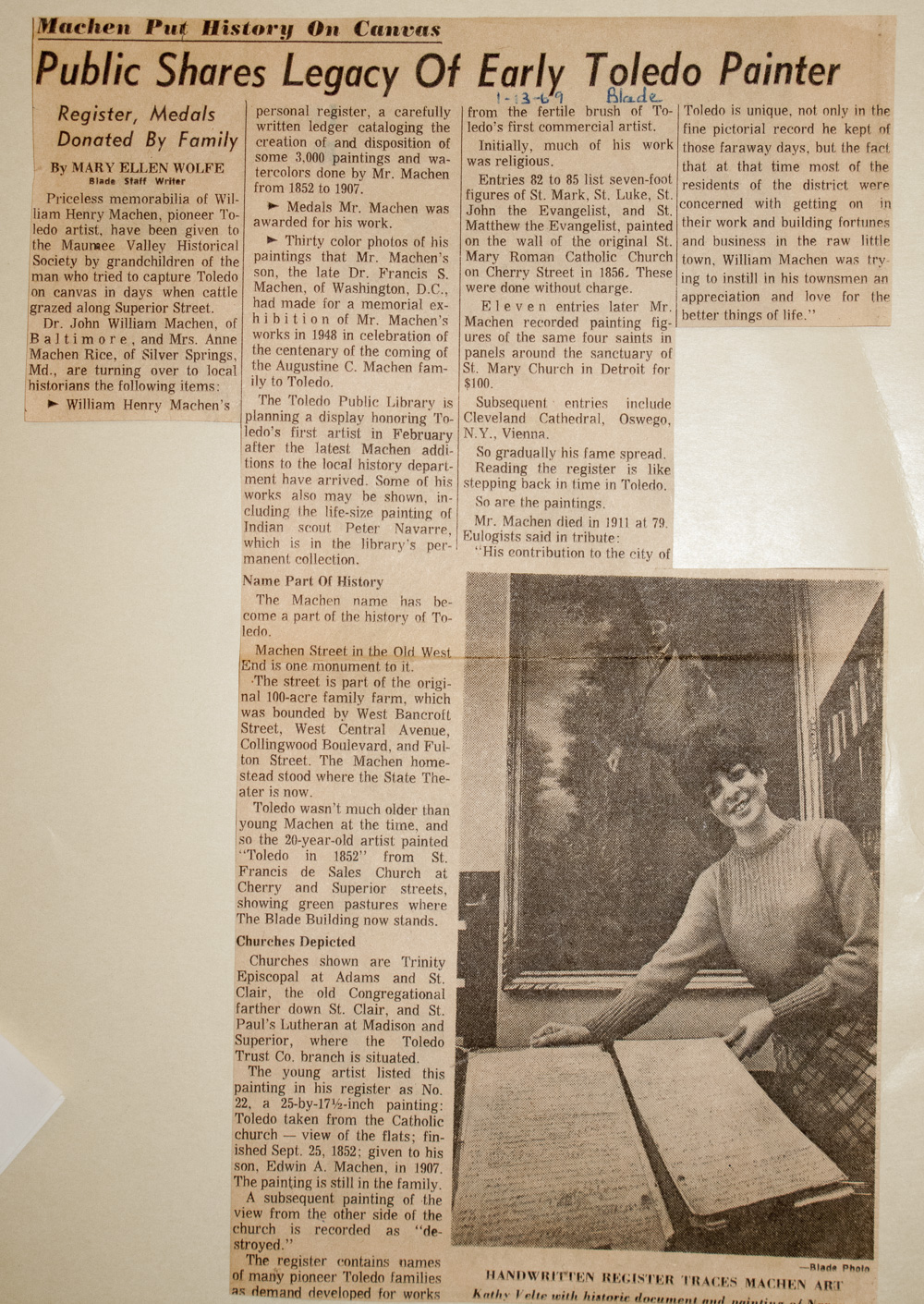
There are other inconsistencies. Machen kept a journal of his paintings where he carefully documented his work. It is a rare and invaluable record. It gives us a framework against which new attributions can be tested—not simply accepted. In it, 2,545 paintings are listed from 1852 t0 1907, with a note by his son who archived it stating there are more paintings that are not listed. Machen died in 1911, so he might have painted 250 more. There was no entry close to being this work in 1872, the year stated in The Blade that it was painted. There is an entry for a copy of the “Portrait of the Artist’s Mother (deceased)” that was painted for his son Henry in 1873. But the size was small, 12 x 15.”
Entry from William H. Machen’s journal (1873), recording a 12 × 16 inch copy of his mother’s portrait. The dimensions do not correspond to the larger painting currently attributed to her.Machen’s mother on the right. Machen’s paternal grandmother on the left, in the bonnet. Could the woman in the middle be the same grandmother, similar because they are dressed in white ruffled bonnets but perhaps share little likeness otherwise? See larger sized images below.
There is also a telling detail in the painting’s recent history. In communication with a member of the extended Machen family, it was noted that the work had been kept in an attic for many decades and was known primarily through family lore. That helps to explain how an identification might have shifted over time. As with many inherited portraits, names can attach gradually, becoming accepted without documentation.
It is amazing how quickly such a misidentification can harden into certainty — a newspaper feature, then a “google truth.” This post is an attempt to slow that process down, after contacting both the library and The Blade on March 21 and 22, receiving confirmation of my emails from both. On a search on March 25, and again as I search this morning on March 30, the mistruth publicly persists.
March 25 google search for Machen paintings at the Toledo Lucas County Public Library.
But really?
Hopefully it will get fixed soon where it matters — at the library, in the press, and on google, so this misattribution doesn’t totally get set in stone.
Here, I am gathering what can be documented: portraits of Machen’s relatives, their stories, along with his important paintings documenting Toledo’s history. Seen together, they begin to form a more coherent picture—not just of the artist, but of the visual world he came from.
The portrait now circulating as his mother may yet find its proper place. But for now, it raises a useful question:
Not just who is this woman?
But how do we know who we are looking at?
What follows is a working archive—Machen and his folks, as best as they can be known.
An inscription on the Machen family tree written by Edwin Machen Jr., courtesy of James Machen
The Machen family came to America, to Toledo, being French Catholic refugees escaping France to Germany to Holland — first, escaping the guillotine in France at the height of the French Revolution in 1793. Second, in 1847, leaving Holland for Ohio, when the two Machen brothers, Augustine and Henry left with their families for reasons of religious freedom after the Dutch government forced Catholics to join the Dutch Reformed Church.
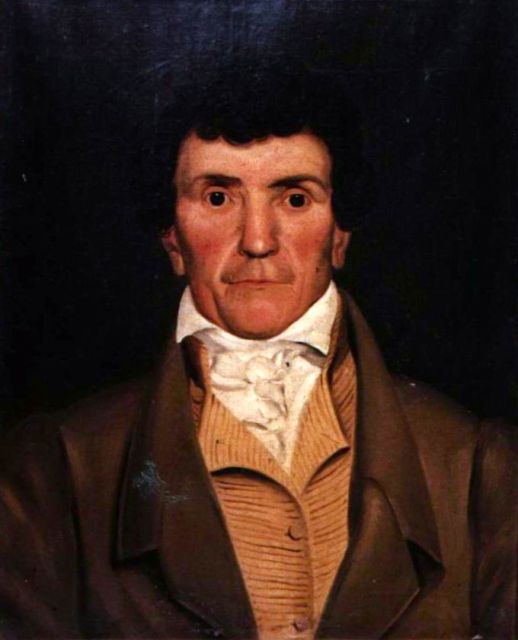
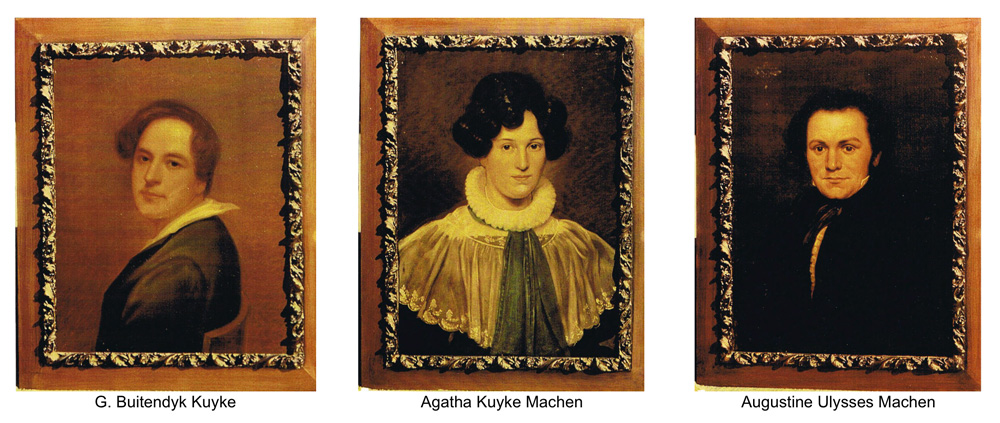
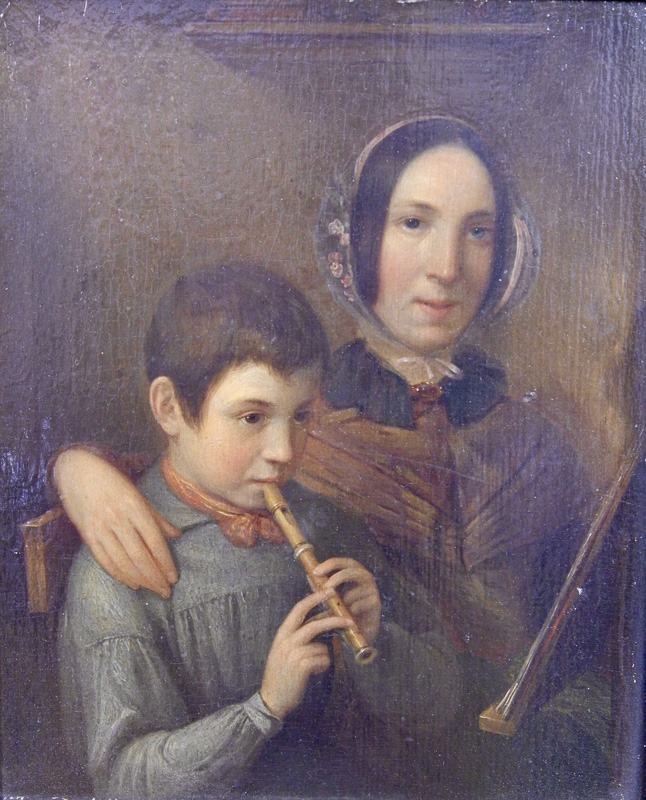
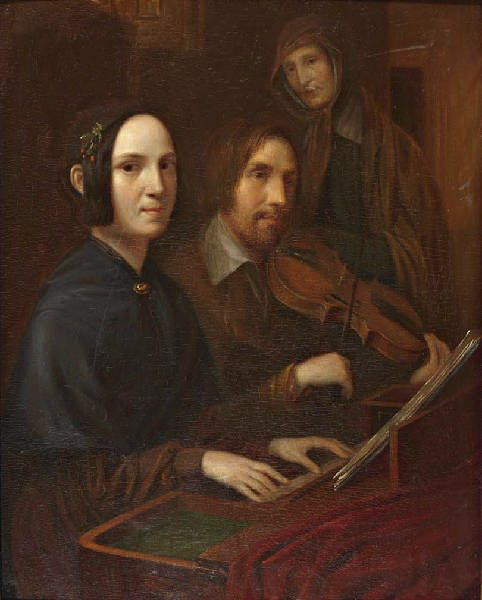
Constant Theodore de Besse (~1763-1828) William’s paternal grandfather, who was saved from the guillotine and escaped with his family to Germany. They changed their name to Machen, derived from the wife’s maiden name.Marie Marguerite Macaine de Besse (1764-1841) William’s paternal grandmother, from whose name the family derived the Germanized name of Machen.Willem Kuijk (1782-1845), William’s maternal grandfather. painted by G. Buitendijk Kuijk. Photo: Museum Arnhem | CollectieGelderland.Neeltje Buitendijk Kuijk (1779-1842), William’s maternal grandmother, painted by G. Buitendijk Kuijk. Photo: Museum Arnhem | CollectieGelderland.Paintings by William’s uncle, G. Buirendyke Kuyke: his self portrait at age 20 (1825), Agatha Kuyke Machen and Augustine Ulysses Machen, William Machen’s parents (date of paintings unknown). These paintings were made in Holland before the families migrated in 1847 (Cleveland first, settling in Toledo in 1848).Agatha Kuijk Machen (1807-1855), William’s motherAugustin Ulysses Machen (1804-1854), William’s fatherPainting by G. Buitendijk Kuijk of his wife and son. Note the chiaroscuro lighting and soft rendering of the faces, and the Dutch painting tradition of focusing on the dignity of everyday subjects engaging in concentrated activities.Painting by G. Buitendijk Kuijk
Echoes of Dutch training carried into an American city still defining itself
Documented work by William H. Machen, representative of his known style and subject matter in Toledo:
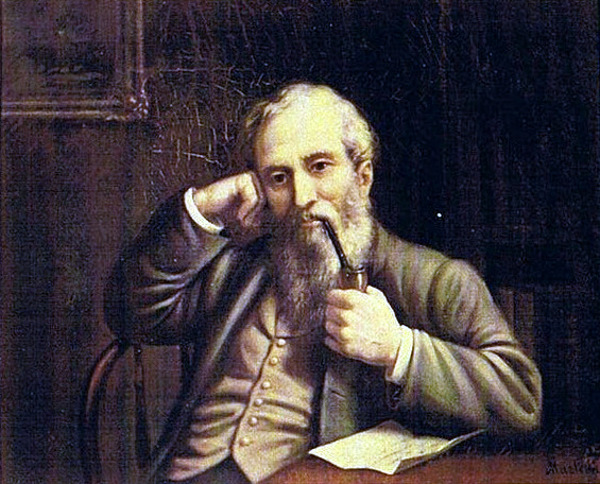
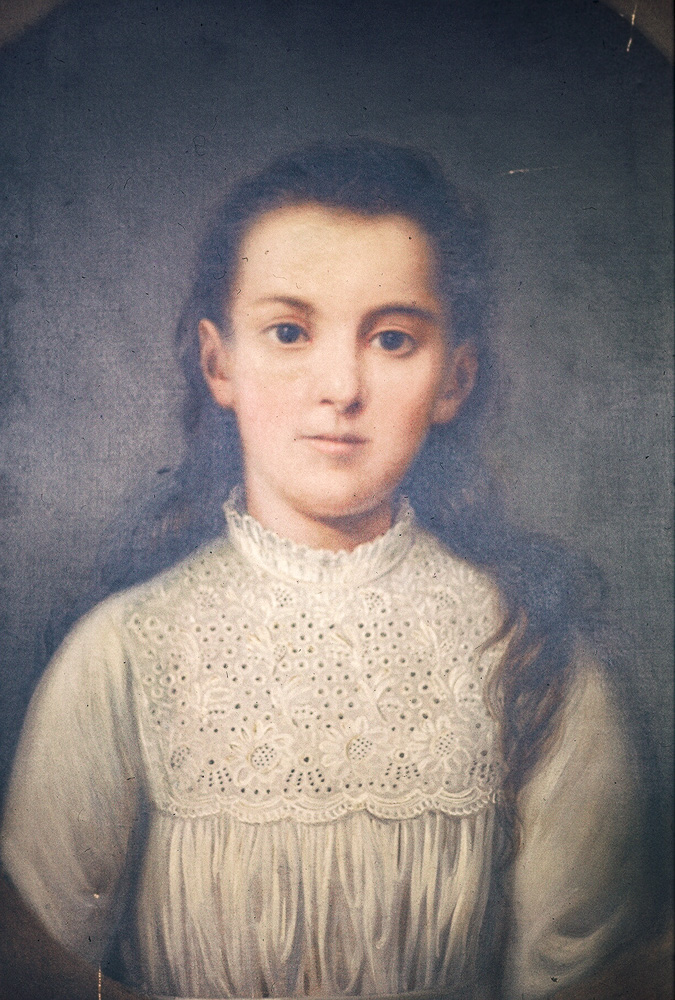
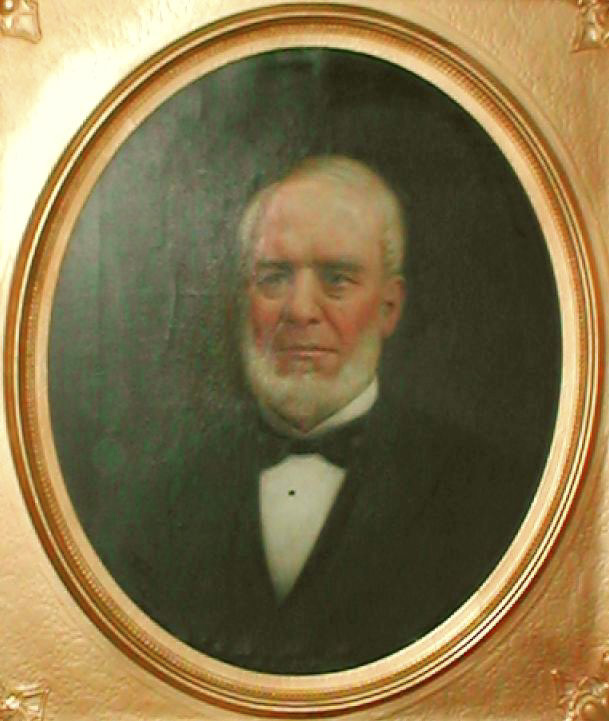
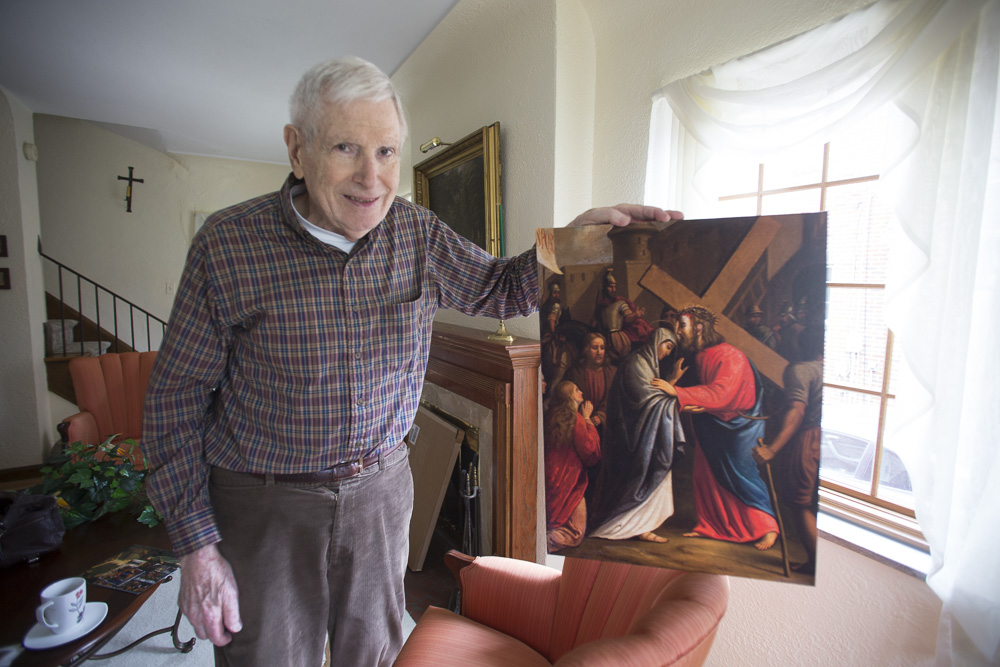
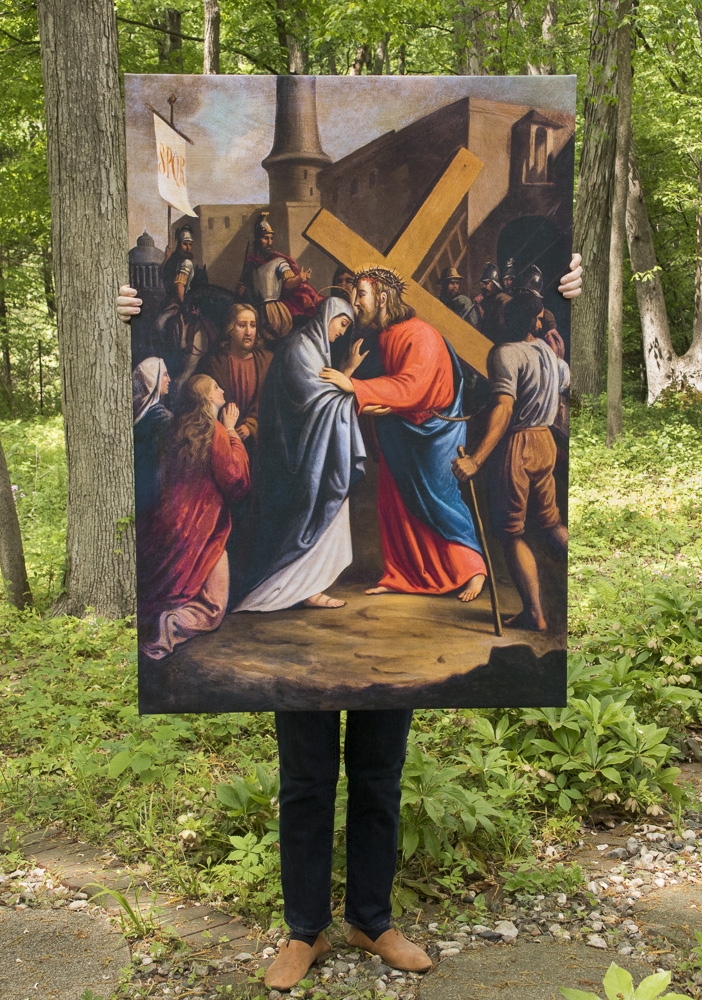
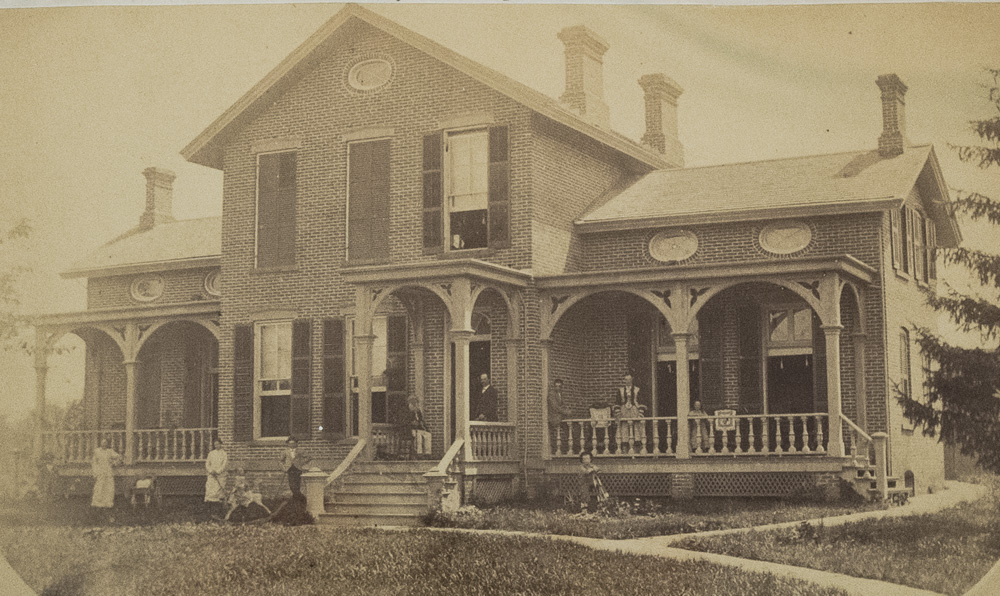
Henry P. L. Machen (uncle of William who also brought his family to America with them.)Elizabeth Machen, William Machen’s niece (1871-1884)Patrick Short (William’s father-in-law), painting by William H. MachenMary Clark Short (William’s mother-in-law), painting by William H. MachenHenry Machen, William Machen’s nephew (1873-1901)Augustin F. Machen (1834-1893) William’s brotherJim Machen showing William H. Machen’s Station Four, Jesus meeting his mother along the way, Stations of the Cross painted for St. Francis Parish in 1867. Photographed April 2, 2015, Jim made a set of digital restorations from my photographs of the fire-damaged paintings and donated the set to a church in the Philippines.William H. Machen’s Station Four, Jesus meeting his mother along the way, Stations of the Cross painted for St. Francis Parish in 1867, my digital restoration of fire-damaged painting for Our Lady of Lourdes Church, Genoa, Ohio, 2021.Machen’s house built by Augustin, William’s father, on Collingwood Ave. in Toledo. Photo c. 1875, courtesy of James Machen. William’s family and the uncle, Henry, are pictured.
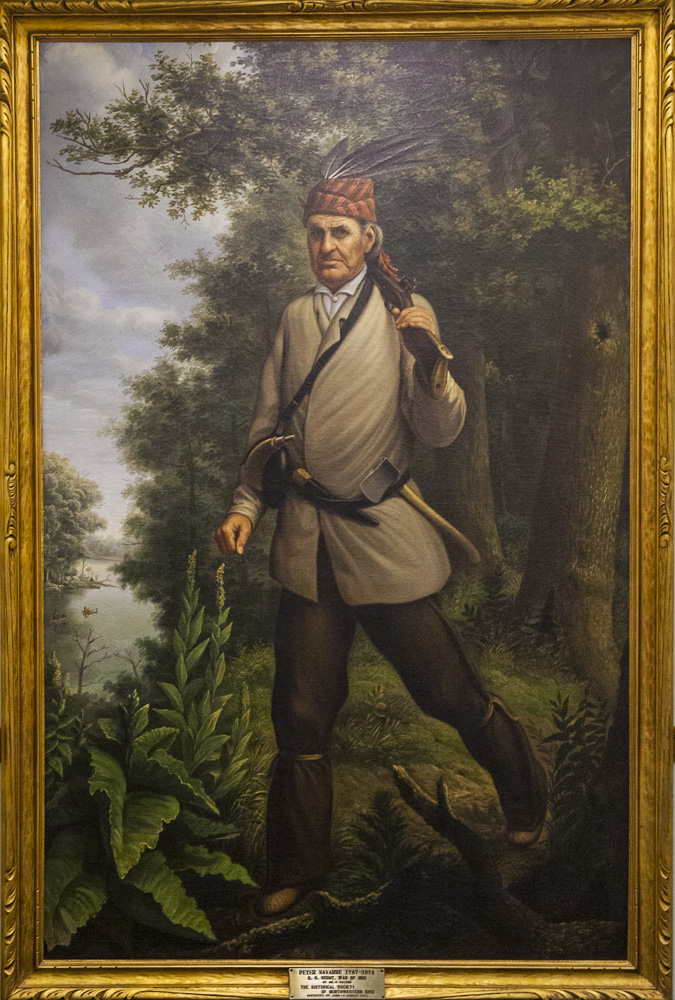
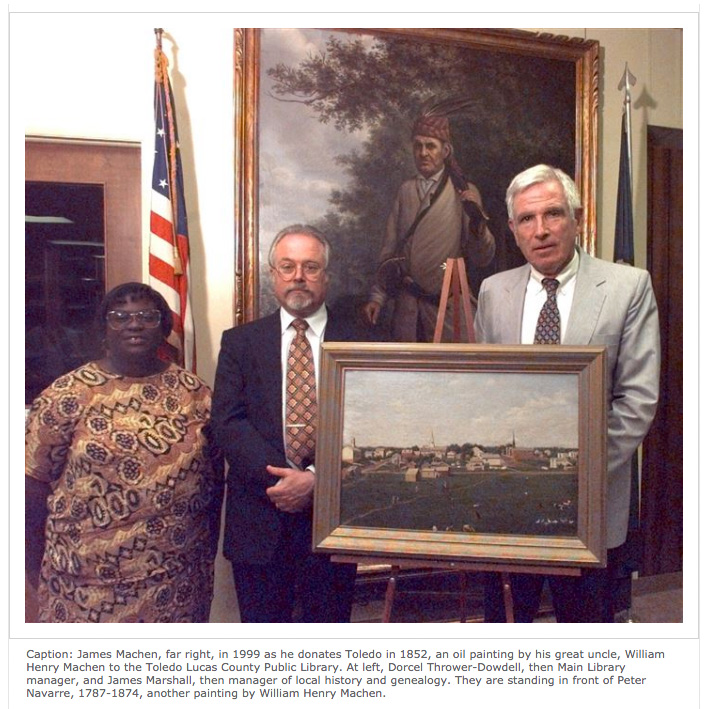
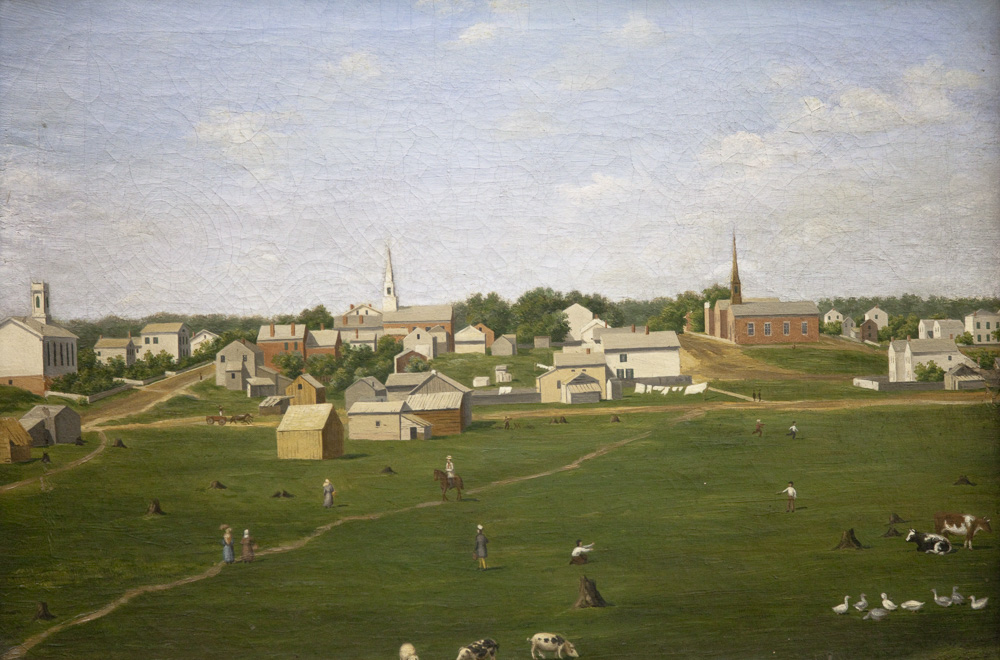
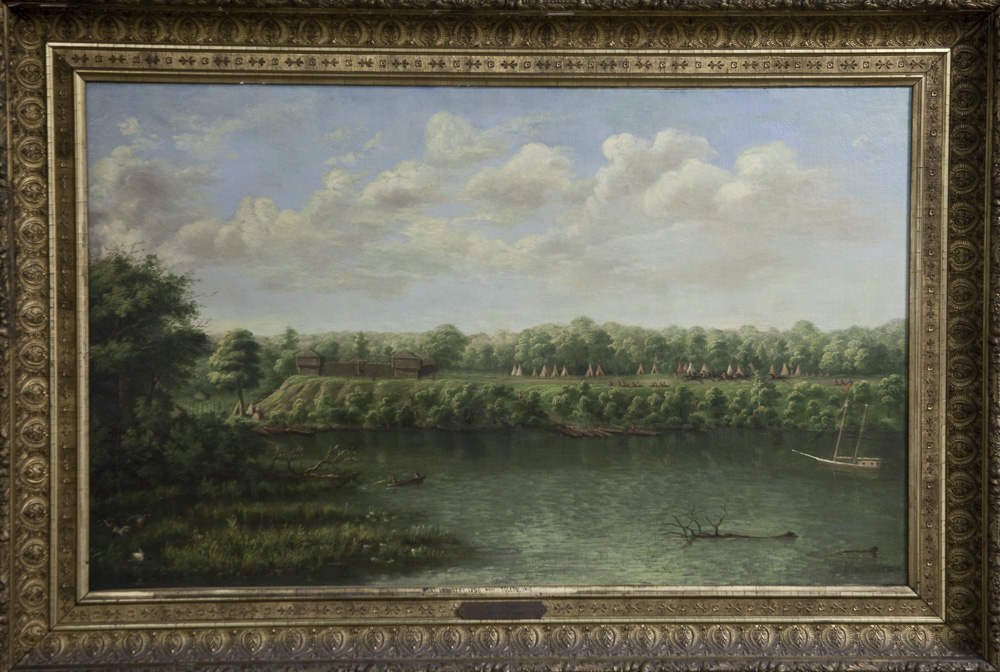
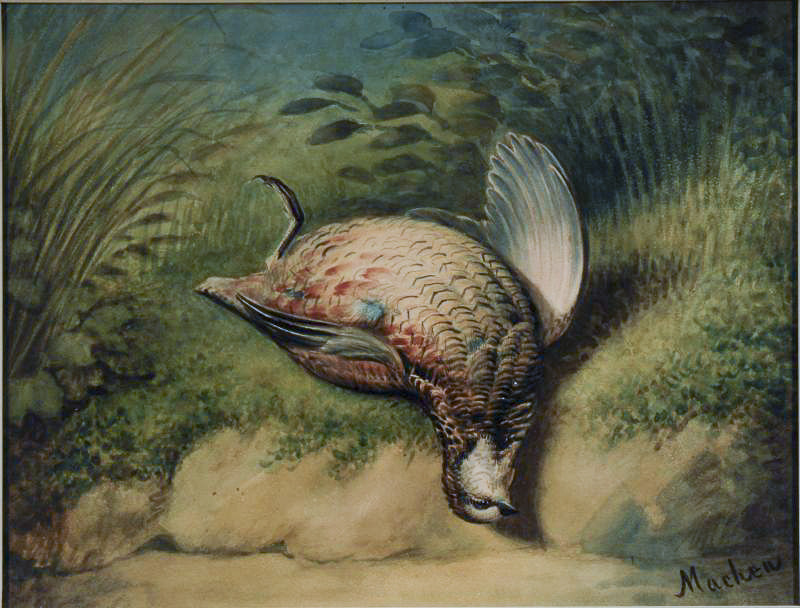
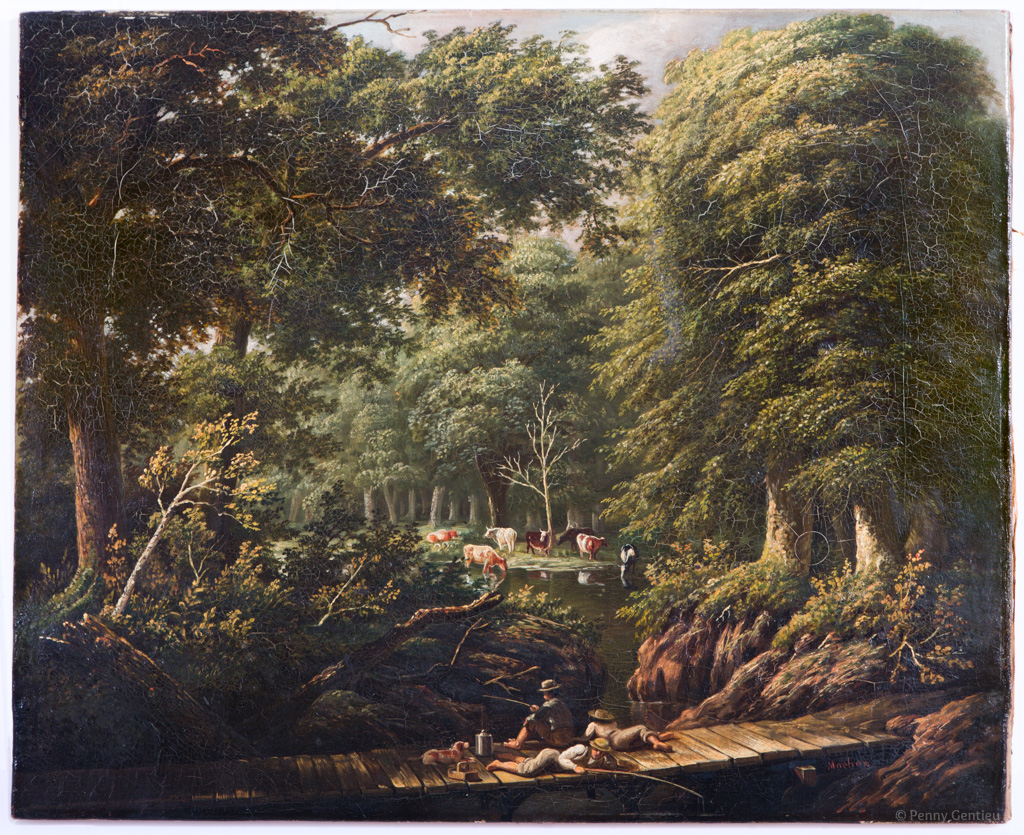
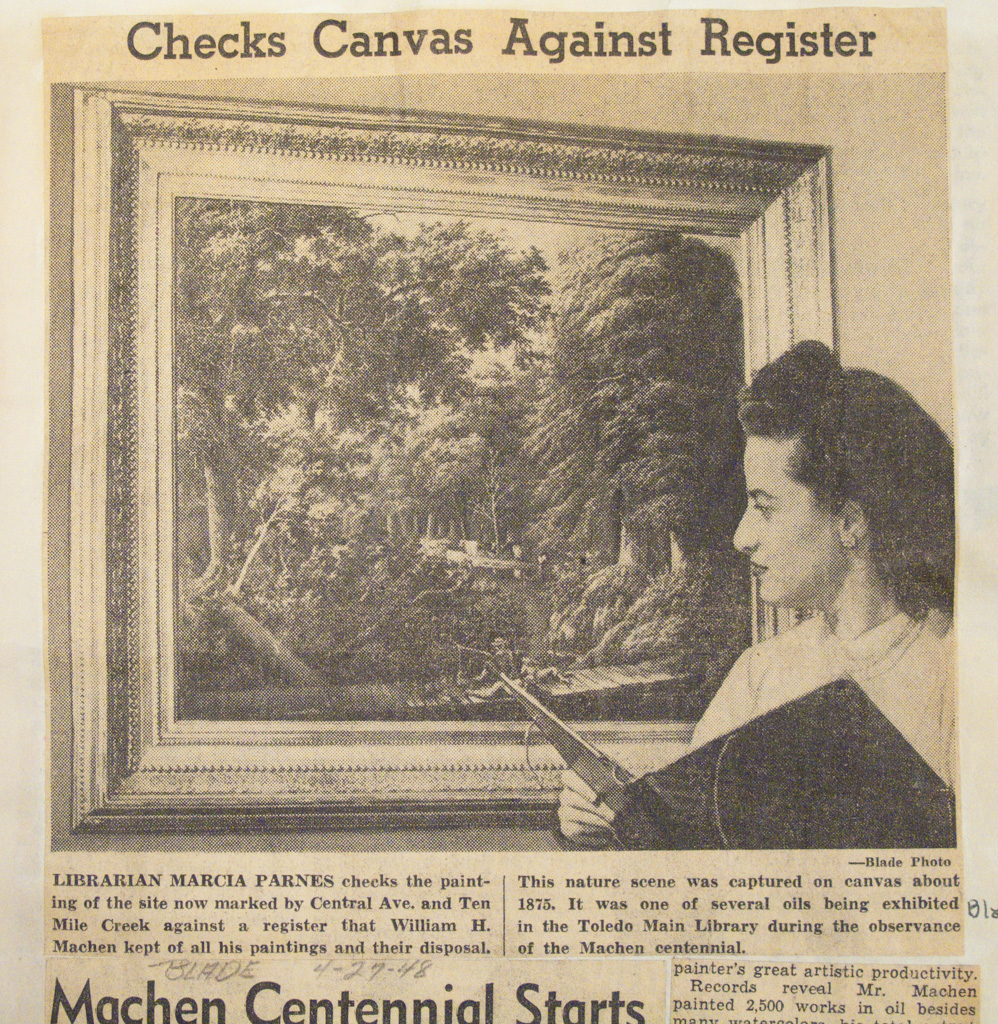
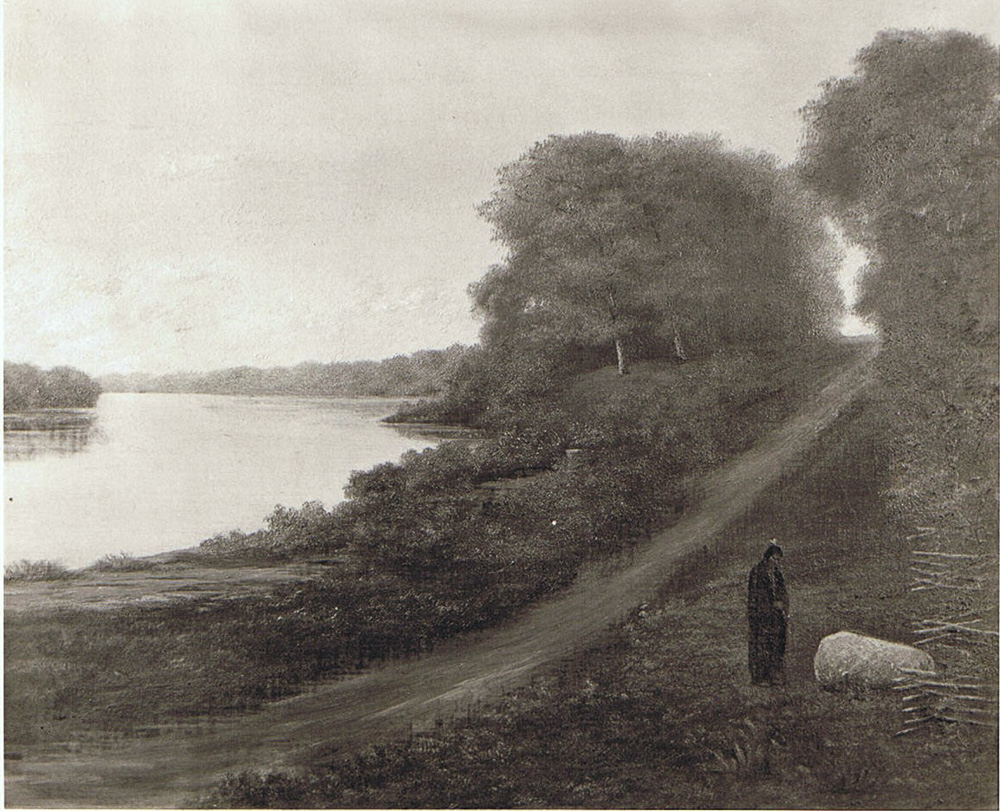
Peter Navarre, hero of the War of 1812. Painted from life in 1866 when Navarre was 80 years old. Painting #313 in the artist’s Journal. Collection of the Toledo Lucas County Library.The Blade 1999 photo used for James Machen’s online news obituary.Toledo in 1852. Collection of the Toledo Lucas County Library.Fort Industry, 1796, William H. Machen, Collection of the Toledo Lucas County Library.Quail, a popular Machen subject.Painting of Ten-Mile Creek, 1875, by William Henry Machen. The location is the onetime Central Avenue bridge, near where the Jeep plant used to be.The Blade, April 27, 1948. William Machen’s painting (1875) of the site now marked at Central Avenue and Ten Mile Creek was one of several paintings exhibited at the Toledo Main Library in observance of the Machen centennial.Turkey Foot Rock on the Maumee River. A later inscription on the rock reads: “On this rock according to tradition, Chief Turkey Foot of the Ottawa Indians rallied his warriors during the Battle of Fallen Timbers. Here he was killed and for many years tribesmen made offerings of tobacco on the rock to appease the Great Spirit.” This painting was in the 1948 Machen Centennial Exhibition and was owned by Mrs. Agnes McClarren, Winameg, Ohio.
Native American Memorial marker, 1994
In memory of all the American Indians who gave their lives at this place, including members of the following tribes.
Chippewa • Ottawa • Delaware • Potawatami • Miami • Shawnee • Mingo • Wyandot