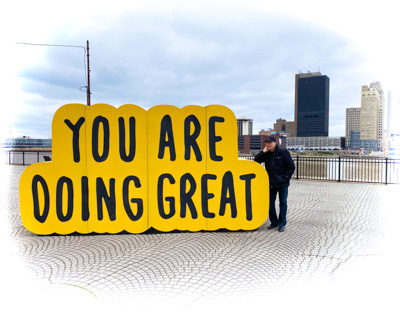
I love this story about the Toledo Museum of Art. The author, James Moore, kindly granted me permission to share it here.
They are the words of a highly distinguished curator who got his professional start at the museum. James Moore left Toledo to become the first director of the Albuquerque Museum of Art and History, directing it for 26 years.
In the 1970s, James Moore served as a coordinator for the Art History department at the Toledo Museum of Art.
It was the most unique workplace I have ever experienced. The professional staff (curators/educators) all met in the restaurant for coffee at 10 and again at 2. It wasn’t required, but it was traditional enough that if you missed one, you apologized and explained at the next one. That was where our informal interaction took place, an activity highly important in any healthy corporate organization but all too often ignored.
At Toledo nobody would have ever thought of dropping into someone’s office just to chat. Once in the saddle and off to work, we were all business.
One day at coffee we were celebrating Bob Phillips’ birthday. While passing out the cake, Roberta Waddell, Curator of Prints humorously prodded everyone to reveal their age. To our surprise, with the exception of Bill Hutton (Senior Curator), who was 50, we were all between the ages of 38 and 41, including Roger Mandle, who was the director then.
Surprised, we sat there looking at each other in silence.
Then Roberta grinned and said: “You know what’s happened, kids? They’ve turned it over to us!”
We laughed but had to fight back the tears. “It,” of course, was the collection.
“They” cast a long shadow indeed, and we could see their work on the walls and feel them following us around every day.
Given “their” example, how could one not do one’s absolute best? How could one possibly let “them” down?
I know of no other story that better explains what it felt like to work at Toledo.
To be a curator is not a matter of selecting things. Curation is, first and foremost, knowledge of and care for, a collection.
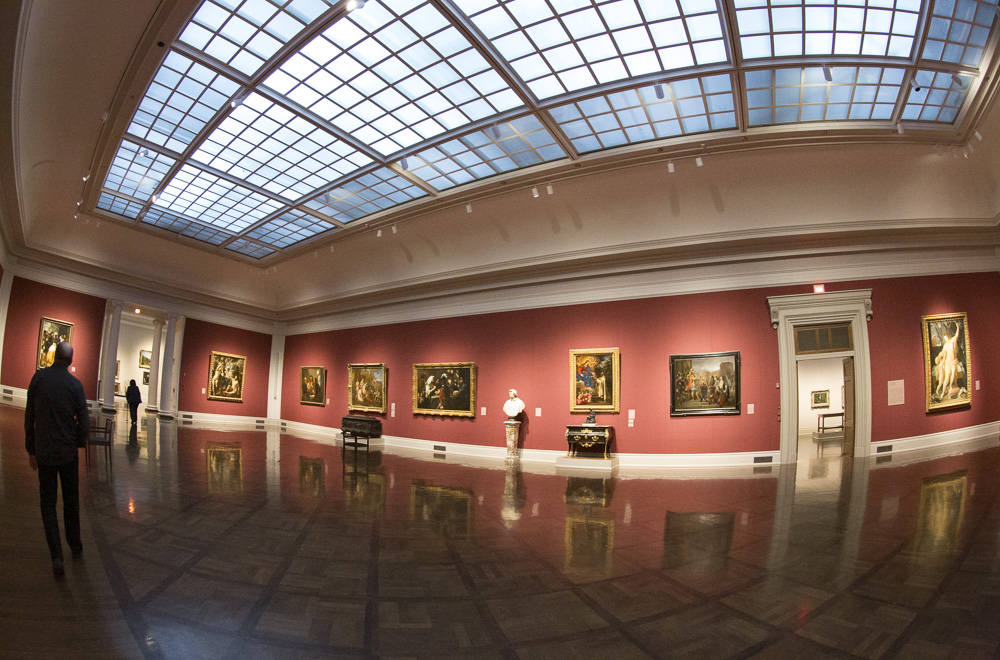
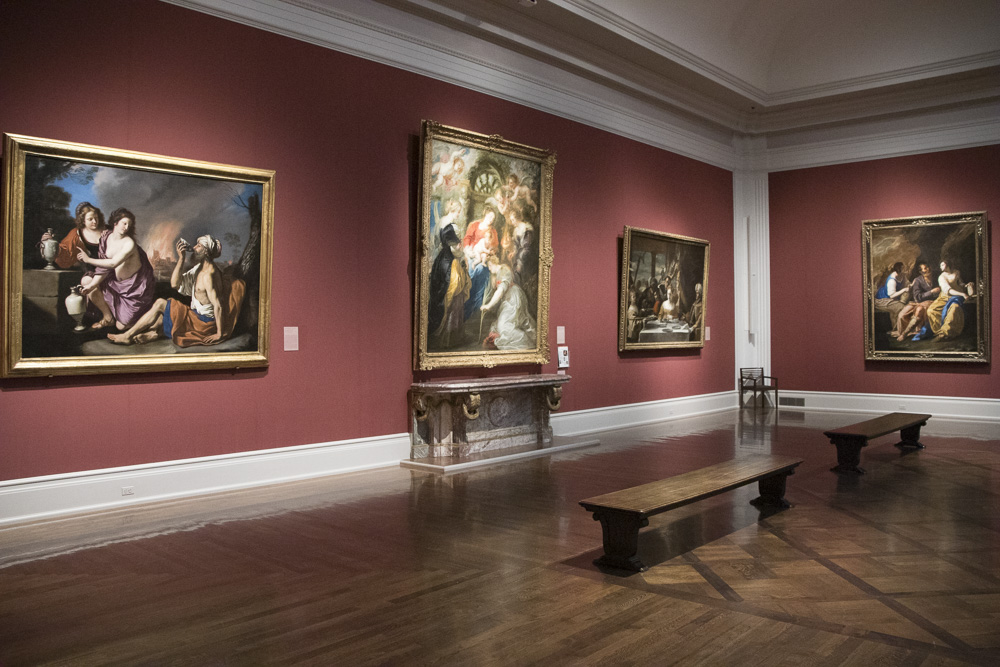
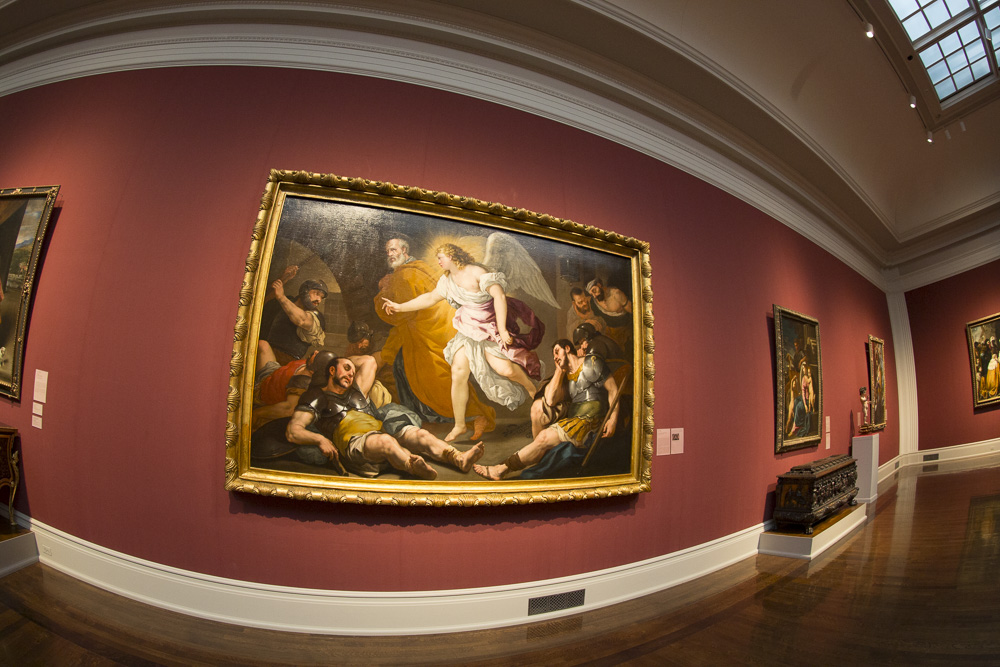
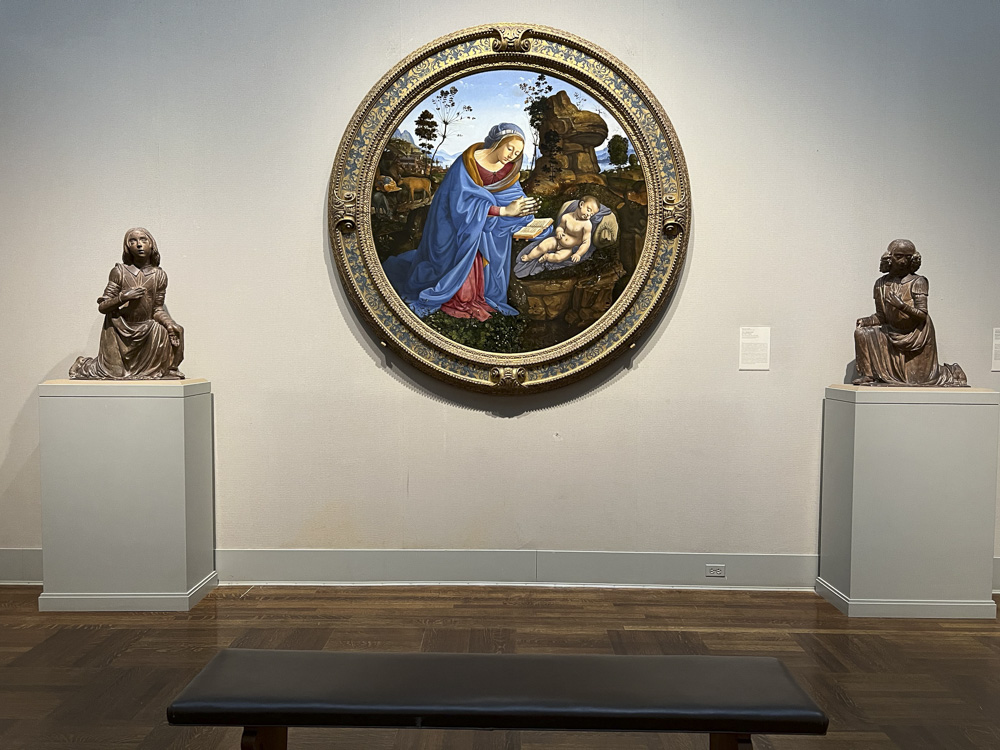
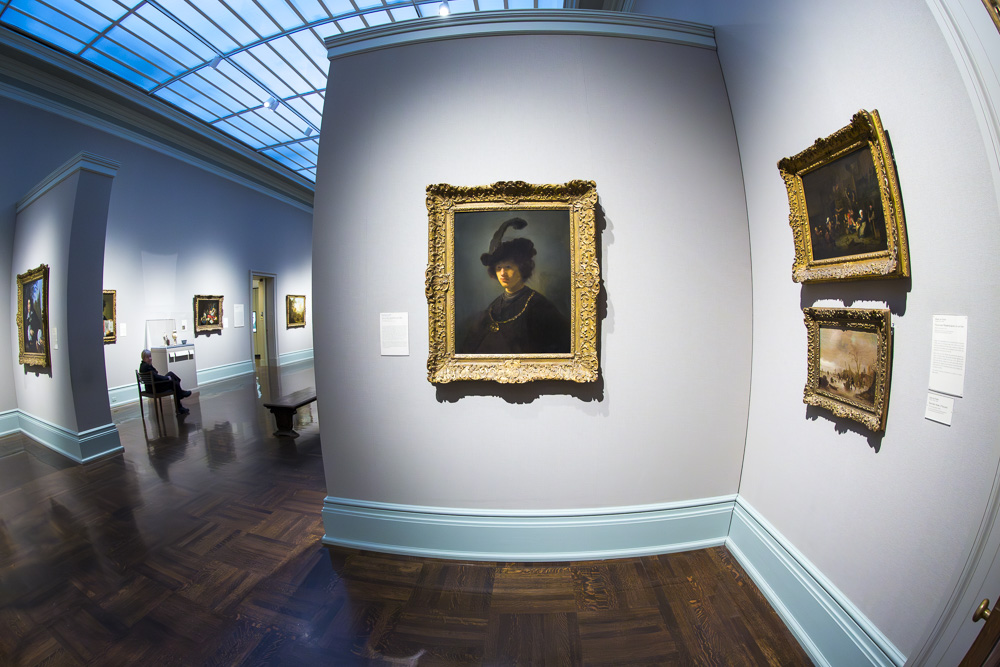
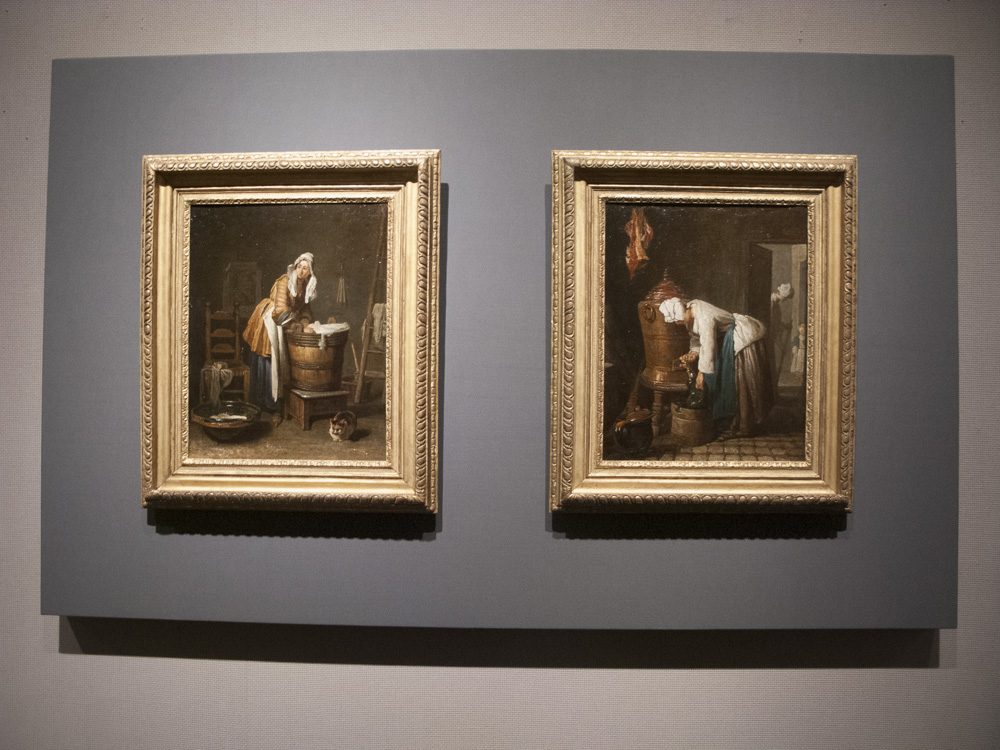
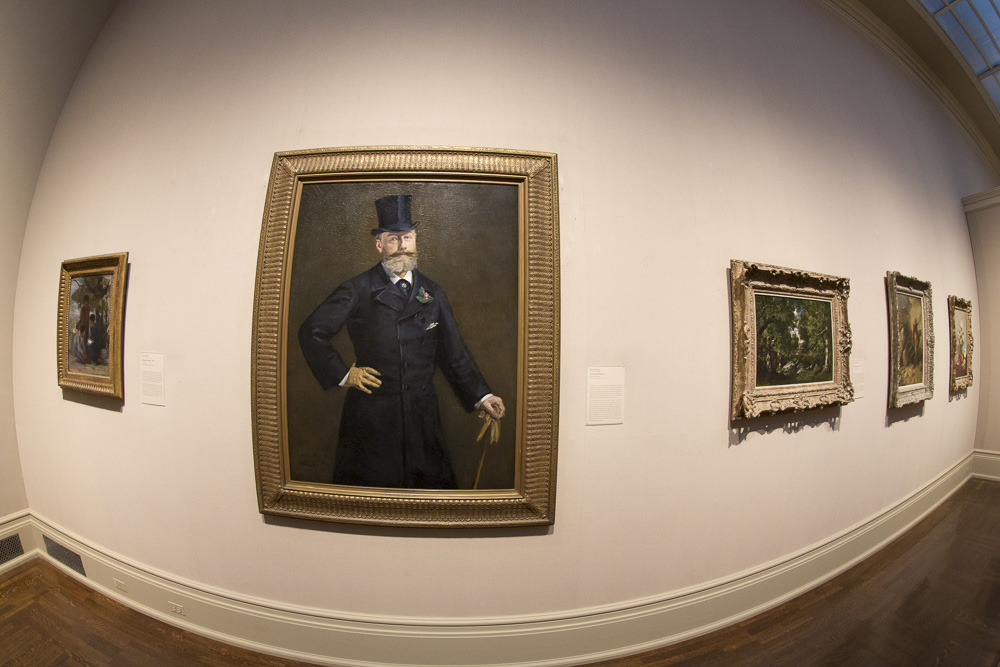
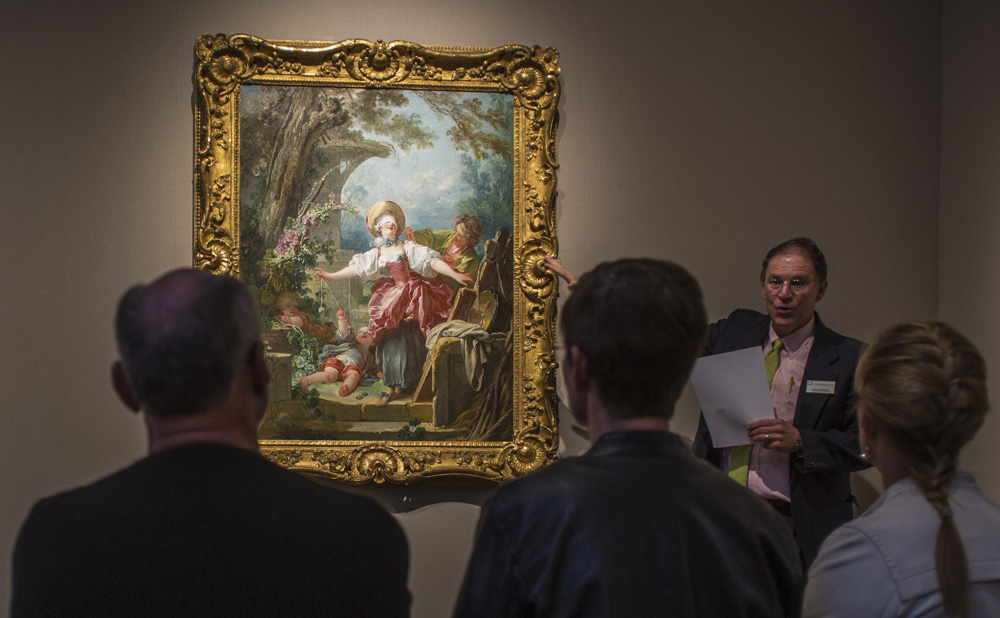
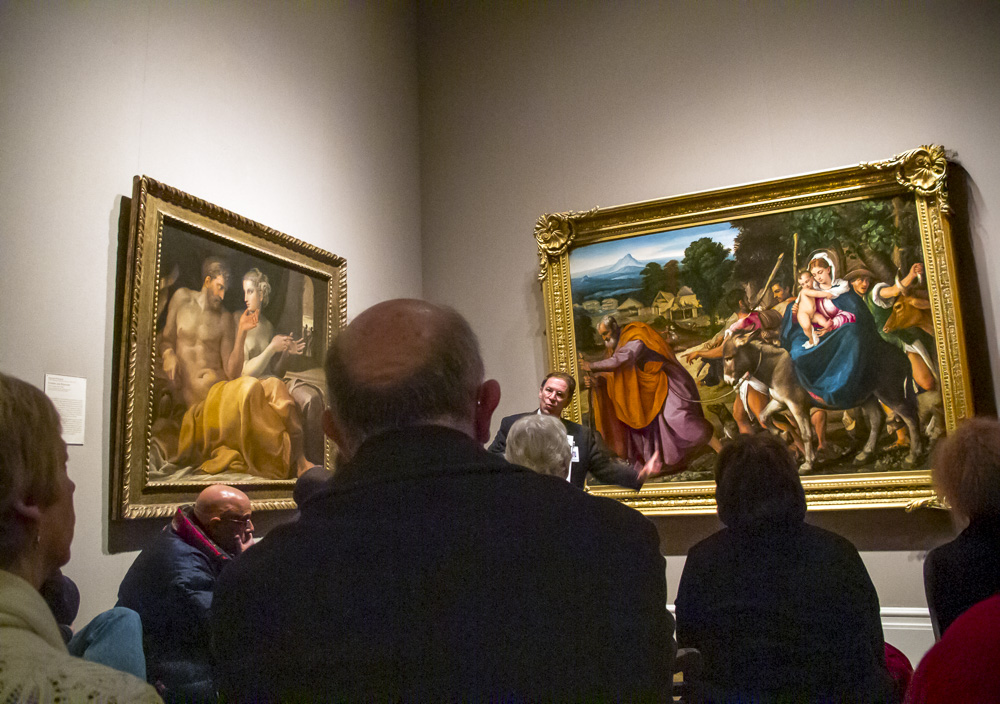
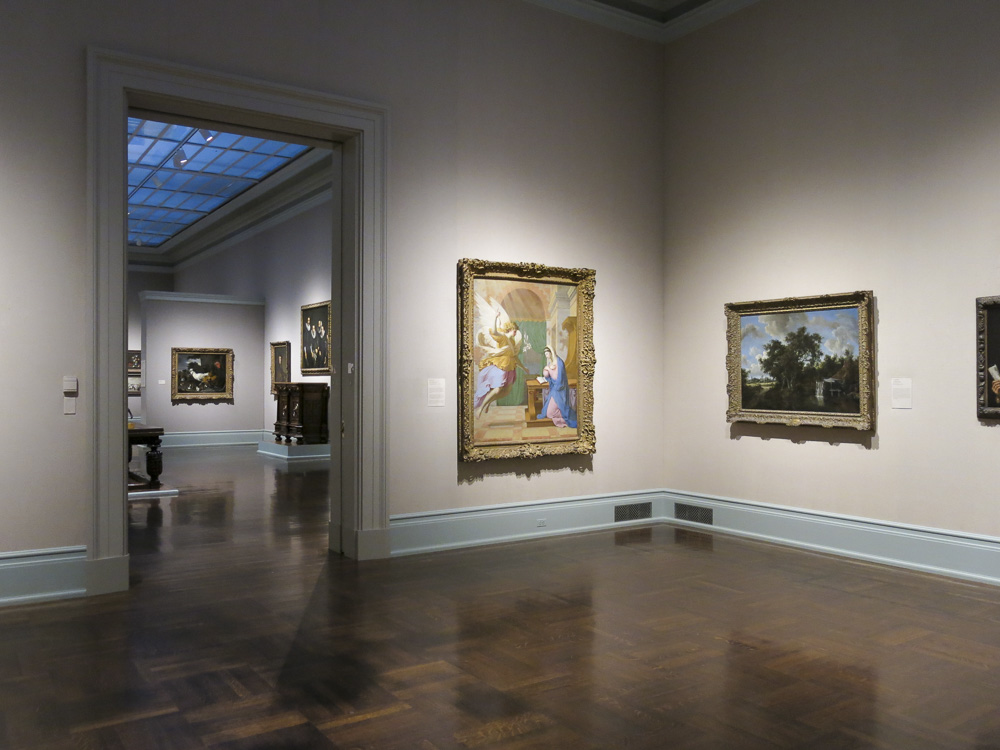
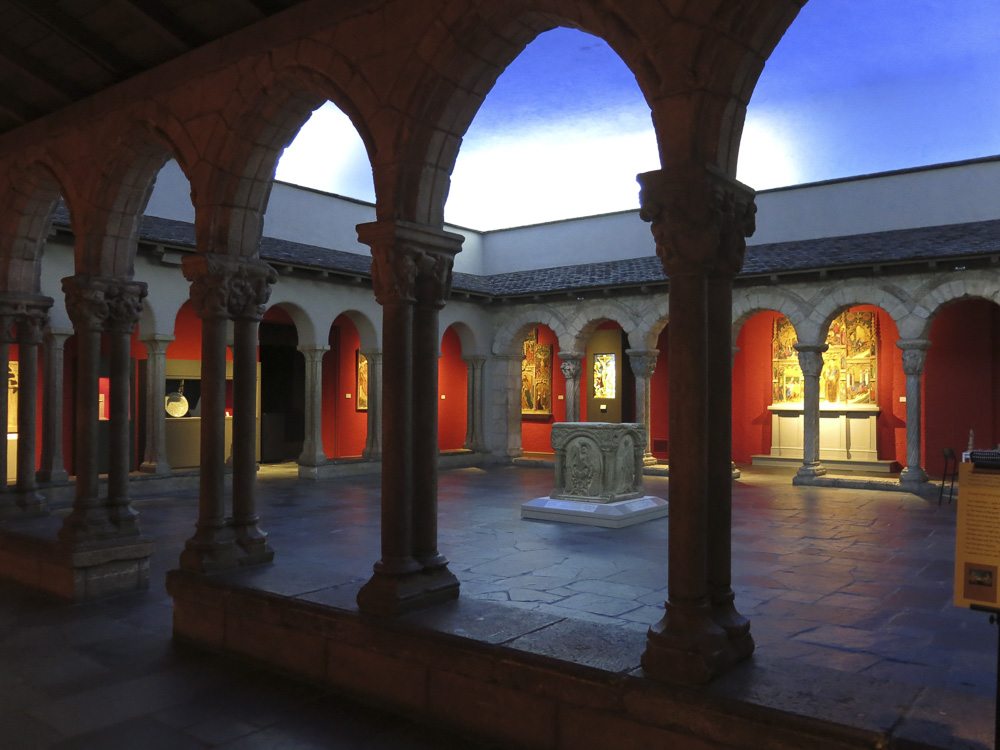
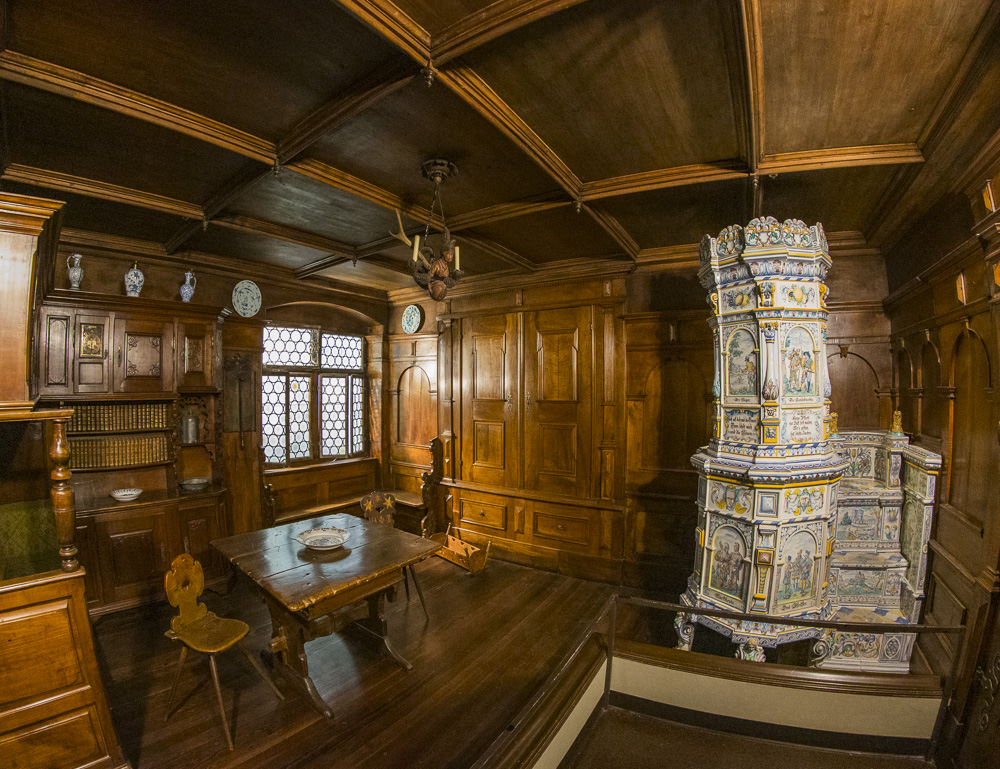
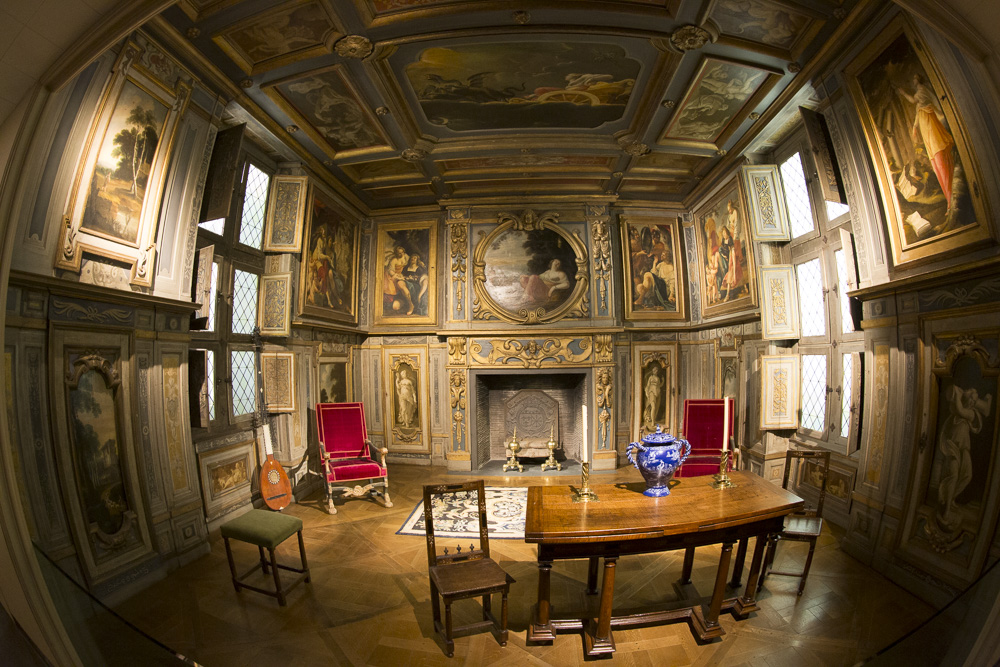
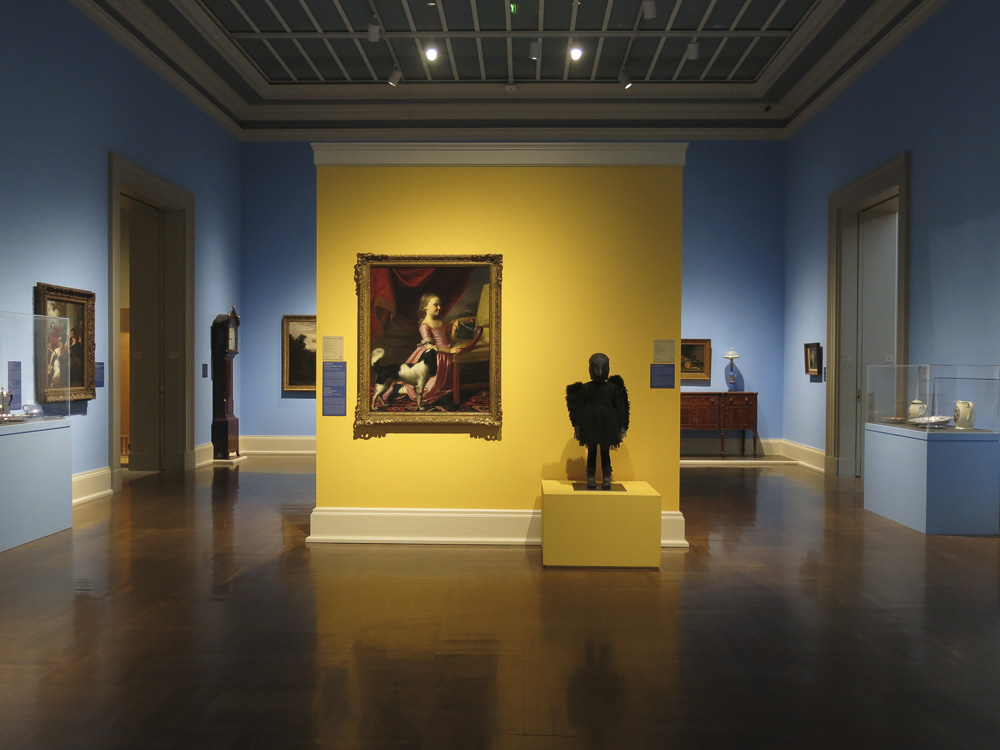
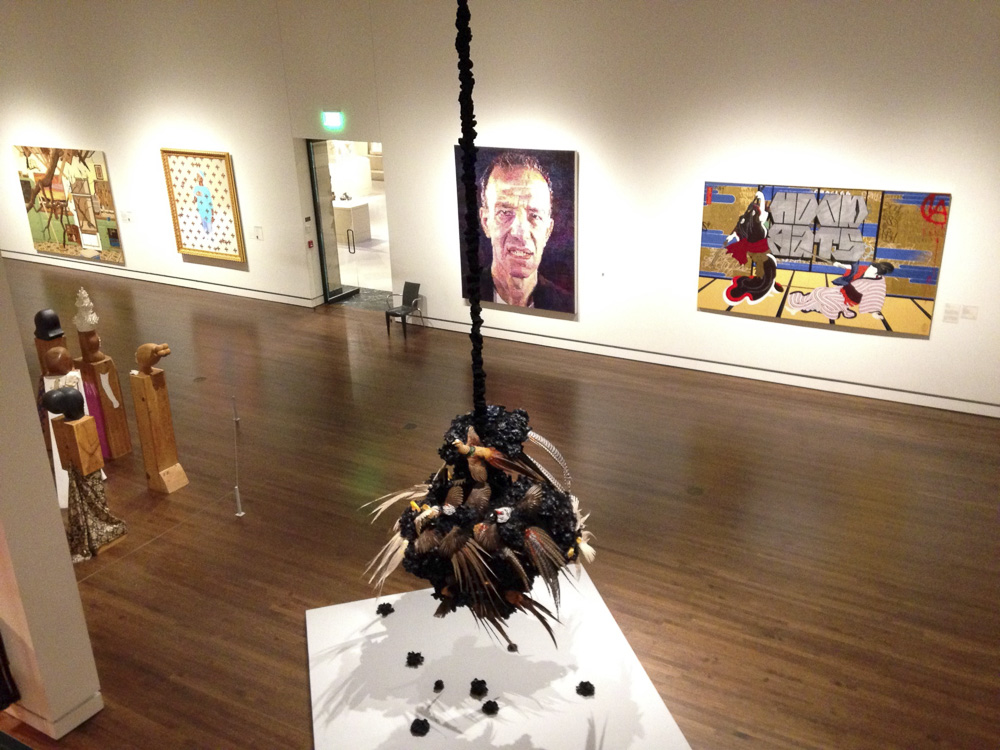
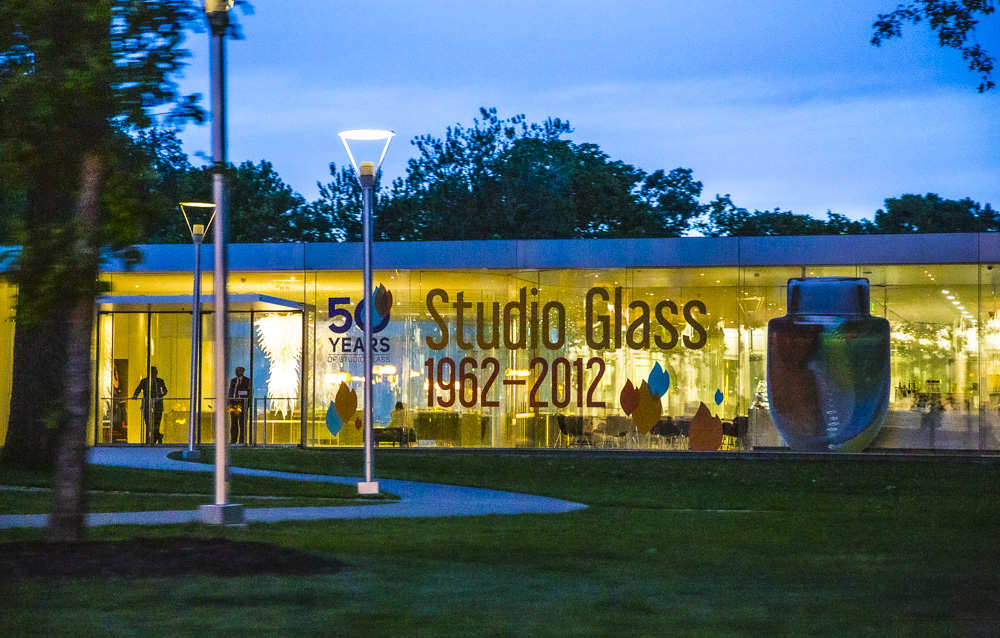
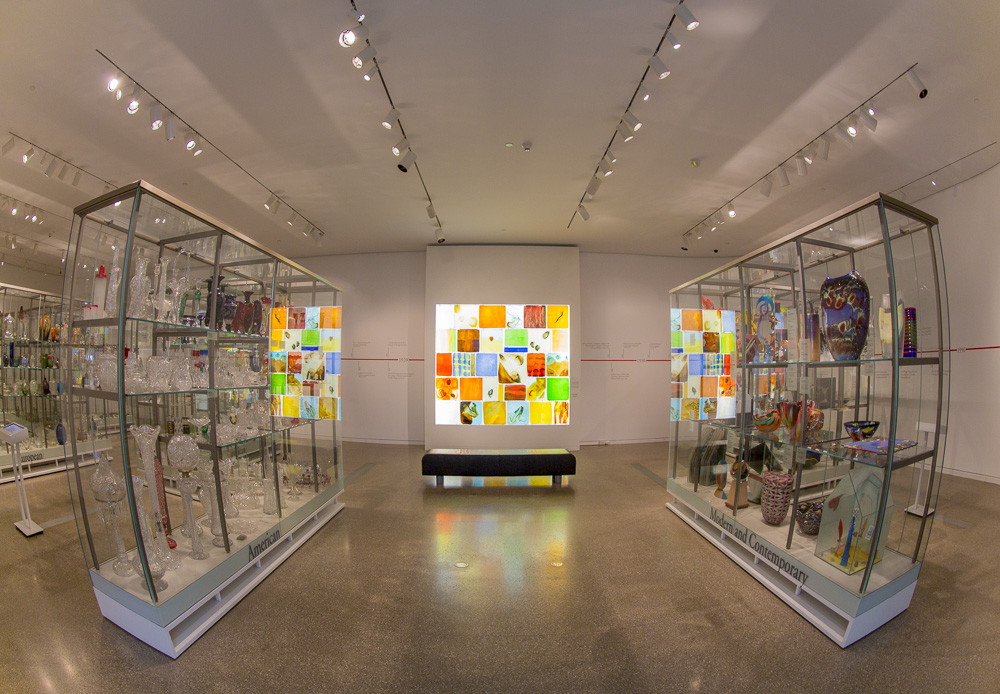
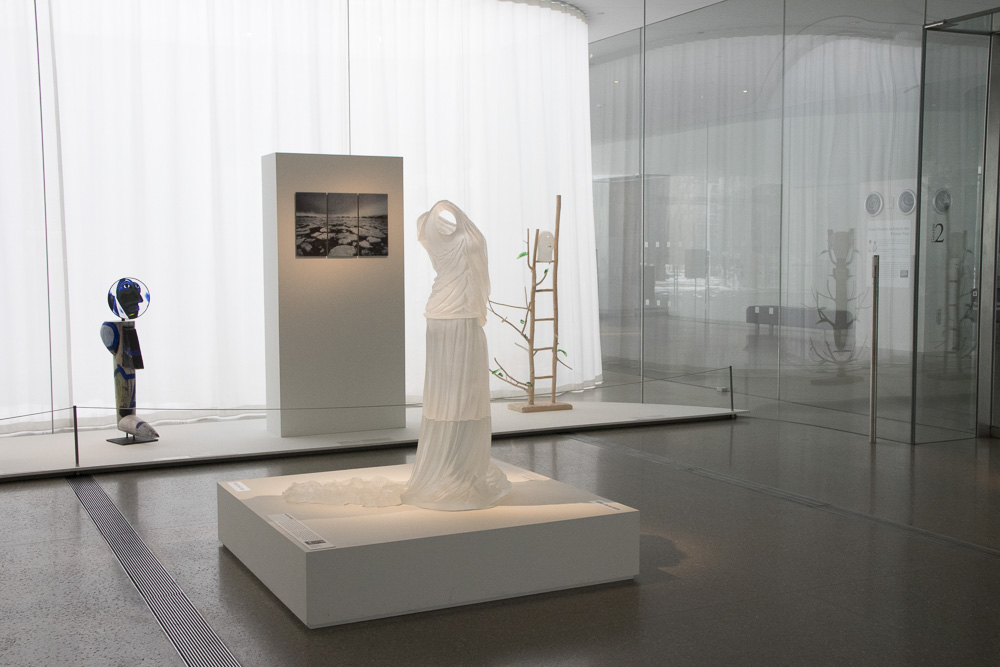
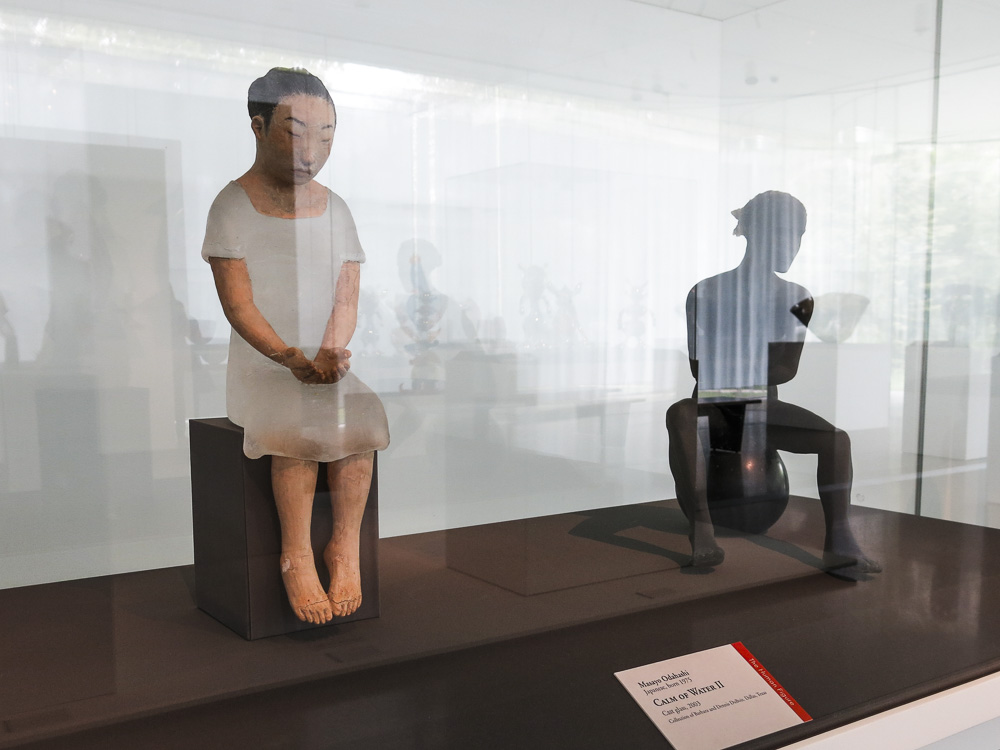
The changing of the guards
The culture of the museum carries on. Generations later, there is still a sense of awe and camaraderie amongst the employees. They love the museum. The museum, with its collection, has always been and will always be (unless they sell it) the epitome of excellence.
The collection is the result of a $10 million endowment to the museum from the Libbeys in 1925. The fund would be worth maybe $3.66 billion today if it had only grown 6% annual interest and never had been touched for 101 years. But since it’s been used quite effectively all these years; while being conservatively invested, it is worth today about $34 million.
Edward Drummond Libbey and his wife, Florence Scott Libbey wanted to give the people of Toledo a gift. After all, Libbey made his fortune in industrial glass here, and he wanted to give back to his workers, their families, and all the people of the city. He did so in the most democratic way. He endowed a museum with art and art education, and made it forever free for all people to attend.
To make his gift last, Edward Drummond Libbey had an ingenious condition regarding the use of the funds. The condition was that for any money withdrawn, 50% would have to be spent on art. Working in perfect harmony with this plan, curators over time have purchased the very best art for the collection. Today this collection well-exceeds the $3.56 billion of our 6% estimated return on the original investment if it was never touched. It’s worth well into the double digit billions. The 57 masterworks that are currently on tour in New Zealand and Australia as a group are worth $1 billion or more.
The endowment’s 50% rule has transformed itself into a continual stream of new art for the cultural benefit of the people of Toledo, as it was a gift to the people, under the historic charitable trust of Edward Drummond Libbey.
The Museum in the Seventies
In the 1970s, when James Moore was there, the museum was highly culturally productive. The community drew its vitality from its existence in the heart of the art world, which was the museum.
Local artists were supported within the museum system, which showcased their work in a prestigious annual juried exhibition that grew into a nearly century-long tradition. The museum also provided the public with an exceptional art education, particularly through its year-round city-wide children’s classes held every Saturday.
Toledo believed that curators should be educators first. Each year, a competitive fellowship program brought together six or more talented young art history scholars from the best colleges across the country to work at the museum. In addition to gaining firsthand experience with the museum’s collection, fellows were required to teach children’s classes. The children’s education program was a tremendous gift to Toledoans, myself included.
Perhaps 50 fellows came through this program during this decade, many going on to prestigious positions in the art world. For example, the Pulitzer Prize winning art critic of the Los Angeles Times, Christopher Knight, and the Director Emeritus of the Whitney Museum of American Art, Adam Weinberg.
Adding organically to the texture of the world’s arts culture, the museum gave to the city all of this, and did so, so leanly. The annual budget of the museum was about $1.34 million, or $10.59 million in today’s dollars. (Today’s budget is close to three times that, with none of that anymore.)
All this as the art collection grew.
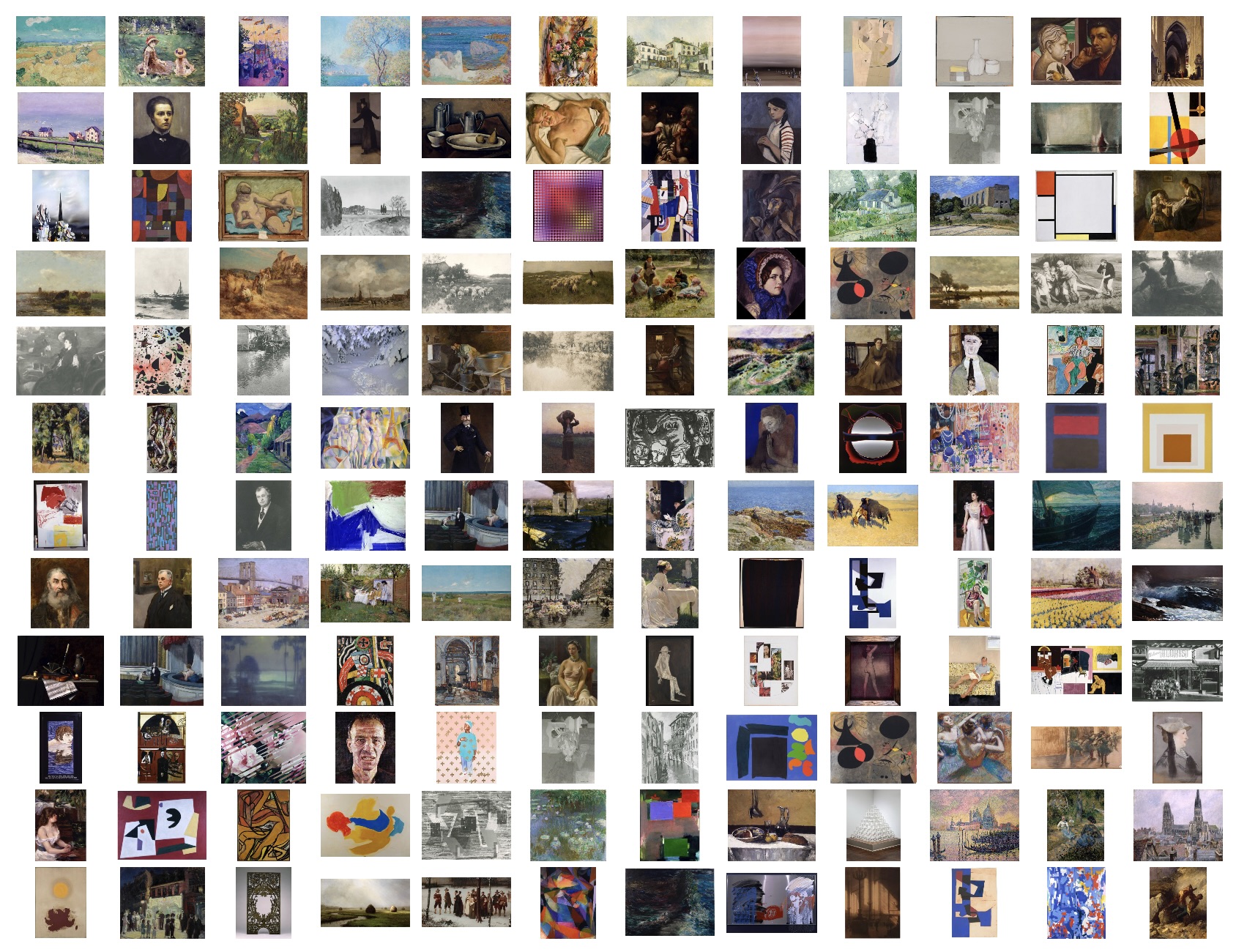
The 21st century Battle of Toledo
After the untimely resignation of Director Brian Kennedy in March of 2019, and the year-long search for a new director, during which John Stanley was hired in the interim, Adam Levine, the youngest director ever, began his tenure. He started exactly when covid hit – in April 2020.
Adam Levine “leverages” the Libbey collection. He speaks openly about it. He is using the collection to transform the museum right down to the “physical studs.” He is not as much a curator as he is an excavator-turned contractor.
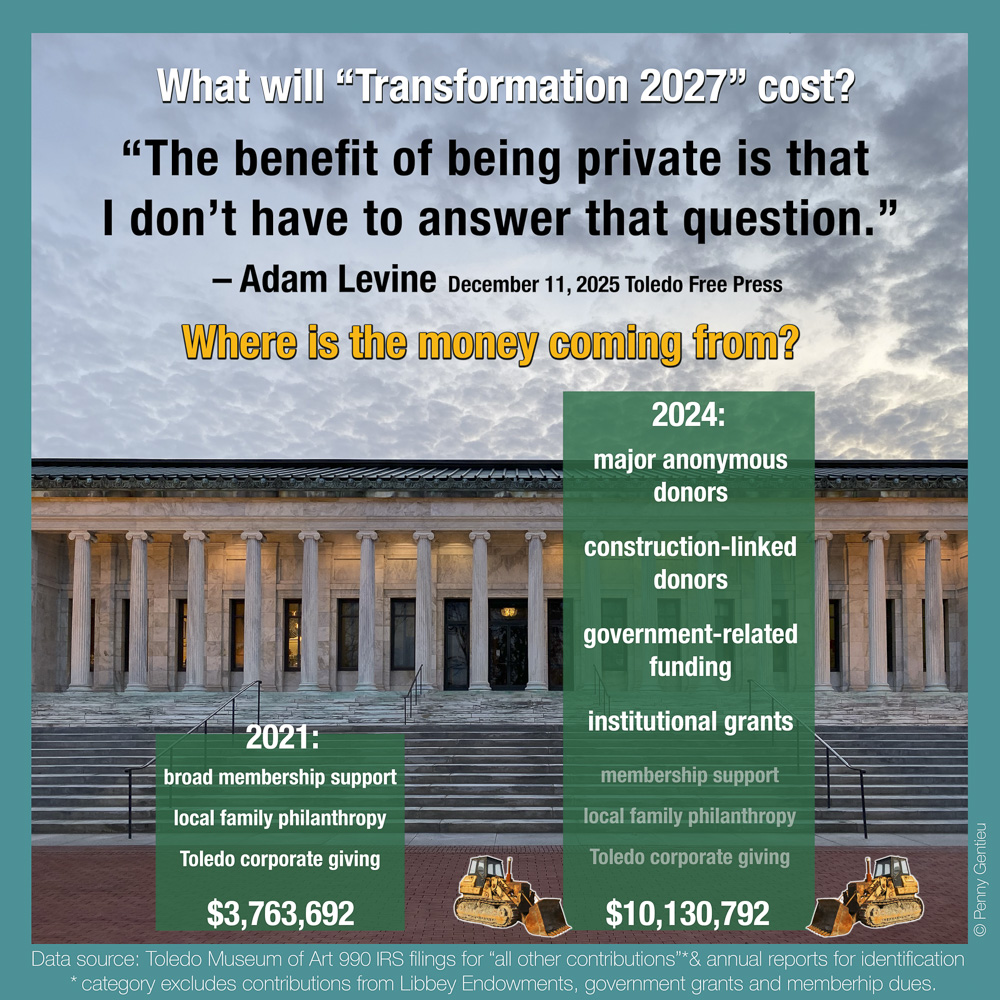
He calls it, “Transformation 2027,” a strategy slowly revealed to the public with what began as a plan to update the HVAC system, funded by a bond issued by three different Ohio port authorities for $25 million.
Adam Levine will not reveal the financial details of “Transformation 2027.”
Whereas the museum had always been supported locally, it went out of its way collecting donations from any and everywhere possible, strings or no strings. The new sources include anonymous donors, institutional grants, government-related funders of all kinds, and construction-linked donors. These new donors overshadow the long-time local family philanthropy, Toledo corporate giving, and broad membership support that for 125 years has kept the museum going quite successfully, and locally, carrying out Libbeys’ intentions and visions for the people of Toledo.
Adam Levine collected federal public funds during the pandemic meant to help support hurting institutions. He obtained a two-year variance on Libbey Endowment”s 50% rule, so that the money earmarked to buy art could be used for the “care of art” instead. Was it to the best advantage of the trust and for the people of Toledo? There was no financial hardship, as would be shown in the IRS 990 filings after the fact. Considering that Levine used the money to prepare paintings for shipment outside of the country so that he could leverage the art and finance his makeover of the museum, I would argue that the variance obviously was not in the best interests of the trust, which was to provide culture to the people of Toledo. In fact, it might have been obtained under false pretenses, if in fact the museum claimed hardship.
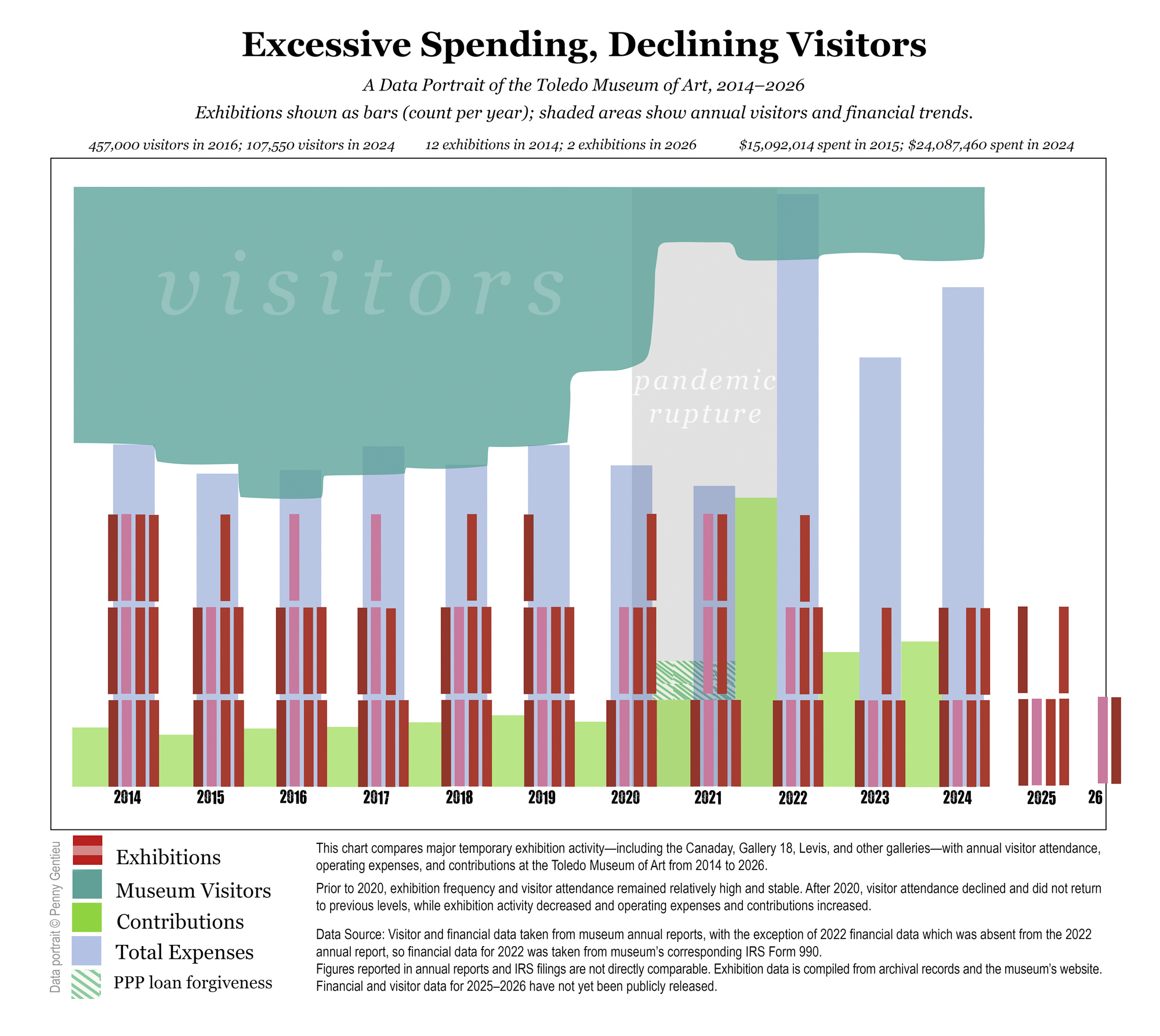
Adam Levine took a $6M federal loan forgiveness in 2021. Who would blame him for taking the free money. But with it, he raised the operating budget fast and high, and there was no looking back.
His funding sources even cut into the precious Libbey art collection — in 2022 he sold three exquisite paintings by Cezanne, Matisse and Renoir for $59.7 million dollars. He did not buy art with it as it is stated in the will. He did not put it back into the Libbey Fund earmarked for art purchases. He created a brand-new fund the size of the “Libbey corpus” with the Cezanne and Matisse proceeds, out of sight from public scrutiny of the Libbey Fund.
Attendance never recovered after the pandemic
The museum staff grew by perhaps 50% or more since Adam Levine started. Whereas in 2017 the museum reports 150 employees, in 2025 we heard reports of 350 employees.
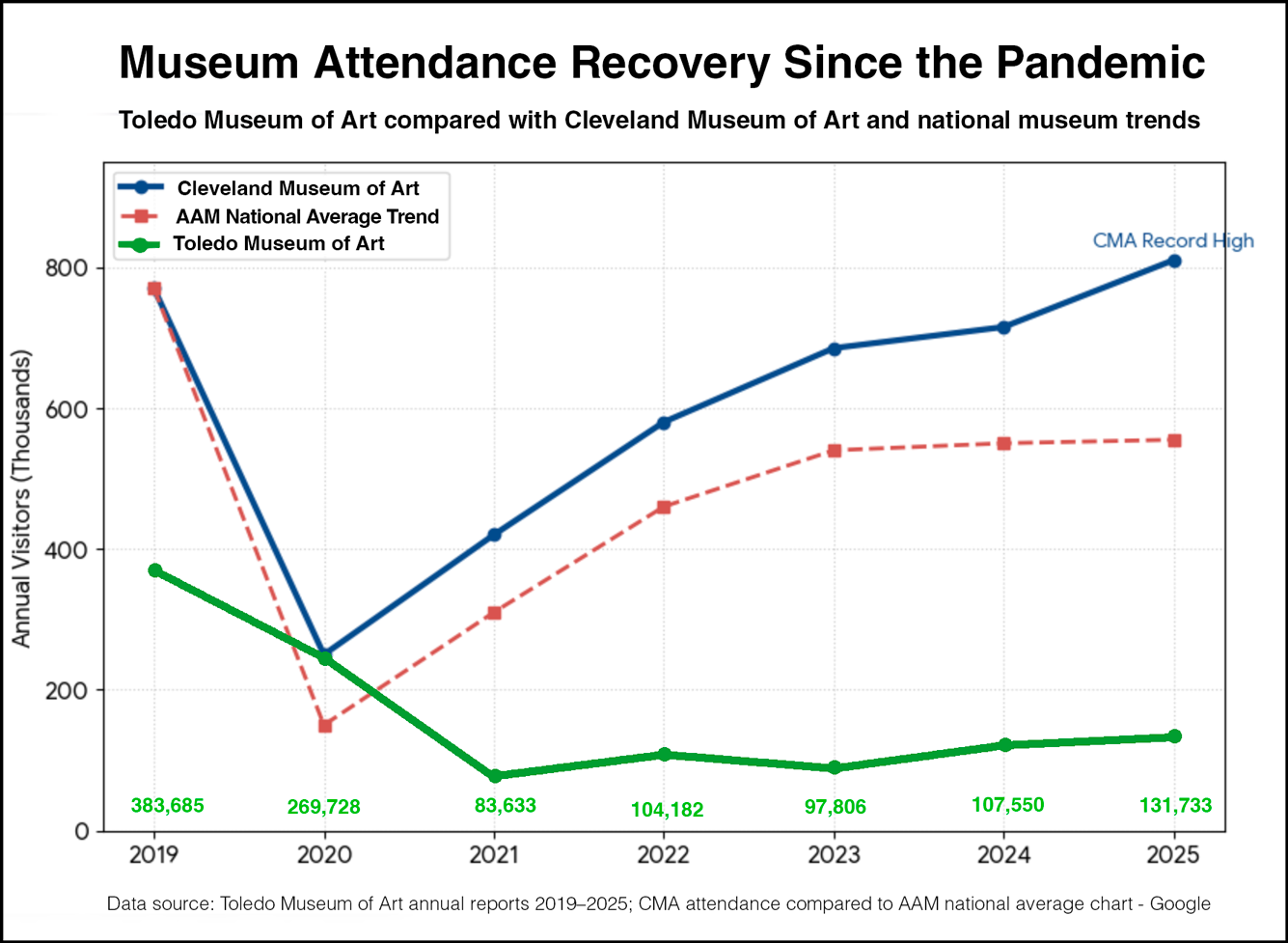
One might wonder, what was the point of the increase in staff, because the museum never recovered from the “pandemic rupture.” The attendance reported in the annual reports had been flat from 2021 through the last annual report published, 2024.
Toledo is a union town
One day in 2024, the employees of the visitor services, glass studio, research, education, curatorial and library departments started talking about forming a union. They loved the museum and were passionate about their jobs; they wanted job security. They could foresee the future and wanted to protect themselves. They were as unified a group of museum workers today as they had been throughout the museum’s history.
They formed a union, under the American Federation of State, County and Municipal Employees (AFSCME), of about 100 workers, which was officially recognized in the spring of 2025.
A story about the formation of the union, Toledo Art Museum Workers Move to Unionize, was published by Hyperallergic on April 11, 2025.
Skye Sloane, a team leader for visitor services, told Hyperallergic, the reinstallation project is “a significant change to the institution that we all love, and we wanted to band together and feel sure and secure in our new jobs, benefits, and wages, before the project is completed.”
TMA chief people officer Jennifer McCary told Hyperallergic that TMA “respects the democratic process and remain committed to fostering a supportive and collaborative work environment for all employees.”
For a museum that supposedly prided themselves as having great employee relations, it seems that they suddenly became union busters. A few of the employees who were interviewed or who posed for the photo in the Hyperallergic article, among other vocal employees of the union, are no longer working at the museum today – one year later.
The museum talks the talk but it won’t walk it.
This is Objective 3 of Adam Levine’s 2021 five-year strategic plan:
Become an Employer of Choice — Visitors will be “shocked and delighted to be welcomed by a diverse and empowered staff so clearly loving what they do and the institution they serve,” and visitors will also be “eyeing the posted job opportunities, hoping for a chance to work for an institution known widely for treating its staff so well.
An employer of choice would allow their staff to have direct collective bargaining power, to ensure fairness and security for themselves and for their coworkers.
Especially in Toledo, a union town.
Letting their guards down
Now, in 2026, as the guards tried to unionize, the museum terminated the guards only to rehire them through an outside company, stripping them of health insurance, retirement benefits, reduced hours and more.
A story about the the guards, TMA guards express hurt, surprise at outsourcing services, was published by Toledo Free Press on April 23, 2026.
The guards wanted to form a union. They filed a petition with the NLRB to do so. But they were immediately cut off at their knees – given notice that they were being terminated but that they could be rehired by the company called (ironically) “Safeguard.” Safeguard is the outside company that the museum had been using for patrolling outside the building and the parking lot. And now this outside company is in charge of the inside, and the workers who once worked for the museum have been taken down.
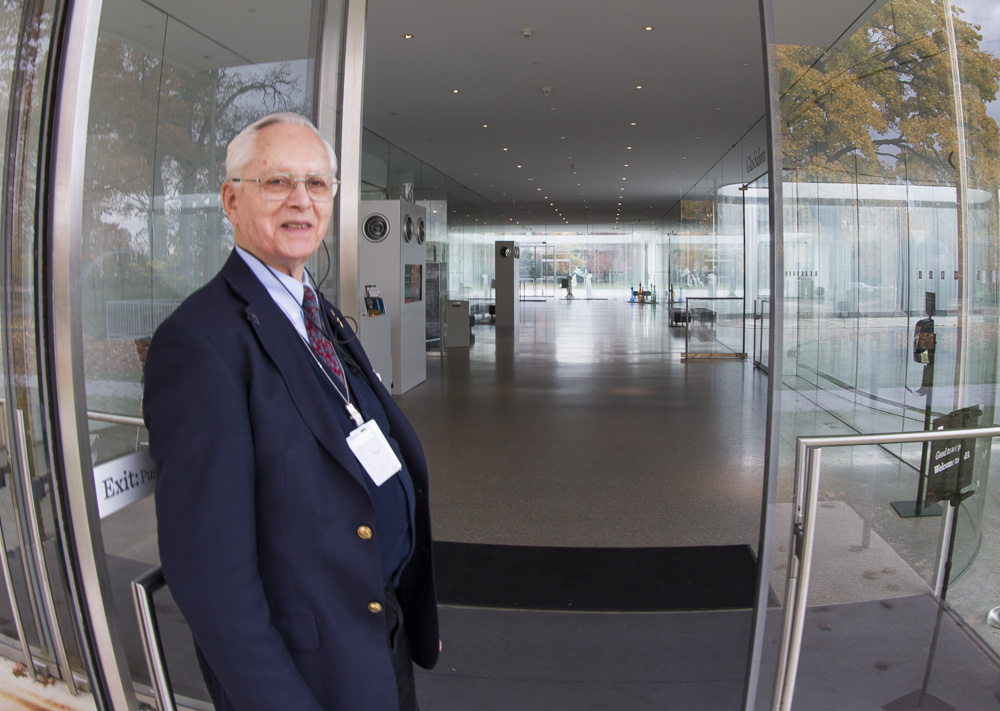
The guards were probably the largest category of employees at the museum — I counted 75 names listed one year on an annual report. They are the frontline, the security, the ambassadors, the people that safeguard the art and connect visitors with the art. They are the most beloved employees at the museum, and they have been downgraded and degraded by an ever-ballooning administration that even hired a special chief people officer a few years ago to keep up with the growing staff and instill a culture of belonging (what a joke) — and look what they are doing now.
Adam Levine’s “Transformation 2027”
In March of 2026, along with out-sourcing the staff, we heard news that our priceless artwork was being shipped out of town en masse.
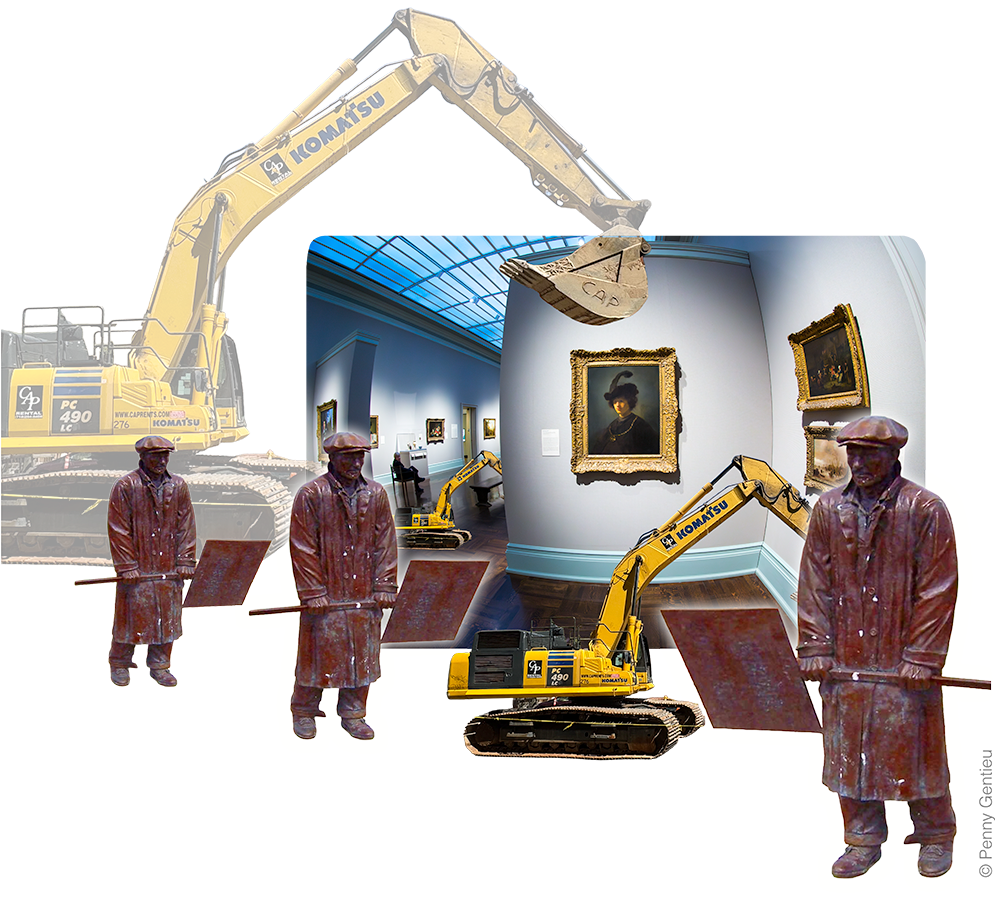
As Adam Levine tears the museum down to the studs, removing our art and shipping it all over the world for exhibitions and storing the rest in art storage facilities in various cities in the U.S., he is also destroying the museum’s own corporate foundational ecosphere built to care for the art.
It makes you wonder, is this going to land well, or are we presently witnessing the total implosion of our museum?
Hey Adam — that’s our Rembrandt! Can you please tell us where it is at this exact moment? And where is everything else?

after all that they have shown us,
How can the directors be deserving of our trust?
It’s OUR museum.
The Libbey Trust, over 101 years, has transformed itself into many billions of dollars worth of public art. The Libbeys intended it for the people, not for leveraging power of a director.
It belongs to the people. For our art to be scattered all over the world — in international exhibitions and in storage facilities across America – while our museum undergoes “transformation” and workers lose jobs is outrageous!
James Moore, the former TMA employee who inspired this essay, has had a distinguished career in the art world. His early life was shaped by the unique culture of Toledo, and the principles learned at TMA have guided him throughout his career. He has been a trustee of the Wichita Art Museum, a lecturer at University of Mexico, a member of the Collections Committee of the National Hispanic Cultural Center, and is the Director Emeritus of The Albuquerque Museum of Art and History.
He wrote an opinion piece published in the Berkshire Eagle in 2018 regarding museum stewardship. The context concerned the unethical deaccessions taking place at the time at the Berkshire Museum. It rings true today. James Moore: Museum’s violation of trust will have far-reaching impact.
We speak of “trustees,” and the “public trust,” but these are abstractions. In reality, it comes down to assessing whether a museum is trustworthy by evaluating whether the people managing and governing it are themselves trustworthy. This is the basis for ethical behavior among people, both internally with employees and externally with the public.
I would end this essay here but there is no end in sight…. So many problems … hence, a petition is underway addressed to the Ohio Attorney General to enforce Libbey’s Will and protect Toledo’s art.
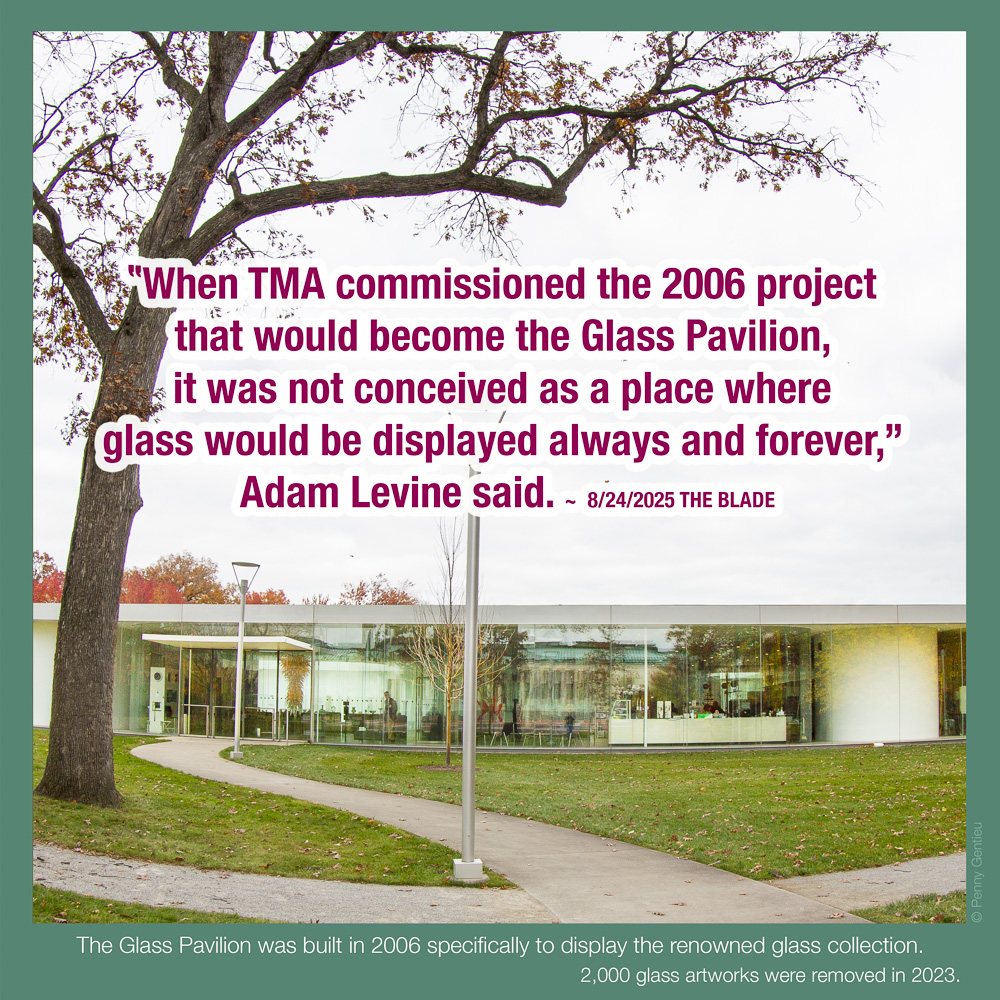
Years of planning, intention, effort and money went into to the building of the Glass Pavilion for the museum’s collection of glass. Then along comes Adam Levine telling us that “it was not conceived as a place where glass would be displayed always and forever.” Umm…really?
Letter to the Attorney General
Thank you for signing, and please add your name if you have not already, to the Petition to enforce Libbey’s Will, here.
April 4, 2026
To the Office of the Attorney General:
While our masterpieces are currently scattered in storage facilities across the country and our galleries are stripped to the studs, we refuse to let the Libbey Will be dismantled along with the walls. We are calling for State Intervention to ensure that the planned reopening does not become a permanent downsizing of our cultural inheritance.
We, the undersigned—including Toledo residents, born and raised Toledoans, visitors, friends, art historians, and stakeholders—formally request an investigation into the Board of Directors of the Toledo Museum of Art for apparent violations of the ITEM XXV–LAST WILL AND TESTAMENT of EDWARD DRUMMOND LIBBEY.
We believe the current leadership has deviated from the Trust’s mandates in the following ways:
1. Loss of continuous public exhibition
The Will requires that works be properly housed for public exhibition. Multi-year closures and removal of art from view undermine this mandate.
2. Dismantling of the collection’s integrity
Sales of major works and long-term international loans reduce the cohesion and accessibility of the collection.
3. Removal of art from its purpose-built home
The Libbey building was designed to safeguard and display the collection. Relocating works to storage and transit exposes them to unnecessary risk.
4. Public subsidy without public accountability
Despite tax-exempt status and public funding support, major decisions have been made without transparent public engagement.
5. Breach of the museum’s open-access mission
Extended closures exceed what could reasonably be considered “temporary” and deny access to a unique regional cultural resource.
We ask that your office exercise its authority under Ohio Rev. Code §109.24 to review these actions and ensure that this charitable trust is administered in accordance with its founding purpose.
The Toledo Museum of Art was created for the public—and must remain so.
Respectfully submitted,
[1,150 petition signers as of May 10 and counting.]
Read more about the petition to enforce Libbey’s will on this page of artistsoftoledo and please share: