Categories
Artists of Toledo

When Stewardship Becomes Displacement

What Toledo Is Losing: Stewardship Across Time

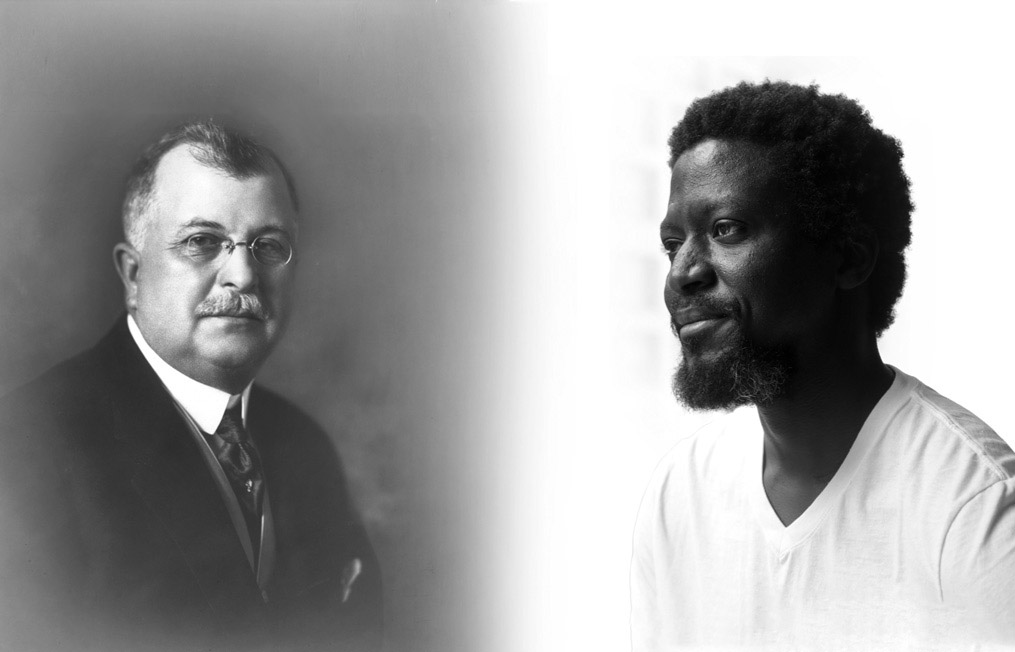
I find myself comparing Edward Drummond Libbey and Ibrahim Mahama. I began thinking about Ibrahim Mahama because my  work along with my daughter’s work is currently part of an exhibition in one of the cultural spaces he has created in Ghana. More than a century apart, the two men each represent a different vision of how culture is built and sustained.

Ibrahim Mahama: Building for a Future He Will Not See

Ibrahim Mahama is a Ghanaian artist whose work engages collective memory and historical narratives deeply rooted in Ghana’s past and present. He has described his practice as a form of “time travel.” Internationally celebrated, Mahama has chosen to turn the profits of the global art market back into his home region of northern Ghana—building studios, research centers, archives, and public cultural spaces that serve artists and communities far beyond his own career.

Mahama’s work is often discussed in terms of materials, but its most consequential dimension may be institutional. Rather than withdrawing from Ghana after achieving international success, he has reinvested directly in place. His cultural spaces preserve memory, support research, and provide infrastructure for artists and the community.

Mahama does not dismantle cultural memory in order to innovate. He adds to it. His institutions are long-term civic commitments meant to outlast his own presence. They are built on the assumption that continuity itself has value.

Seeing what Mahama is building in Ghana made me reconsider what Toledo once understood a museum to be.

Edward Drummond Libbey and the Civic Ideal of the Museum

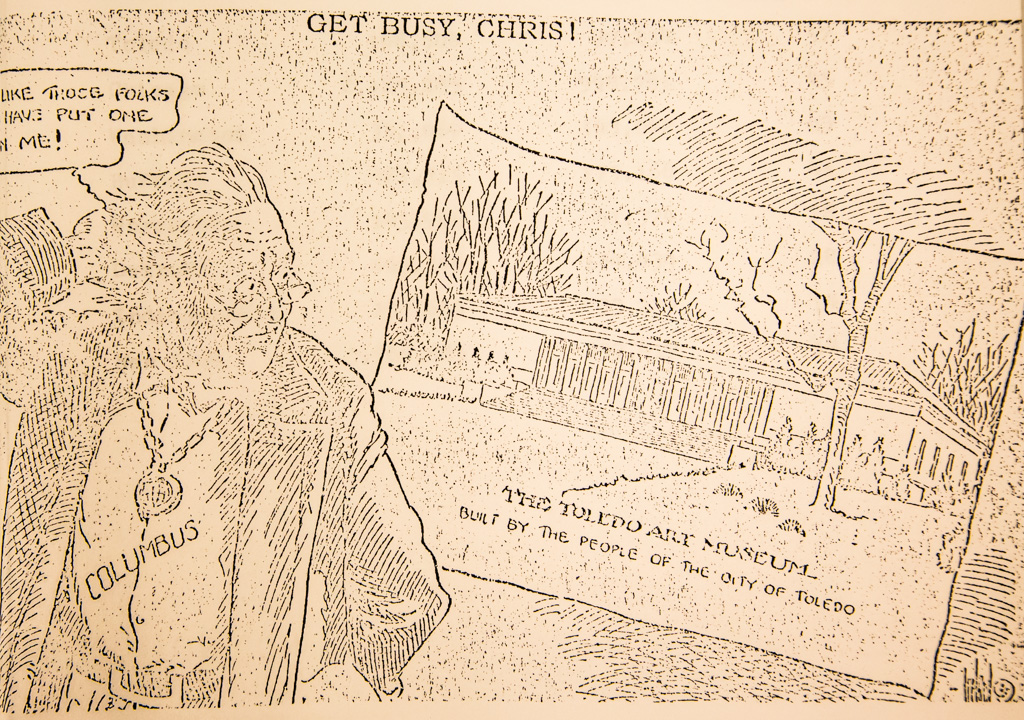
More than a century earlier, Edward Drummond Libbey made a remarkably similar decision. At the height of his success in the glass industry, Libbey endowed the city of Toledo with something radical for its time: a free, educational art museum meant to belong to the entire community. From its founding, the museum was free and educational, and civic at its core. It offered year-round Saturday art classes for children, college students, and adults. For nearly a century, it hosted the annual Toledo Area Artists Exhibition, a cultural touchstone that brought the local artist community together and helped launch countless careers.

Along the way, curators assembled an encyclopedic collection of art from around the world. The majority of the museum’s most valuable works were either gifted by the Libbeys or acquired through endowments they established. Edward Drummond Libbey and his wife, Florence Scott Libbey, articulated a clear governing principle: for every dollar spent on administration, an equal dollar should be spent on art. This balance was meant to keep the institution grounded in its purpose.

For much of the twentieth century, the museum thrived under long-serving directors who built steadily on this foundation. The Toledo Museum of Art was widely regarded as a model democratic institution—without having to announce itself as one.

Mahama reinvests success back into the community that produced it.

Libbey endowed permanence so art would remain available to those who lived with it. Different eras, different methods — the same ethic.

Continuity: How Stewardship Actually Works

Stewardship is the promise that what one generation builds, the next will care for and carry forward.

Cultural stewardship is slow. Its effects accumulate quietly over decades, often unnoticed while they are happening. Institutions like museums do not shape people through spectacle, but through repetition and presence—by being there year after year, generation after generation.

I understand this not only as an observer, but as a product of that system. I grew up with the Toledo Museum of Art as a civic constant, taking classes there from childhood through college. Art was not presented as exceptional or exclusive; it was simply part of life. That continuity mattered. It shaped how I understood art and culture as shared civic goods. Today, my work appears internationally, in an exhibition at the Savannah Centre for Contemporary Art in Ghana built by Ibrahim Mahama. That connection clarified something for me: Libbey’s legacy was never just a building or a collection. It was people.

What changes when art stops belonging to a place
and starts working for an institution?
Stewardship vs. Leverage

What we are seeing now treats legacy as something to be leveraged.

Leveraging art is part of the museum’s 2021 Strategic Plan – “TMA’s exhibitions will depart Toledo to traverse the globe, providing the Museum and its hometown the visibility it once enjoyed.” As Adam Levine stated to The Blade in 2022, “now we have a cultural shift and a new framework for how we can leverage this extraordinary collection to service the community.” 

Dozens of masterworks — many long understood as highlights of the museum — have been removed from Toledo’s walls and sent abroad. Toledoans lose access, continuity, and presence, while the institution gains visibility, prestige, and philanthropic reach elsewhere. Whether or not these arrangements are called loans, they function like renting out the collection — converting Toledo’s inheritance into institutional capital.

This shift has been accompanied by a new level of opacity. At a December town hall, the director refused to disclose the total cost of the museum’s reinstallation. “The benefit of being private,” Adam Levine stated, “is that I don’t have to answer that question.”

With the collection built over more than a century through Libbey endowments and local stewardship, worth many orders of magnitude more than the physical systems used to justify its absence, the museum is undergoing a complete transformation, right down to the physical studs. It’s not merely a change in exhibition strategy, it’s a change in ethics. A museum founded on the principle that art should stay, teach, and belong now treats mobility as virtue and absence as acceptable. The people of Toledo are asked to trust – without transparency – that this leveraging of their inheritance will serve them.
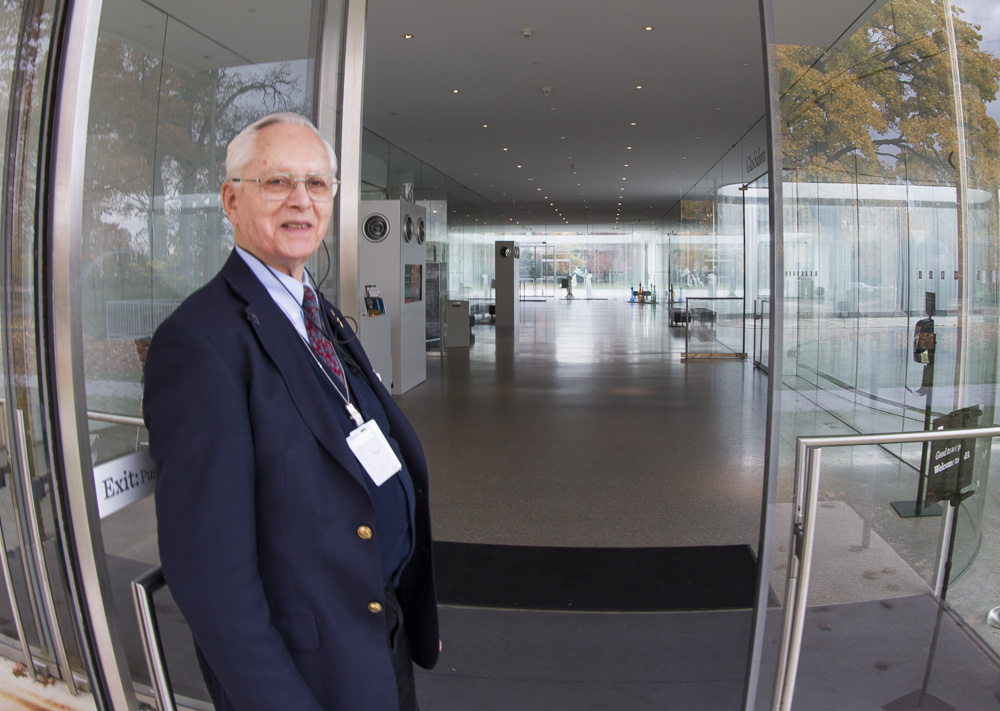
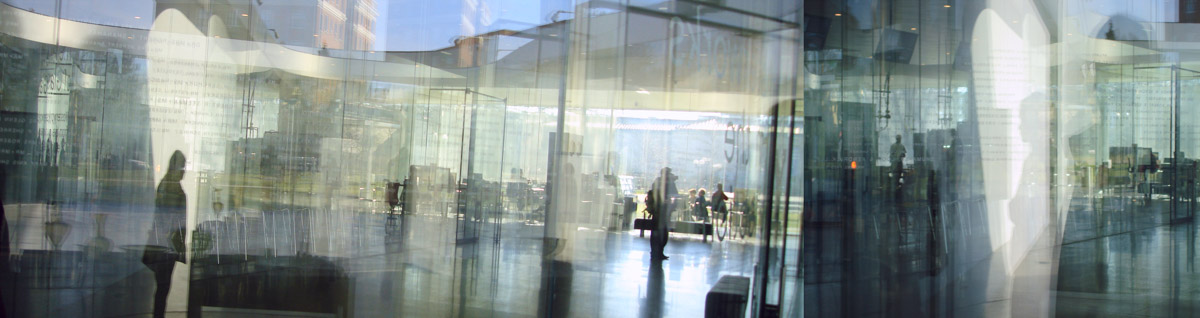
Frank, a museum guard at the Glass Pavilion, 2014
Stewardship Includes Labor

Tourists [will be] shocked and delighted to be welcomed by a diverse and empowered staff so clearly loving what they do and the institution they serve.” – 2021 Strategic Plan.

The irony.

For generations, the museum guards at the Toledo Museum of Art were not simply security. They were trained, knowledgeable, and deeply embedded in the daily life of the museum — often serving as the most human point of contact between Toledoans and their art.

Longtime interpreters and art ambassadors, the replacement of museum guards with a third-party contract service signals another quiet shift: away from relational knowledge and toward transactional presence.

Additionally, “visitor services” workers at the entrances are being replaced by kiosks. Labor is increasingly treated the way the collection is: something to be optimized, externalized, and leveraged.

When a museum distances itself from its workers, it distances itself from its public. And when labor becomes peripheral, the institution risks hollowing out the very relationships that once made it matter.

The Central Question

Would Edward Drummond Libbey have wanted his museum dismantled, its masterworks dispersed, and its educational core deemphasized and long-time workers replaced in the name of reinvention?

And how would Ibrahim Mahama feel if the cultural institutions he is building today were stripped of their purpose a century from now and repurposed into something unrecognizable?

The most radical act a cultural institution can take is not reinvention but continuity—honoring the trust placed in it by the past while making room, carefully and responsibly, for the future.

These two men belong to very different moments in history, but both understood that culture does not sustain itself. It survives only when someone decides it is worth building — and worth protecting. The question for Toledo is what kind of stewardship it now believes in.

Mahama builds so culture can endure where it is made. Libbey endowed a museum so art would belong to the people who lived with it. That is the standard Toledo was given. And it is the standard against which this moment should be measured.


Within five years, changes were made at great speed—resulting in mass removals of artwork, off-site storage across the country, and a wholesale transformation of the museum’s physical space. I have documented this sequence here:

Timeline of Changes at the Toledo Museum of Art (2014–Present)

The Life and Death of the Museum: Photos
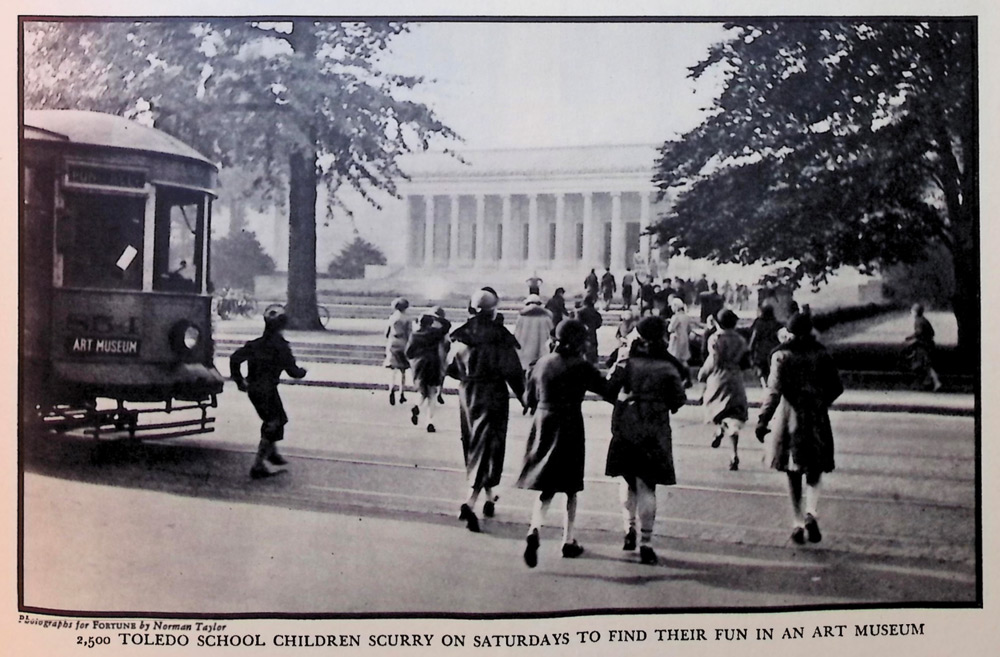
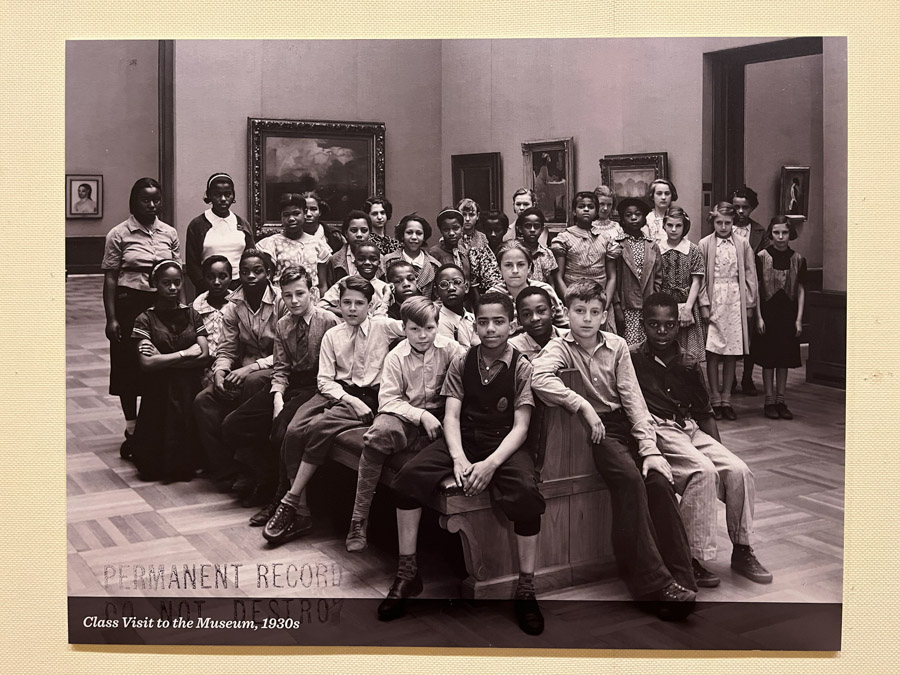
Fortune Magazine 1938: To Edward D. Libbey’s art museum – his enchantment draws 2,500 children every Saturday and 104 per cent of the population of Toledo in a year.
Education was the central mission throughout the entire Twentieth Century.
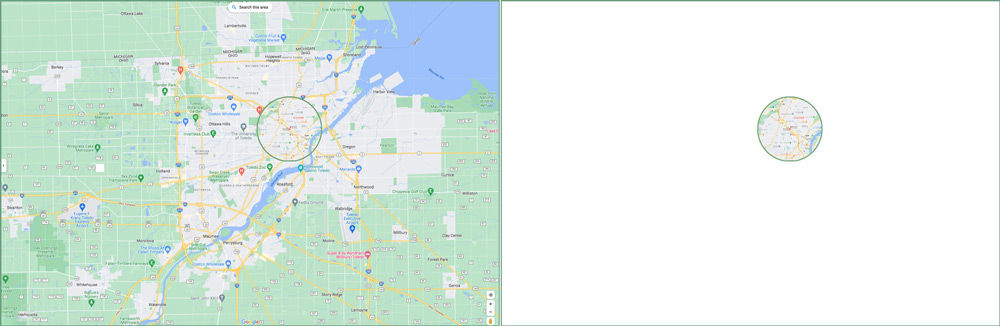
Map of Toledo (light gray) and the greater Toledo area (green) that the museum has always served compared to the circled two-mile radius of audience the focus for the reimagined museum.
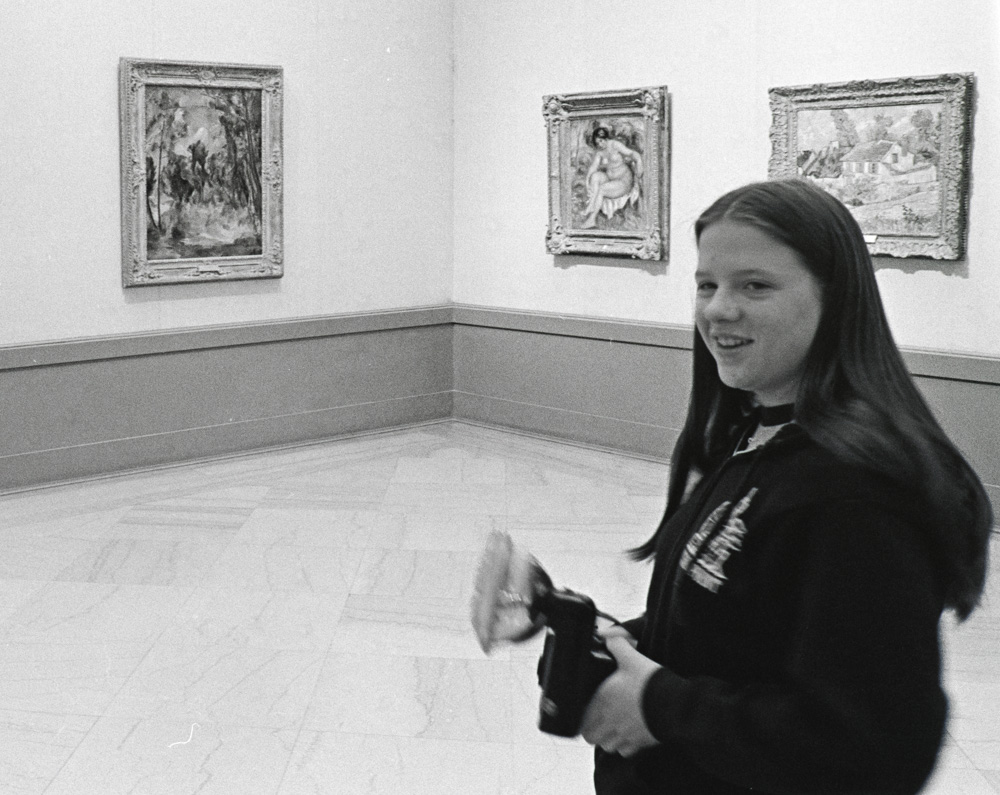
A student of the first photography class offered in the children’s Saturday classes, photographing in the Impressionist Gallery with Cezanne, Renoir and Van Gogh, 1979.
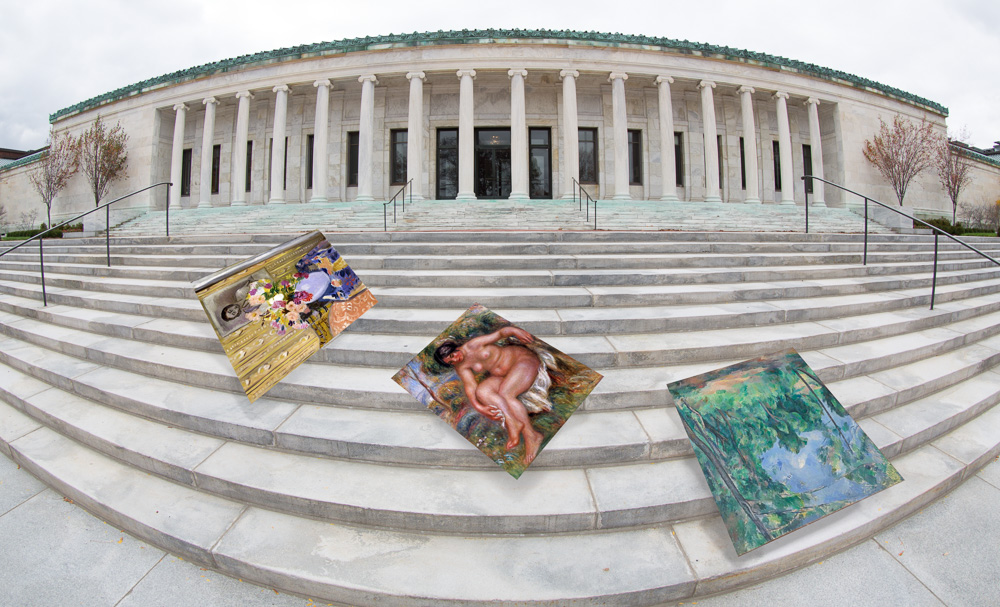
In 2022, our three famous French Impressionist paintings by Matisse, Renoir Cezanne were taken off the wall and sold for $59 Million. And that was just the beginning.
The Glass Pavilion, which opened in 2006, was built expressly to house the renowned glass collection. It will now be used for a different purpose.
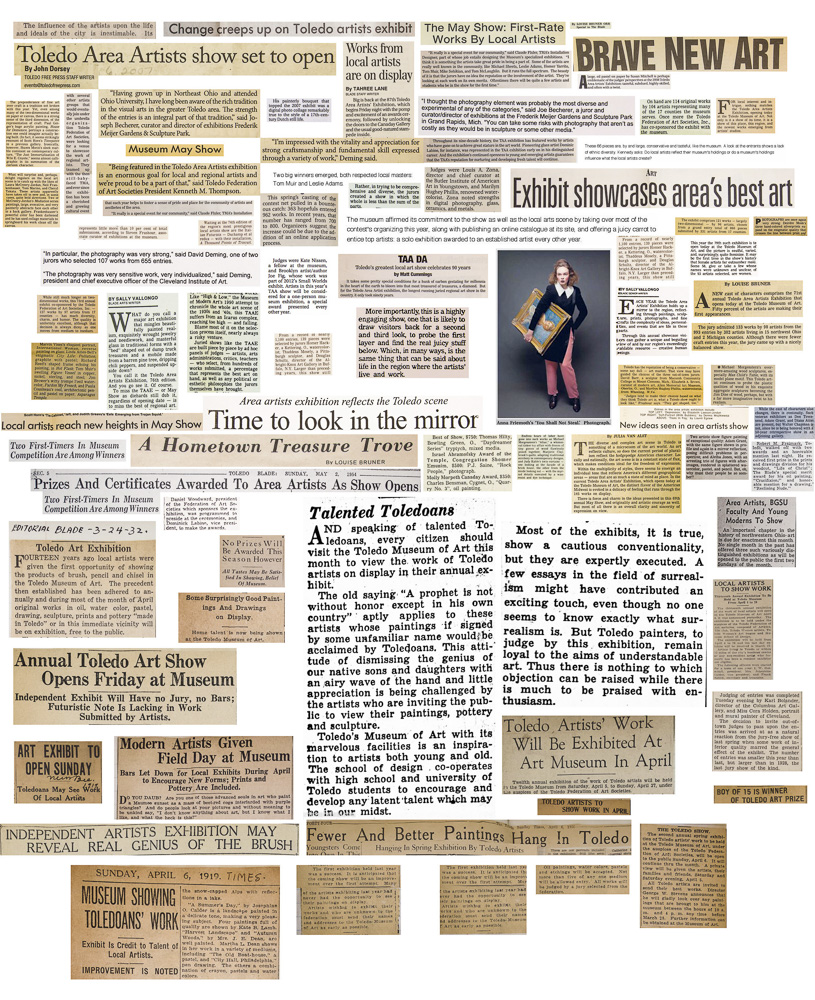
Headlines from 95 years of the Toledo Area Artists Exhibition, which ended in 2014.
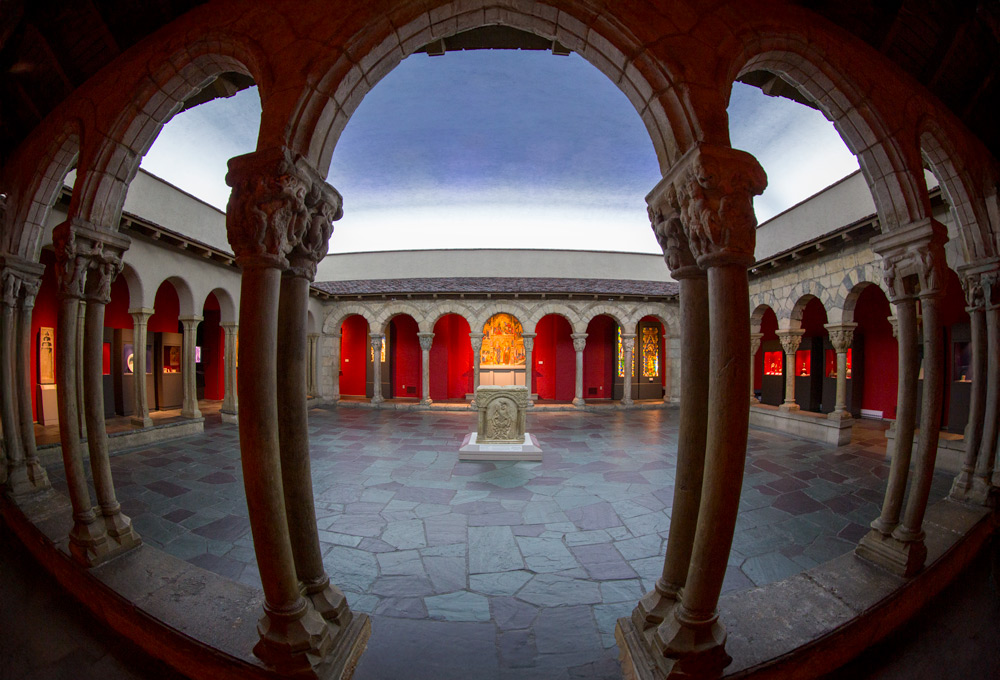
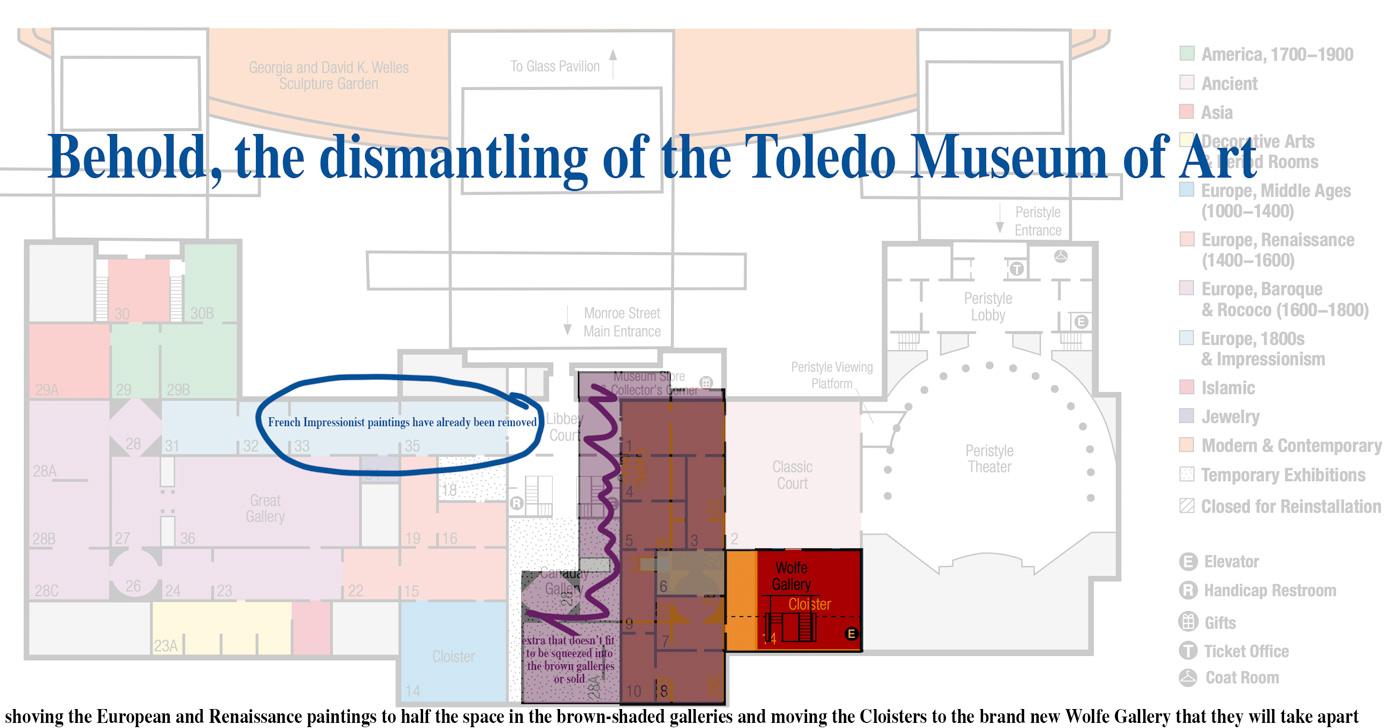
The Cloisters, installed in the museum in 1930_, was closed on Feb. 2, 2025 to be dismantled and moved two galleries over, next to the Ancient Court, as to compress time as art is arranged chronologically.
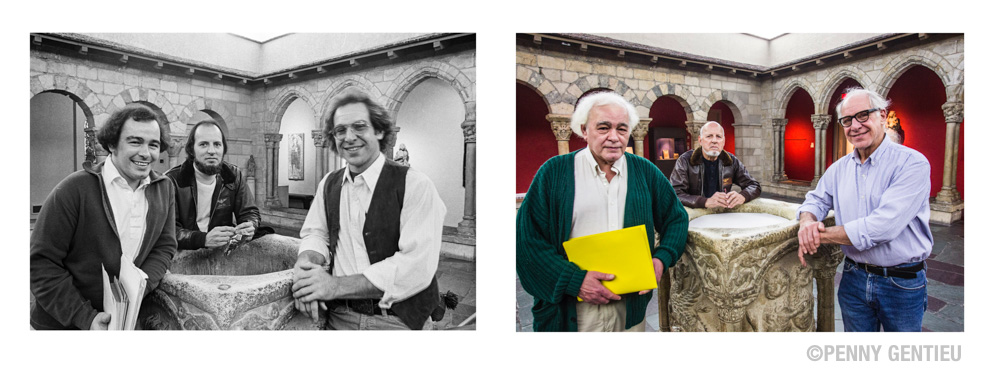
Poets Bob Philips, Nick Muska and Joel Lipman before a poetry reading at the Cloisters, Toledo Museum of Art, 1979 and a reshoot in 2015.
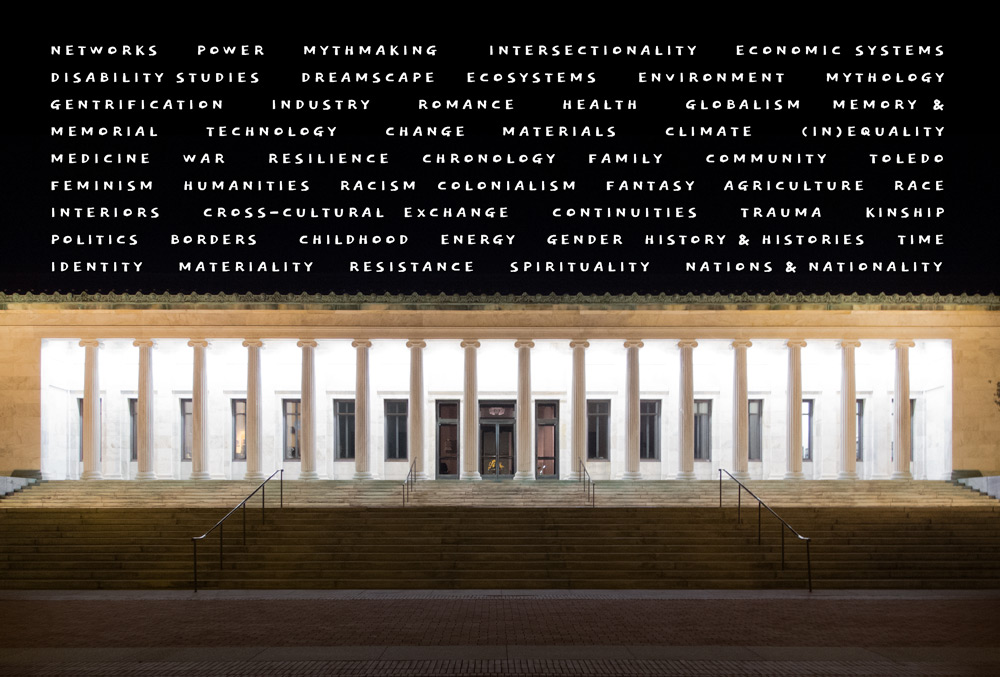
The heavy words of Toledo Museum of Art’s inspirational word cloud shown at their symposium, Expanding Horizons: New Approaches in Display and Interpretation, July 2023
2024: The art museum is renovating. Glass art will be interspersed amongst other artwork in the main building, arranged chronologically. The Impressionist paintings have already been relocated to the Glass Pavilion. UPDATE: Feb. 7, 2025 — they are lending 57 of the impressionist and 20th century core art collection to New Zealand, and according to New Zealand, it’s because the museum is renovating! But they had already moved these paintings to the Glass Pavilion, built in 2006 — are they also renovating THAT building?    Yes.
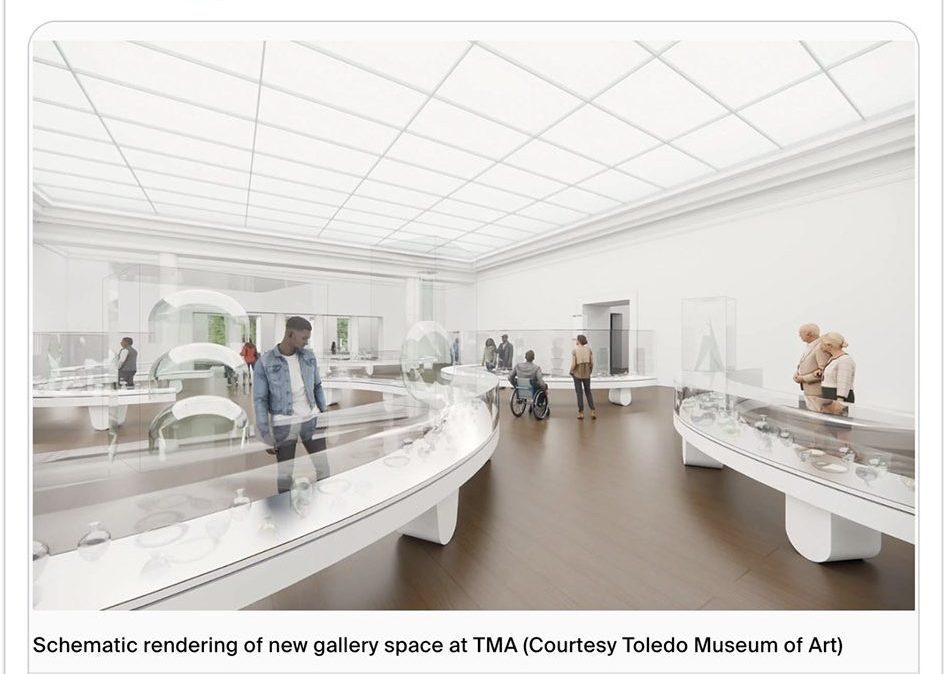
A schematic rendering of how the museum will look, shown to the public in November 2024. It was not received well.
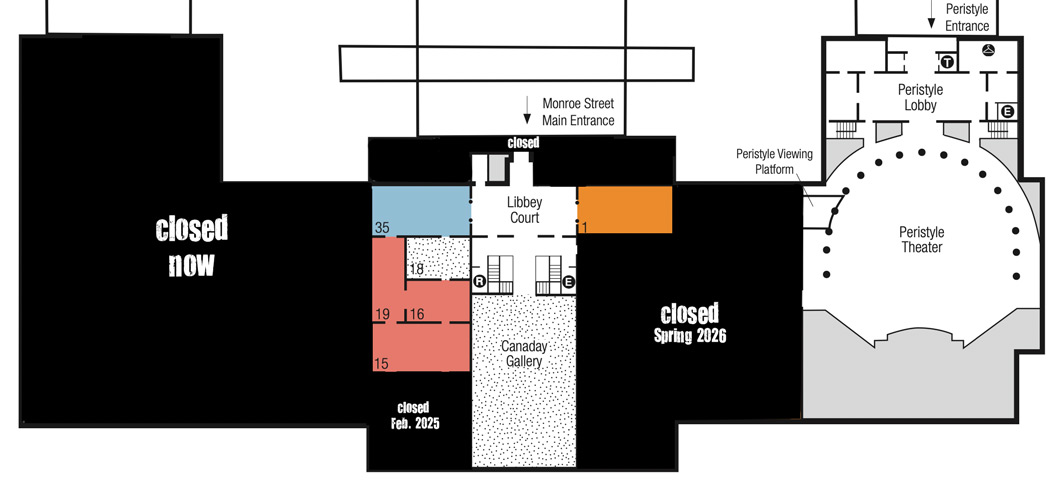
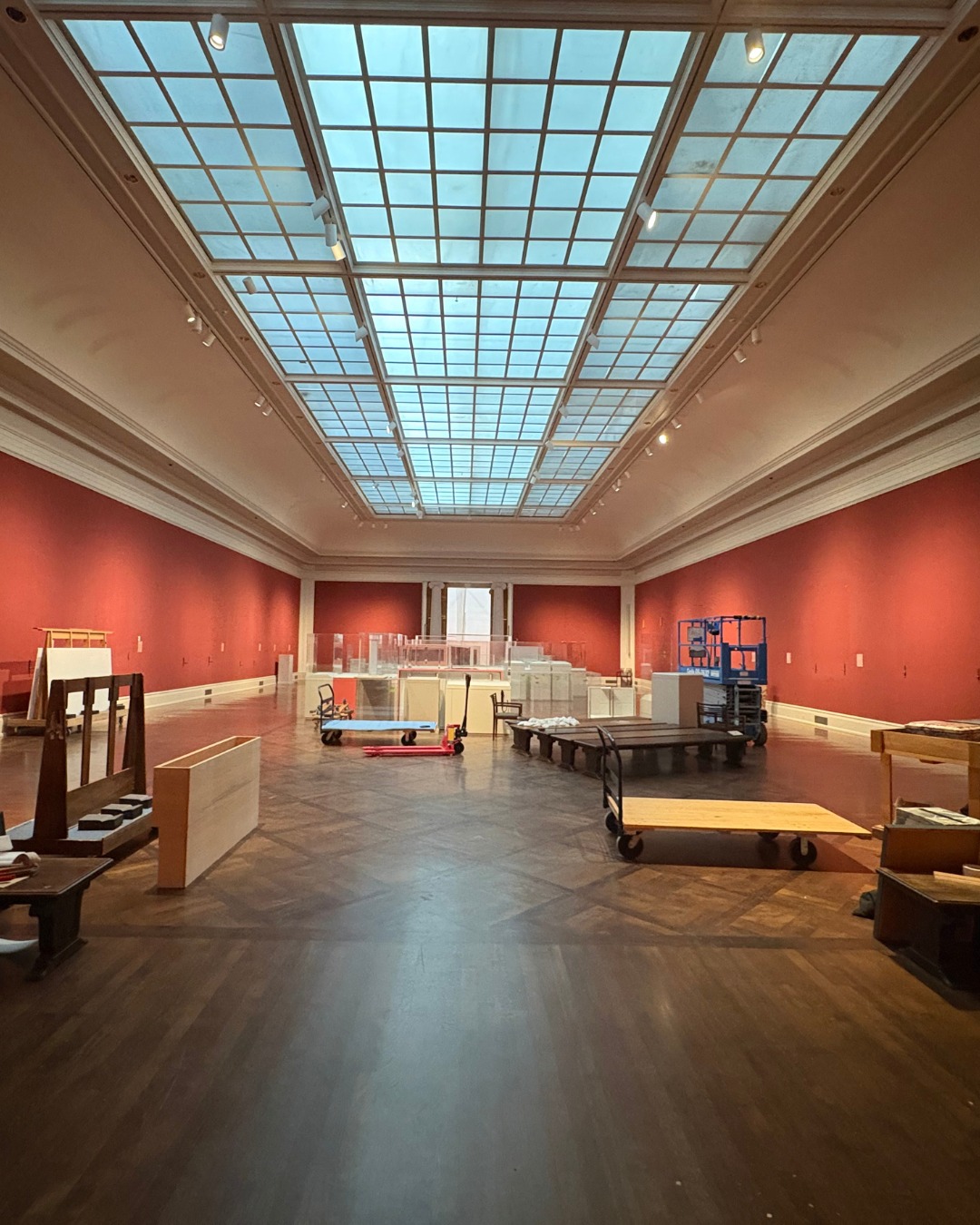
The closure of the museum, 2025 – 2026 – 2027, in order to renovate “right down to the studs” and rearrange the collection chronologically. Art is being sent to art storage rooms across the country.
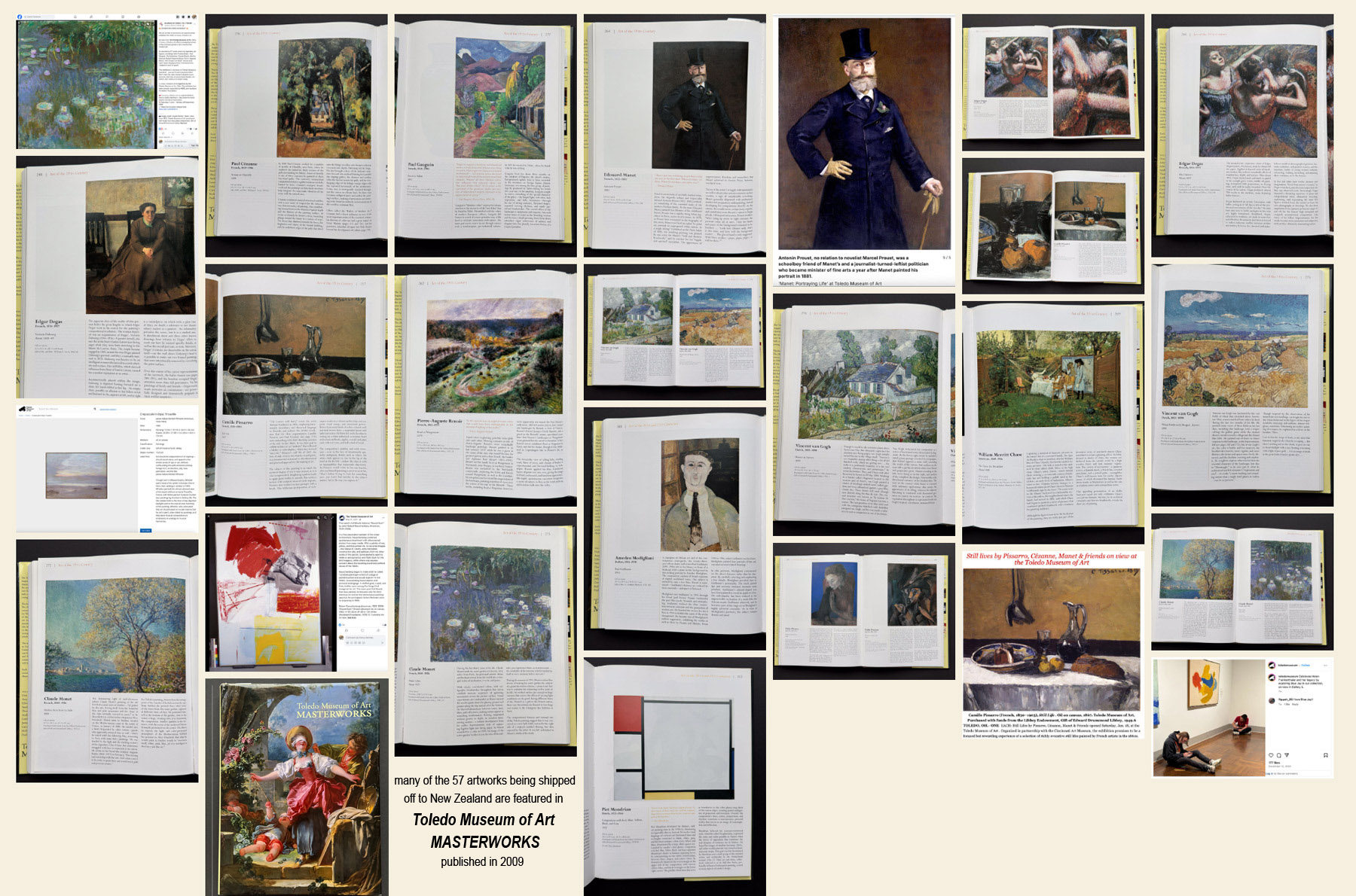
Some of the 57 Impressionist – 20th Century masterworks that were lent to museums in New Zealand and Australia in 2025 and 2026.
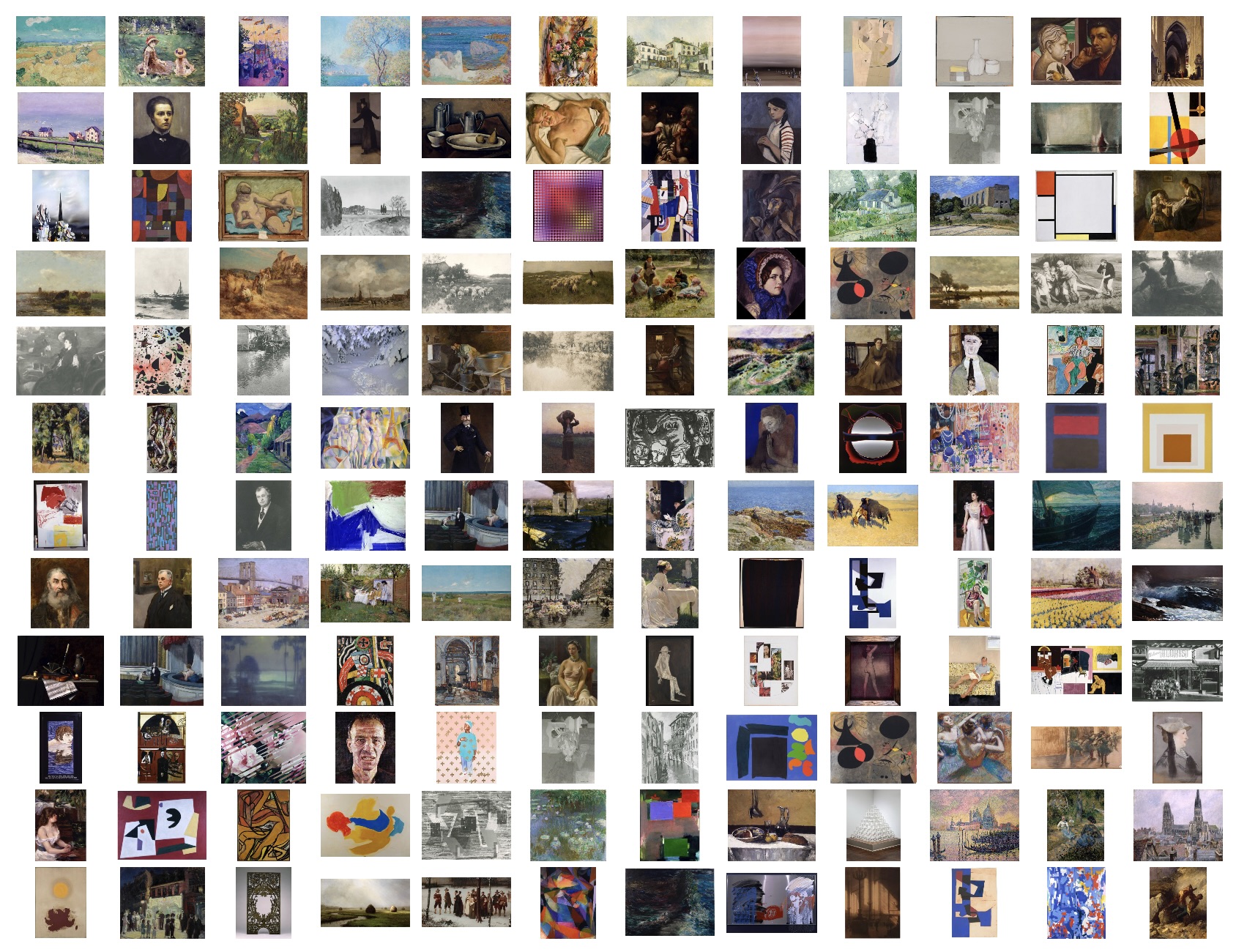
These 144 post-Civil War paintings were off view by April 2025.
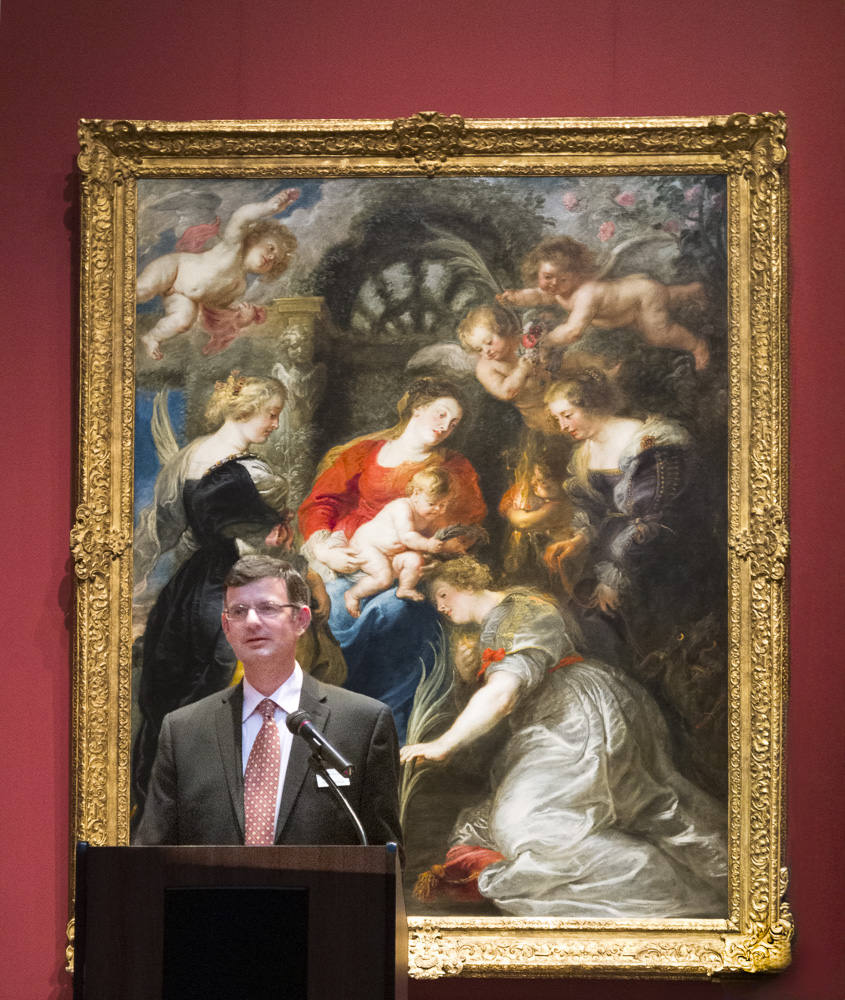
The Crowning of St. Catherine, Peter Paul Rubens, 1631, Brian Kennedy standing in front of it on August 26, 2011, at the opening of the 93rd Annual Toledo Area Artists Exhibition. Brian Kennedy left abruptly in 2019, 18 months before the end of his contract.
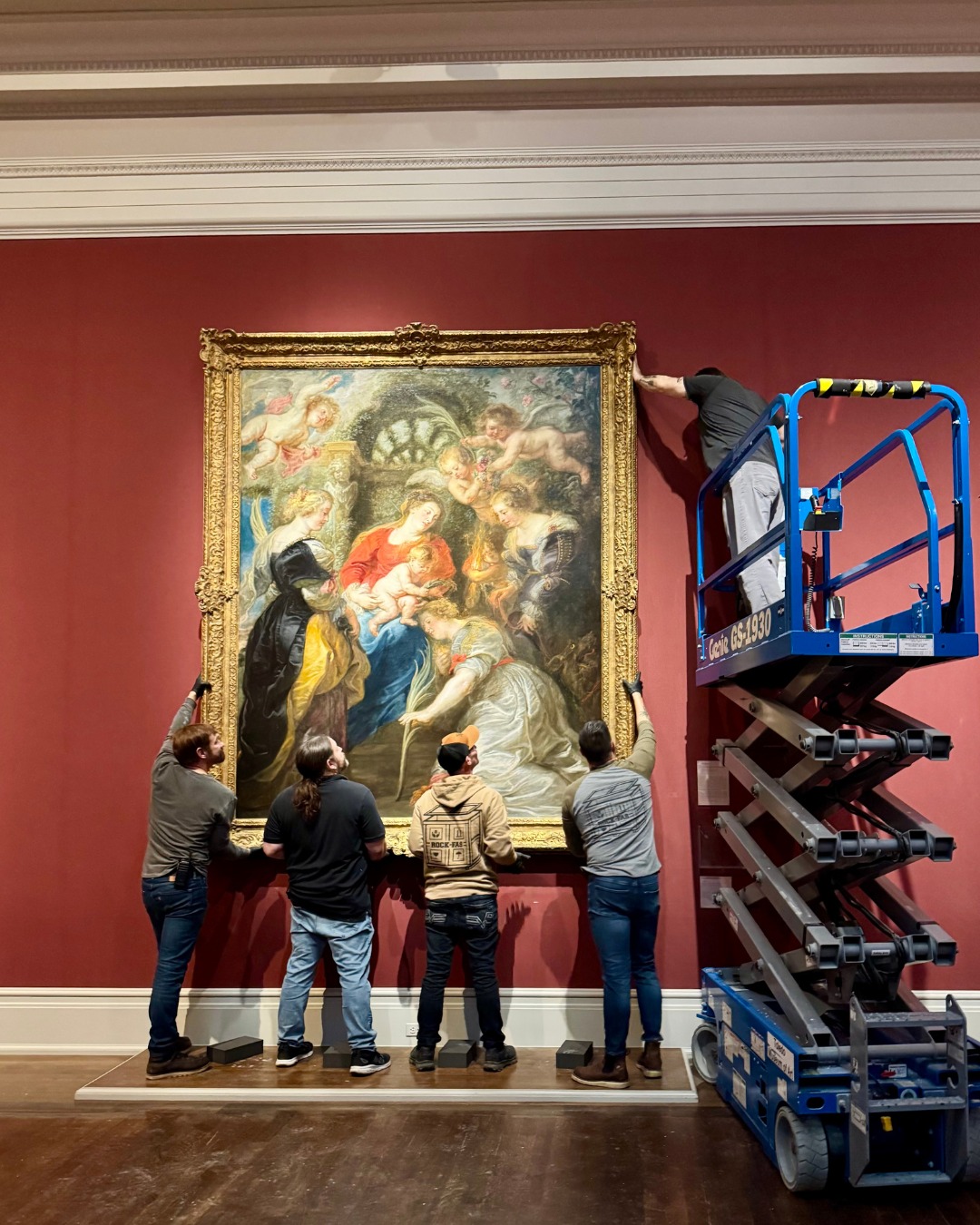
The Crowning of St. Catherine taken down in December 2025. Photo: Toledo Museum of Art
The Great Gallery, dismantled in December 2025. Photo: Toledo Museum of Art. Where did the art go? To art storage rooms across the country. You might see some of your favorites when it opens again in late-2027, but then, you might not ever see your favorites again.

Meanwhile, at the SCCA in Tamale, Ghana…
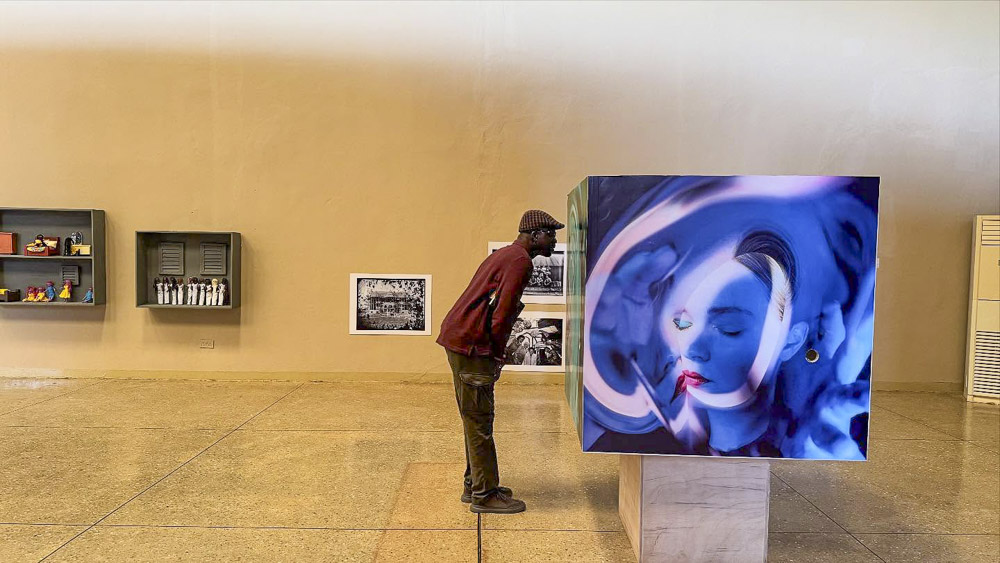
Museum of Modern Art curator Smooth Nzewi looking into our collaborative generational project, “The Beyond,” at the Savannah Centre for Contemporary Art (SCCA) in Tamale, Ghana. My daughter’s Vertigo Cube features peepholes to the past – Victorian interiors photographed by my great great grandfather in 1894. Photo: SCCA
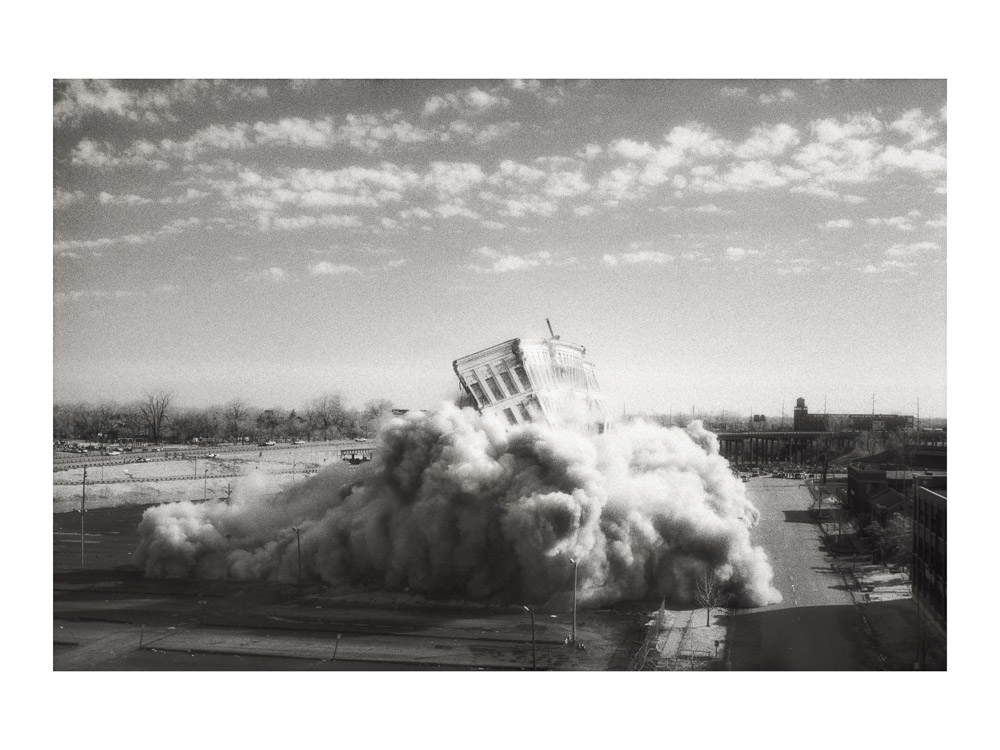
Among our 21 photos on display at Ibrahim Mahama’s Savannah Centre for Contemporary Art (SCCA) in Tamale, Ghana is my photo of the implosion of the Toledo’s Jeep Administration Building on April 14, 1979.

The perspective offered here emerges from long-term observation, archival research, and a lifelong relationship with the Toledo Museum of Art. Photos @Penny Gentieu unless otherwise attributed.

see also:

Timeline of Changes at the Toledo Museum of Art (2014–Present)
Categories
Artists of Toledo

Dear Toledo Museum of Art….

This is my reply to The Toledo Museum of Art’s reply to my September 3 blog post about what the museum did to our Toledo Area Artists Exhibition this year. My answer is in red.

Ms. Gentieu-

Your passionate devotion to Toledo artists is certainly evident in the exhaustive research, time and effort you have put into artistsoftoledo.com. However, that passion, when applied to this year’s Toledo Area Artists show, had led you to some conclusions that are simply false.

 It is your right not to like this year’s format. It is your right to criticize that format and the decisions Museum staff have made in the interest of creating a more compelling and high quality curated exhibition. However, I must clarify some of the information that you are providing as “fact”.

To clarify what you are saying here, you claim that the museum wanted to make a more compelling and high quality curated show of our 95-year old Toledo Area Artists Exhibition. That’s how you try to justify taking most of the Toledo area artists out of it and putting in your own employees, etc… what an insult.

This is a curated show. The curator, Halona Norton-Westbrook, was selected from an international pool of candidates to be the Museum’s third Mellon Fellow. Part of her role here is to oversee one major Museum project or exhibition. At the time she made artist selections she had been in Toledo less than one year.

Yes, she selected two museum employees for the show. She did not select several others who applied. Yes, she selected former TFAS presidents. She does not know those people personally nor was she aware of their connection with TFAS. She did select an artist or two that have had contentious relationships with the Museum in the past. Again, she did not know the background, nor was it relevant to her selections.

It was about the artists, their portfolios and her vision for the show. Period. Ms. Gilman was part of the process as a sounding board, but did not insert any artists into the final selection nor veto any. 

You state that this was a curated show. However, no theme or premise for a so-called “curated” show was given to artists in the CALL FOR ENTRIES. In fact, the only mention of a “curator” in the CALL was in this sentence: “Please consider this portfolio a way of introducing your body of work to the curator.”

Artists were told that “artists would be chosen based on their entire portfolio submitted.”  Yet you now claim that this show is somehow “curated.” Meaning what, exactly? You didn’t bother telling the general public whatever theme it was you were looking for – you didn’t inform the many or all 462 artists who paid $30 to enter, which adds up to be $13,860. 

Artists who entered were informed that Amy Gilman, the associate director of the Toledo Museum of Art, would be one of two judges jurying their work, according to the CALL FOR ENTRY, The Blade, and the museum’s own website. (See, below.) Amy Gilman was the “important” and “prestigious” judge that most artists wanted to get their work in front of. Now you say that it was Halona Norton-Westbrook, a 2013 graduate, who picked the artists. Halona Norton-Westbrook, with an undisclosed notion of a particular curatorial idea for the show, not shared with the entrants, (at least not with most of them.) Amy Gilman, you now tell us, did not participate in the selection. Amy Gilman was just a “sounding board” for Halona Norton-Westbrook, a recent graduate, who was given the Toledo Area Artists Exhibition to do because she needed to “oversee one major Museum project or exhibition” to fulfill her role as a Mellon Fellow.  What a strange project for the museum to give her. What a supreme waste of Mellon Fellowship funding, as it turns out, since Halona Norton-Westbrook has made such a mess of it.

Artists paid $30 each, x 462 = $13,860, collected under the false pretense that Amy Gilman was an actual judge as was stated in the CALL FOR ENTRY and elsewhere. Here are three places that state both Amy Gilman and Halona Norton-Westbrook were the judges. But now you disclose that Halona Norton-Westbrook was 100% responsible for picking the artists, therefore she made all the jury calls, not Amy Gilman, who you say had nothing to do with either adding or subtracting artists, that she was just a sounding board.


On Call For Entry.org:


On TMA’s website:

In The Blade:

o

You state that Halona Norton-Westbrook did not know the museum employees that she picked, nor did she know that she picked the two most recent past presidents of the Toledo Federation of Art Societies, even though all the entrants were required to submit CV’s (curriculum vitae, a detailed resume). She had been working at the museum for 10 1/2 months before picking her winners, but you claim she didn’t know Jefferson Nelson or Timothy Gaewsky or the librarian’s husband. And I suppose you want us to believe that she had no idea about the history of this venerable show nor had she any knowledge of the recent changes with the Federation’s involvement in the show. Yet you want to impress us that you picked Halona Norton-Westbrook from “an international pool of candidates,” so it’s hard to believe that this candidate could be totally ignorant about the Toledo Museum of Art’s history or the history of the 95-year old Toledo Area Artists Exhibition, especially since it was a project she was given to fulfill for her fellowship here. Isn’t Halona Norton-Westbrook (recent graduate) a highly educated woman? 

The show is about celebrating artists. The artists were selected because their work spoke to Ms. Norton-Westbrook. On another day, with another curator, some of the other great artists who applied will be selected. Your criticism of the selection process is also a criticism of the artists selected because of the inference that they were selected for who they know, rather than their exceptional work.

Indeed. The circumstances that The Toledo Museum of Art created make for an ugly show even before it opens. There are countless artists in the Toledo area who do exceptional work who were not lucky enough to be chosen. Undeniably they would have had better odds if they worked at the Museum, were married to someone who worked at the Museum, or were the two most recent past presidents of the Toledo Federation of Art Societies, the group that relinquished control of the show to the Museum in 2011. Why did the Federation relinquish that control, was it because the museum demanded it of the Federation?

If you are a Toledo area woman, you had even less of a chance to get in the Toledo Area Artists Exhibition: your odds were 1 in 232 (compared to 1 in 51 for being a Toledo area man). Even then, being a close friend of the Staff seemed to help.


The geographic location of the submitting artists was not a consideration in the selection process, other than they met the 150-mile radius requirement. We felt the original 17-county model discriminated against our Michigan patrons by not including Ann Arbor and Detroit, Ann Arbor being our largest source of visitors outside of Toledo and surrounding suburbs. Just because something has been done for a long time does not make it fair. 


Discriminate? What a potent word to explain why you would add Detroit and Ann Arbor artists over Toledo area artists in the Toledo Area Artists Exhibition, a 95-year old community-based exhibition celebrating the work of Toledo area artists (hence, the name.) Detroit and Ann Arbor have their own museums and their own flourishing art communities. Couldn’t imagine these art communities would ever think they would be discriminating by not featuring Toledoans in their own local art shows. On the other hand, the fact that only two Toledo area women were chosen to be in this year’s Toledo Area Artists Exhibition is a good example of real discrimination.


Your insinuation that this was “fixed” is just wrong. Your other insinuation that the Museum is somehow profiting from entry fees is also wrong. The total investment in TAA by the Museum is approximately $80,000. We never have, nor will we ever, make money on the show.

You are the one who is using the word, “fixed” but now that you mention it, that hits the nail right on the head. I believe that you took money from unsuspecting artists under false pretenses. I think you should give all artists their money back and apologize.

The opportunity for local and regional artists to have their work displayed in a world class museum is one that is not widely available. Most museums have discontinued their local artist shows. The Toledo Museum of Art remains committed to local artists, through TAA, our Community Gallery shows, selling local artist works in our store, glass residency programs and much more. 

Most museums do not have the history that The Toledo Museum of Art has. The Toledo Museum of Art was started by artists. The museum has meant a great deal to the city of Toledo as well as to the entire community, because the community built the museum and the community supports it. The museum used to help the art community. Now, there is very little left at the museum for the local art community. Except for the chosen few who happen to work there — you might put them in a show (if they are men, that is, not your women employees). What the museum does have now for the local art community, especially for the women artists, is an overwhelming attitude of contempt, which is all too well being playing out in the way it is handling our very special, unique and historic community oriented tradition, which started 1918, almost as old as the museum itself, our Toledo Area Artists Exhibition.

Love it or hate it, we hope people will come to TAA and judge for themselves.

Kelly Fritz Garrow Director of Communications kgarrow@toledomuseum.org

The museum took our name, Toledo Area Artists Exhibition, and took Toledo area artists and Toledo area women out of the show, and instead, stuffed the show with insiders and out-of-towners, while still having the audacity to call it the Toledo Area Artists Exhibition. All the while collecting $30 per entry as if it was business-as-usual. Why would anyone think that is a good idea?

 
Categories
Artists of Toledo

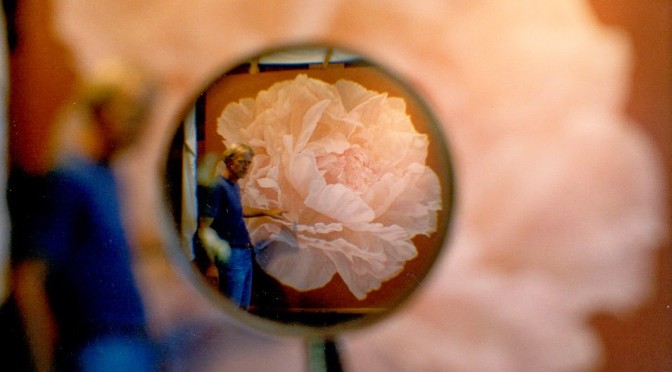
Sometimes when you look in the microscope you see the whole thing.

Photo by Steve Coffin of John Botts and his Big Peony painting. Corte Madera, California


This photo came today in my email — a photo of John Botts, my painting teacher at the Toledo Museum of Art School of Design. Wow. I owe so much to John Botts — he made me see what I really was, which is a photographer. When he saw the first photographs I took, he gave me a book — the first edition of Robert Frank’s book, The Americans.


It is probably fair to say that the Toledo Area Artists Exhibition this year is the most controversial Toledo Area Artists Exhibition there has ever been, and not for the art either, because we don’t get to see the art until November.  The show is controversial this year because of the circumstances created by the Toledo Museum of Art and the questionable decisions that the museum has made that put the show and the museum in a bad light even before it opens.


excerpts from the press release about the 95th Toledo Area Artists Exhibition on Toledo Museum of Art website

Were they really? Pleased with our region? Doesn’t seem so.


Out of all those entries that they looked at — 4,175 images, 44 videos, and two audio entries, the museum curator in-house judges could barely find any Toledo artists for the show who didn’t work at the museum, or weren’t friends of theirs, etc. or weren’t the most recent presidents of the Federation of Toledo Art Societies, the group that was formed in 1918 to put on this show, to put in the show.

And then the curators had to go beyond the Toledo area to fill it in with out-of-town artists from Akron, Cleveland, Columbus, Detroit, Grand Rapids Michigan, Muncie Indiana. Our Toledo Area Artists Exhibition.

We have so many artists in the Toledo area, yet in a show that has only 28 artists this year, cut down from a show that had 76 artists last year, a show that historically ranges anywhere from 70 to 120 artists — of 90% real Toledo area artists, the museum this year  has to go 150 miles out in all directions to pick out 17 artists who live outside of the 17 counties that comprise the Toledo area – the 15 counties of NW Ohio and the two bordering counties in SE Michigan?

Then, with our show taken over by metropolitan areas that are not our own, over half of the meager remaining 11 artists chosen actually from this area, from all the 4,175 images that they got to select from, are artists within the “Museum nucleus?”

Is that okay with you?

Do we really have to drink this water?

 o

Is it fair that 435 artists paid $30 each thinking that they were entering a fair competition (435 x $30 = $13,050) when they never had a chance because the museum judged it and got to put in their employees and friends, then fill it up with a pick of artists in big metropolitan areas not our Toledo area, that the museum has the audacity to call the 95th Toledo Area Artists Exhibition?

The reason why the annual TAA show started using outside jurors after eight years into their history was so that the show could be judged fairly and without conflicts of interest.

So this year, 2014, for the 95th annual show, why did museum staff members make themselves the jurors of the 95th Annual Toledo Area Artists Exhibition? Was it so they could unfairly get to pick fellow museum employees and friends, for some unknown reason, or maybe it was because they got Christopher Knight to be the money judge and they wanted to make themselves look good?

How does that make you feel, big vibrant Toledo art community? Are you ready to trade in your chance at entering the TAA show every year, along with the chance of winning and getting recognition for your creativity at the great white marble pillared Toledo Museum of Art, for the condescendingly concurrent series of workshops run by the Federation to teach you how you can be more professional like those “full time” “professional” artists who are supposedly so much better than you, that are showing in your place, in your TAA show?

This show belongs to us, the Toledoans, to help “us all” be better artists, as well as, in return, for “all us” artists to contribute to and continue the artistic cultural history of Toledo that is and can only be us. And why don’t we clean up our water too.

Please keep the Toledo Area Artists Exhibition at the Toledo Museum of Art and for the Toledo area artists. It’s our legacy and it belongs to us. It’s our tradition.

The Toledo Area Artists Exhibition for Toledo area artists is the oldest regional art competition affiliated with a museum in the United States. It gives the art community a great sense of pride to compete and get in to the prestigious museum show, that features and celebrates the talents of Northwest Ohio and Southeast Michigan. It’s 95 years old.  Must it go so soon, so young in European terms, just a baby in comparison.