It’s been quite the week in the hellscape that is the new Toledo Museum of Art. On Monday, we found out that our 57 impressionist paintings were just shown in Traviso, Italy, with three more paintings added to it so now the total of that show is 60. We were not informed by the museum – we discovered it after a deep Google search. Eight hours into a lively discussion on the Facebook Toledo Then and Now page, the museum chimed in – the first time ever to comment on one of my posts, and told us:

We had to find out about the New Zealand show through Google in New Zealand. The Australian show was discovered a year later through Google in Australia. But sending them to Italy in between? And now they go back to Australia to kick off tourist season in Adelaide. The town received a $15 million grant to promote the town, so the museum must be making money. And where do our paintings go after Australia? We aren’t allowed to know yet. A billion dollars worth of paintings that Edward Drummond Libbey gave to the people of Toledo to be on display in Toledo, Ohio.
Then on Wednesday, we read a completely misleading story on Michigan Public NPR – Art museums in Toledo, Flint creatively draw people in post-pandemic written by Newsroom Intern, Anna Busse, effectively congratulating the museum for having the worst post-pandemic attendance recovery in the country.
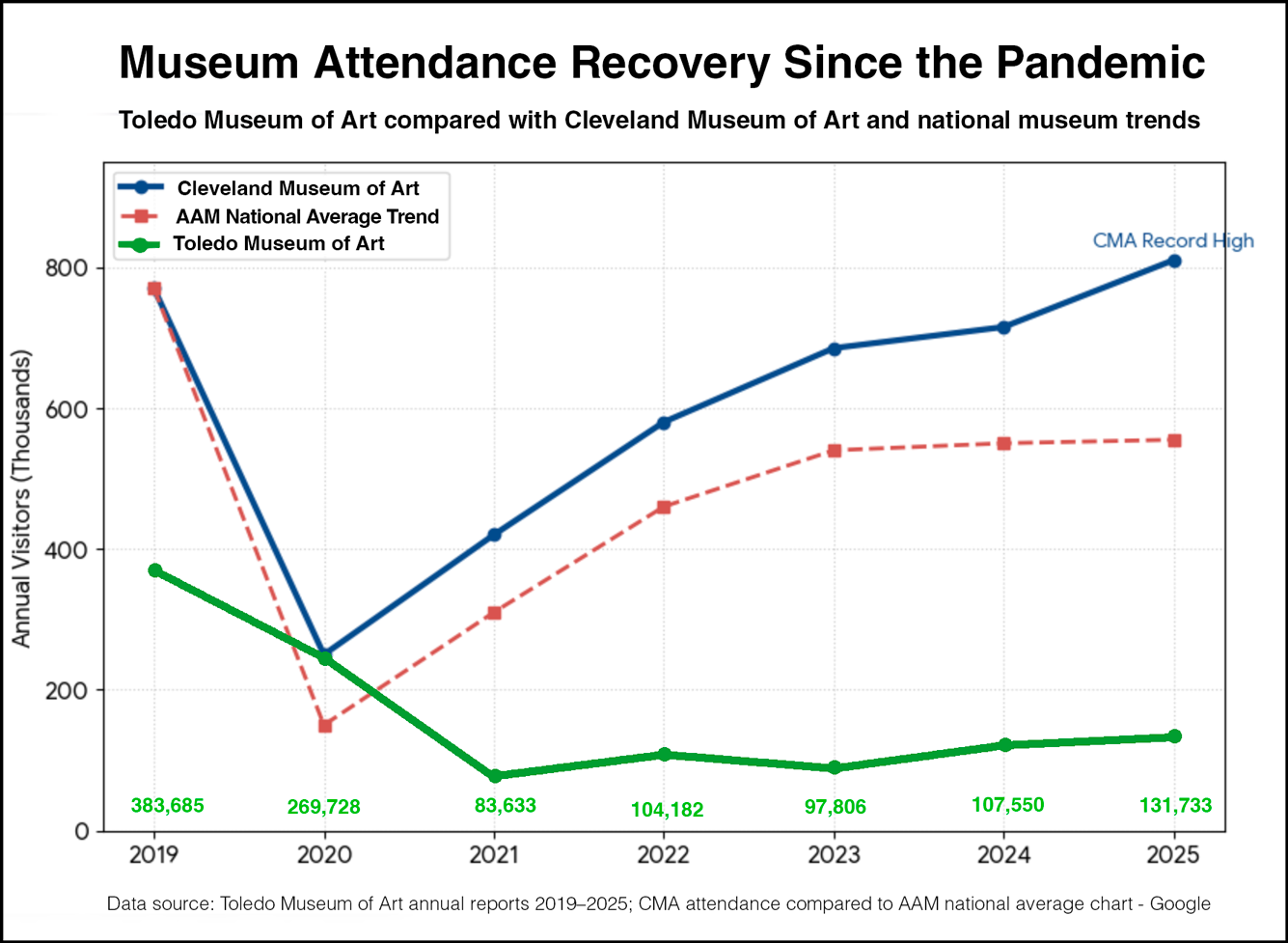
TMA’s attendance rose from 83,633 visitors to 131,733 visitors between 2020 to 2025, an increase of nearly 50,000 people.
The attendance actually dropped from 269,728 visitors to 131,733 between 2020 and 2025, a decrease of 137,995 people.
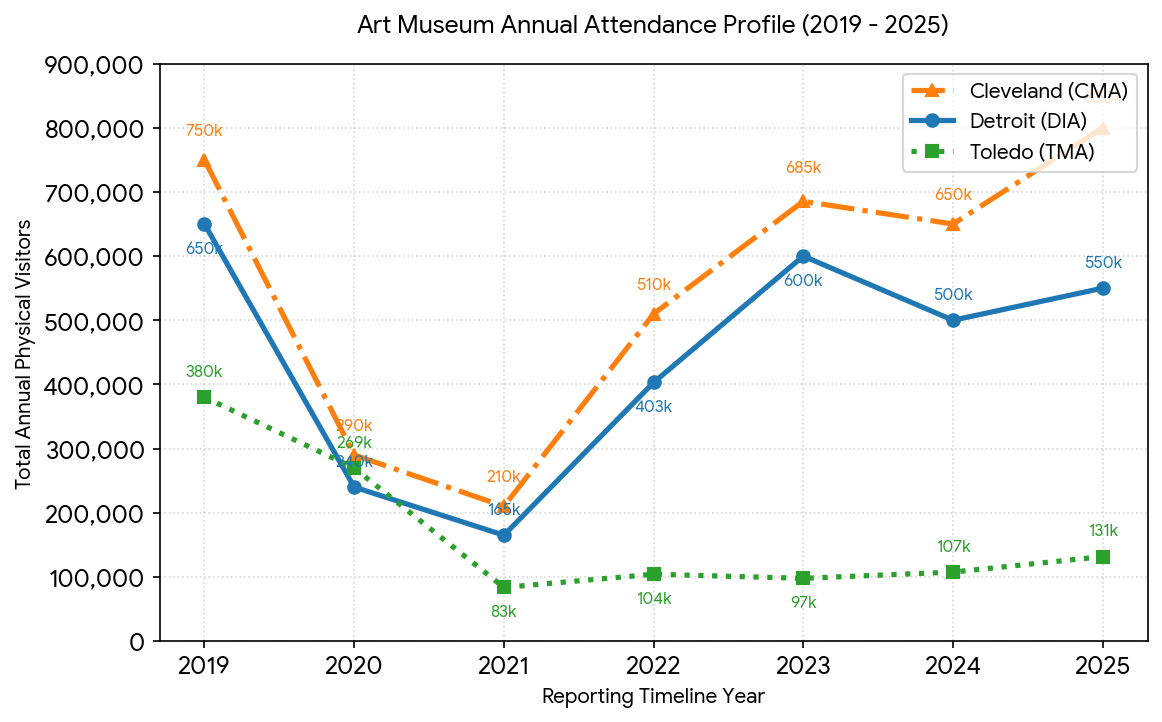
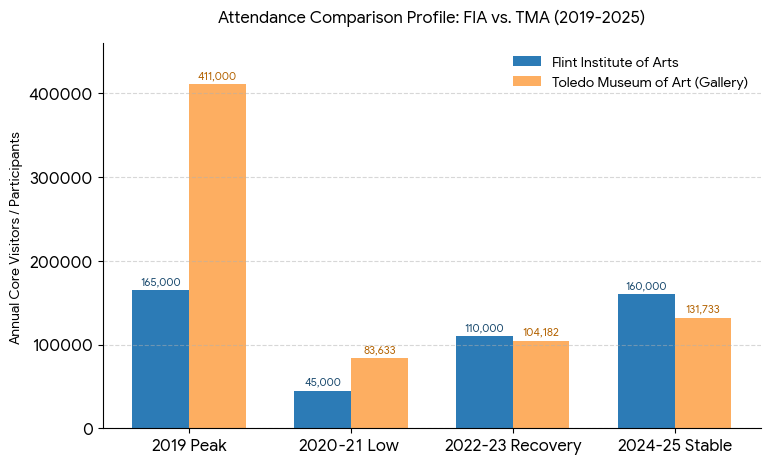
As for the Flint museum, a museum less than half the size of Toledo’s — it has completely recovered, and has attendance now that exceeds Toledo’s.
 Ending the week, we found out that there is disturbed asbestos in the area of the museum by the offices and children’s classrooms, and that the employees are being forced to work under these conditions. Children’s classes are still going on.
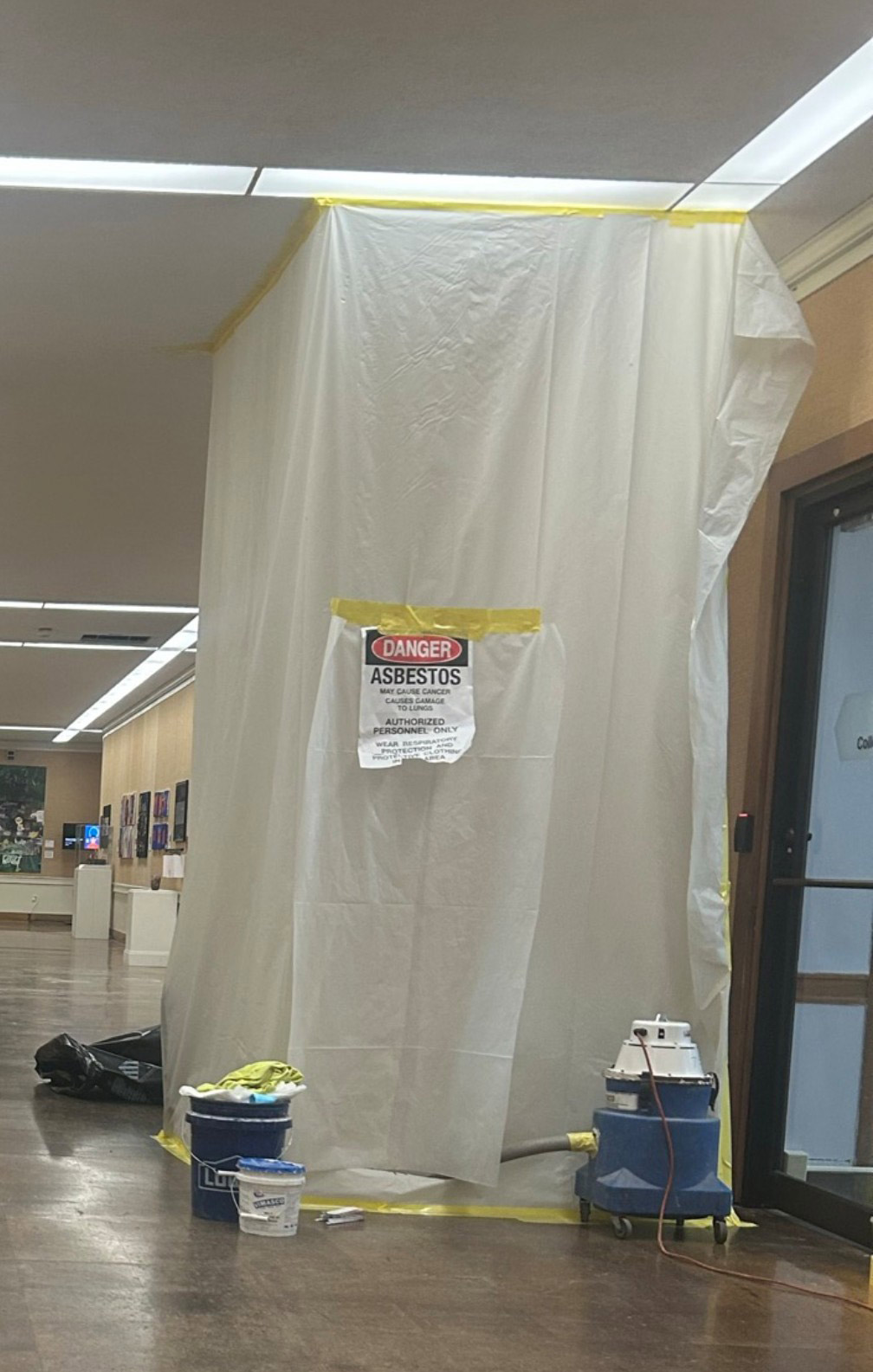
The museum is torn up right now. Almost every gallery is closed in the main building, and the main building of the museum will be completely closed in June — only the Family Center and some classes and the library will be open. The rest of the building, the entire gallery floor, is closed until the end of 2027, as they tear it down to the studs. And surprise, surprise, they have disturbed the asbestos of the 114-year-old building. And the trolls are thick on Facebook putting laughing emojis on our post about the asbestos. It’s not funny — disturbed asbestos causes Mesothelioma. Mesothelioma is caused primarily by airborne asbestos. When microscopic asbestos fibers are inhaled or swallowed, they become permanently trapped in organ linings, causing chronic inflammation and cell damage over several decades.
Margy Trumbull’s husband, Scott Trumbull died of Mesothelioma in 2020, after a 5-year battle with it. Major donors to the museum, he was a board member, and now she is a board member. What does Margy Trumbull have to say about employees and children in the immediate area of disturbed asbestos? How could she possibly be okay with it?
Museum’s substantial expenditures on rebranding and institutional marketing was not for bringing people in – it was to send our paintings around the world
2/1/2025 The Blade A look for the future: Toledo Museum of Art’s rebrand continues to grab attention
The logo brings the transformative power of art to everyone; it’s a public manifestation of TMA’s five-year strategic plan to become the model U.S. museum with a commitment to quality and a culture of belonging.
“Our normal activities of the Toledo Museum of Art quite literally generate millions of dollars in advertising values for the museum, and therefore for our community,” Levine said.
“The museum isn’t just broadcasting the incredible work it’s doing, it’s broadcasting the incredible things happening in Toledo to a national and international audience … There is no institution in Toledo whose earned media equates to our earned media.”
Museum Attendance Recovery Since the Pandemic
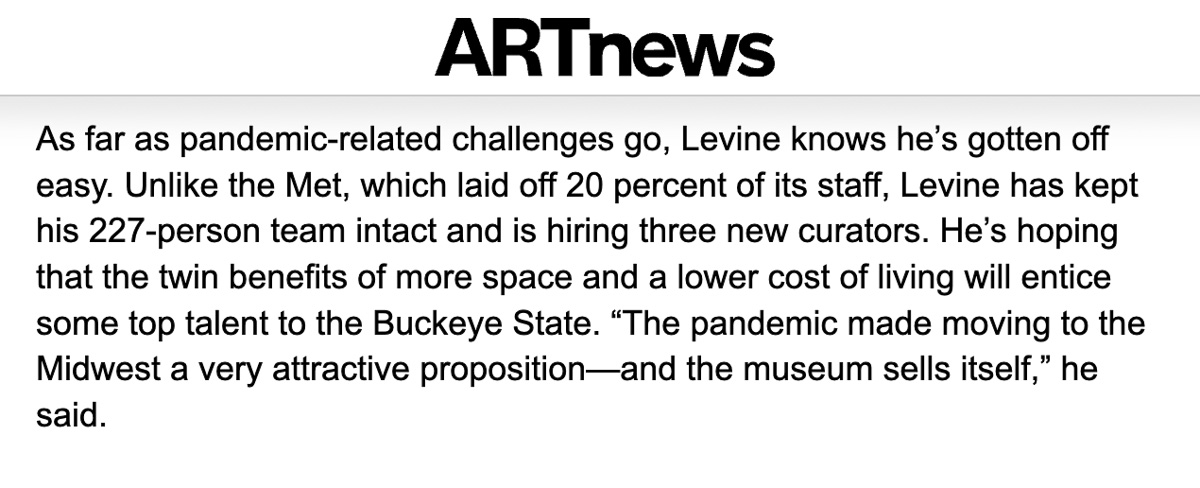
But the museum got off easy, even hired three new curators in 2021:
Has the museum stopped serving the public?
They didn’t they bring the public back to the museum after the pandemic.
They doubled their operating budget and spent at least $2M between the brand strategy manager and the logo designer rebranding themselves.
They shipped a billion dollars worth of artwork to undisclosed locations for undisclosed shows on a multi-year world tour with no announcement while tearing apart our museum to the studs.
The value of the art in the art museum is many magnitudes the value of the building that houses it – the art is worth billions of dollars.
The primary purpose of curators and a museum director is to care for the art and keep it safe for future generations – it belongs to the public – it’s in a public trust.

Rethinking how they share our collection?
Edward Drummond Libbey established a perpetual charitable endowment intended to support the acquisition, preservation, and public exhibition of works of art in Toledo. His will directed that endowment income be used for maintaining the museum and for the purchase of artworks “for the purpose of public exhibition.” The will further required that such works be appropriately housed in Toledo and that the museum “shall forever maintain” a building in Toledo for public exhibition and free public access.
Billions of dollars worth of art is not at the museum anymore, it has been shipped overseas for shows and to storage facilities across the country. This valuable art is exactly where right now?
Looking inward instead of outward
If you wonder why attendance at the Toledo Museum never recovered after the pandemic, here’s a clue — the curators looked inward instead of outward — they decided they would tear up the museum and start over, after all, they were mostly new employees — only 3 out of 15 were there before the pandemic, and Adam Levine was so supportive. They traveled to 160 different museums, historic houses and art spaces during 2021 and 2023. Some international. They were like kids in a candy store. As if the parents gave them the keys to the Maserati and they didn’t quite have a learners permit. Here’s the story from the source:
Toledo Museum of Art Symposium:
Expanding Horizons: New Approaches in Display and Interpretation
Taken from the transcript of the July 2023 symposium hosted by the museum, Diane Wright (Curator of Glass) describes the museum’s process to other curators from around the country.
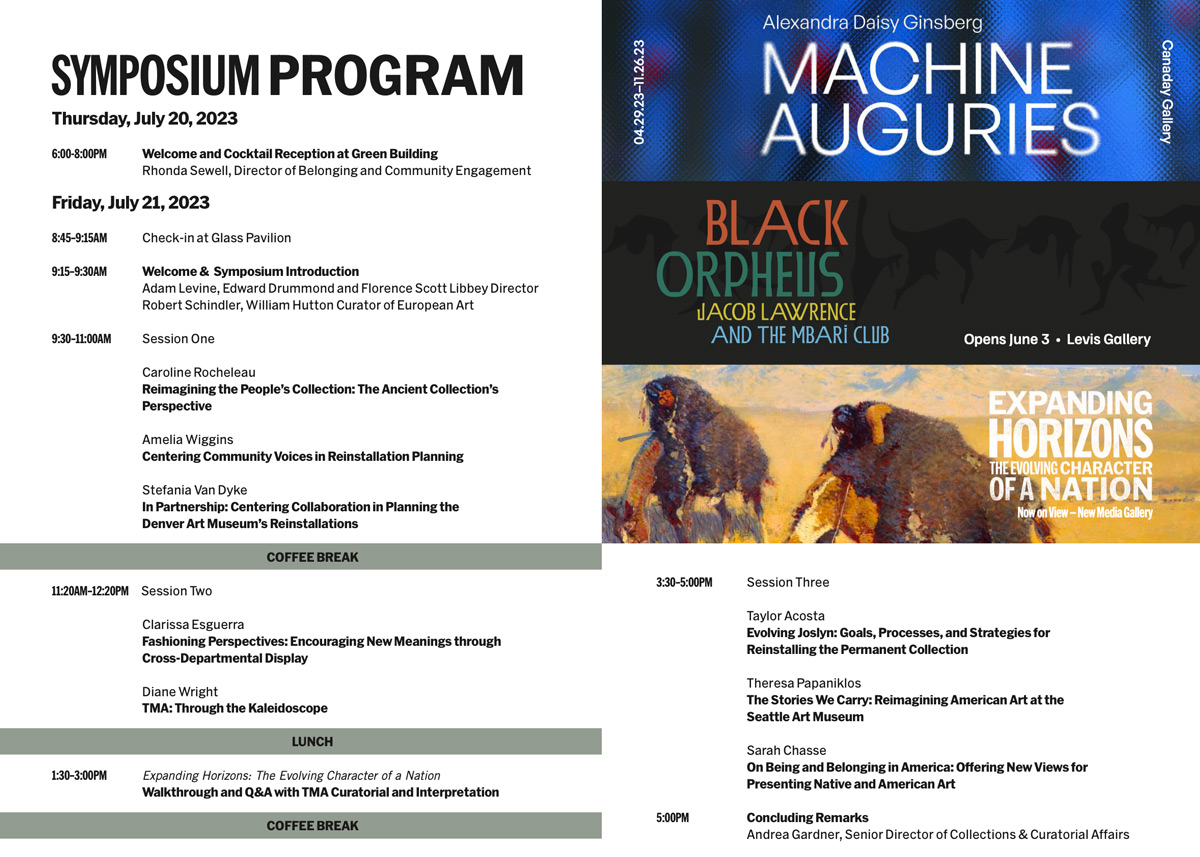
“We have a solid history at TMA that we are very proud of yet in 122 years there have also been so many opportunities for variation change even some discontinuity and in 2023 we find ourselves in a moment where we ask ourselves and really demand of ourselves the refocusing and clarification of our strategy for display.
“In 2020 and 2021 TMA experienced major non-pandemic related staffing changes in leadership at the director level and on the curatorial team. Adam Levine joined TMA as the Edward Drummond and Florence Scott Levy director in April of 2020 followed by our long-term colleague Andrea Gardner taking on the role of head of Curatorial Affairs along with collections.”
“A strong sentiment for change amongst colleagues blended with opportunities that Adam brought to the museum and conversations about reinstallation naturally led to one about how we would build a staff to accomplish such a monumental project.”
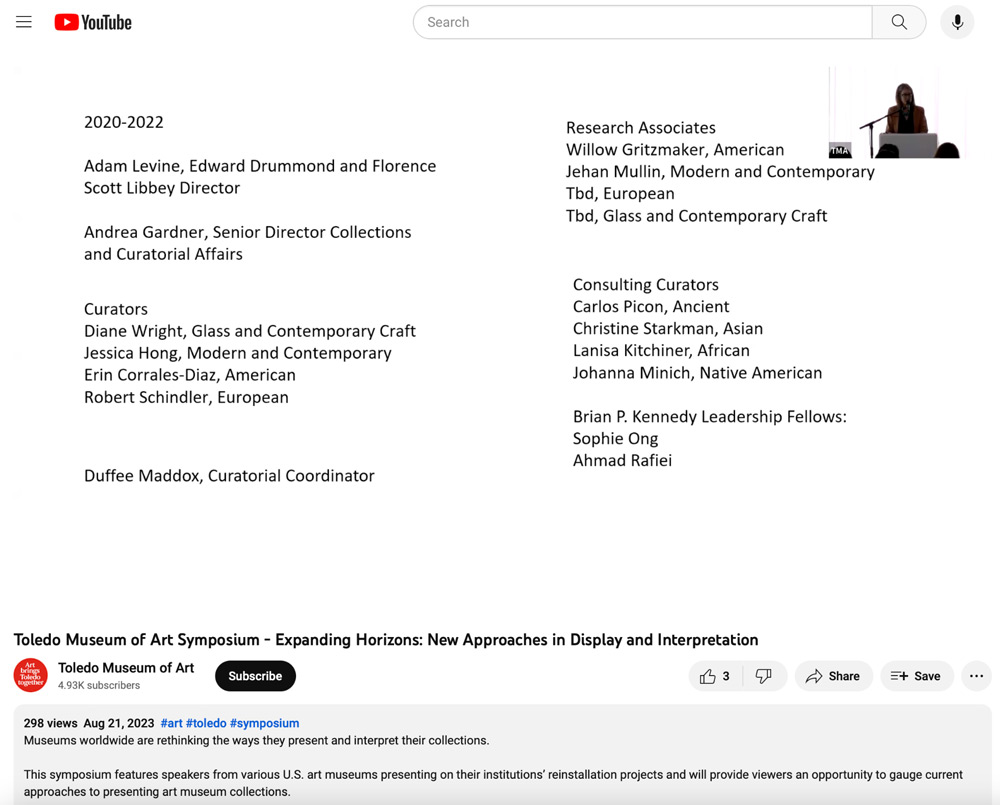
“As you look at this screen with a lot of names on it and small text I can tell you that there are 15 names on here with two placeholders.
“Only three of these people were here in 2020 as we started this conversation, so we really had an amazing opportunity to build a team that would come in knowing that this project was at hand. And coming in, all really with the same kind of motivation and values and ideas.
“We have a collection that changes frequently, whether it’s new acquisitions or how we write about it, or what we put on display, or what we put into storage. Dropping the term permanent from the description helps us convey this more clearly to both ourselves and our audiences.
“At the same time we’re doing all this internal work, we also began to look outward to the state of museums, to you curators, and importantly, museum from across the institution, have been out to see more than 160 museums, historic houses and art spaces in the last two years. Mostly in the United States, but also internationally, finding inspiration and getting advice from all of you. We are immensely appreciative, not only of the hospitality that has been shown to us but all of the honest and frank conversations that we’ve had with you.
“These engagements have been so enlightening and honestly really one of the most joyful parts of this work so far. Over the last two years, we’ve also held periodic day-long intensives. We’ve built continuity of thought with these, the regular cadence of conversation that’s helped us really gain momentum. During these long sessions, we’ve debated, discussed, advocated for different approaches to an overall collection layout. And when I say this, this group was primarily at this point, curators and Andrea, and so our head of the department.
“We talked about geographical, thematic, chronological, maybe a mixture of all three. We actually spent the better part of a year having this conversation and conversations so we, uh, recently in June, made the first major decision, project decision, a significant step forward with us.
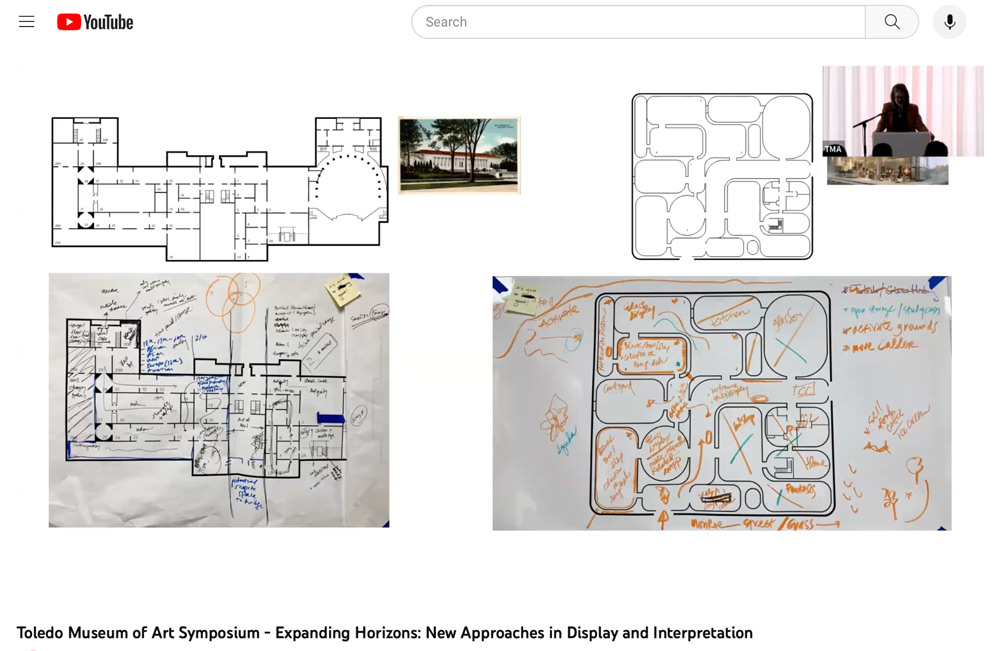
“We are using chronology as our primary approach. One of the exercises that helped us get to this point was to study over and over again, our gallery maps, repeatedly drawing out variations of our ideal installation. This was both collective and individual work. Often we would take these home, write on them, bring them back and review them together, which I would say is one of the most fascinating aspects, to figure out what we would actually come up with when they’re not all in the room together.”
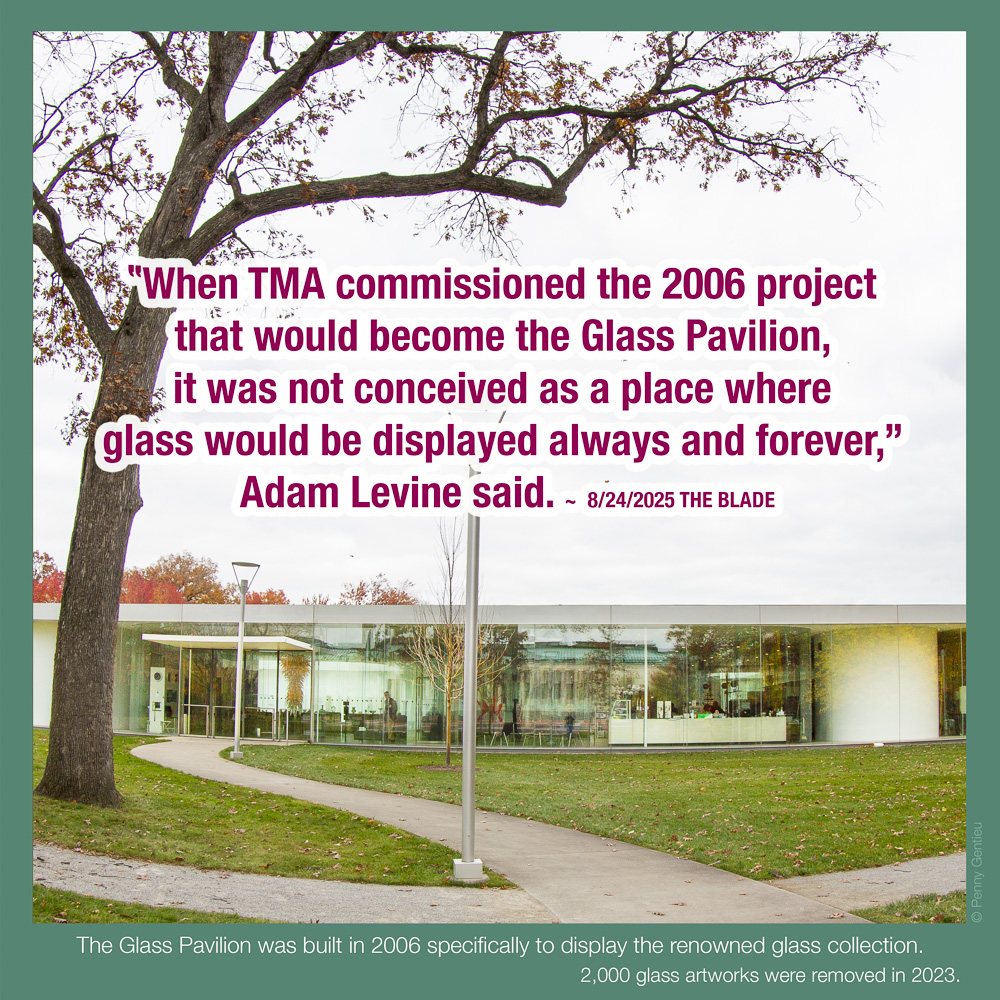
“The display in the Glass Pavilion you’ll notice is almost entirely devoted right now to one medium. When it was built in 2006, the Glass Pavilion was meant to showcase this rather singular collection, which is actually a third of the overall collection here, while also providing state-of-the-art glass making studios.
“We’ve really achieved that goal, and before the new installation opens this space will be 20 years old.
“So the future of the Glass Pavilion is to show special exhibitions, some collection installation, and artist commissions while remaining a space for our glass making facilities and residencies and special events such as this one.”
Diane Wright’s closing words were telling – We will inevitably get things wrong too. My hope is that this will not inhibit us from taking risks finding our collective and our individual voices and using the most creativity that we can muster, being true to who we are as Museum professionals and institutions to connect art and people.
Participating museums at the symposium were:
- North Carolina Museum of Art
- Delaware Art Museum
- Denver Art Museum
- Los Angeles County Museum of Art
- Joslyn Art Museum
- Seattle Art Museum
- Peabody Essex Museum
Now in 2026, we can see how these other museums have done compared to how Toledo has done by examining their published attendance statistics.
Every museum that participated in the 2023 symposium did much much better than the Toledo Museum of Art.
The Toledo Museum of Art succeeds at failure however, as it barely achieved 27% of its pre-pandemic attendance.
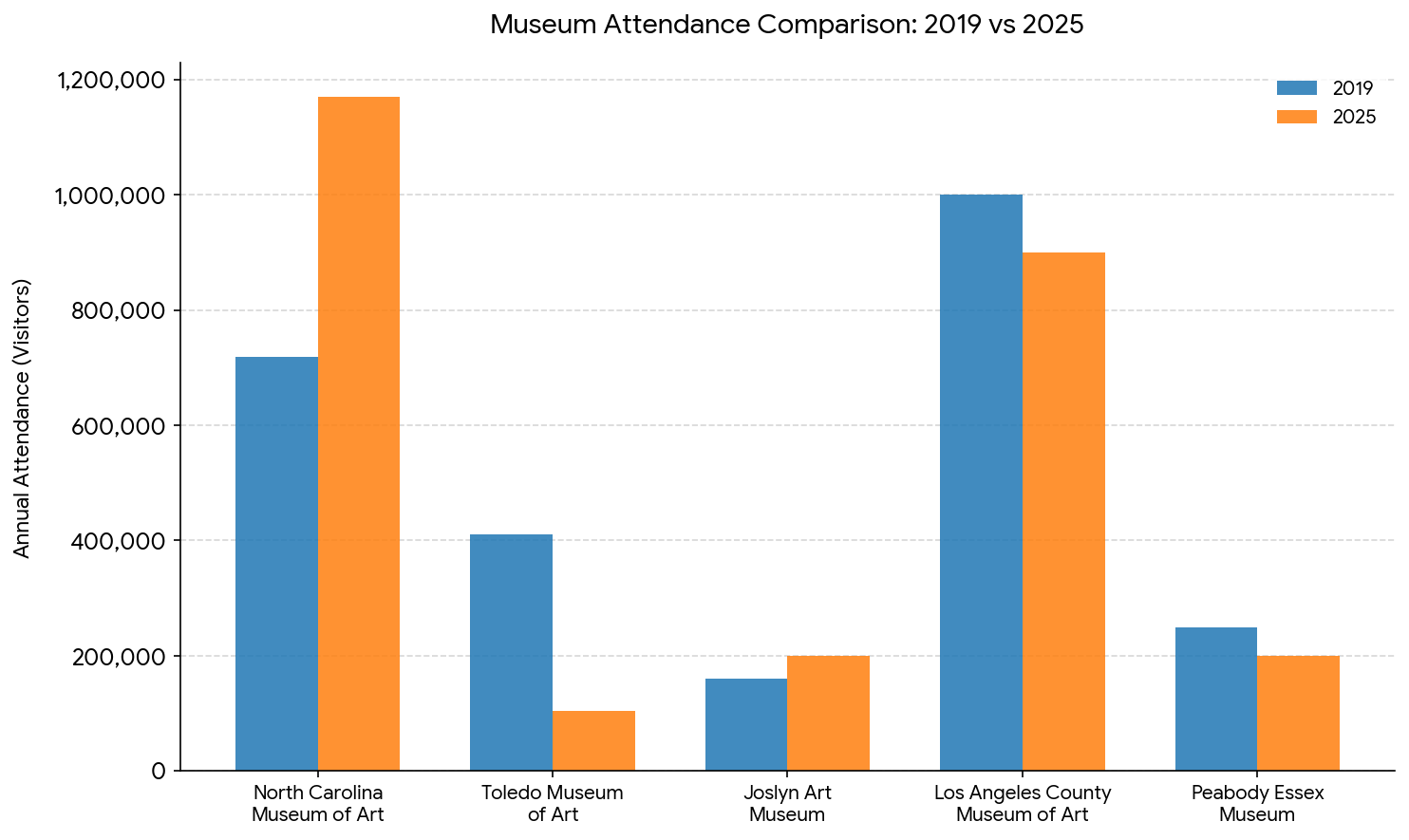
The new Toledo curators didn’t learn much from going around to the 160 museums. After their world tour with tons of money spent to make the museum better, the museum got worse.
The travel money for the Toledo curators to go all over the country visiting other institutions may have come from John Stanley, the interim director in 2019-2020, — AN OUT-OF-THE-ORDINARY DONATION: A former director of the Toledo Museum of Art, September 9, 2021, as it was for “staff professional development.”
I can think of a reason why the museum didn’t do better in 2021. I remember the public outrage over it. The museum was closed to the public on October 22, 2021, a Friday, for a private concert in the Great Gallery that night, for only 40 neighborhood children and sponsors. They completely rehung the gallery, removing the famous Italian and European masterpieces from the sixteenth and seventeenth century, to replace them with contemporary paintings for a private John Legend concert. (Sojourner’s Truth, Nov. 4, 2021)
To make it clear that the museum’s annual attendance was always larger than the the population stats, in 2021, Adam Levine stated that “In a year, the museum has about 350,000 visits.” The Blade, June 20, 2021, Savages donate for community gallery. That Friday, October 22, had a potential of 1,500 or more museum visitors to whom the museum closed its doors for the first time on a Friday. (A little more than average daily visitors because it was on a Friday. 350,000 visitors divided by 260 days that the museum is open in a year is 1,346, give or take a day or two.)
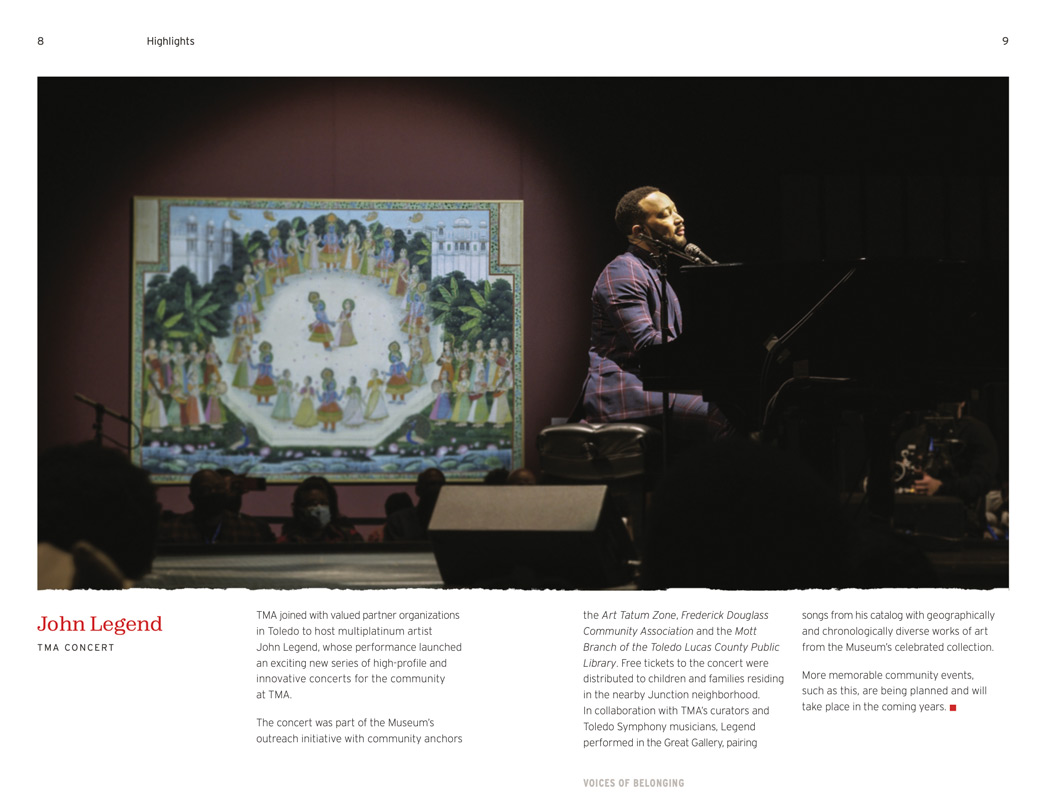
In a double-page spread, the museum’s annual report for 2021 highlighted this private, for the neighborhood only event, for only some people living within a two-mile radius, less than 2% of the Toledo area that the museum serves. “More memorable community events, such as this, are being planned and will take place in the coming years.”
The Private Lecture that should have been public

In April of 2024, the museum had a speaker come for a private audience – themselves. The speaker was Anna Marley, a curator from the Pennsylvania Academy of Arts, who gave a lecture on her work with Impressionist paintings, a show called, The Artist Garden American Impressionism in the Garden Movement. For this show that she had in 2015, she borrowed our William Merritt Chase painting of a garden scene.
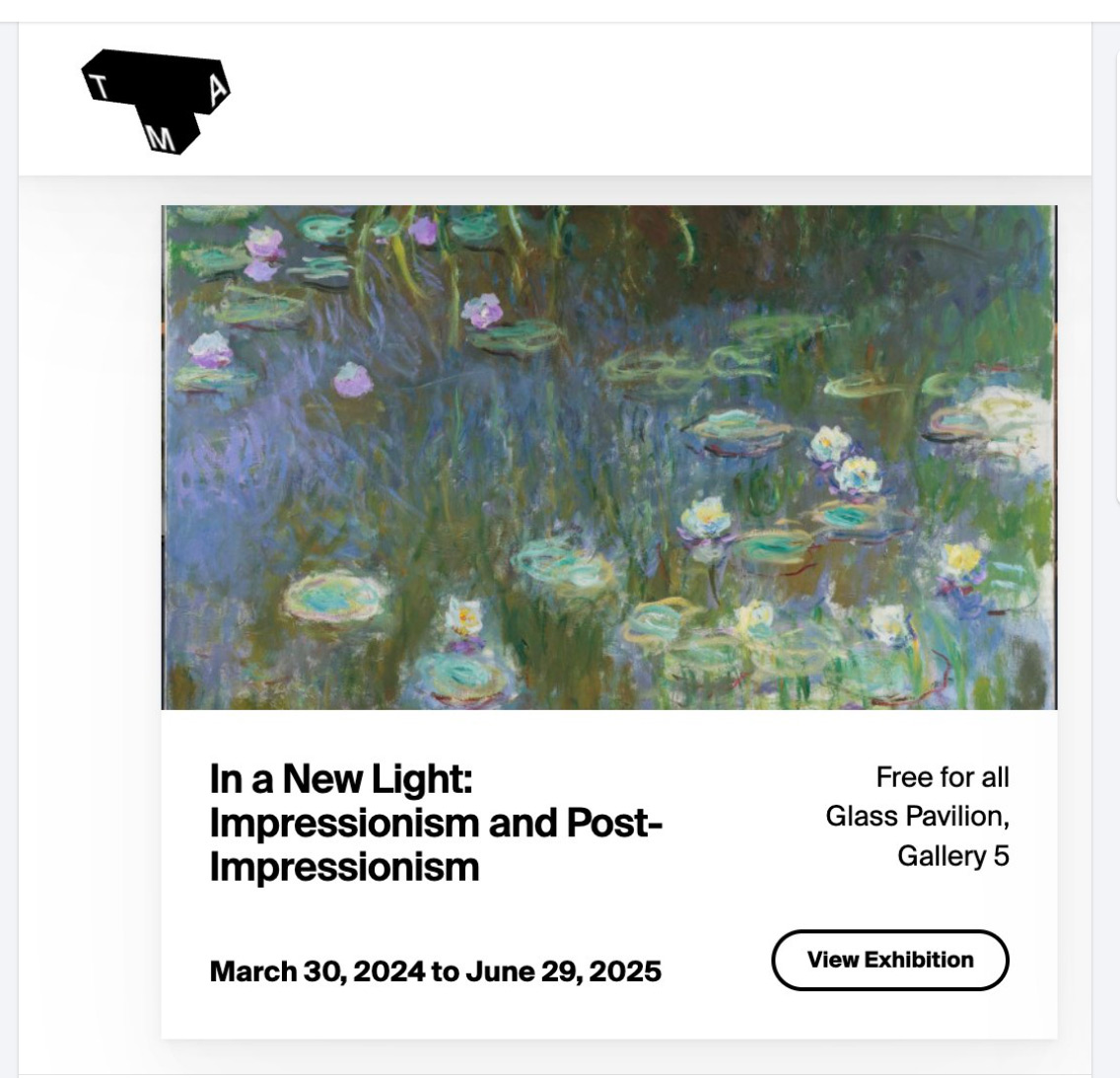
The curator had just moved the Impressionist paintings to the Glass Pavilion from Gallery 35, and was advertising them in a show, In a New Light: Impressionism and Post-Impressionism. The show opened on March 30, 2024.
Two years later, on the PBS 419 Show this past month (available on youtube) Anna Marley talked about the experience.
After my lecture, he [Adam Levine] hosted a little dinner for me, and he sat me down and had a glass of champagne, and he said, ‘so tell me about your career ambitions, Anna.’
She was hired as Director of Curatorial Affairs and started in September 2024.
This talk was not announced to the public, there is no ad nor facebook post about it. It was a lecture that Anna Marley was giving to the public elsewhere. Why wasn’t the public invited to this lecture, welcoming and educating the public with a lecture about Impressionism, the subject of In a New Light – Impressionism and Post Impressionism?
Edward Drummond Libbey endowed the Toledo Museum of Art for the people of Toledo, but the core art collection of Impressionism thru 20th Century paintings — 60 of them — have been sent abroad on a multi-year tour without any announcement to the public. Attendance has never been worse at the Toledo Museum of Art, because the art is gone — in these shows abroad, and the rest of the art has been sent to storage facilities across the United States.
20 billion dollars worth of art is gone — it’s not display, it hasn’t been on display for quite some time, and as for being on display in the future, they tell us that some of it will be back on display after they reopen. Probably after 2027.
2022 Kress Fellow Job description — TMA aims to blend scholarship with equity and inclusion in paradigm-shifting ways to become the model museum in the country for its commitment to quality and culture of belonging.
This fellow, Adero Kauffmann-Okoko, was hired in January of 2023. She graduated with a degree in art history from Swarthmore College. As of May 2025, she is now the museum’s “Grants Program Specialist.”
“Museum Development” is the biggest department of the museum now, – nine women – most of them new hires, piling up the money from wherever they can find it. Our museum, that had always been fine for 125 years with local support.
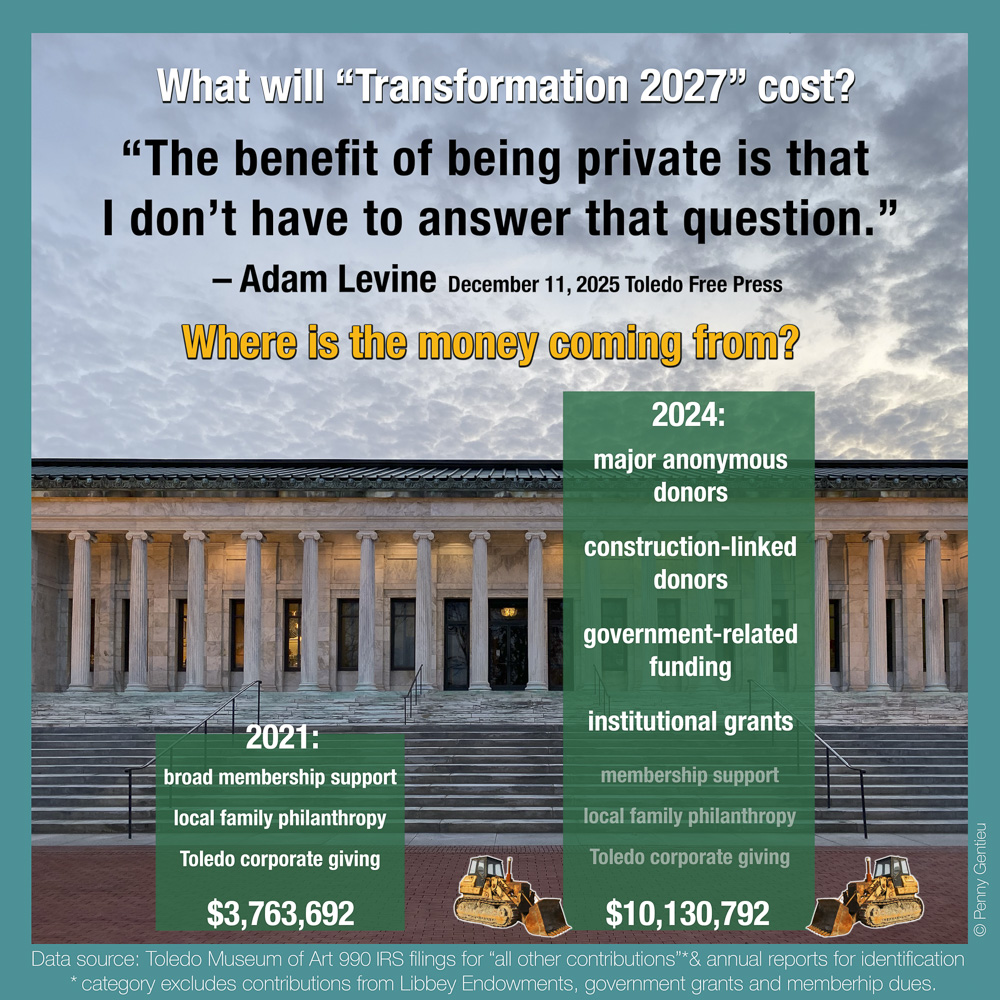
It’s not just the museum that is succeeding at failure. They get their employees to do it too.