Categories
Artists of Toledo

Remembering Edith Franklin on her 100th

Remembering Edith Franklin on the 100th anniversary
of her birth, December 2, 2022.
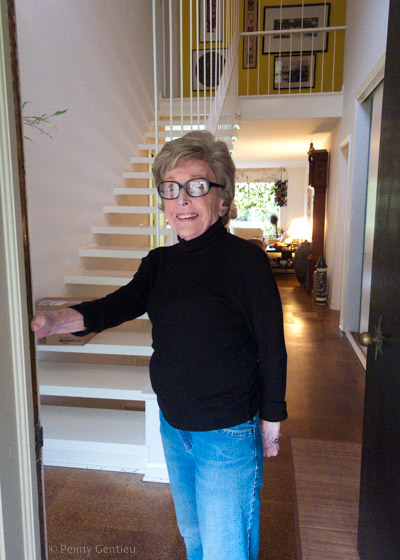
Can you feel it – Edith Franklin is in the air. No wonder, it’s her Centennial.

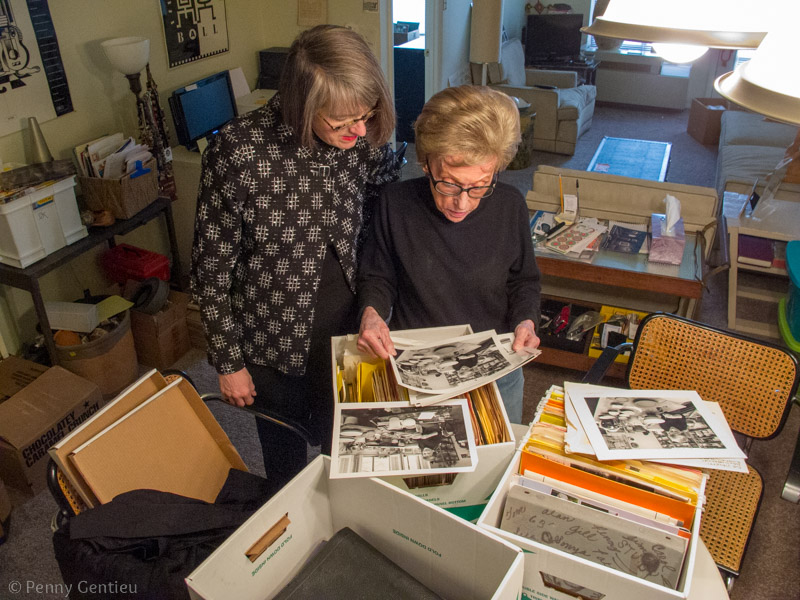
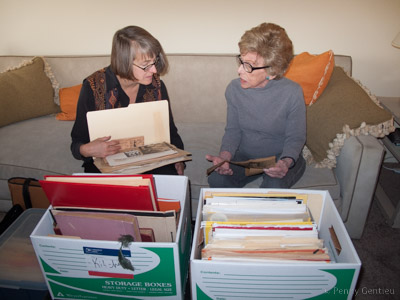
I met Edith early on when I was building this website about the historical artists of Toledo. At the age of 87, she was majorly downsizing, selling her house and her collections. She asked me to help organize her papers to give to the Ward M. Canaday Center for Special Collections at the Carlson Library of the University of Toledo. We worked on it for almost a year. Here she is donating her papers, shown with the Canaday’s archivist and director, Barbara Floyd (incidentally, who is also the author of The Glass City):
Edith Franklin was quite active. On any given night, she’d be out. She maintained that lifestyle until the week before she died in hospice, three months short of her 90th birthday.
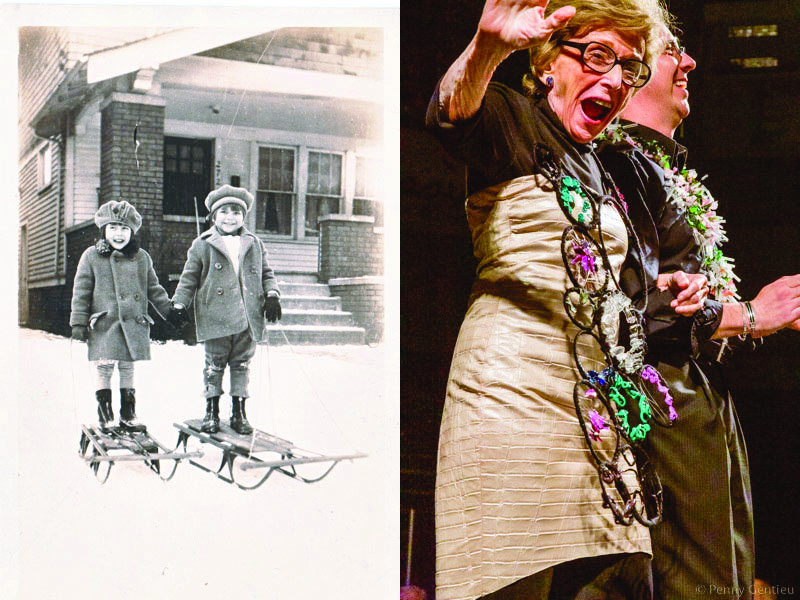
Brian Kennedy, the ninth director of the Toledo Museum of Art, gave a eulogy at Edith Franklin’s Memorial Service on September 2, 2012. He described her as a “delightful chirpy smiling diminutive lady with big eyeglasses and a beautiful necklace who never missed a party.”

“As Director of the museum she loved, where she had studied and taught, which she visited so often, and where in 1962 she participated in the historic first Toledo Glass Workshop, Edith cared deeply that Toledo has a great art museum. After all, Edith had been the very first female artist to receive a solo show at the museum, back in 1958.”

Edith and the Museum

Director Kennedy’s description of Edith in his eulogy was colorful, and she did care very much that Toledo had a great museum, but Edith Franklin was not the first female artist to receive a solo show at the Toledo Museum of Art – not by a long shot. Born in 1922, Edith was a third-generation artist of the once-flourishing and inclusive museum artist community. Seventy women before Edith received local artist solo shows at the museum, starting with Isabel Kuhlman in 1933. (All the local artist shows – 540 local artists from all walks of life – are a thing of the past. See a complete list of the local artist museum solo shows here along with the current museum director’s unfulfilled promise to bring them back.)

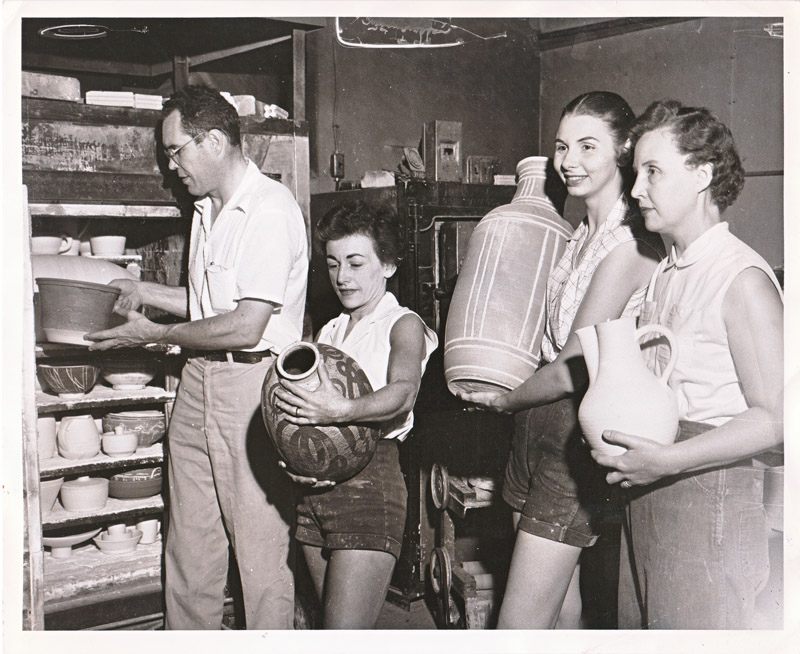
Growing up in Toledo and benefiting from the Toledo Museum of Art free children’s Saturday Classes, Edith’s love of clay developed at the Boston Museum of Fine Arts School during WWII in 1943-44. That’s not all that developed in Boston, as she returned to Toledo in 1945 with her new husband who had served in the Navy. By 1947, they had two children.

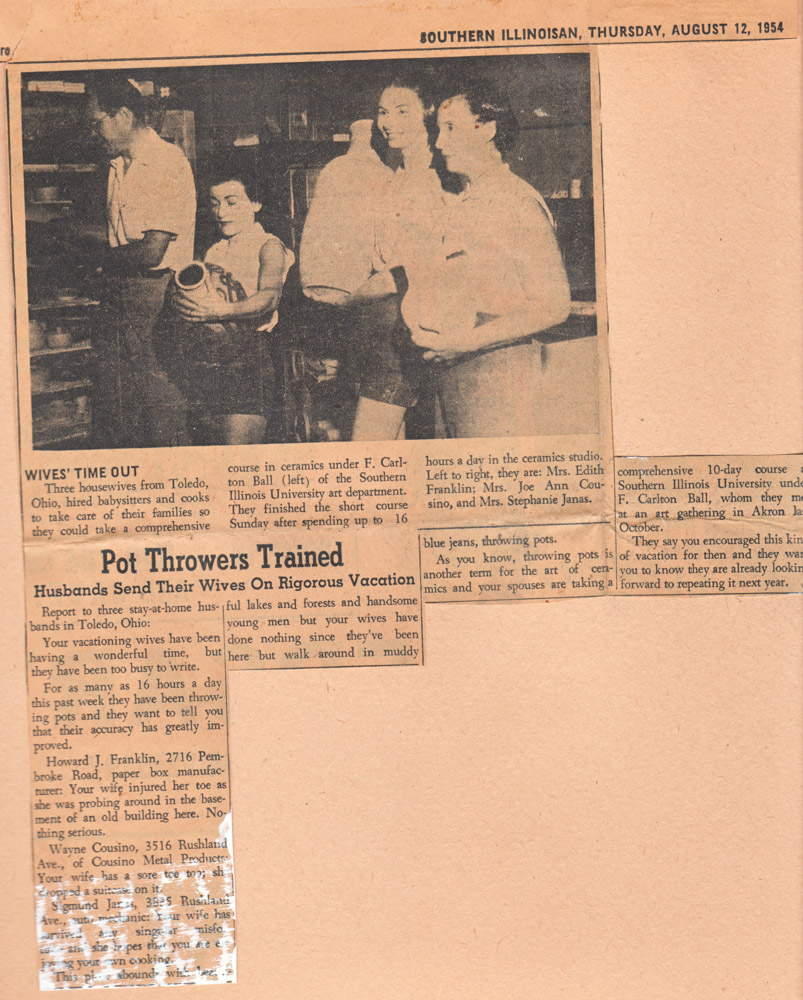
Edith took pottery classes at the Toledo Museum of Art School of Design for 41 years, from 1945 to 1986. These classes, at a world-renown museum, connected her to the world of pottery, where she got to know the greats. (She couldn’t do that today! Pottery classes for adults have been eliminated. The adult artist community is no longer welcome at the museum – which is quite ironic, since the museum has a new so-called community “Belonging” department with a special director.)

Edith showed her work in nearly every annual Toledo Area Artists Exhibition from 1952 to 1982, and won the Purchase Award in 1982. (Not to digress again, but what a shallow new museum director Brian Kennedy was, to have known Edith so well, and to have seen how her history with the museum so perfectly exemplified the beneficial symbiotic relationship between the museum and the local art community, but then to have killed the nearly 100-year old Toledo Area Artists Exhibition just two years after Edith was gone.)

Edith’s style
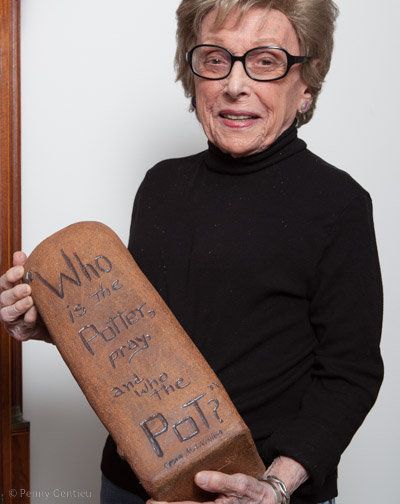
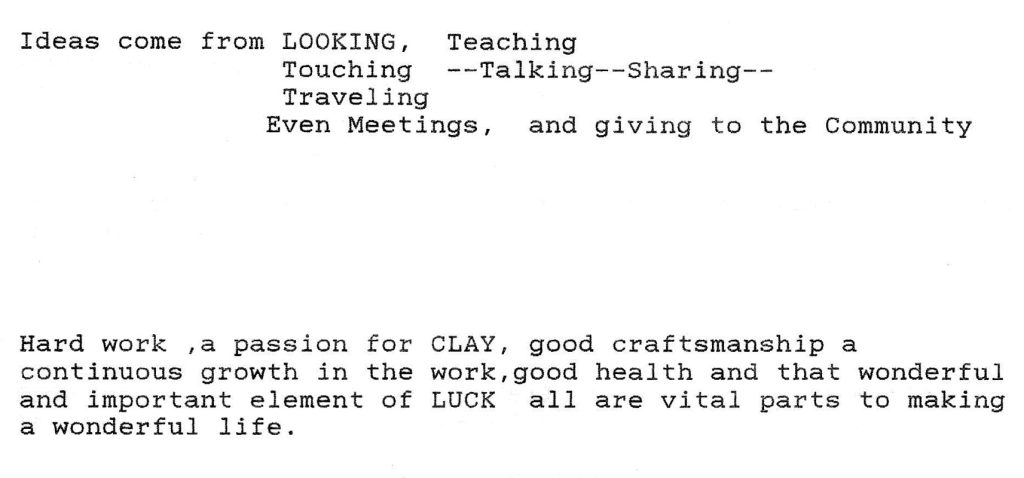
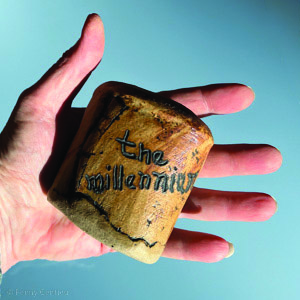
Edith incorporated text into her work. Her grandson said that what he learned from her was to take risks, to not fear failing, and to speak truth to power. “Who is the Potter, pray, and who the Pot?”

Many of Edith Franklin’s works revolve around the word “Love.”
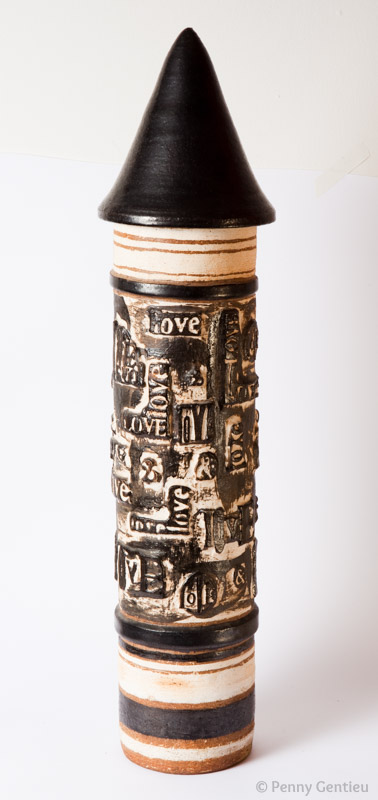
Rocket to Love – 27 3/8 inches tall

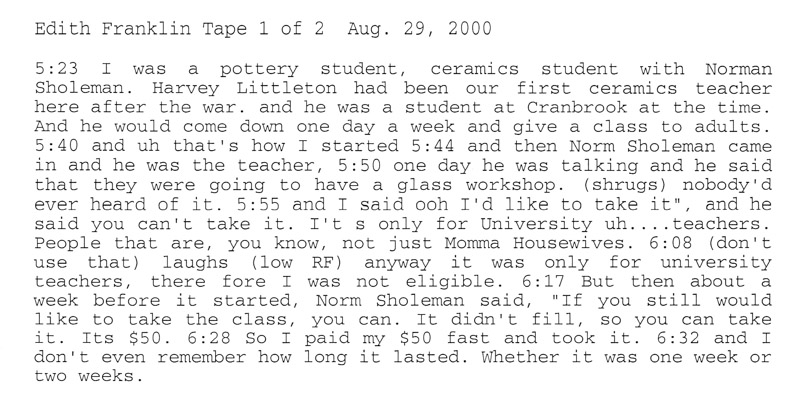
Edith Franklin was experimental and influenced by what was going on. In a 2000 interview, Edith said,

The artwork since 1948 keeps getting better, it is growing. A lot of that is due to people like Harvey Littleton, who taught at the museum, as well as Hal Lotterman, Dan Woodward, and Hal Hasselschwert. They helped break us out of the ‘red barn’ and ‘sailboat’ mold. People like Harvey talked about ideas that questioned the essence of art and what we were supposed to do with it. The fifties were marked by mentors like these.
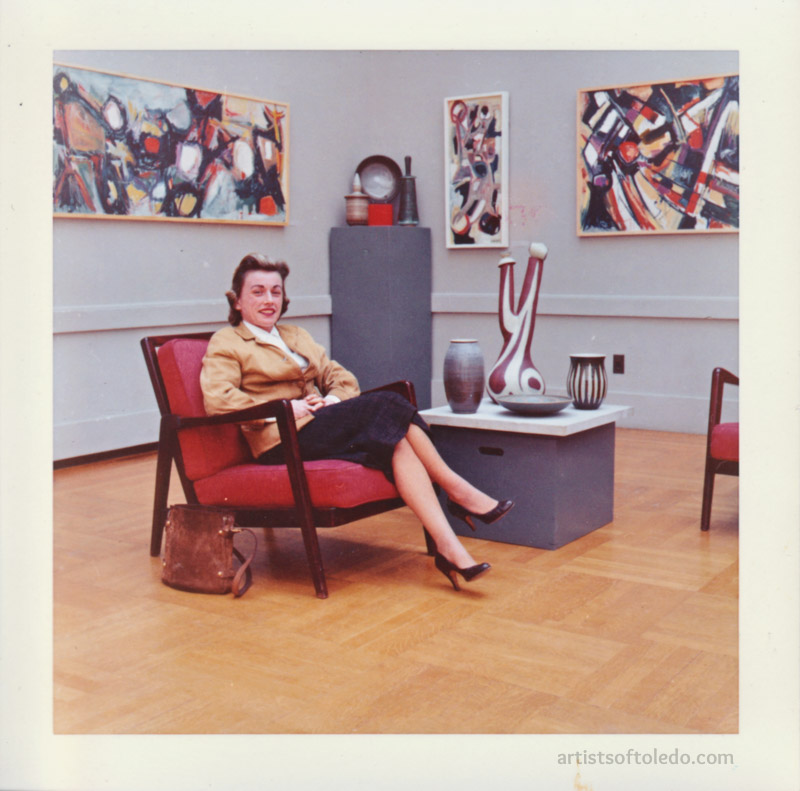
In this photo, taken at her 1958 solo show at the Toledo Museum of Art, (on the walls are paintings by Clay Walker), Edith sits next to her double-spouted vessel. It looks like the paintings. Perhaps she was influenced by the work of Toshiko Takaezu, an abstract-expressionist ceramic artist from Hawaii who was Edith’s exact same age. Ms. Takaezu, in the 1950’s, was a teaching assistant at Cranbrook, the esteemed art academy north of Detroit with close peer connections to the artists in Toledo, including Harvey Littleton, Carroll Sims, Clyde Burt and LeMaxie Glover, all clay artists. Edith’s piece, titled Patio Pot, acquired by the Toledo Museum of Art in 2016, could have been inspired by the double-spouted vases Toshiko Takaezu was making at the time. Or perhaps it was the other way around.

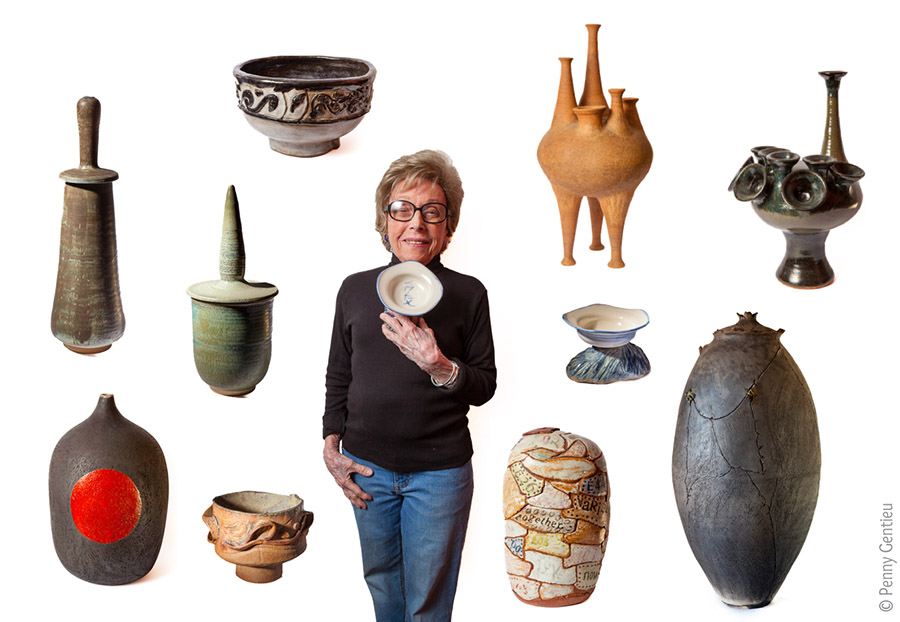
Edith and some of her distinctive work, photographed in 2010:

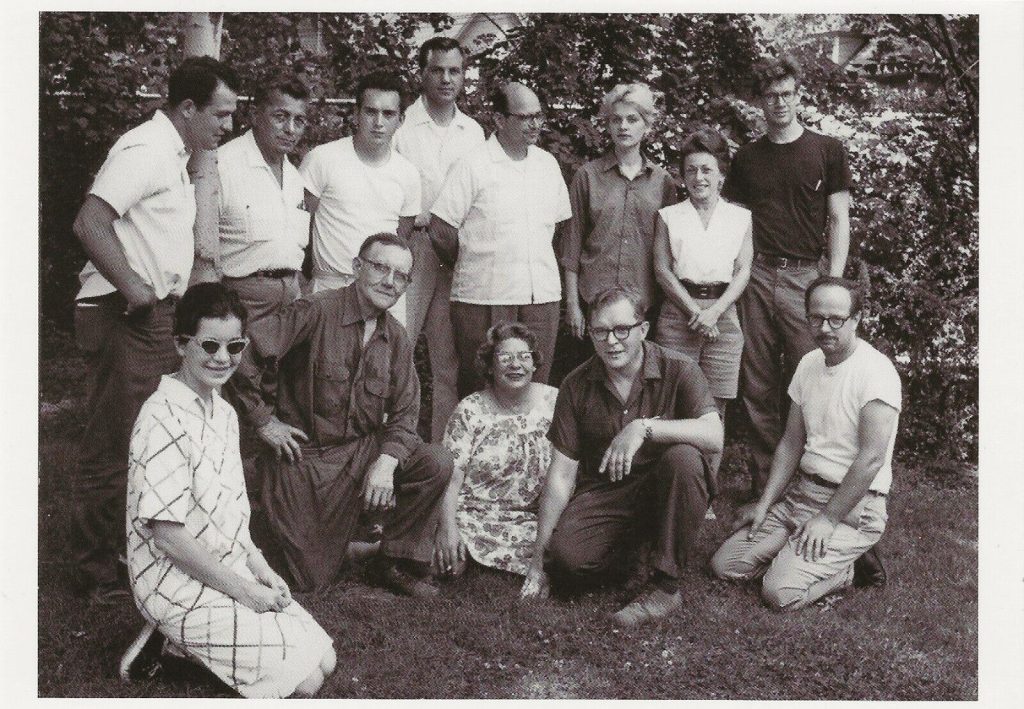
Edith and the 1962 Toledo studio Glass Workshop
The birth of the studio glass movement
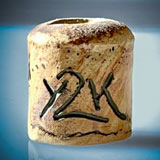
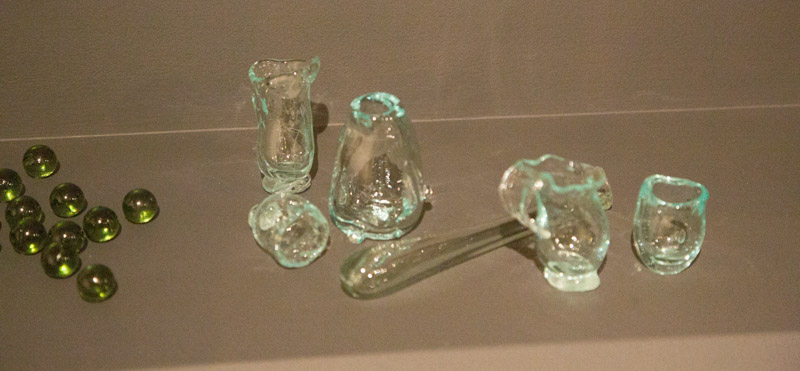
Edith’s glass pieces from the first glass workshop in March 1962, acquired by the Toledo Museum of Art in 2011:

Edith and the 577 Foundation
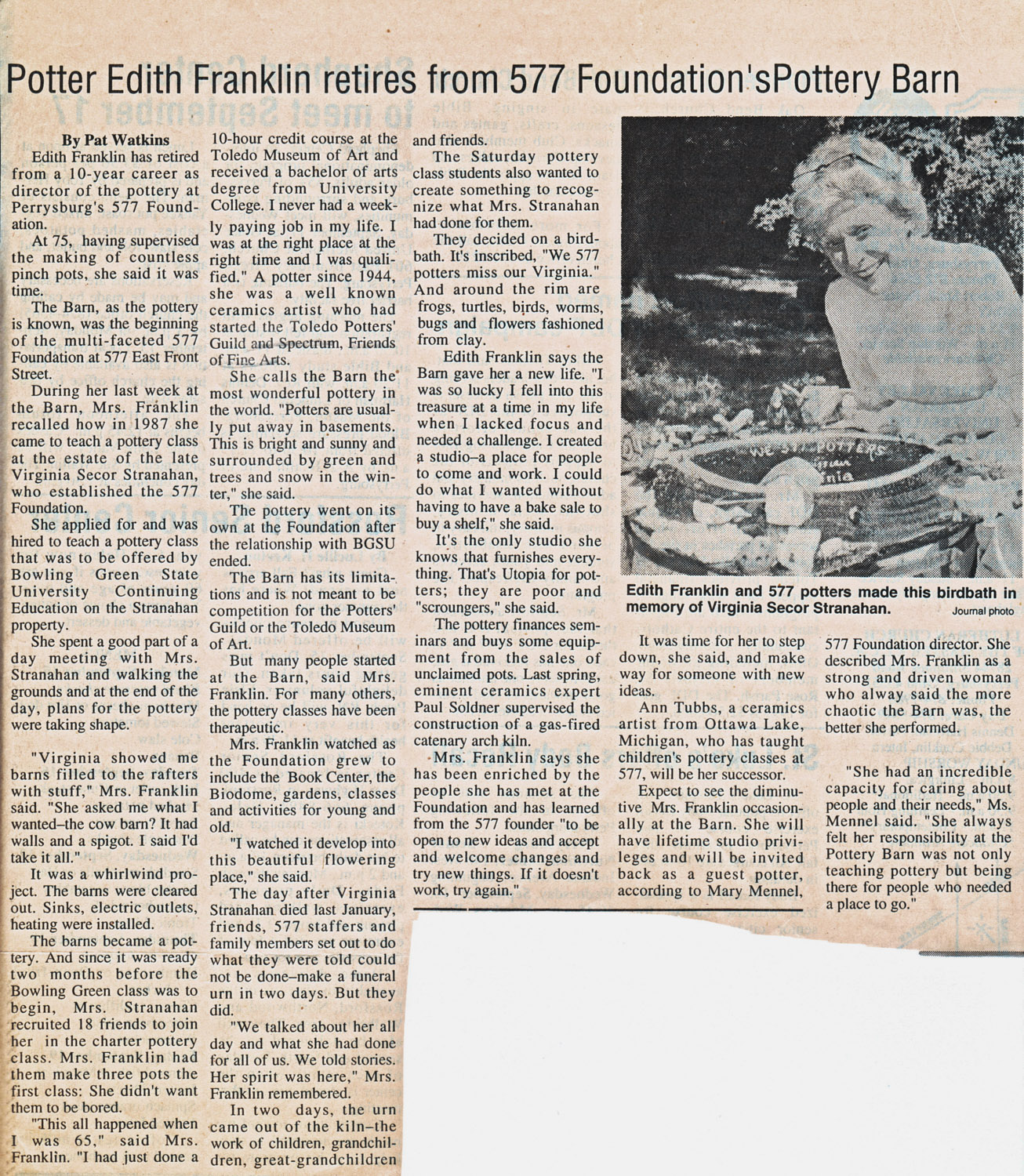
One of Edith’s favorite stories was how she got her first job at the age of 65. Here is the long and the short of it, as she tells it, first to Barbara Floyd, and then at her 88th birthday party and launch of her new scholarship fund:
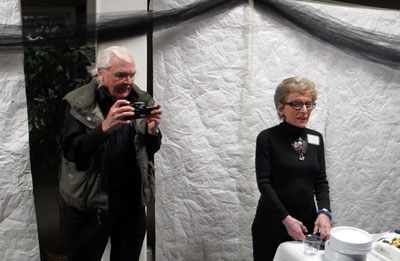
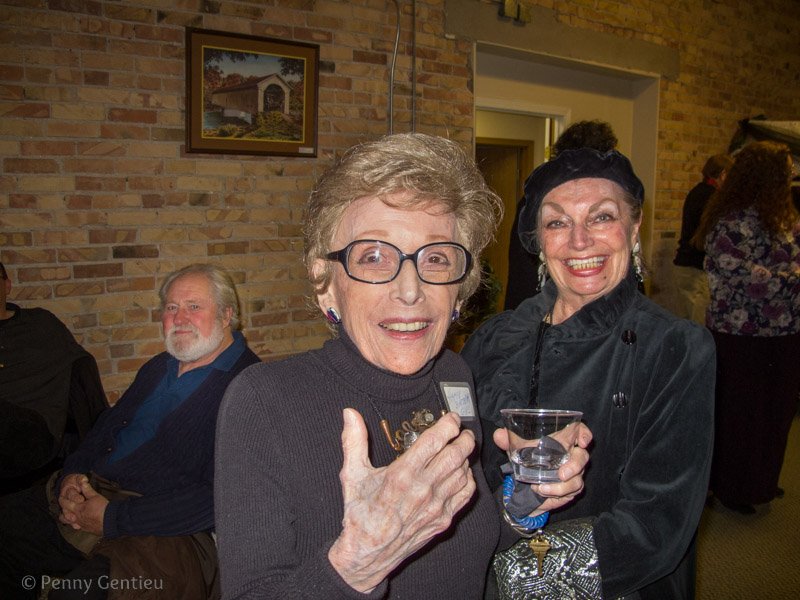
Edith at her 88th birthday party and fundraiser event to kick off the new Edith Franklin Youth Scholarship Fund. 150 friends and art supporters were present, including Herral Long, Marty Reichenthal and Joyce Perrin shown in these two photos.  What an arty gang! R.I.P., arty gang.


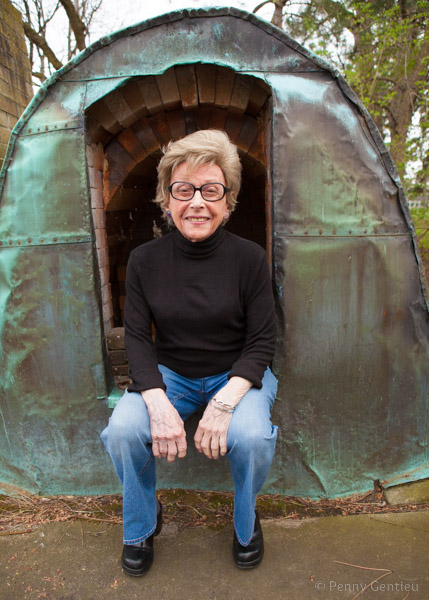
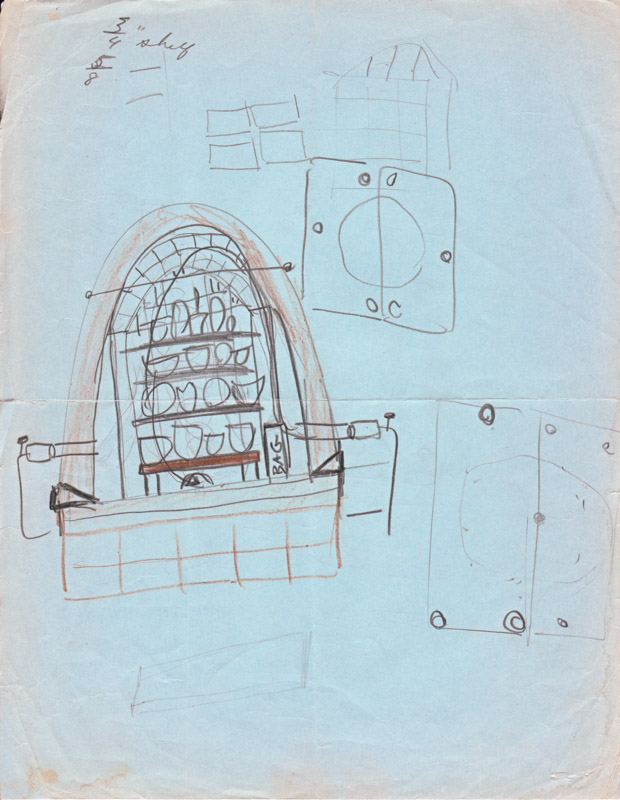
Edith built her own kiln
brick by brick, rivet by rivet
She wanted to give back – and so she has.

Edith was a great potter who attributed her success to having luck. She was in the right place at the right time, and she seized the day.

Good luck to all of the Edith Franklin Scholarship recipients. I hope they find a supportive, engaging community to live in so that they can be lucky, too. It’s not so great in Toledo anymore, I’m sorry to say – because all the valuable opportunities local artists once had have been taken away. No free museum classes for public school children, no solo shows for local artists, no annual art exhibitions for the community of artists, no adult classes in a museum-centered school where monumental artistic advancements can be developed, such as the birth of the studio glass movement in 1962, which helped the Toledo Museum of Art just as much as it helped the participants and glass artists. The soul of the community has been swept out of the museum, and with it, all of the potential greatness.

Those who happen to live in federally funded housing projects within two miles of the museum are in luck, however. The museum got millions of dollars from Owens Corning and Promedica for installing on-site art-making studios, complete with on-site classes taught by art museum instructors, in ten housing projects. They tout that it serves 18,000 people. I wonder how many are artists. I’m happy for the few artists who qualify, but unfortunately for most of Toledo’s children and adults, since 94% of the population of Toledo does not live in federally funded housing projects, 94% percent of the community is out of luck. If it had not been for the museum classes and shows that were available to the entire Toledo area community throughout the twentieth century, the opportunity for Edith, who lived in Ottawa Hills, to give back with her Edith Franklin Youth Scholarship Fund would have been lost.

I guess that’s why they call it the Greatest Generation – it was before the museum cut us off. Here’s to Edith Franklin, born 100 years ago today. Keep her in your memory, there is much to learn from her.
Categories
Artists of Toledo

But will they bring back our show?

A critique on the museum’s 5-year plan for growth
as reported by The Blade
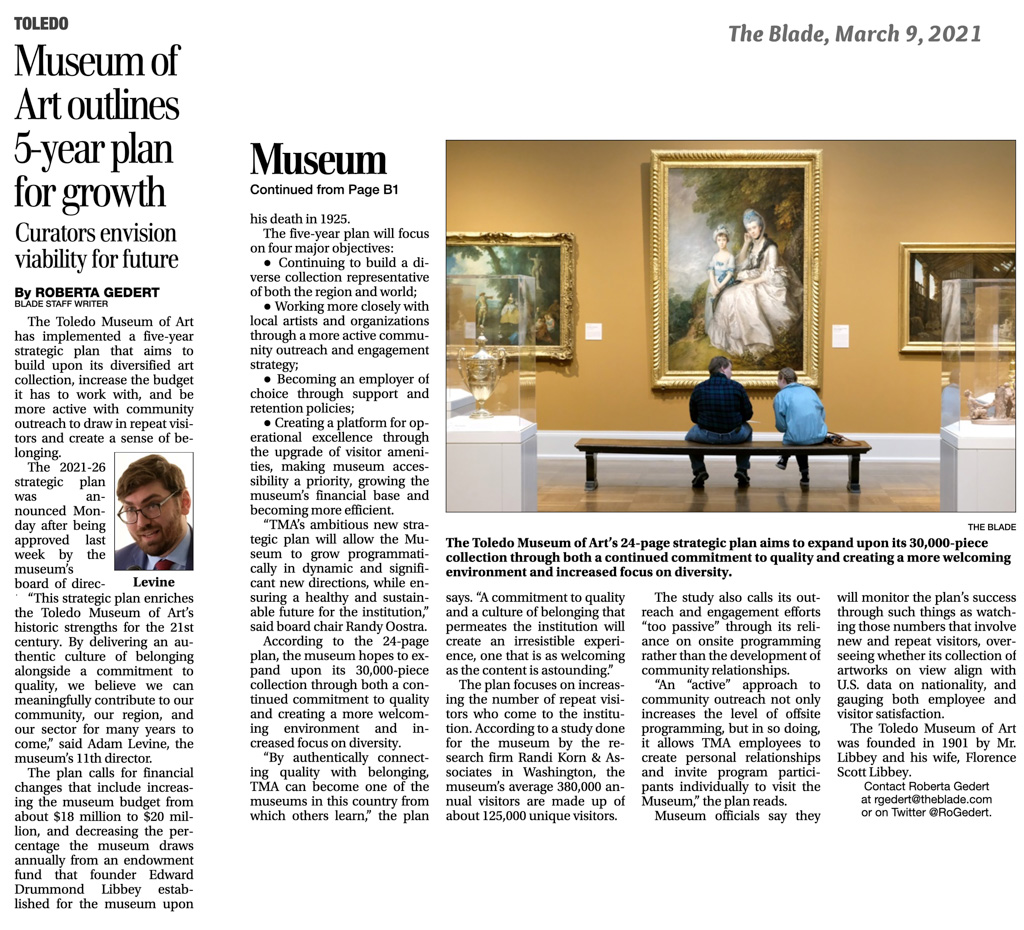
The last paragraph in the above article.

In the spirit of community involvement, I’m compelled to offer some feedback on the recent article in The Blade about the museum’s future. But first a discussion about the last paragraph in the article, “The Toledo Museum of Art was founded in 1901 by Mr. Libbey and his wife, Florence Scott Libbey.”  That’s incorrect – The Toledo Museum of Art was founded by a group of artists.

Don’t get me wrong – I don’t mean to say that Libbey was not important in the establishment of the museum – he was by far the chief benefactor in establishing the Toledo Museum of Art. But to say that he and his wife founded it is like throwing the museum’s populist history down the memory hole.

There are many near-contemporaneous accounts of how the Toledo Museum of Art was founded by a group of artists.

In the book, Memoirs of Lucas County and the City of Toledo from the earliest times down to the present Vol. II, published in 1910, which includes biographical sketches of prominent Toledo men, there is no mention of Libbey founding the museum, but there is mention of Edmund Henry Osthaus being “one of the founders and incorporators” of the museum.

This is how Osthaus is described in the Toledo Museum of Art’s own collection:

The Blade, October 29, 1926. Obituary of George W. Stevens, the museum’s long-time second director, founding member of the Tile Club, the group of artists responsible for “procuring a museum of Toledo.”

The Blade, September 30, 1922: “Museum Idea Takes Form” In 1893, the painter, Thomas Parkhurst formed the Tile Club, a group consisting of artists and architects in 1893. In 1900 the club had its first exhibition at Parkhurst’s store on Superior St. Out of that event grew a movement.  After the exhibition, the group of artists and architects was so enthused and fired up with the idea of establishing a home for art in Toledo that they got together with George Stevens as the leader, and talked art museum day and night. Robinson Locke, son of David R. Locke of Petroleum V. Nasby letters fame, helped through The Blade. Finally, George Stevens, “in an inspired moment” elicited the co-operation of Edward Drummond Libbey, who gave them the use of an old building on Madison Ave. and 12th Street to use for the museum, but they needed money…

The Blade, March 27, 1923

Edward Drummond Libbey was the biggest benefactor, and he encouraged community involvement because everyone wanted a museum that belonged to the people. Libbey matched donations, and children collected pennies to contribute to the building fund.

The Toledo Museum of Art was always OUR museum….

Nearly all cities of any size in the country have their museums and galleries, which are fast becoming a necessity….We owe it to ourselves, to the school children of Toledo, and to the future generations to see that our good work shall continue, that we lay a foundation so solid and so complete that the future citizens of Toledo will look back upon this, our pioneer work, with praise and appreciation. — Edward Drummond Libbey. First annual report of The Toledo Museum of Art.

By the Seventies, the museum was in high gear: it was a leading teaching museum, providing annually about eight Educational Fellowships, training museum professionals from all over the country, who also helped with the free children’s Saturday classes that drew around 2,000 children per week. The Toledo Museum of Art ranked in the top 10 American art museums for popularity and assets. It was the center of the community art scene, with not only Saturday classes for grade school and high school students, but for its small but superior college art program in the basement of the museum, the Toledo Museum of Art School of Design, which extended to adult classes. That really brought in the community.

The museum also had monthly shows featuring local artists from 1933 to 1970, 540 in total, for both men and women artists. Beginning in 1918 it hosted the annual Toledo Area Artists Exhibition, celebrating the local art community. The museum was alive with community involvement.

The Blade, February 15, 1993

In the 1990’s, the museum’s School of Design and much of the adult education ended when the Frank Gehry building was built, which was connected to the east side of the museum. The University of Toledo’s School of Visual Arts occupies the space, taking over for the museum’s School of Design. The extensive children’s Saturday class program slipped away. The Saturday class program that had served the community for many decades became a sorry shadow of what it used to be.

What have they done to OUR museum?

Brian Kennedy, director of the museum from 2010 to 2019

In 2014, under the new director Brian Kennedy’s watch, the venerable, 95-year old tradition of the Toledo Area Artists Exhibition came to a shameful demise when the Toledo Museum of Art opened the show to entries from Detroit, Cleveland and Columbus, populations nine times the size of the Toledo region, while simultaneously limiting the show to only 27 artists. To add insult to injury, they stuffed it with Toledo Museum of Art insiders, mostly men. Additionally, the show was totally devoid of diversity, the absence of which is not the norm and has never been the norm for our TAA show.  See a full account of the 2014 show on this website, in the tag cloud in the footer of this page.

In 2011, Brian Kennedy presented his five-year strategic plan. I remember him saying that if art classes were available at one place in town, they were not necessary in two places because that’s redundant, we should save resources. Kennedy’s “basic principles” projected on the screen contradicted what he was saying there, as would his subsequent actions to what was projected on the screen.

An overhead slide projected at Brian Kennedy’s presentation of his “5-year Strategic Plan.” at the 93rd TAA jury dinner, August 2011.

In 2015, a few months after the 2014 TAA show debacle, I was at the museum attending the senior curator Larry Nichol’s gallery talk about a particular painting we were sitting on front of in the gallery, when at the end, he asked the small group of people before him, mostly age 45 and up, how to bring younger people in. I raised my hand and said, bring your children’s classes back. Bring the TAA show back. Bring the monthly local shows back.  He said, “noted.”

What did they expect would happen to attendance at the museum, when they take everything away that enlivened the art community, from classes for children and adults to lending a wall for a local art show?

Yoga on the steps of the museum if you are between 24 and 45. July 2014

The exclusive, discriminatory “Circle 2445” membership effort designed to bring in the museum’s desired younger members was short-lived. The overt ageist discrimination insulted many people.

click on letter to see more…

In other ways too, the Museum became unresponsive to the Toledo community. For example, here’s a story having to do with Toledo’s first artist, William H. Machen, who died in 1911. Over the years, his descendants have approached the museum for advice, once in 1941 and again in 2015 — see the contrast in responses between the third museum director, Blake-More Godwin and the ninth director, Brian Kennedy…

In 2019, Brian Kennedy resigned after only eight years to become the director of the Peabody Essex Museum in Salem, Massachusetts. (Which might be a fine historical museum that is owned by Harvard University, but it doesn’t hold a candle to the great Toledo Museum of Art.)


Now then, back to the subject of this post, a critique of the new 5-year plan as outlined in the above screen-shotted March 9, 2021 Blade article…

the new 5-year strategic plan
  1. to continue to build on its diverse collection...   Well that’s good, because Edward Drummond Libbey’s bequest stipulates that half of the money taken from the fund in any given year must go to buying new art.
  2. working more closely with local artists through a more active outreach and engagement strategy…   Does this mean they will bring our Toledo Area Artists Exhibition back? Have they forgotten the relationship they used to have with local artists? I hope they will read my blog post, it’s outlined above!
  3. becoming an employer of choice through support and retention policies…   Hasn’t the Toledo Museum of Art ALWAYS been an employer of choice? Or are they talking about the museum guards, whom for many years were hired from our community of senior citizens, but about 10 years ago the museum started replacing senior citizens with young people, who just aren’t sticking with the job like the seniors did.
  4. creating a platform for operational excellence through the upgrade of visitor amenities, making museum access a priority, growing the museum’s financial base and becoming more efficient…   
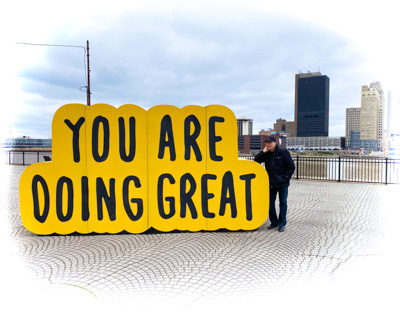
Are we doing great?

Culture of Belonging
and Authentic Integration
of great art and everyday community

As if words, regardless of deeds, will make it so.

That’s exactly what the Toledo Museum of Art used to do. The Toledo Museum of Art didn’t have to try to be authentic — the Museum oozed with authenticity and community involvement. That’s because it was our museum – it belonged to the people of Toledo – it was Edward Drummond Libbey and the artist founders’ intention – funded in part with the pennies of the children who have since become our forefathers.

Will the Toledo Museum of Art bring back our venerable, prestigious Toledo Area Artists Exhibition? Will they bring our classes back? Will the Museum ever be the center of the working artist community again? Or will it continue to be a place for yoga on the front steps for the 24-45 crowd, and “baby and me” looking-at-art classes in the galleries for bored (but sufficiently young) parents?

The artists of Toledo can’t wait to find out.

The last authentic Toledo Area Artists Exhibition, 2013, and the 94th TAA Awards Ceremony at the Peristyle. Brian Kennedy and Amy Gilman handing out awards. The prestigious juried exhibition has launched many young artists’ careers.
Categories
Artists of Toledo

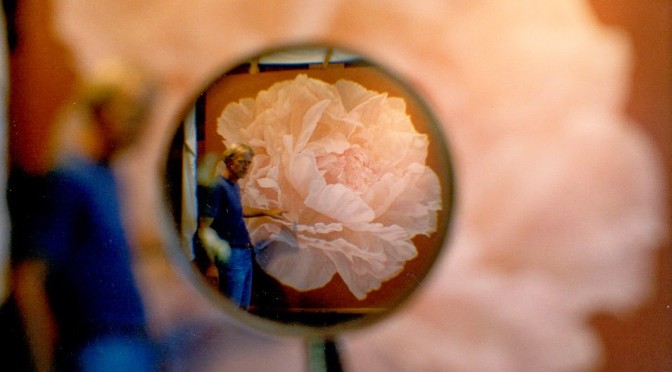
Sometimes when you look in the microscope you see the whole thing.

Photo by Steve Coffin of John Botts and his Big Peony painting. Corte Madera, California


This photo came today in my email — a photo of John Botts, my painting teacher at the Toledo Museum of Art School of Design. Wow. I owe so much to John Botts — he made me see what I really was, which is a photographer. When he saw the first photographs I took, he gave me a book — the first edition of Robert Frank’s book, The Americans.


It is probably fair to say that the Toledo Area Artists Exhibition this year is the most controversial Toledo Area Artists Exhibition there has ever been, and not for the art either, because we don’t get to see the art until November.  The show is controversial this year because of the circumstances created by the Toledo Museum of Art and the questionable decisions that the museum has made that put the show and the museum in a bad light even before it opens.


excerpts from the press release about the 95th Toledo Area Artists Exhibition on Toledo Museum of Art website

Were they really? Pleased with our region? Doesn’t seem so.


Out of all those entries that they looked at — 4,175 images, 44 videos, and two audio entries, the museum curator in-house judges could barely find any Toledo artists for the show who didn’t work at the museum, or weren’t friends of theirs, etc. or weren’t the most recent presidents of the Federation of Toledo Art Societies, the group that was formed in 1918 to put on this show, to put in the show.

And then the curators had to go beyond the Toledo area to fill it in with out-of-town artists from Akron, Cleveland, Columbus, Detroit, Grand Rapids Michigan, Muncie Indiana. Our Toledo Area Artists Exhibition.

We have so many artists in the Toledo area, yet in a show that has only 28 artists this year, cut down from a show that had 76 artists last year, a show that historically ranges anywhere from 70 to 120 artists — of 90% real Toledo area artists, the museum this year  has to go 150 miles out in all directions to pick out 17 artists who live outside of the 17 counties that comprise the Toledo area – the 15 counties of NW Ohio and the two bordering counties in SE Michigan?

Then, with our show taken over by metropolitan areas that are not our own, over half of the meager remaining 11 artists chosen actually from this area, from all the 4,175 images that they got to select from, are artists within the “Museum nucleus?”

Is that okay with you?

Do we really have to drink this water?

 o

Is it fair that 435 artists paid $30 each thinking that they were entering a fair competition (435 x $30 = $13,050) when they never had a chance because the museum judged it and got to put in their employees and friends, then fill it up with a pick of artists in big metropolitan areas not our Toledo area, that the museum has the audacity to call the 95th Toledo Area Artists Exhibition?

The reason why the annual TAA show started using outside jurors after eight years into their history was so that the show could be judged fairly and without conflicts of interest.

So this year, 2014, for the 95th annual show, why did museum staff members make themselves the jurors of the 95th Annual Toledo Area Artists Exhibition? Was it so they could unfairly get to pick fellow museum employees and friends, for some unknown reason, or maybe it was because they got Christopher Knight to be the money judge and they wanted to make themselves look good?

How does that make you feel, big vibrant Toledo art community? Are you ready to trade in your chance at entering the TAA show every year, along with the chance of winning and getting recognition for your creativity at the great white marble pillared Toledo Museum of Art, for the condescendingly concurrent series of workshops run by the Federation to teach you how you can be more professional like those “full time” “professional” artists who are supposedly so much better than you, that are showing in your place, in your TAA show?

This show belongs to us, the Toledoans, to help “us all” be better artists, as well as, in return, for “all us” artists to contribute to and continue the artistic cultural history of Toledo that is and can only be us. And why don’t we clean up our water too.

Please keep the Toledo Area Artists Exhibition at the Toledo Museum of Art and for the Toledo area artists. It’s our legacy and it belongs to us. It’s our tradition.

The Toledo Area Artists Exhibition for Toledo area artists is the oldest regional art competition affiliated with a museum in the United States. It gives the art community a great sense of pride to compete and get in to the prestigious museum show, that features and celebrates the talents of Northwest Ohio and Southeast Michigan. It’s 95 years old.  Must it go so soon, so young in European terms, just a baby in comparison.