
“Reframing History”– What Toledo Museum of Art Visitors Are Saying
Comments on the museum’s October 14, 2026 Facebook post reveal a deeper unease about the future of a Toledo institution.
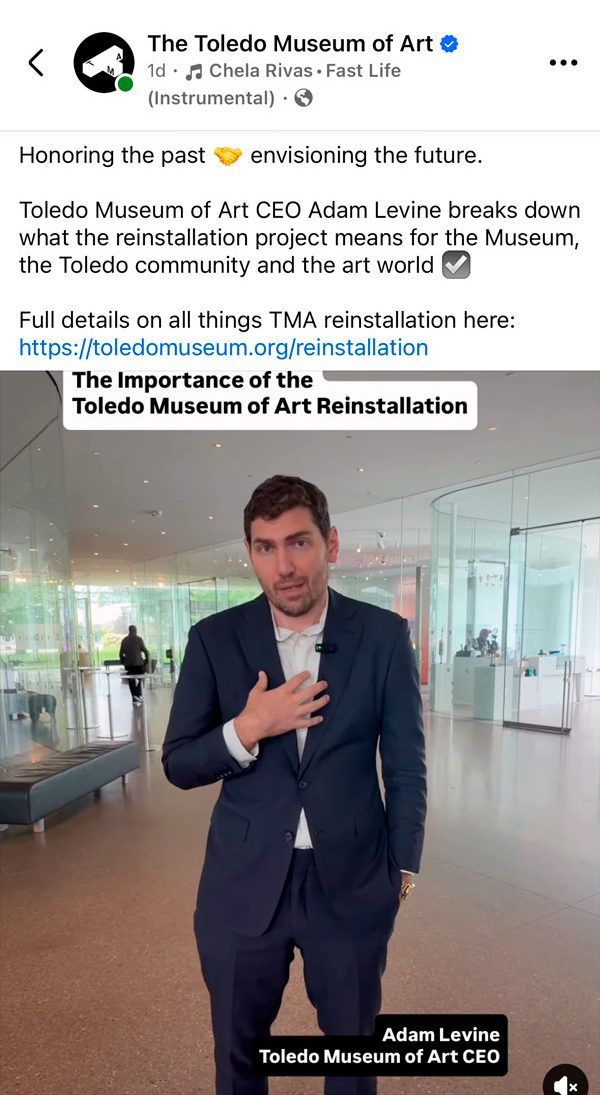
On October 14, the Toledo Museum of Art published a Facebook post featuring CEO Adam Levine under the heading “Honoring the past, envisioning the future.” The post invited viewers to hear what the museum’s reinstallation project means for the museum, the Toledo community, and the art world.
But the comments raised a question that the museum’s promotional language does not appear to answer: Why did a world-class museum with an established identity, important collections, and generations of community support need to be fundamentally reimagined?
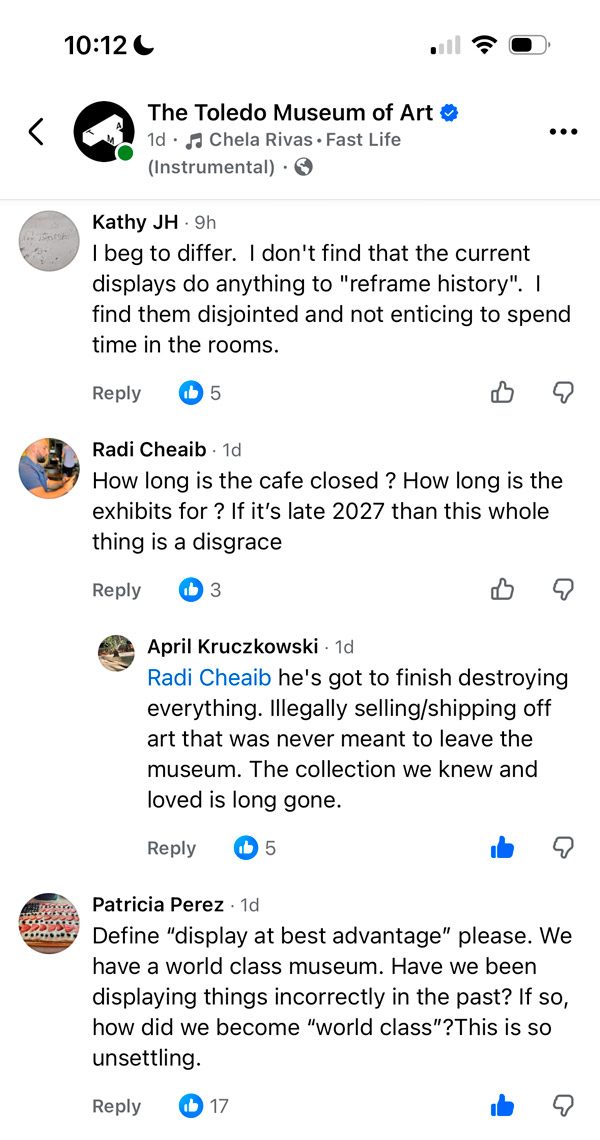
I captured the comments displayed beneath the post. Although on October 16 Facebook reported 39 comments, only 27 were visible in the comment views I checked. The responses included hardly any support for the project, but many expressed disappointment, confusion, and concern about the direction of the museum.
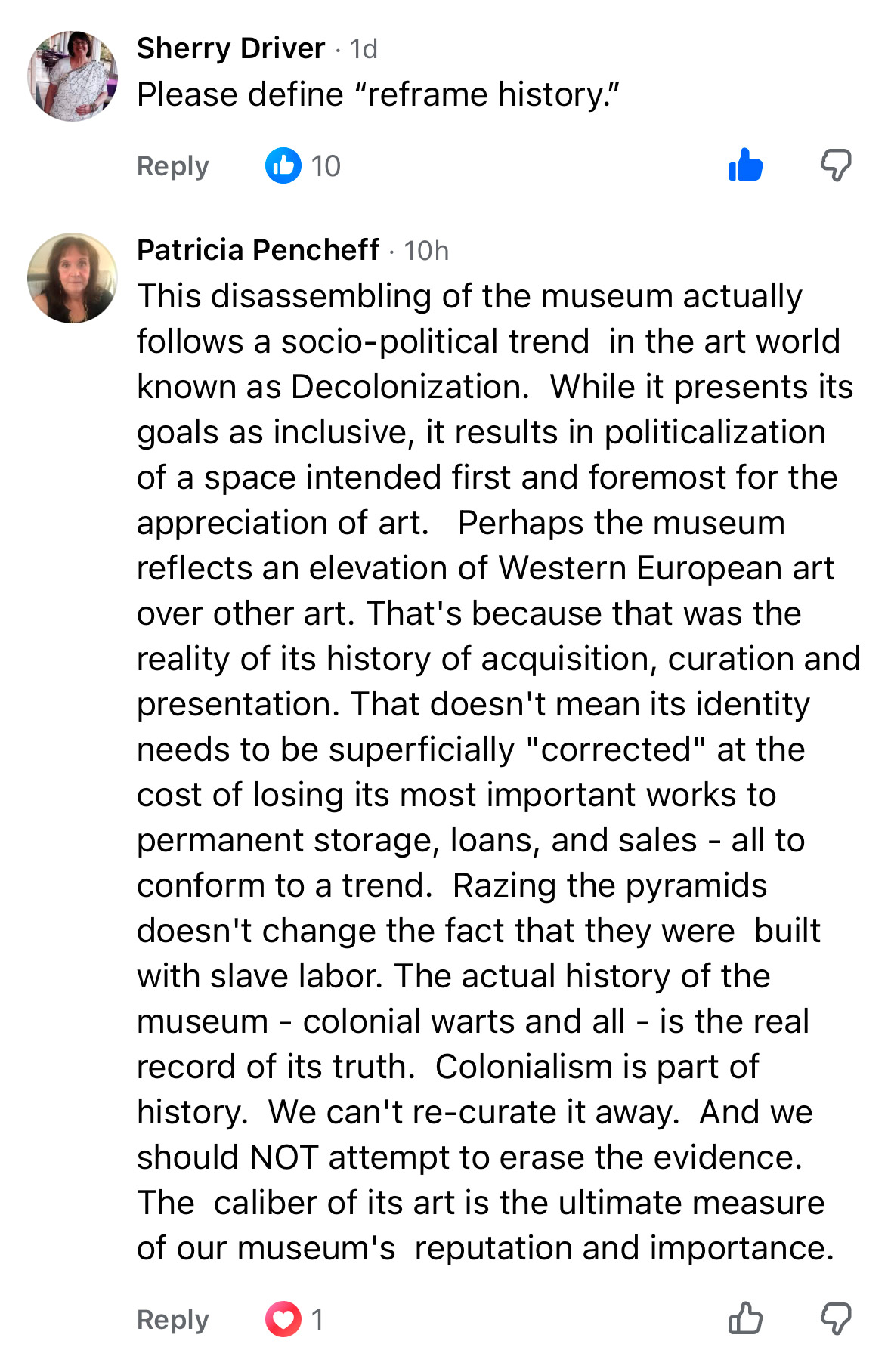
What does it mean to “reframe history”?
Again and again, commenters asked what the museum meant by “reframe history,” “reframe the art,” and “display at best advantage.”
Patricia Perez questioned whether the museum had been displaying its art incorrectly in the past. If the museum had already achieved a world-class reputation, she asked, why was this fundamental reinterpretation necessary?
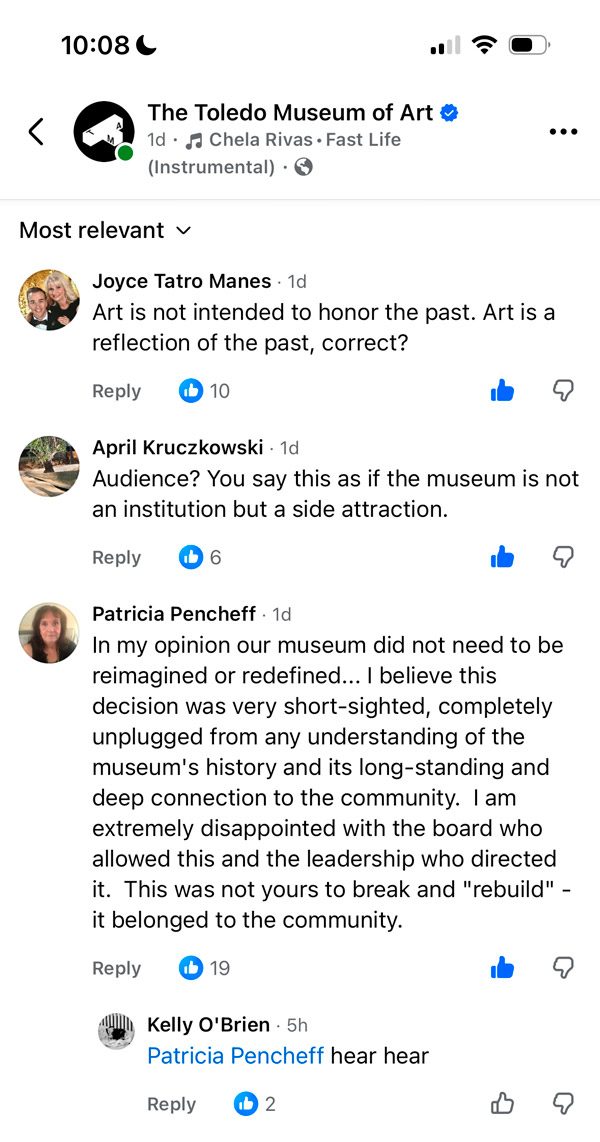
Joyce Tatro Manes compared the idea to saying that the Louvre needed to be reframed. Other commenters dismissed the language as buzzwords that did not explain what visitors would actually gain.
These questions deserve serious answers. What specific shortcomings in the former displays justified the scale of the changes? What evidence supports the claim that the new approach will improve the visitor experience? And how will the museum measure whether it succeeds?
“The warmth and connection is gone”
For some commenters, the changes are not an abstract debate about museum philosophy. They describe a personal sense of loss.
Lisa Marie wrote that the museum had been perfect the way it was and that its warmth and connection were gone. She said her favorite works had been put on tour or taken down and asked, “What’s the vision?”
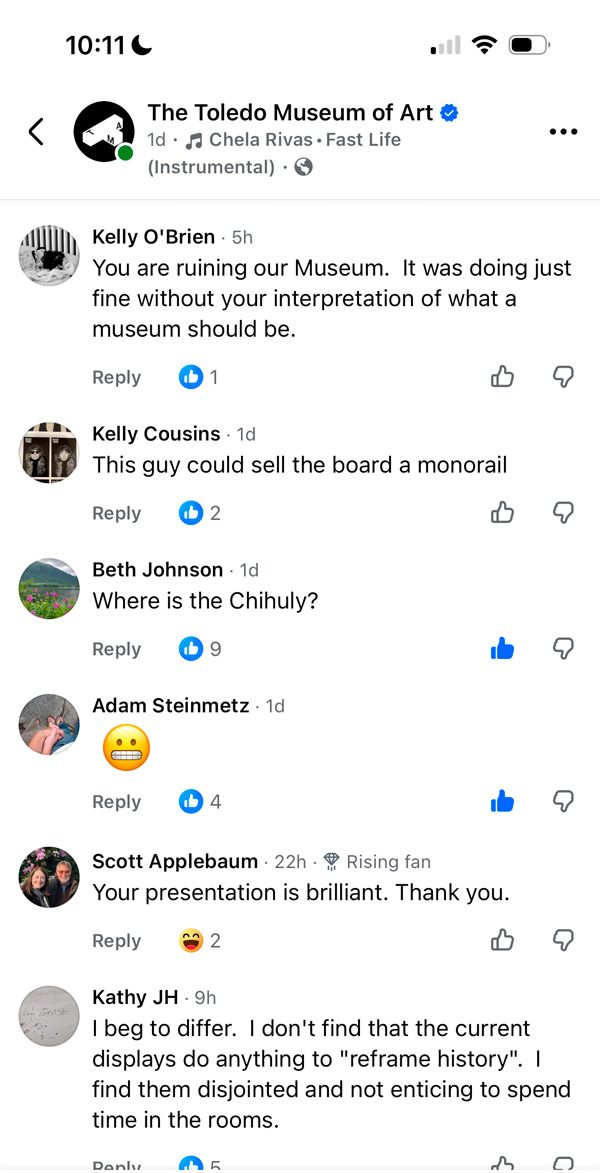
Deb Swingholm said that each recent visit seemed to leave the museum “less vibrant and less beautiful.” Kathy JH found the current displays disjointed and not enticing places to spend time. Beth Thomsen Madden called the museum a treasure that did not need redesigning.
These comments describe a gap between the museum’s promise of renewal and some visitors’ actual experience of the galleries.
Where is the art?
Perhaps the most consequential concerns were about the collection itself.
Deborah Torres wrote that the museum’s longstanding identity had grown out of the importance of its collections. She did not want to see them “reduced, sold, in storage, continually on loan, replaced etc.” She added, “I’m hoping I’m wrong.”
Visitors also asked where particular works had gone, including the Chihuly. Their questions reflect a larger concern: if familiar works disappear from the galleries, what remains of the museum that people have supported and come to know?
The museum needs to communicate clearly about which works are on view, which are in storage, which are on loan, and which have been sold. These are different circumstances, and the public should not have to guess about them.
Who owns the museum’s future?
Patricia Pencheff offered one of the clearest statements of the community’s stake in the decision:
“This was not yours to break and ‘rebuild’ — it belonged to the community.”
Her criticism was directed at both the leadership that initiated the changes and the board that approved them. April Kruczkowski similarly questioned the way the presentation characterized the museum’s audience.
These comments raise an important issue of stewardship:
The museum director and board have responsibilities to lead an institution, but leadership does not make the institution theirs. Its collections, reputation, and relationship with the public have been built over generations. Leadership’s fiduciary duty is spelled out in the Libbey will.
How are the changes are justified?
How do they serve the public?
Who asked for them?
A debate about history—and what museums should preserve
Patricia Pencheff also argued that the changes reflect a broader trend toward decolonization in the art world. She questioned whether changing the interpretation of a collection could come at the expense of preserving its most important works.
Her argument was that the history of a collection—including the uncomfortable parts—should be documented rather than obscured. Reinterpreting history does not change the historical record.
Visitors can reasonably disagree about the best way to display art, address colonial history, or introduce new perspectives. But those debates should not obscure a fundamental responsibility: to preserve the collection and make it accessible to the public.
A presentation is not the same as public confidence
Not everyone responding to the post was critical. Scott Applebaum praised Levine’s presentation, and Deborah Torres expressed confidence in architect Michael Maltzan’s involvement in the project.
But a polished presentation and an impressive architectural résumé do not, by themselves, resolve the concerns other visitors are raising.
The comments were not simply about wall colors or interior design. They concerned the museum’s identity, the accessibility of its collections, the experience of visiting, the length and consequences of the disruption, and the board’s judgment.
The museum’s post promised to honor the past while envisioning the future. Its critics are asking whether the past is actually being honored—and whether the future being envisioned is one that the people of Toledo recognize as their own.
A public museum should be able to explain why it is changing, what those changes accomplish, be accountable to the community it serves, be transparent about how much money it’s costing and how it is being funded. The people raising these questions deserve more than slogans. They deserve substantive answers.