Glass architecture did once house glass art
until “change agent” Adam Levine came along.
When transformation becomes de-evolution: highlights from the Press Kit announcing the opening of the Glass Pavilion in 2006
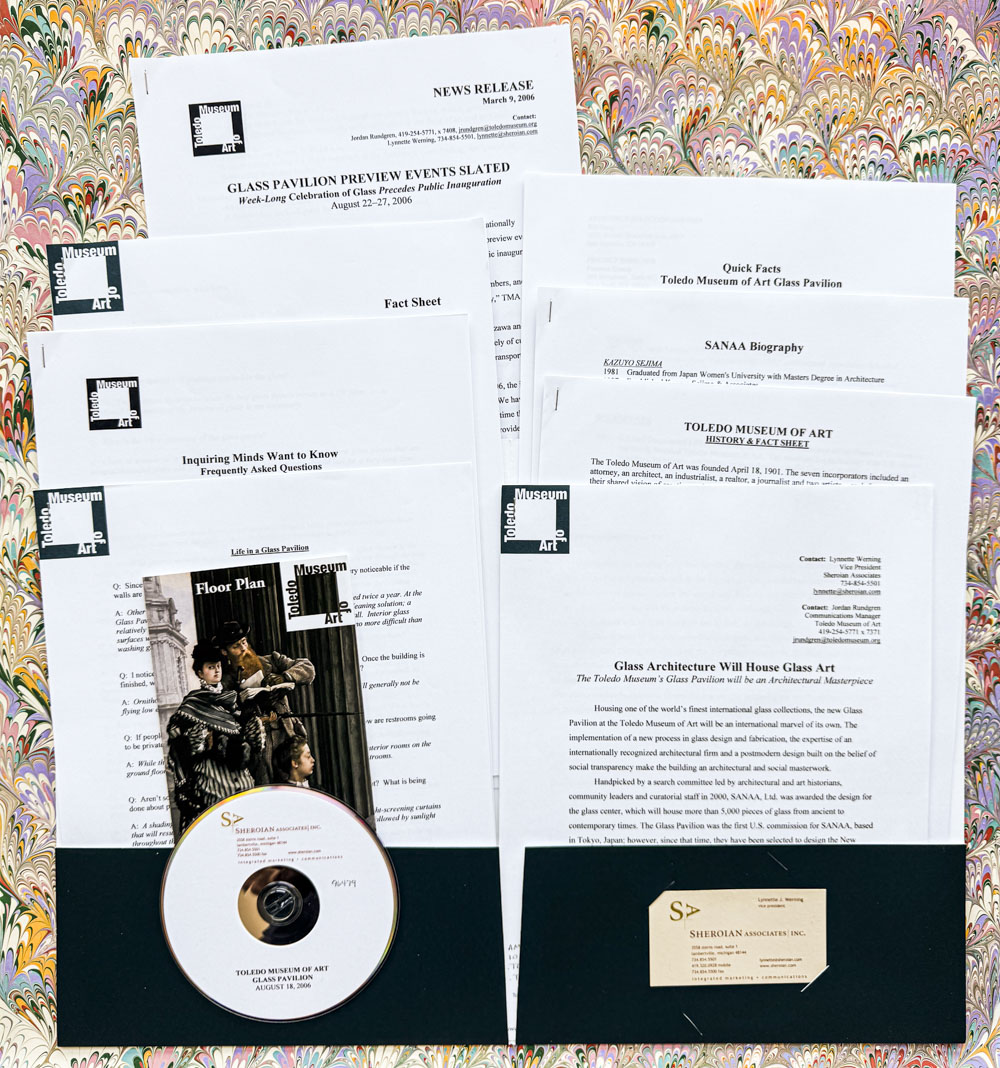
Featured Glass Art on display:
The 2006 press kit for the opening of the Glass Pavilion featured these 12 artworks on a CD, out of 5,000 that were to be housed at the new glass center. Today, November 2, the TMA website emuseum shows that each one of these featured works is “not on view.”
Where did the famous glass art go?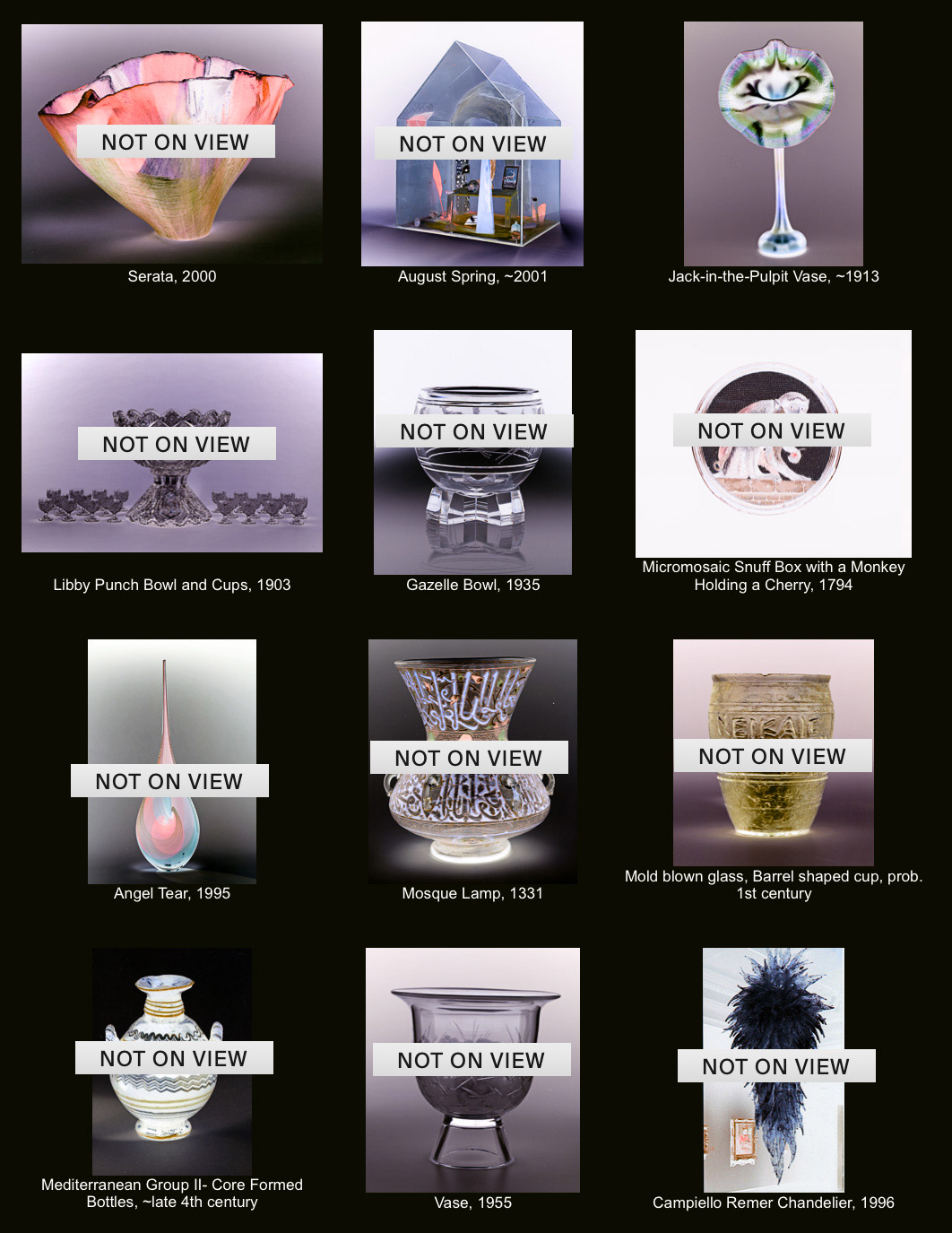
Quick Facts: Toledo Museum of Art Glass Pavilion
• The Glass Pavilion will include 76,000 square feet on two floors.
• Increased exhibition space will allow for more of the Museum’s more than 5,000-piece collection to be displayed.
• Two hot shops will be available; one for use in classes, demonstrations and workshops, the other for rental and use by artists-in-residence. Both are enclosed in glass walls. The activity within will be visible to the public.
• Additional classroom and studio spaces are provided for lampworking, cold working, casting, slumping and fusing, sand blasting and molding.
• A café, a warming kitchen for use by catering and a multipurpose room will be available for special events and public lectures.
• The lower level will contain offices for Museum staff.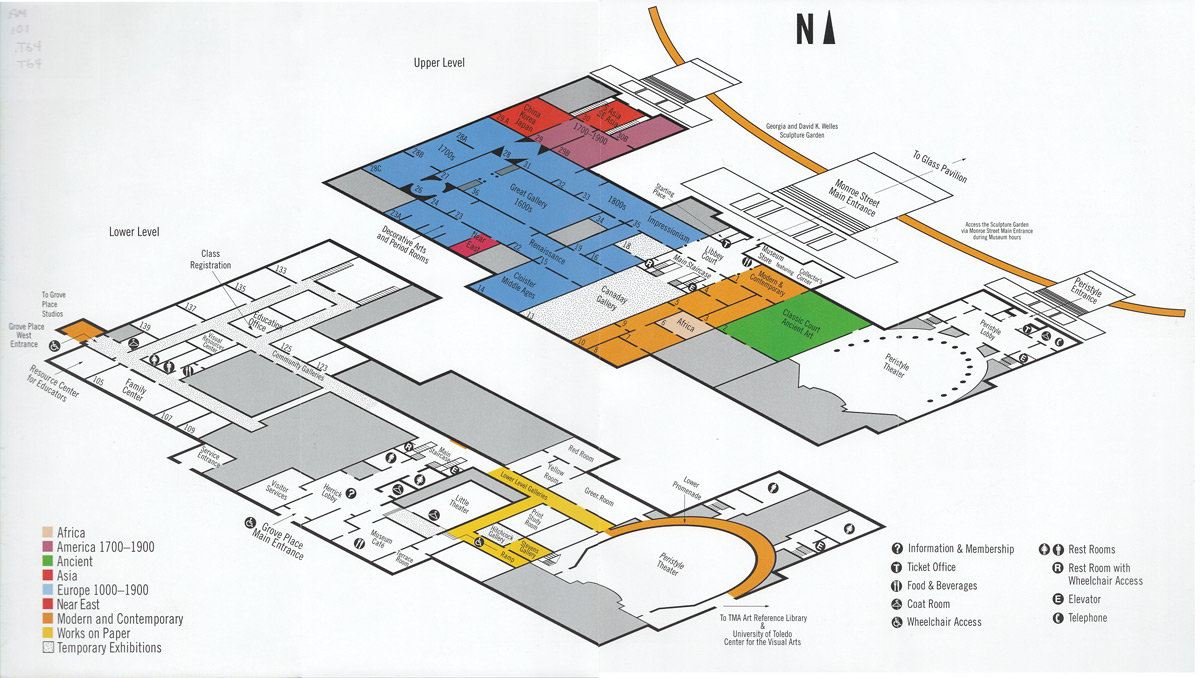
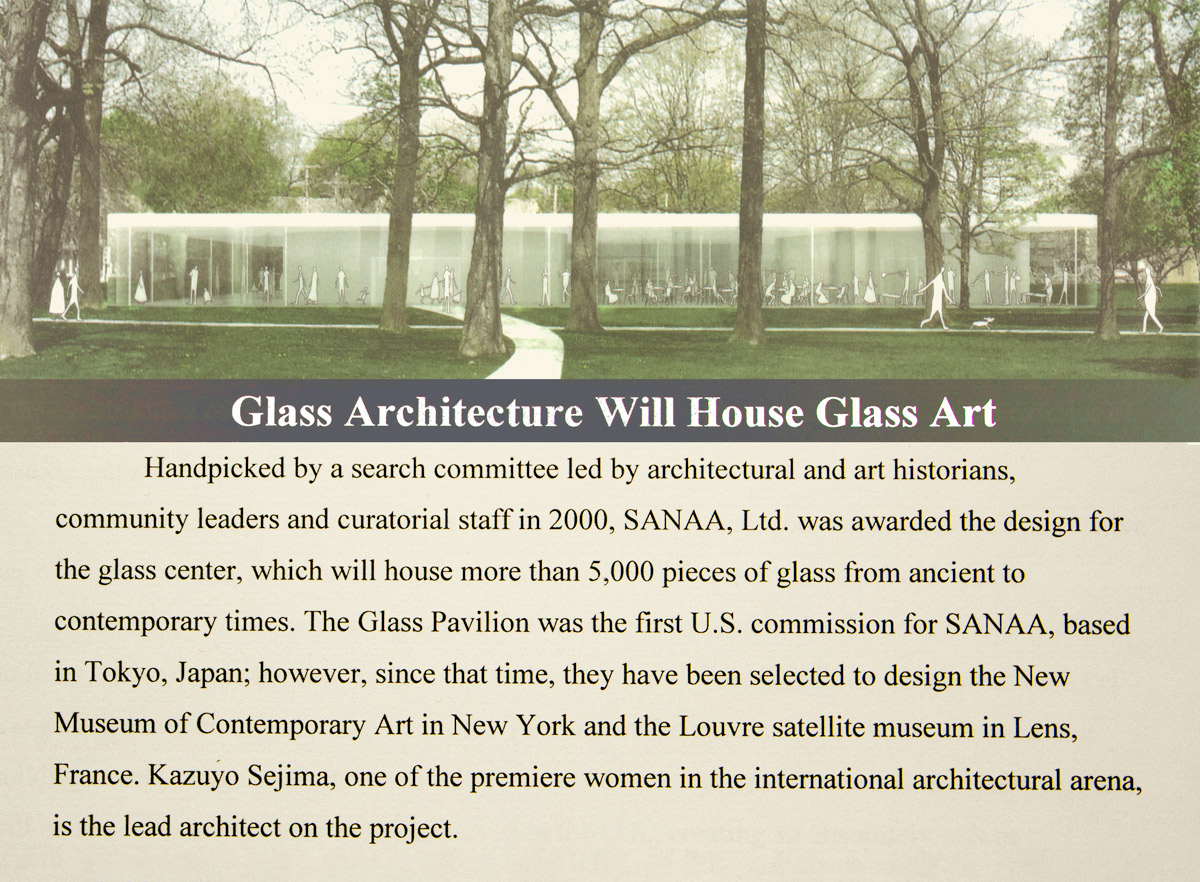
Glass Architecture Will House Glass Art
The Toledo Museum’s Glass Pavilion will be an Architectural Masterpiece
Housing one of the world’s finest international glass collections, the new Glass Pavilion at the Toledo Museum of Art will be an international marvel of its own. The implementation of a new process in glass design and fabrication, the expertise of an internationally recognized architectural firm and a postmodern design built on the belief of social transparency make the building an architectural and social masterwork.
The Glass Pavilion’s design is an extension of a 20th-century vision where cities made of glass symbolized a new cultural and social transparency and openness. Frank Lloyd Wright and other visionary 20th century artists shared this ideal.
The Glass Pavilion’s primary purpose is to provide an in-depth examination of the creative process by presenting the Museum’s glass collection within the context of all the visual arts. Within the Pavilion, artists and patrons will explore the creative process of glassmaking through the interpretation of the Museum’s collection and by emphasizing the relationship between the art created there and the masterpieces in the collection. Some museums focus on the history of glass, and a few others contextualize works in this media by integrating them within the history of art. The Glass Pavilion will be unique in featuring the close physical relationship between its glass collection, related works in other media, and its glassmaking facilities.
Toledo’s Glass Pavilion becomes the second museum building in Ohio to be designed by an internationally recognized woman-architect.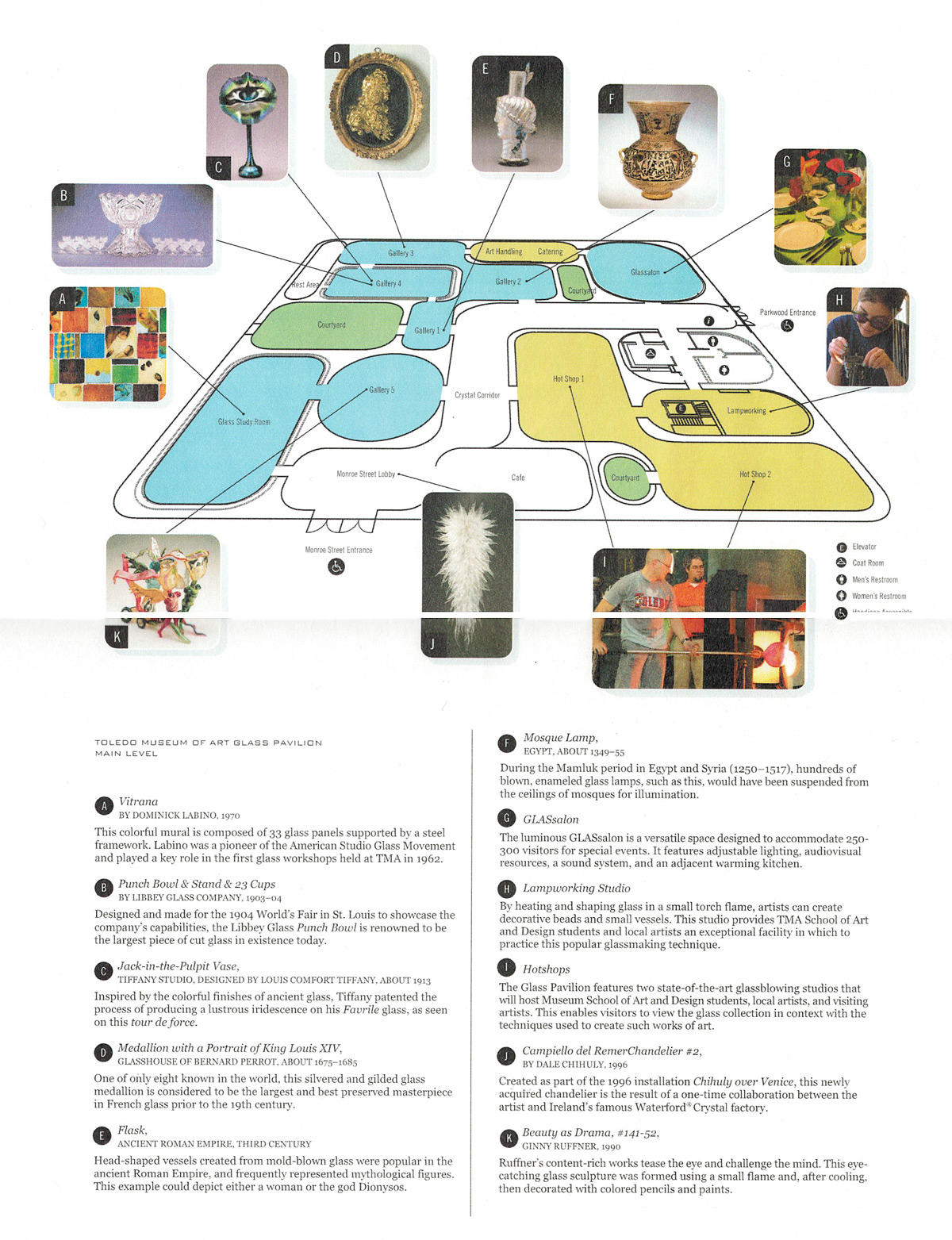
Historical milestones included in the 2006 press kit
M I L E S T O N E S
1901—Edward Drummond Libbey, founder, is elected first President of the Board of Trustees of the newly founded Toledo Museum of Art. The museum began humbly with 120 charter members, temporary exhibitions in rented rooms in the Gardner Building in downtown Toledo and no permanent art collection.
1903— George Stevens and his wife, Nina, are appointed TMA’s Director and Assistant Director, respectively. The Museum moves to it’s first home, 1216 Madison Avenue. Edward Drummond Libbey bought and remodeled this property and rented it to the Museum for a nominal fee. George Stevens’ policy of welcoming children to the Museum – even unaccompanied by adults – and free art classes for children, was
innovative and successful in generating community support for the institution.
1907—Edward Libbey pledges $50,000 toward a new Museum building if the people of Toledo will raise an equal amount. The goal is accomplished within 20 days. Libbey and his wife, Florence Scott Libbey donate six acres of land on Monroe Street for the new building.
1912—The Museum’s new Monroe Street building opens. Libbey is adamant that the Museum be named for the people of Toledo, not him and his wife. The classical Greek style of the Museum architecture employs Ionic columns on the entrance façades.
1916—Due to rising costs, Edward Libbey pledges $400,000 for endowment, if the public can raise the same. Again, the fundraising is successful and prompts Libbey to pledge to donate the remaining sum needed to build the expansion of the building.
1919—The Museum creates the School of Design and provides traditional studio art classes and practical design classes to adults and children.
1924-26 Due to World War I and later economic depression, the expansion planned in 1916 was not completed until 1926. Edward Drummond Libbey’s gift of $850,000 was realized. With the addition of the Gothic Hall, auditorium and additional gallery and classroom space, the Museum has doubled in size.
1925—Edward Libbey dies and leaves $1 million to an endowment fund for the Museum.
1931—Florence Scott Libbey gives up her rights to her husband’s assets to make provision for two new Museum wings. The construction employs 2,500 men for two years in the depth of the Great Depression.
1933—The Peristyle concert hall and the two new wings open with a gala featuring the Philadelphia Orchestra.
1947—TMA Director Otto Wittmann institutes the Docent program to meet the growing demand for school tours by educating volunteers as guides.
1962—The Studio Glass Movement is born at a workshop in a garage on Museum grounds, proving that glass could be worked in a studio setting.
1969—The Museum’s Glass Crafts Building is built by Libbey-Owens-Ford, Owens-Illinois, and Owens Corning, making TMA the first museum with a studio built specifically for teaching glass working techniques.
1970—Art in Glass Gallery is donated by Harold Boeschenstein and houses one of the most important glass collections in the world.
1970s—Donor Abe Plough forms and renovates the Levis Galleries in honor of William C. Levis. These galleries display much of the TMA collection of 18th-century European art.
1970s-80s—The corridors of the lower east wing are renovated to store and display the TMA graphic arts collection.
1982—The Gothic Hall and Auditorium are removed to construct the Canaday Gallery for special exhibitions. The Museum Café, the Hitchcock Print Room, the Glass Study Room and a new Grove Street entrance are added.
1992—The University of Toledo Center for the Visual Arts opens. This 51,000 square-foot building was designed by renowned architect Frank O. Gehry. The CVA houses the UT Department of Art, studios, an art reference library and gallery space.
2000-01—The Monroe Street building’s white marble façade undergoes extensive restoration in preparation for the Museum’s centennial.
February 2001—The Museum renovates the Professional Arts Building at Parkwood Avenue and Monroe Street. This Art Deco style building houses the Toledo Symphony Orchestra offices and the Arts Commission of Greater Toledo.
June 2001—The Museum dedicates the Georgia and David K. Welles Sculpture Garden in front of the Museum on Monroe Street. Twenty-two sculptures and landscaped green spaces expand the Museum experience to the outdoors.
April 2004—Construction begins on the 76,000 square foot Glass Pavilion on Monroe Street facing the Museum. The exterior walls of the finished building, designed by Tokyo-based architectural firm SANAA, Inc., will be made entirely of glass. The structure will house the Museum’s extensive collection of glass art, as well as state-of-the-art glassmaking facilities, meeting spaces and a café.
Timeline beyond 2006:
2008 – 1,450 solar panels are installed on the roof over the Classic Court and Peristyle to maximize operational efficiency through renewable energy, one of the largest solar panel installations in the state of Ohio. On a clear, sunny day, the solar modules produce up to 20% of the total electrical demand for the building.
2012 – Wolfe Gallery for Contemporary Art, a new renovated space costing $2-million, opens
2012: The Glass Pavilion galleries were reinstalled to better integrate contemporary glass into the visitor experience. Gallery 5 now houses ancient glass, Gallery 2 is a showcase for contemporary glass sculpture, and the two come together in Gallery 1 where an ancient marble sculpture of the goddess Isis is juxtaposed with the elegant glass Dress Impression with Train by Karen LaMonte.
2013 – The Art of Efficiency energy brochure boasts State of the Art HVAC
2016 – POLISHING THE GEM: renovation and reinstallation of galleries in the West Wing including Gallery 29, American Art, and the creation of a “new media gallery” replacing the two period rooms (Swiss room, French room) and storage room along the south wall. Levis Galleries (Galleries 28A-C) in the West Wing: “The renovation of the Levis Galleries is part of our plan for large-scale gallery renovation and reinstallation to be completed by 2020.”
2019 – HVAC temperature control replacement $605,020
2021 – Cloister Gallery renovated, repainted, reinstalled with new casework, lighting and security measures.
2022—Sold three French Impressionist paintings at Sotheby’s for $59.7 million: Cezanne, Renoir and Matisse; two to the same buyer.
2023–Historic glass from glass study room dismantled, 2,000 pieces taken off-view in 2023.
2024—Moved remaining impressionist paintings to the Glass Pavilion.
2025—Closed the recently renovated Cloister Gallery.
2025—Sent major collections of Impressionist thru Modern and Baroque paintings worth billions of dollars on multi-year international tours with no public disclosure.
2025—Sold 24,000 square foot Art Deco Professional Arts Building, practically giving it away for $2M.
2025—Bought a painting for reportedly $5 million to bail out a southern college (and for the publicity), while a college in Toledo failed. (conflicted board members)
2025—Purchased a Kiddush cup for $5 million and immediately loaned it to a museum in New York.
2026—When attendance dropped by 66% after the pandemic and never recovered, director stated that he counted attendance differently.
2026—Sold 18 American paintings from 1840-1926 at Christie’s, making it 46 sold from the collection to the 87 that remain.
2026—Emptied the main museum building of the art (perhaps worth $20 billion) and closed every gallery for “deferred maintenance” repairs and reinstallation, selling naming rights for remodeling galleries.
2026—Bought a painting literally found in a dumpster by a Bolivian workers rights artist for the labor story and publicity while firing the largest group of employees at the museum–the guards–only to offer their jobs back through a third party company.
2026—Director on a talk tour about the Kiddush cup bought with Libbey funds but not yet shown to Toledoans, getting publicity for being a “transformative leader” guiding TMA through “significant growth and innovation.”
2026: 20-year anniversary of the Glass Pavilion
Where did the glass art go?
Statements made by the New Director in regard to the glass collection and the Glass Pavilion, Unified vision: TMA gallery closures imminent; Glass Pavilion up next for remodel, The Blade, August 24, 2025:
“It would be senseless not to have glass showcase alongside these other media, and to divorce glass history from overall art history,” Levine said.
“When TMA commissioned the 2006 project that would become the Glass Pavilion, it was not conceived as a place where glass would be displayed always and forever,” Levine said.
“It’s a place where we can do performance-based art. It’s a place where we can try sound art,” Levine explained.
An exhibition of ancient magic, comprised of international loans, is set for the renovated Glass Pavilion.
Mamluk cup sold in 2026 for 5.5 Million euros
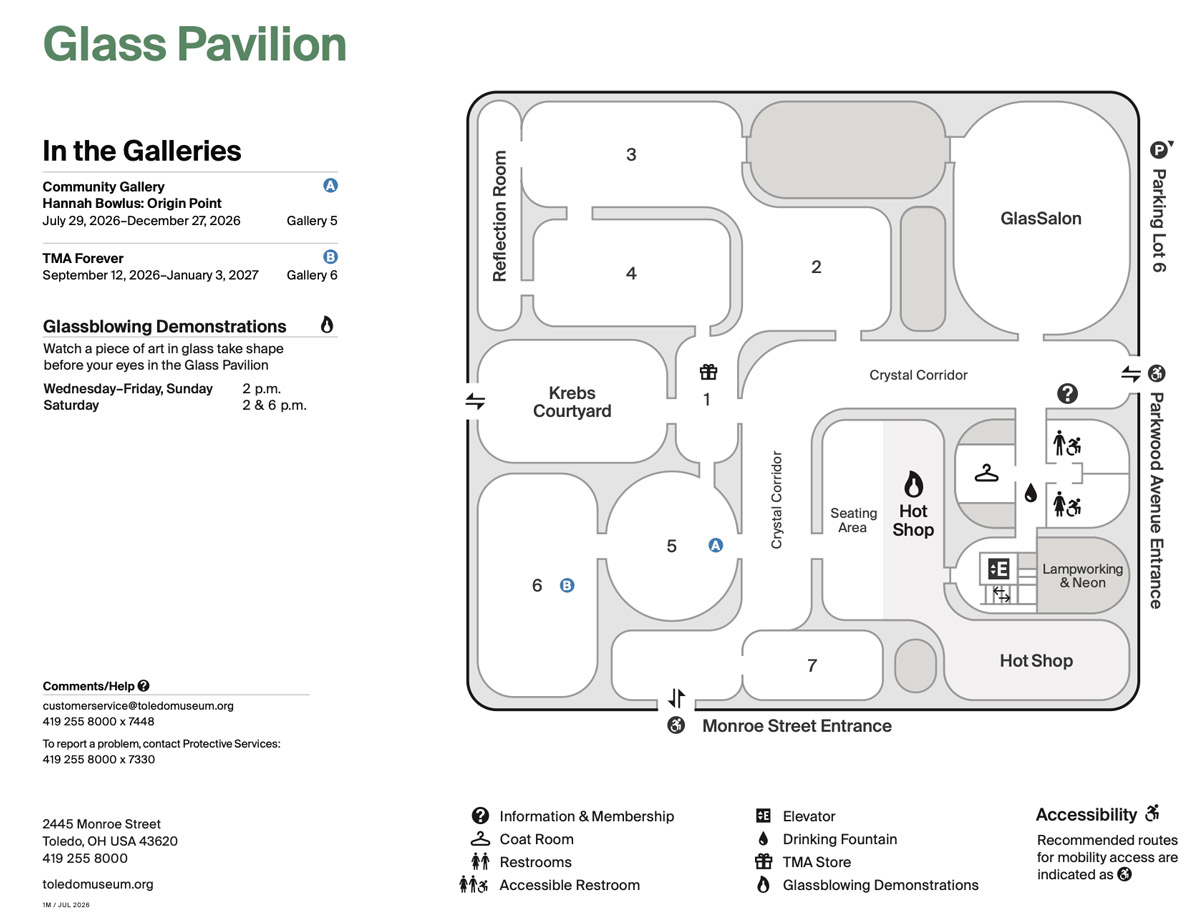
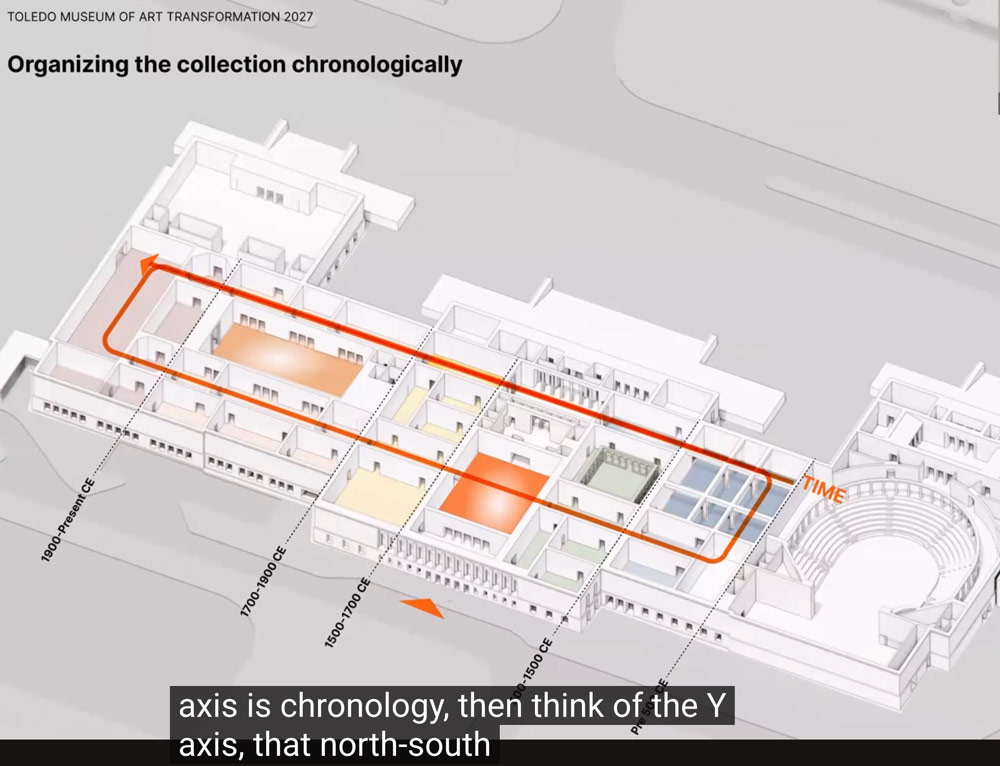
April 2026: The Ward M. Canaday Gallery for temporary exhibitions in the main building removed and replaced by The Trumbull Family Gallery for the history of glass.
So much for glass architecture displaying glass art.
Now on display at the Glass Pavilion:
TMA Forever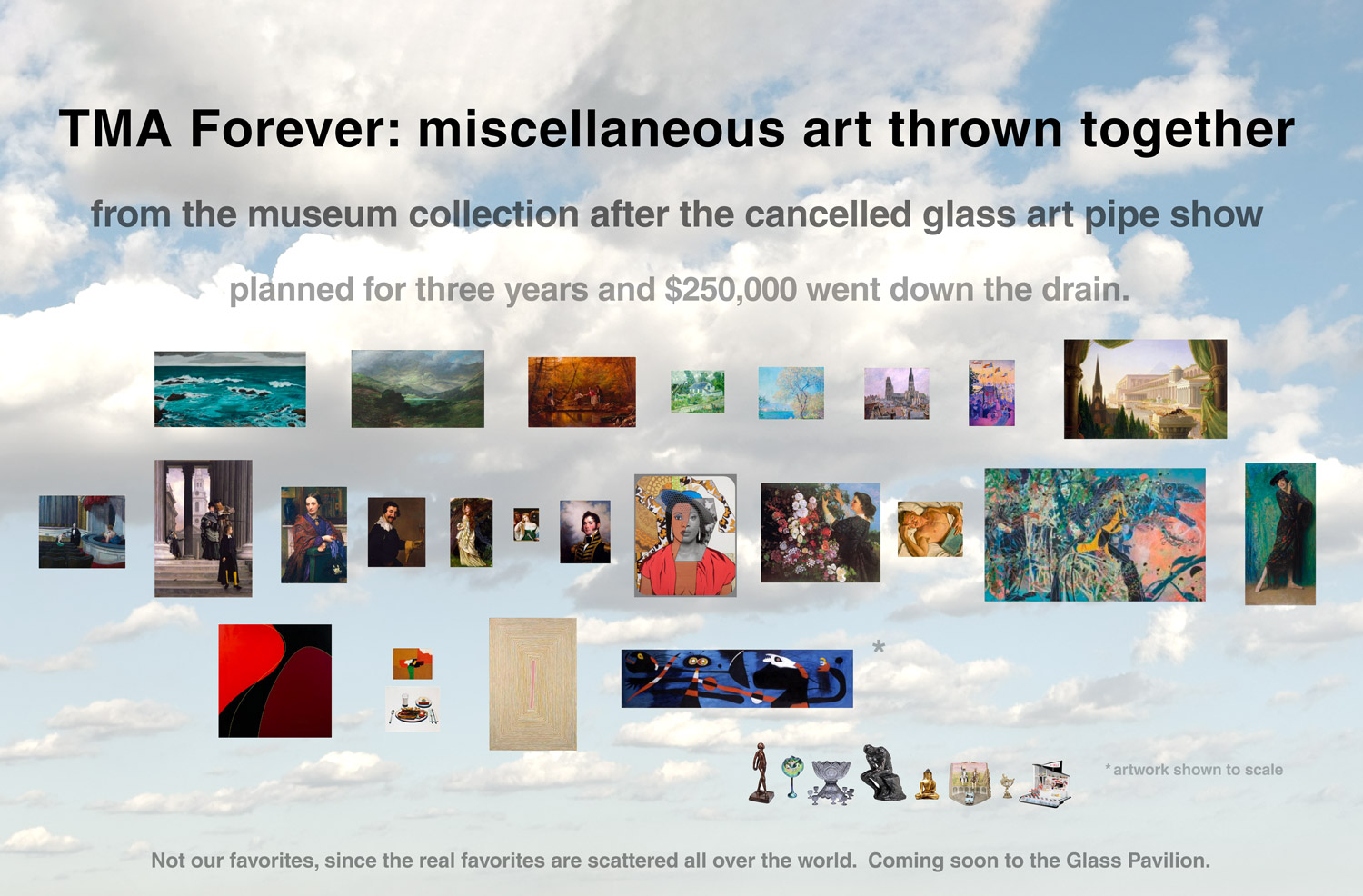
Thanks for the memories, Toledo Museum of Art!
For everyone who is proud of the Museum for its great collection, for those who want to actually see it, I hope you are rich and have time to travel. The Impressionist to Modern Art exhibition Monet to Matisse in Adelaide, Australia is closing on November 15. After that, you’ll have a chance to see it in Taipei.