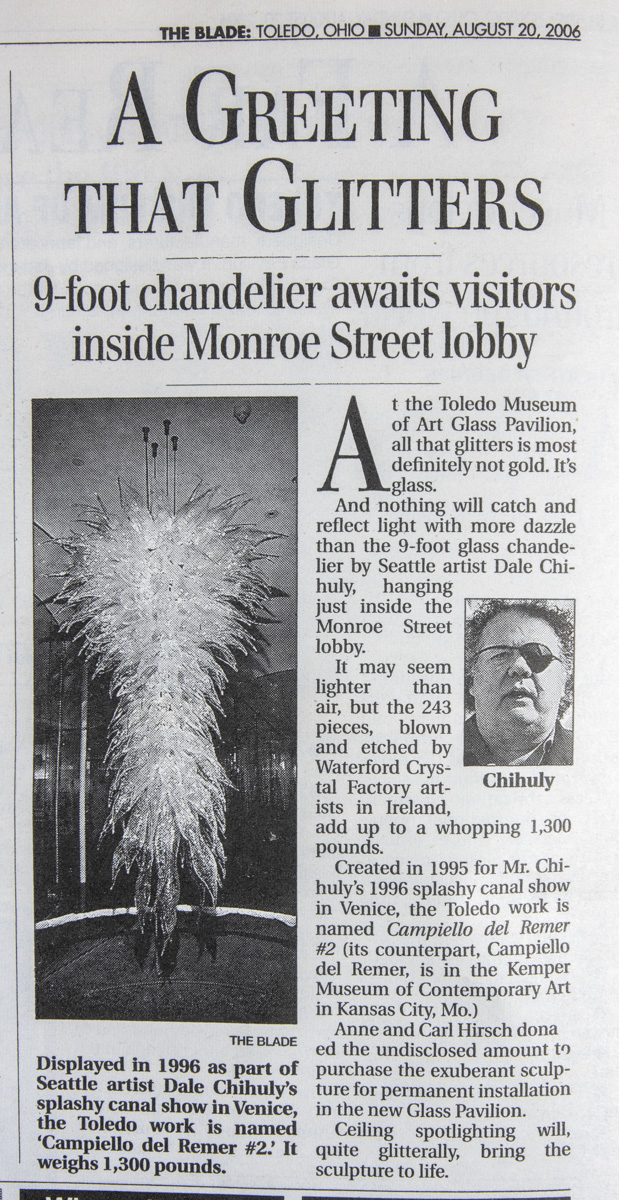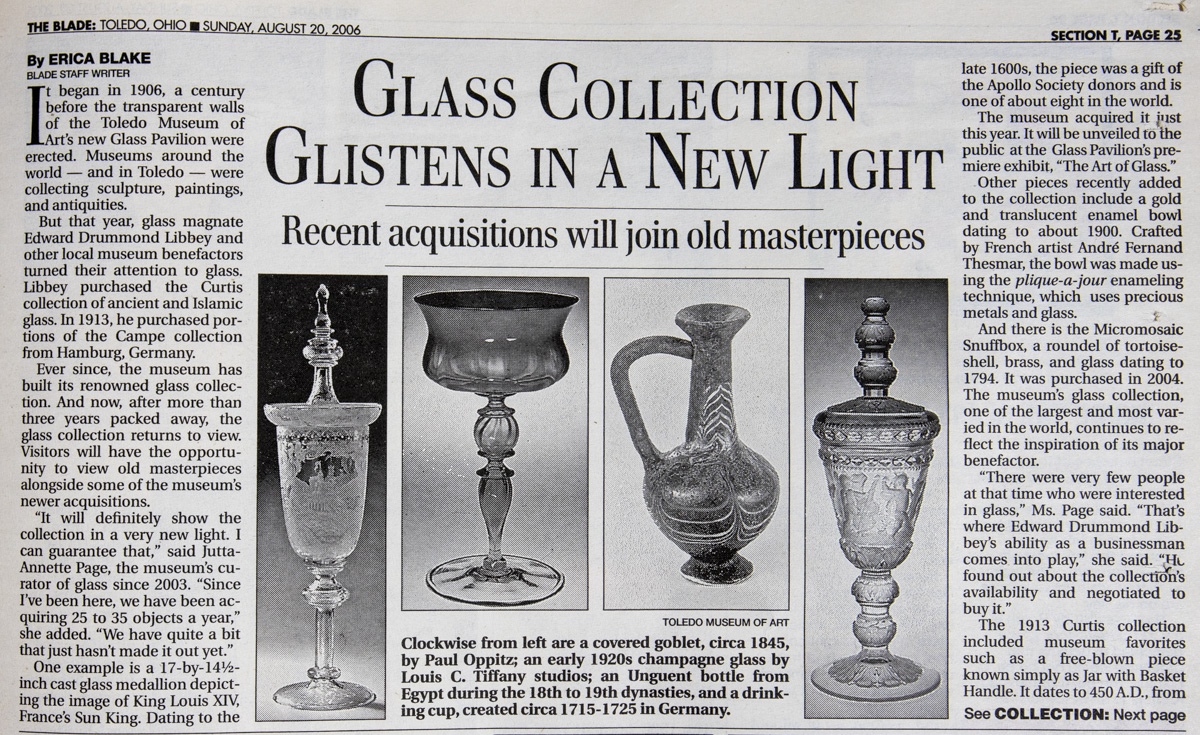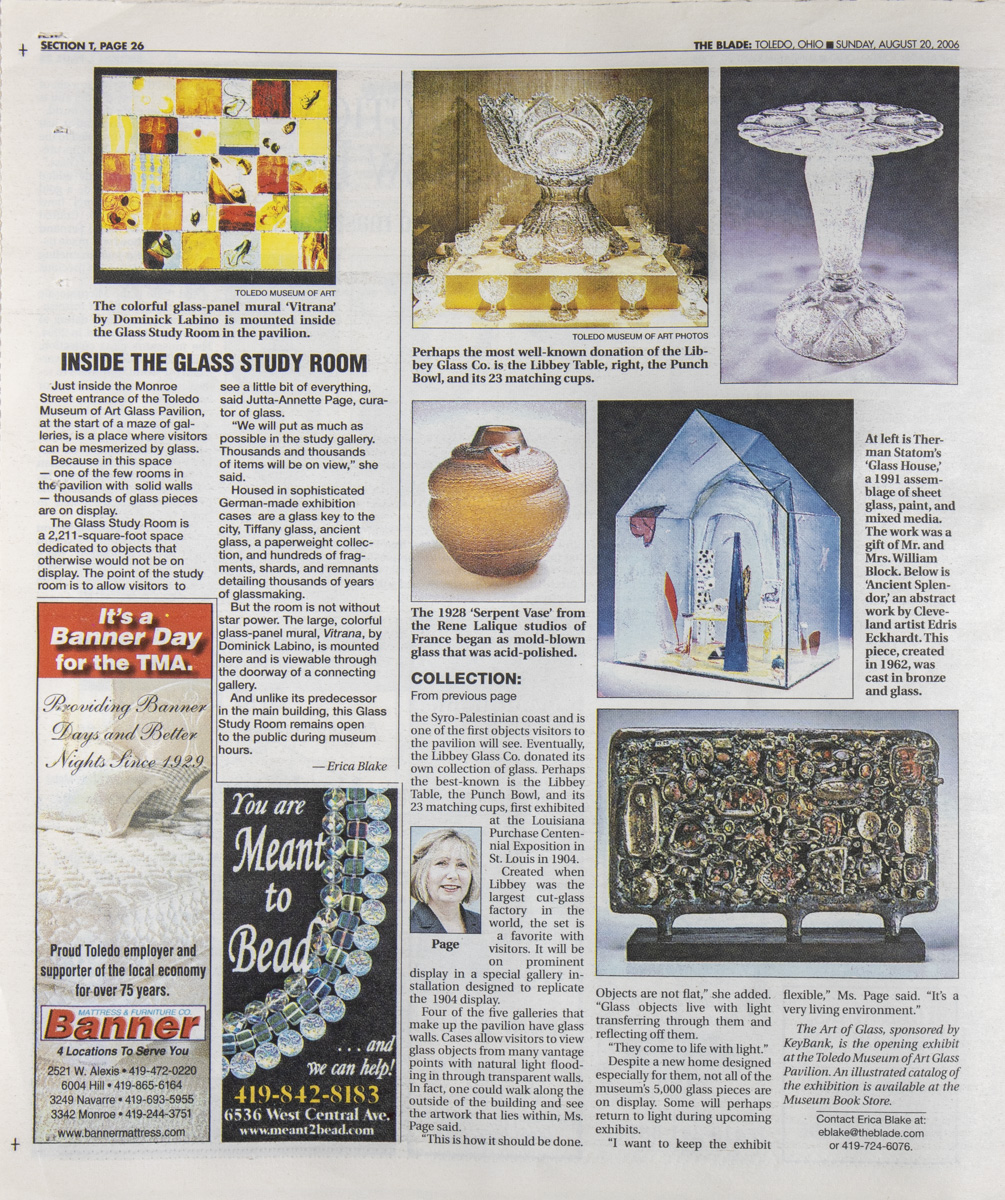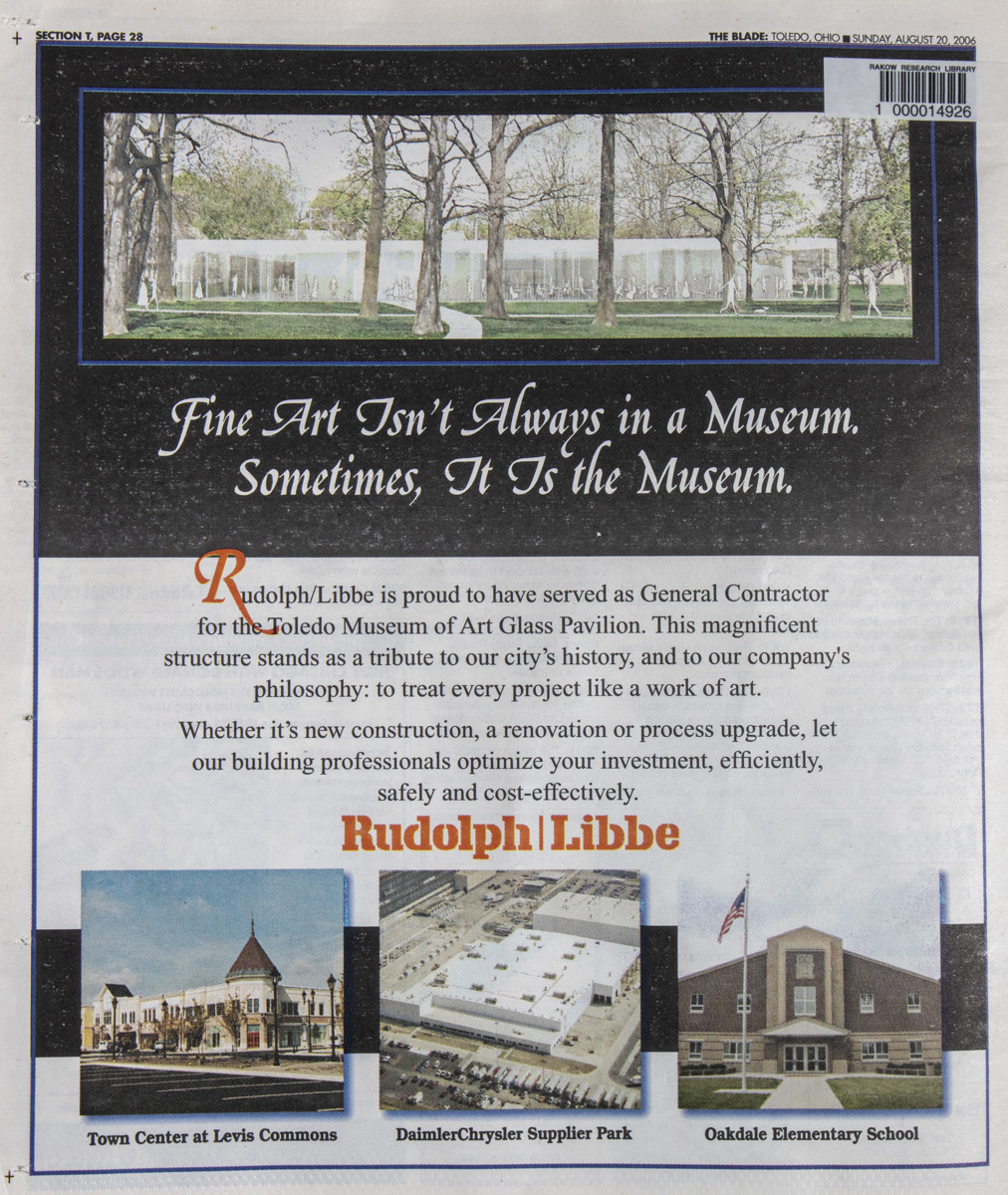
What have they done with the Glass Pavilion? It was a conceptual work of art that was unique to Toledo.
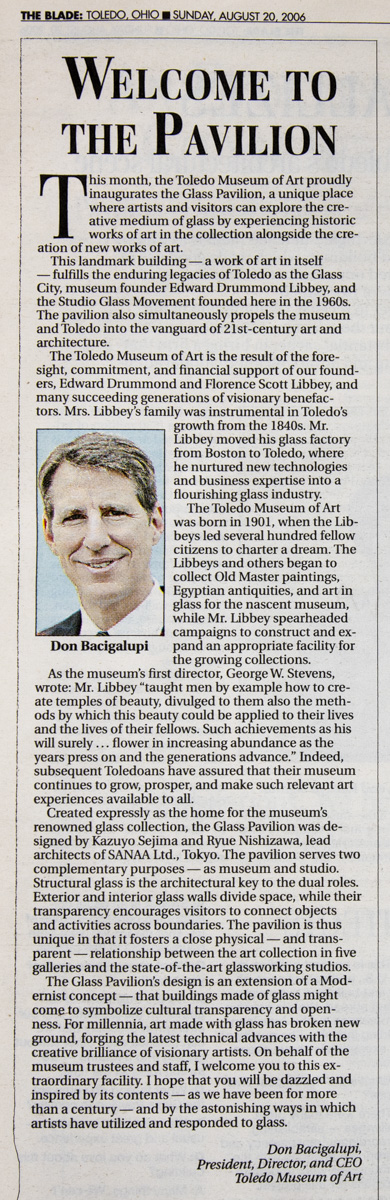
Here are some great quotes confirming the intention of the Glass Pavilion, written by Don Bacigalupi, President, Director, and CEO, Toledo Museum of Art, published in The Blade on August 20, 2006:
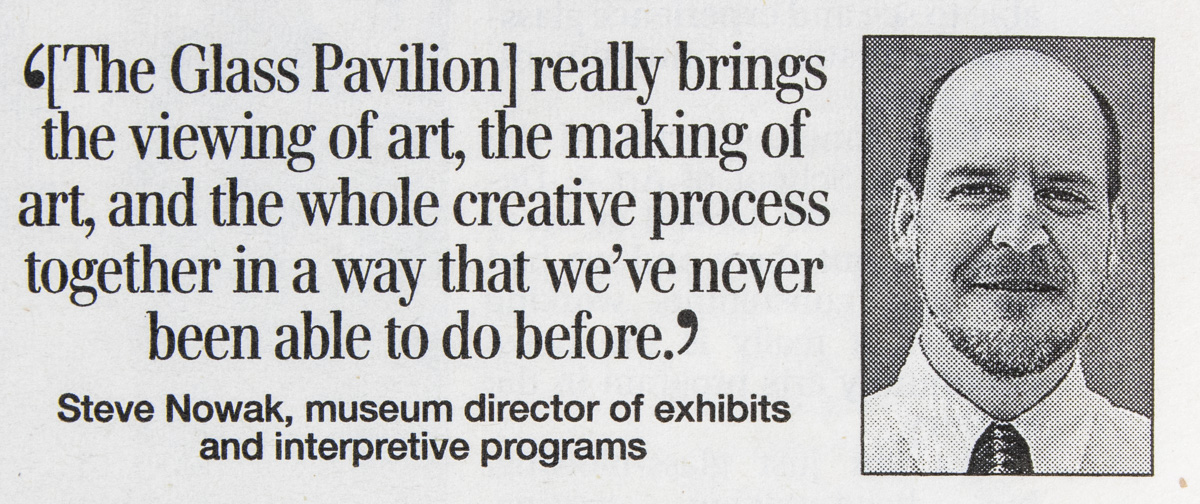
“This month, the Toledo Museum of Art proudly inaugurates the Glass Pavilion, a unique place where artists and visitors can explore the creative medium of glass by experiencing historic works of art in the collection alongside the creation of new works of art.”
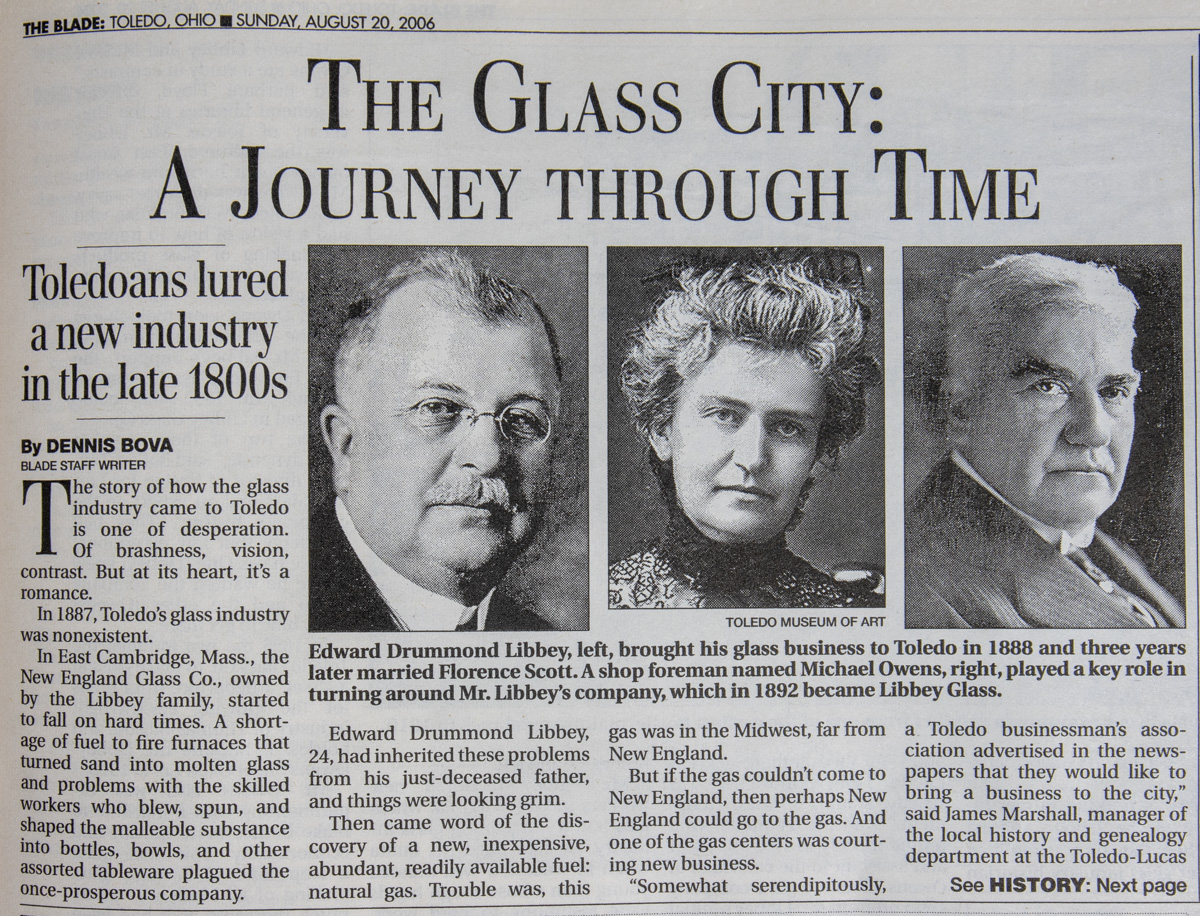
“This landmark building — a work of art in itself —fulfills the enduring legacies of Toledo as the Glass City, museum founder Edward Drummond Libbey, and the Studio Glass Movement founded here in the 1960s.”
“The pavilion also simultaneously propels the museum and Toledo into the vanguard of 21st-century art and architecture.”
“The Toledo Museum of Art is the result of the foresight, commitment, and financial support of our founders, Edward Drummond and Florence Scott Libbey, and many succeeding generations of visionary benefactors. Mrs. Libbey’s family was instrumental in Toledo’s growth from the 1840s. Mr. Libbey moved his glass factory from Boston to Toledo, where he nurtured new technologies and business expertise into a flourishing glass industry.”
“The Toledo Museum of Art was born in 1901, when the Libbeys led several hundred fellow citizens to charter a dream.”
“Mr. Libbey “taught men by example how to create temples of beauty, divulged to them also the methods by which this beauty could be applied to their lives and the lives of their fellows.”
“Created expressly as the home for the museum’s renowned glass collection, the Glass Pavilion was designed by Kazuyo Sejima and Ryue Nishizawa, lead architects of SANAA Ltd., Tokyo.”
“The pavilion serves two complementary purposes – as museum and studio. Structural glass is the architectural key to the dual roles. Exterior and interior glass walls divide space, while their transparency encourages visitors to connect objects and activities across boundaries. The pavilion is thus unique in that it fosters a close physical – and transparent – relationship between the art collection in five galleries and the state-of-the-art glassworking studios.”
“The Glass Pavilion’s design is an extension of a Modernist concept – that buildings made of glass might come to symbolize cultural transparency and openness. For millennia, art made with glass has broken new ground, forging the latest technical advances with the creative brilliance of visionary artists. On behalf of the museum trustees and staff, I welcome you to this extraordinary facility.”
“I hope that you will be dazzled and inspired by its contents – and by the astonishing ways in which artists have utilized and responded to glass.”
THEN ADAM LEVINE COMES ALONG a few years later, and removes much of the glass artwork, quoted in THE BLADE:
Unified vision: TMA gallery closures imminent; Glass Pavilion up next for remodel, The Blade, August 24, 2025,
“When TMA commissioned the 2006 project that would become the Glass Pavilion, it was not conceived as a place where glass would be displayed always and forever,” Levine said.
“It would be senseless not to have glass showcase alongside these other media, and to divorce glass history from overall art history,” Levine said.
“It’s a place where we can do performance-based art. It’s a place where we can try sound art,” Levine explained.
An exhibition of ancient magic, comprised of international loans, is set for the renovated Glass Pavilion.
ADAM LEVINE TIMELINE
2021– Museum changes focus to serving the 2-mile radius of the museum campus at the detriment of the rest of the greater Toledo-Northwest Ohio community.
2022—Sold three French Impressionist paintings at Sotheby’s for $59.7 million: Cezanne, Renoir and Matisse; two to the same buyer.
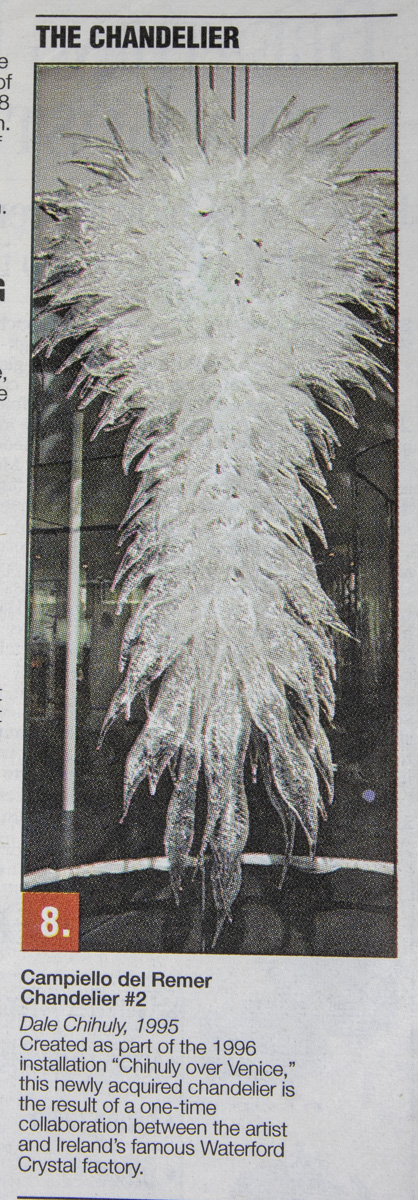
2023–Ancient glass room, Gallery 5 dismantled, 2,000 pieces taken off-view in 2023.
2024—Moved remaining impressionist paintings to the Glass Pavilion. These paintings and more were shipped off to New Zealand in 2025 with no public disclosure.
2025—Closed the just-renovated Cloister Gallery.
2025—Sent major collections of Impressionist thru Modern and Baroque paintings worth billions of dollars on multi-year international tours with no public disclosure.
2025—Sold 24,000 square foot Art Deco Professional Arts Building, practically giving it away for $2M.
2025—Bought a painting for reportedly $5 million to bail out a southern college (and for the publicity), while a college in Toledo failed. (conflicted board members)
2025—Purchased a Kiddush cup for $5 million and immediately loaned it to a museum in New York.
2025-2026–- employees formed a union and administration reportedly engaged in union-busting. Guards were fired and replaced by a third party company.
2026—All the years while attendance dropped by 66% after the pandemic and never recovered, the museum was secretly busy preparing and sending off major collections on international tours, focusing on the 2-mile radius of the museum in neighborhood centers, and had no good shows to speak of to bring the public in.
2026—Sold 18 American paintings from 1840-1926 at Christie’s, making it 46 sold from the collection to the 87 that remain.
2025-6—Emptied the main museum building of the art (perhaps worth $20 billion) and closed every gallery for “deferred maintenance” repairs and reinstallation
Adam Levine touts “Transformation 2027,” as if it is a good thing. But by definition, a transformation is a total change, a thorough, fundamental, and often irreversible change in the form, appearance, nature, and structure.
WHY? The museum was perfect the way it was. It was one of the nation’s best museums. It was community oriented, it was for everybody. It had a great artist community. Most of that is gone, art has been “leveraged” overseas to make money and prestige for the Toledo Museum curators, and an entire generation of Toledoans are missing out on the great gift that the Libbeys gave to the community. Not to the curators or the directors who are merely temporary stewards. The museum belongs to the people.
This is what in Libbey’s will that is being broken — “…ALL PAINTINGS, PICTURES AND OTHER WORKS OF ART BY IT OR THEM ACQUIRED BY EXPENDITURES FROM SAID INCOME, SHALL AT ALL TIMES BE PROPERLY AND APPROPRIATELY HOUSED IN ONE OR MORE ROOMS OF THE TOLEDO MUSEUM OF ART IN SAID CITY OF TOLEDO, EACH OF WHICH ROOMS SHALL AT ALL TIMES BE DESIGNATED AND PLAINLY MARKED “THE EDWARD DRUMMOND LIBBEY GALLERY”; EACH AND EVERY OF SAID PAINTING, OTHER PICTURES AND WORKS OF ART SHALL AT ALL TIMES BE PLAINLY MARKED “GIFT OF EDWARD DRUMMOND LIBBEY”, AND SHALL BE KEPT ADEQUATELY INSURED AGAINST LOSS FROM FIRE, THEFT AND OTHER CAUSES…”
It’s pretty straightforward. It doesn’t mean that the current stewards can “defer maintenance” so they can empty the museum of all the artwork, rent it out, store it all over the country and the world, while they “transform” it into something completely unrecognizable. The museum and the art is Toledo’s legacy, it belongs to the people.
What Adam Levine and the current curators have done to the amazing, unique Glass Pavilion, which is a complete conceptual work of art, that they have disrespected and destroyed, shows you just how bad it’s going to be.
Please share! And if you haven’t already, please sign the Petition to Enforce Libbey’s Will here: https://c.org/wcdz2j6CnVPlease write to the Ohio Attorney General’s Charitable Law Section. They need to hear from us. reference case #114140 in the subject and send an email to: CharitableComplaints@OhioAGO.gov